
Amsterdam
Amsterdam is one of those cities that manages to be both instantly familiar and endlessly surprising. You have almost certainly seen the photographs: narrow canal houses leaning at improbable angles, bicycles everywhere, bridges covered in flowers, canal boats gliding past and that unmistakable mixture of old-world charm and modern liberalism.
And, unlike some cities that look better in photographs than they do in reality, Amsterdam really is remarkably attractive.
It is also completely bonkers in places.
The Dutch capital is a city of canals, bicycles, museums, cafés, historic buildings and an almost astonishing tolerance for doing things differently. It can be sophisticated, beautiful and cultured one minute, chaotic and rather grubby the next. That combination is part of its character — although there are moments when you might wish the character would have a shower.
The canals
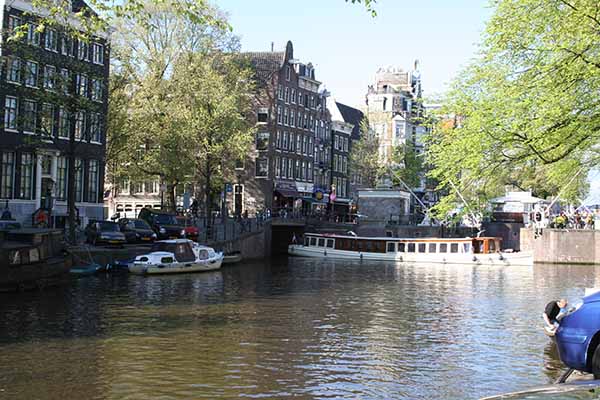 The obvious place to start is the canal belt, which is the reason Amsterdam has become such a favourite with photographers and visitors.
The great semicircles of canals — Herengracht, Keizersgracht and Prinsengracht among them — were constructed during Amsterdam's seventeenth-century Golden Age. They created an extraordinary urban landscape of waterways, bridges and tall merchant houses.
The houses themselves are fascinating. Narrow plots meant that buildings were squeezed upwards rather than outwards, producing the distinctive tall façades that have become synonymous with Amsterdam.
Many have enormous windows and ornate gables, while some lean alarmingly forward. Don't worry: most aren't about to fall down. The slight angles are partly the result of foundations, settling ground and deliberate construction techniques.
A canal cruise is an excellent way to see the city, particularly for a first visit. From the water you get a completely different perspective and can appreciate just how extensive the canal network is.
Standard 1-hour Amsterdam canal cruise prices range from €12.25 to €22 per adult for basic open or closed boat sightseeing tours. Specialty options like wine and cheese, pizza, or private luxury experiences cost between €35 and €70+ per person. Children's tickets usually cost about half price (roughly €8.50 to €9.50). Booking online directly often secures a discount compared to buying at the dock.
But don't spend your entire visit on a boat.
Amsterdam is at its best when you walk.
The Jordaan
The Jordaan is one of my favourite parts of the city. Once a working-class district, it has become fashionable without losing all of its character.
Its narrow streets and little canals are filled with cafés, independent shops, galleries and restaurants, and there are plenty of quieter corners where the tourist crowds thin out.
This is where Amsterdam feels like a city rather than an attraction.
Wander without a plan and you will inevitably discover something interesting. That is one of the joys of Amsterdam.
The museums
Amsterdam has an extraordinary collection of museums.
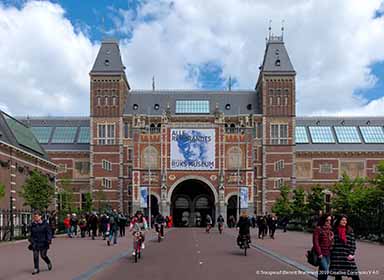 The Rijksmuseum is the heavyweight, with masterpieces by Rembrandt, Vermeer and many other Dutch artists. Even if you aren't normally a museum person, the building itself is impressive and the collection is enormous. Adult admission is currently €25, with under-18s admitted free, and it is open daily from 9am to 5pm.
Then there is the Van Gogh Museum, containing the world's largest collection of works by Vincent van Gogh. His paintings are familiar from reproductions, but seeing the originals is another experience altogether.
VAn Gogh Museum admission Adult (18+) €25.00, students €16, children free but must still book a time slot.Tickets must be booked in advance and are not available on the door.
The Anne Frank House is different again. It is an intensely moving visit, taking you into the hiding place where Anne Frank and her family lived during the Nazi occupation. Admission €16.50 for adults (ages 18+), €7.00 for children and teens aged 10 to 17, and €1.00 for children aged 0 to 9. Prices include a mandatory online booking fee. Tickets must be pre-booked strictly via their official site.
There are many more museums covering subjects ranging from maritime history to photography, science and Dutch culture.
In other words, you could spend a week in Amsterdam just looking at things.
Dam Square and the centre
At the heart of the city is Dam Square, dominated by the Royal Palace and the Nieuwe Kerk.
It is busy, noisy and almost permanently full of visitors, but it is also one of those places you should see simply because it is central to Amsterdam's history.
From here, the main shopping streets radiate outwards. Some are pleasant, others are increasingly dominated by international chains and tourist shops.
For something rather more interesting, head towards the older streets and canals.
The bicycles
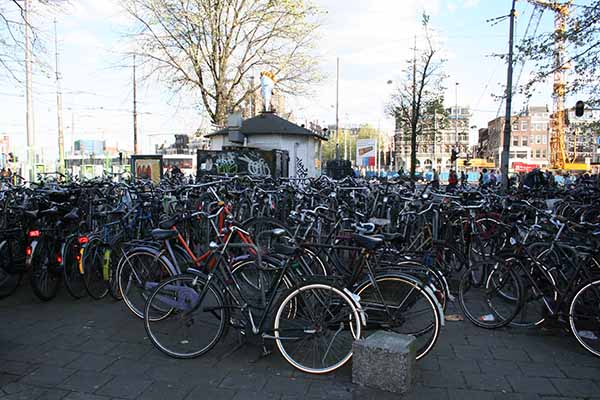 And now we come to the subject of bicycles.
Amsterdam has an extraordinary cycling culture. Hundreds of thousands of journeys are made by bicycle, and cyclists have priority on much of the city's dedicated infrastructure.
This is brilliant if you are cycling.
It is considerably less brilliant if you are a pedestrian who has just stepped into a cycle lane while admiring a canal.
The bicycle bells are not decorative.
They are warnings.
Amsterdam's cyclists can move quickly and confidently through the city, so visitors should learn the difference between pavements, cycle paths and roads very quickly. Standing in the wrong place can produce an unpleasantly close encounter with a Dutch bicycle.
That said, the cycling infrastructure is one of the things that makes Amsterdam such a pleasant city to explore. It is a remarkably efficient way of getting around and gives the city a very different atmosphere from car-dominated urban centres.
The Red Light District
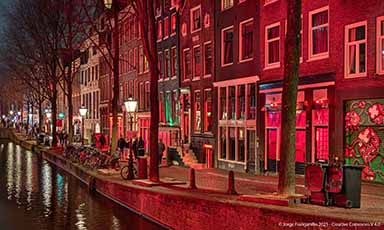 Amsterdam's famous Red Light District is another part of the city that attracts enormous numbers of visitors.
The area around De Wallen is historic, atmospheric and undeniably interesting, but the endless stream of tourists gawping at the windows can make it feel more like a theme park than a working neighbourhood.
The district is also home to some beautiful old buildings, including the Oude Kerk, and its narrow lanes and canals are historically significant.
The sensible approach is to remember that this is a real neighbourhood where real people live and work.
And don't photograph the workers.
That really shouldn't need saying.
Coffee shops
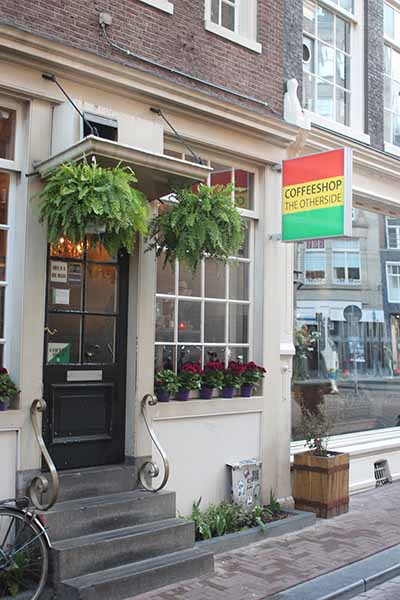 Amsterdam's cannabis coffee shops are another element of the city's unusual reputation.
The Dutch approach has historically been based on tolerance rather than outright endorsement, and the coffee-shop culture has become deeply associated with Amsterdam's image.
Whether this interests you or not, it is simply another part of the city's distinctive character. If it doesn't, there is absolutely no shortage of other things to do.
Food and drink
Dutch food doesn't always receive the international recognition it deserves, although Amsterdam provides plenty of opportunities to try local specialities.
You should certainly sample a stroopwafel, preferably a fresh one, and try some Dutch cheese. Herring is another traditional option, although the prospect of eating raw fish with onions while standing beside a canal may not appeal to everyone.
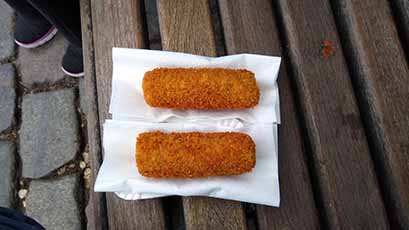 My personal favourite is the croquette - fast food at its sublime best.
 There are also Indonesian influences throughout the city, reflecting the Netherlands' colonial history, and Indonesian food can be excellent.
And then there are the cafés, bars and restaurants, ranging from tiny brown cafés to sophisticated modern establishments.
Beyond the postcard
One of the things I particularly like about Amsterdam is that the city isn't entirely polished.
Yes, the historic centre can be beautifully maintained, but you will also encounter graffiti, litter, crowded pavements, tourists behaving badly and the occasional smell that makes you wonder whether something has died in a canal.
It is a real city.
The challenge is that Amsterdam's success has created its own problems. Mass tourism has put pressure on the historic centre and housing, while some parts can feel overwhelmed during peak periods.
Visit outside the busiest times and explore beyond the obvious attractions and you will discover a much more enjoyable city.
Getting around
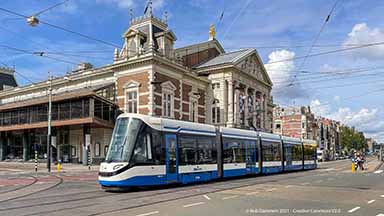 Amsterdam is wonderfully easy to explore.
The historic centre is compact enough to walk around, while trams provide an excellent way of reaching places farther afield. Metro and bus services extend the network further, and of course there are bicycles.
For visitors, walking is still my first choice.
There is something about crossing a little bridge, turning a corner and suddenly finding yourself beside another beautiful canal that no transport system can reproduce.
The verdict
Amsterdam is a city I would happily return to, well I am biased as I did live there for a while.
It has magnificent art, extraordinary architecture, fascinating history and a transport system that actually works. Its canals are beautiful, its museums outstanding and its neighbourhoods full of character.
It is not perfect. Far from it.
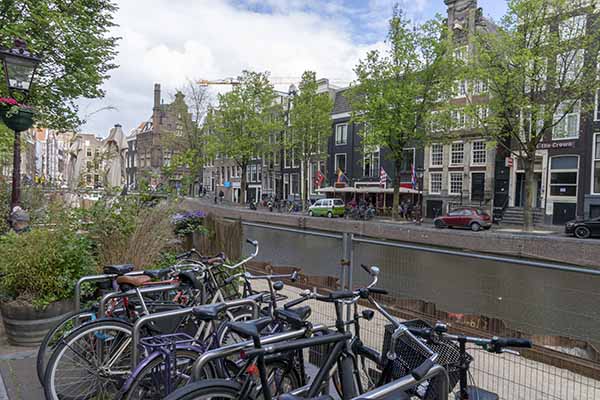 The tourist crowds can be ridiculous, prices can be eye-watering and some areas have become victims of their own popularity. The bicycles can be terrifying until you learn the rules, and parts of the centre can feel rather grubby.
But underneath all that, Amsterdam remains a wonderfully distinctive city.
The best way to experience it is to get away from the crowds, put the map away and simply wander. Explore the Jordaan, discover the quieter canals, sit beside the water with a coffee and watch the bicycles go by.
Amsterdam isn't just a city built around canals. It is a city built around character — occasionally eccentric, sometimes infuriating, frequently beautiful and almost impossible to mistake for anywhere else.
And that's probably why, despite all the moaning, you will want to go back.
Prices quoted correct as of June 2026
Back to Netherlands home page