
USA - Arizona
Grand Canyon
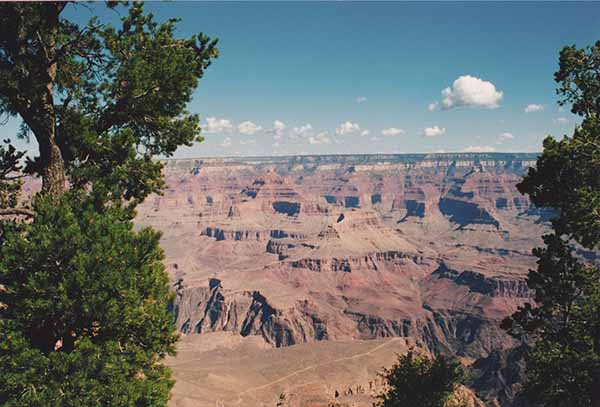 No trip through this part of America is really complete without seeing the Grand Canyon, and despite the endless photographs and television programmes, it is one of those places that genuinely lives up to the hype.
 You can arrive at the rim with a pretty good idea of what you are going to see, but the sheer scale of it still comes as a shock. It is vast beyond belief, stretching for hundreds of miles, with the Colorado River cutting its way through the bottom of the canyon.
The South Rim is the most accessible and the one most visitors choose, with spectacular viewpoints along the rim and plenty of opportunities simply to stand there and wonder how on earth nature managed to create something on this scale.
The colours and shadows change constantly with the light, so even if you spend several hours there, it never quite looks the same twice.
It's is especially worth getting out of bed silly o'clock in the morning to watch the sun rise - trust me you will not be disappointed.
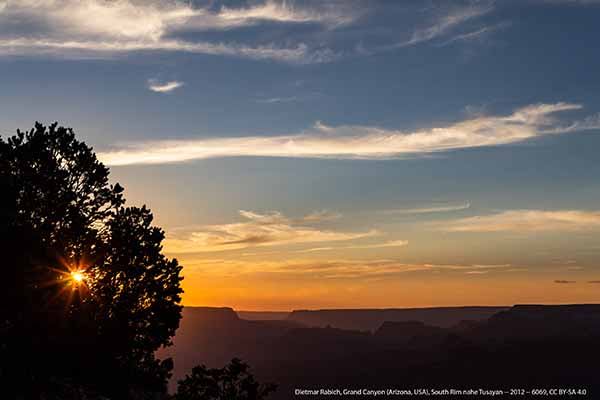 If you really cannot drag yourselof the night then sunset isn't too shabby either.
Personally I would strongly suggest doing both.
There are plenty of ways to experience it, from the easy option of wandering between the viewpoints to hiking down into the canyon. Just remember that walking downhill is the easy bit — getting back up is another matter entirely. There is a reason the Park Service takes dehydration and heat exhaustion so seriously.
If you have the time, a helicopter flight is an unforgettable way of seeing the canyon, although personally I think everyone should first experience it from the rim. There is something rather humbling about standing quietly at the edge and realising that you are looking at millions of years of geological history.
One word of warning: don't try to rush it. The Grand Canyon is frequently treated as a tick-box excursion from Las Vegas, with people arriving, taking a photograph and disappearing again. That's a shame. The place deserves time.
Hoover Dam
Then there is the Hoover Dam, sitting dramatically in the Black Canyon of the Colorado River and conveniently positioned between Las Vegas and the Grand Canyon. Built during the Great Depression and completed in 1936, it was an extraordinary engineering achievement for its time and remains an impressive sight today.
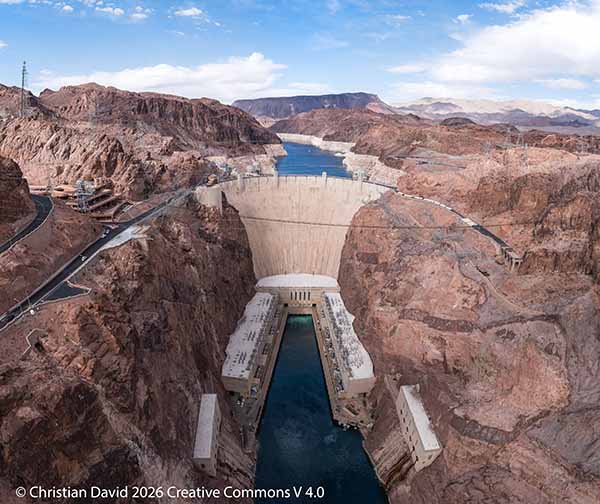 The scale is difficult to appreciate until you are standing beside it. The concrete dam rises hundreds of feet above the Colorado River and created Lake Mead, which at the time of its construction was the largest reservoir in the United States.
The dam wasn't built simply to look impressive. It transformed the development of the American Southwest by providing hydroelectric power, controlling flooding and creating a huge reservoir for water storage. Las Vegas in particular owes an enormous debt to the infrastructure created around the Colorado River.
The surrounding scenery is spectacular too, with the enormous concrete structure contrasting dramatically with the barren Nevada and Arizona desert. The Mike O'Callaghan–Pat Tillman Memorial Bridge, which carries US 93 high above the canyon, provides another excellent view of the dam and is worth stopping for.
The visitor experience is, inevitably, rather American: big car parks, security, gift shops and plenty of information about the achievement. But underneath all of that is a genuinely remarkable piece of engineering.
Two very different wonders
The Grand Canyon and Hoover Dam make an excellent combination because they demonstrate two completely different types of American achievement. The Grand Canyon shows what nature can do when given millions of years; Hoover Dam shows what humans can do when given enough concrete, money and determination.
Both are spectacular, both are worth seeing, and neither is quite as easy to appreciate properly through a photograph. The Grand Canyon leaves you feeling very small; Hoover Dam leaves you wondering how on earth they managed to build it in the first place.
Prices quoted correct as at June 2026
Return to USA Home Page