
Ascott House
A Little Bit of Old England in Buckinghamshire
Tucked away in the Buckinghamshire countryside near Wing, Ascott House is one of those National Trust properties that can be surprisingly easy to overlook. It doesn't have the fame of some of the country's great stately homes, but that is probably part of its charm. This is a house with plenty of character, an interesting history and gardens that are every bit as important as the building itself.
And, as with so many National Trust properties, the real pleasure is discovering that there is considerably more to Ascott than initially meets the eye.
From Farmhouse to Country House
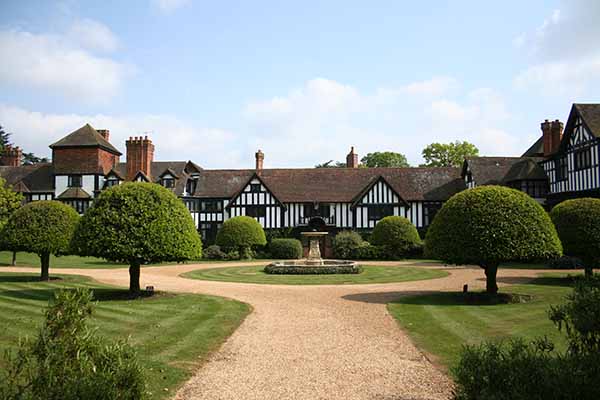 Ascott began life as a much more modest farmhouse. Its transformation into the rather grand house we see today was largely the work of Leopold de Rothschild, who acquired the property in the 19th century.
The Rothschild family had a remarkable influence on the country houses and estates of Buckinghamshire, and Ascott became another expression of their enthusiasm for art, architecture, collecting and entertaining. Leopold and his family gradually transformed the house, employing the architect George Devey to create the rather quirky mixture of Tudor and Jacobean influences that we see today.
Ascott is wonderfully rambling, with gables, chimneys, half-timbering and all sorts of architectural bits and pieces seemingly added whenever somebody had another bright idea.
Inside the House
If you like country houses packed with paintings, furniture, ceramics, tapestries and curiosities, Ascott is definitely worth a look.
The interior reflects the collecting habits and tastes of the Rothschild family, and there is an extraordinary amount to look at. Paintings hang alongside furniture, decorative objects and works of art, while the rooms themselves are full of the sort of detail that rewards a slow wander rather than a quick inspection.
One of the pleasures of houses like Ascott is that you don't necessarily need to know what every object is to appreciate it. You can simply stand there and wonder how on earth anyone managed to get away with decorating a room quite so lavishly.
The house also contains an impressive collection of fine art and furniture, including works associated with some of Europe's leading craftsmen and artists.
This isn't a minimalist country house. If your idea of interior decoration is a beige sofa, two cushions and a strategically placed houseplant, Ascott may come as something of a shock.
The Gardens
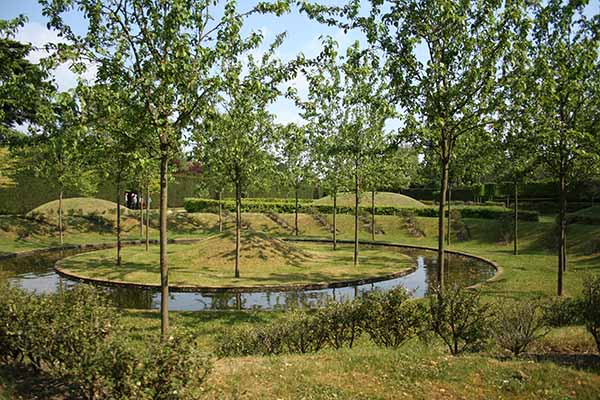 For me, the gardens are one of Ascott's great attractions.
The house sits within extensive grounds, with formal gardens, lawns, mature trees, terraces and carefully planted borders. There are plenty of opportunities simply to wander around and enjoy the setting.
The gardens were developed over many years and incorporate a mixture of formal and informal areas. Sculptures and architectural features appear throughout the grounds, providing plenty of visual interest.
There is also a particularly impressive avenue of lime trees, while the wider estate provides that quintessential Buckinghamshire countryside setting.
It is the sort of garden where you don't necessarily need to know anything about horticulture. You can simply enjoy it.
And after an hour or two inside a house full of expensive furniture, getting outside into some fresh air is probably no bad thing.
Ascott is also refreshingly manageable.
Some of Britain's larger National Trust properties can leave you feeling that you have walked the equivalent of the London Marathon before you've even reached the tea room. Ascott is much more intimate.
You can explore the house, wander through the gardens and enjoy the surrounding countryside without feeling that you need a military-style itinerary to see everything.
There is also the inevitable National Trust café and shop — because apparently no National Trust visit is complete without somebody buying a packet of biscuits they didn't know they needed.
But that's all part of the experience.
The Verdict
Ascott House is a bit of a hidden gem.
It doesn't have the monumental scale of Blenheim Palace or the celebrity status of some of the country's better-known National Trust properties, but that isn't really the point.
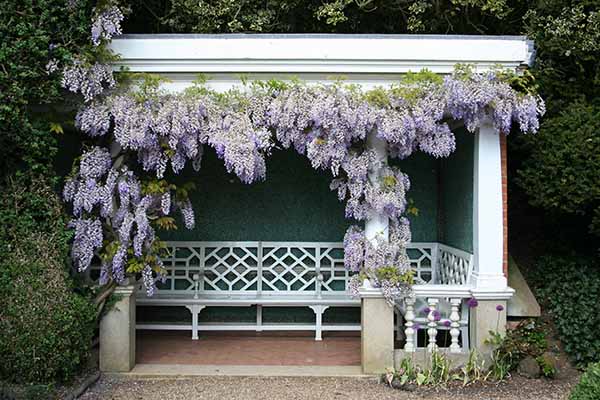 What Ascott offers is something rather more personal: a fascinating Rothschild country house, packed with art and antiques, set in attractive Buckinghamshire countryside and surrounded by beautiful gardens.
The architecture is wonderfully eccentric, the interiors are full of treasures and the gardens provide a peaceful place to escape afterwards.
And perhaps most importantly, Ascott hasn't become so famous that you need to fight your way through hordes of visitors simply to get a glimpse of the drawing room.
If you're exploring Buckinghamshire, Ascott House is well worth putting on the list.
It may not shout for attention like some of Britain's great stately homes, but once you've discovered it, you may well wonder why more people haven't heard of it.
And that's usually a pretty good recommendation.
There is one negative however (well it's a negative for me) in that dogs are not welcome - apart from registered assistance dogs.
Opening Times: Tuesday 17 March to Sunday 1 November 2026
Tuesdays to Sundays - Gardens: 11:30 to 17:00 (last entry 16:30)
House and Collection: 13:00 to 16:00 (last entry 15:30
Pavilion Tea Room: 11:30 to 16:45
Admission: Gardens: Adults £12.95, Child (5- 17) £6.50. House an additional £7.50 for adults and £3.75 for children
National Trust members free.
(prices quoted correct as at September 2026)
Return to South East home page