
Belfast
Belfast is one of those cities that has had a pretty rough time of it. Once one of the great industrial cities of the British Empire, it became internationally famous for building ships, producing linen and engineering just about anything that could be engineered. Then came decades of political and sectarian violence that gave Belfast a reputation few cities would envy. Today, thankfully, Belfast is a very different place, although its turbulent past has certainly not been forgotten – and nor should it be.
The city sits at the head of Belfast Lough, surrounded by hills and with Cave Hill providing a magnificent backdrop. It isn't a huge city and most of the central attractions are reasonably easy to get around, making Belfast a much more manageable proposition than some of its larger British cousins.
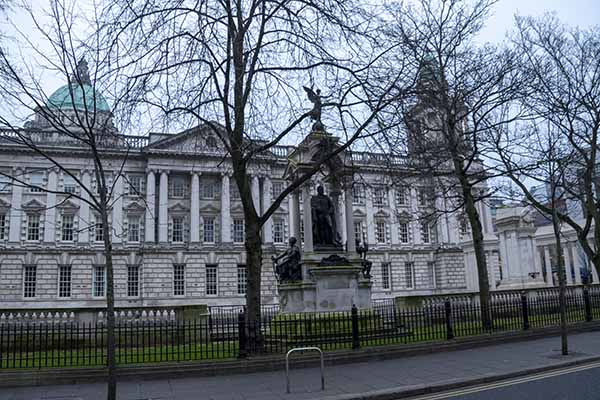 Start with City Hall, which dominates Donegall Square and is one of Belfast's most impressive buildings. Built at the height of the city's prosperity, it is a reminder of the confidence and wealth generated by the linen and shipbuilding industries. Around it you'll find the commercial heart of modern Belfast, although thankfully the city hasn't gone completely down the shopping-mall-and-chain-store route.
Then there is St George's Market, one of Belfast's real survivors.
Housed in a magnificent Victorian market building, it is the place to go for food, local produce, crafts and a bit of atmosphere. It feels like a proper market rather than something manufactured for tourists, which is always a good start.
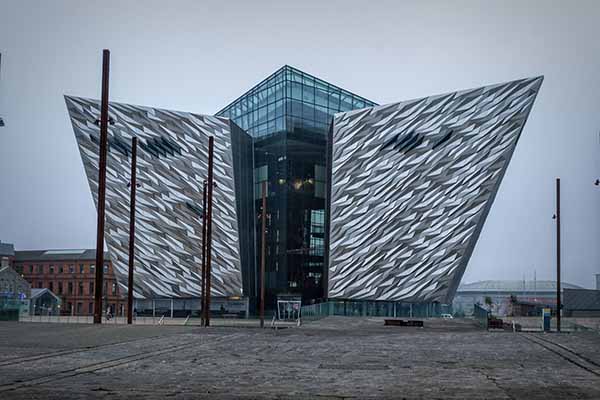 But Belfast's industrial history is best experienced across the water in the Titanic Quarter. This is where the great Harland and Wolff shipyard once stood and where the world's most famous ship was built.
And yes, you really should visit Titanic Belfast. It is housed in that enormous, rather spectacular building beside the original slipways and tells the story of Belfast's shipbuilding industry as much as it tells the story of Titanic herself. The experience is considerably better than the usual collection of photographs and rusty bits of metal found in lesser museums. You are taken through the design, construction, launch and tragic maiden voyage, while the surrounding Titanic Quarter allows you to stand where the great ships were actually built.
The nearby SS Nomadic is another worthwhile stop. This little ship was a tender for the White Star Line and is the last surviving vessel of the company. Together, Titanic Belfast and Nomadic give you a much better understanding of Belfast's extraordinary maritime past.
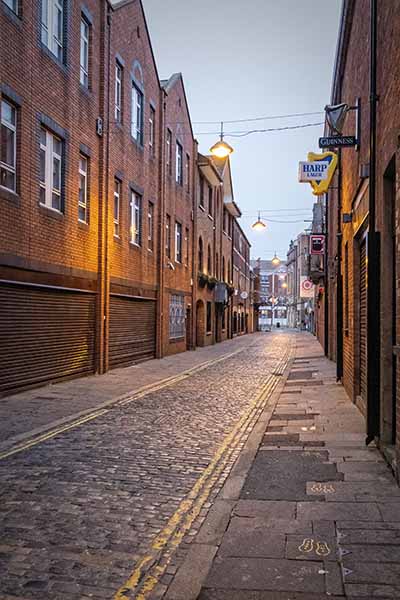 For something rather more cheerful, head towards the Cathedral Quarter, one of Belfast's liveliest areas.
 The old warehouses and narrow streets have been transformed into pubs, restaurants, galleries and entertainment venues.
It is particularly good in the evening, when Belfast's famous musical streak becomes apparent. Belfast is, after all, a UNESCO City of Music, and there is usually something going on somewhere.
The Queen's Quarter provides a completely different atmosphere.
Centred around Queen's University, it has leafy streets, cafés and some fine Victorian architecture.
The Botanic Gardens are here too, and the magnificent Palm House is well worth seeing.
Then we come to the part of Belfast that visitors really shouldn't ignore – its political history.
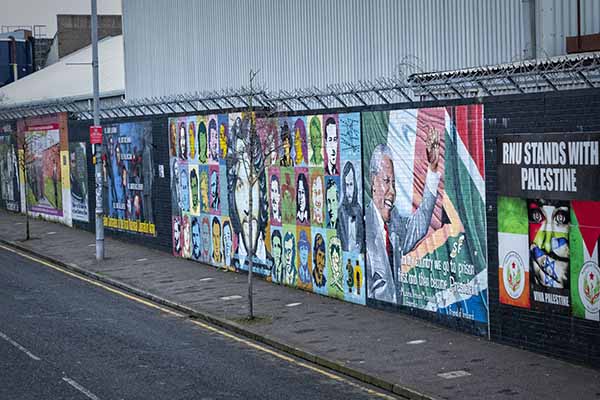 The Troubles were not some distant historical event. They are still within living memory, and Belfast's streets carry the evidence. The murals in West Belfast and along the Shankill Road tell very different versions of the city's history, while the Peace Walls remain a remarkable physical reminder of how divided the communities once were – and, to some extent, still are.
This is where I would strongly recommend taking one of Belfast's famous black taxi tours. You aren't simply looking at murals from the window of a sightseeing bus; the drivers often have personal experience of the events and can explain the background to places that otherwise make little sense. The Peace Wall and the murals are fascinating, but they deserve to be treated with a little more respect than simply being another photo opportunity. Belfast's recent history involved real people, real deaths and real suffering.
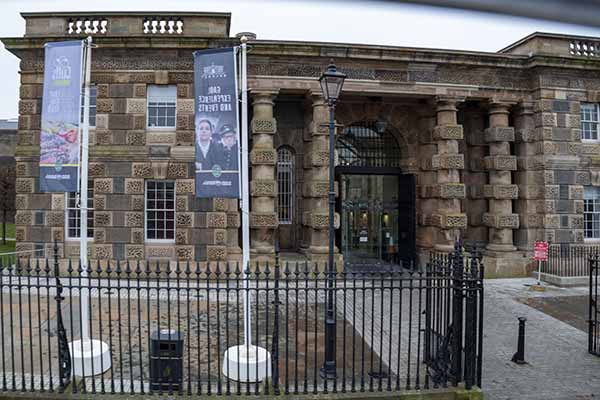 The Crumlin Road Gaol provides another sobering insight into the city's past. Opened in the nineteenth century, it housed ordinary criminals alongside political prisoners and remained in use until 1996. Today it is a visitor attraction, with tours taking you through the cells, tunnels and execution areas. It is an impressive and slightly chilling place, particularly when you remember that this isn't some reconstructed Victorian prison – it actually operated until within living memory.
Away from the political history, Belfast has plenty of more conventional attractions. The Ulster Museum in the Botanic Gardens is excellent and covers everything from archaeology and natural history to art and the history of Northern Ireland. Ulster Museum
Up on the northern side of the city is Belfast Castle, sitting beneath Cave Hill with superb views over Belfast and Belfast Lough. Belfast Castle If you fancy a walk rather than another museum, Cave Hill provides some excellent countryside surprisingly close to the city.
And then there is Stormont, home of the Northern Ireland Assembly. Stormont Estate The enormous Parliament Buildings sit in extensive
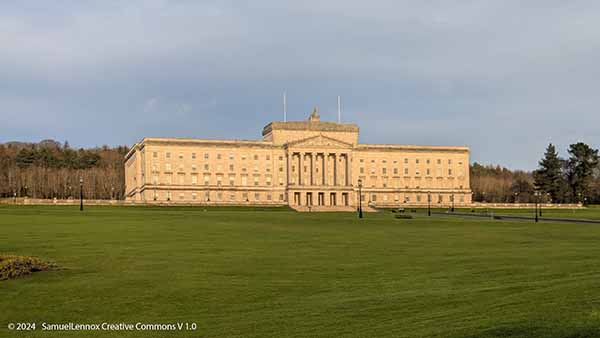 parkland and the approach up the avenue gives you a rather grand view of the building. Given Belfast's political history, it is difficult to stand there without appreciating just how much has changed.
One attraction that often gets overlooked is HMS Caroline, the First World War-era warship preserved in Belfast's docklands. Royal Navy Museums: HMS Caroline It is an unusual and worthwhile addition to the Titanic Quarter and another reminder that Belfast's relationship with the sea was about considerably more than one famous liner.
Food and drink are another reason to spend a little time here. Belfast has moved a long way beyond the old image of pubs serving beer and nothing else. There are good restaurants, cafés, traditional pubs and plenty of opportunities to sample Northern Irish produce. And, of course, you haven't really visited Northern Ireland until you've had an Ulster Fry. Healthy it most certainly isn't, but nobody ever claimed that a holiday was supposed to be good for you.
What I particularly like about Belfast is that it doesn't try to hide what happened here. The city has regenerated enormously, the centre is lively, the Titanic Quarter is impressive and the hospitality is generally excellent, but the murals, Peace Walls and political history remain part of the landscape.
And perhaps that's Belfast's greatest strength. It isn't polished into some sanitised tourist fantasy. It has scars, character and a story to tell. You can stand in the Titanic Quarter and contemplate the extraordinary achievements of Belfast's shipbuilders, wander through the Cathedral Quarter for a pint and some music, admire the architecture around City Hall, and then spend an afternoon confronting the much darker history of the Troubles.
Belfast has been through an awful lot – and it has come out the other side with considerably more confidence.
Verdict: Belfast isn't conventionally beautiful, and anyone looking for another Edinburgh or Bath will probably be disappointed. But if you want a city with history, character, excellent pubs, fascinating museums and one hell of a story, Belfast is difficult to beat. Just don't come here expecting the past to have disappeared. It hasn't – and that's precisely why Belfast is worth visiting.
(prices quoted correct as at August 2026)
Return to UK Home Page