
Birmingham
Birmingham is one of those cities that has spent years trying to convince people it is much nicer than they think it is. The trouble is, for a long time, it had a rather good case against itself. If your first impression was the grim industrial centre, concrete, traffic, ring roads and a city centre that appeared to have been designed by someone with a passionate dislike of architecture, you could hardly be blamed for wondering what all the fuss was about.
But Birmingham has changed — and, to be fair, quite dramatically.
The second city of the United Kingdom is now a much more interesting place to visit than it was when I first knew it. It is still big, busy and decidedly urban, but large parts of the centre have been cleaned up, pedestrianised and redeveloped. Some of the old industrial heritage has been preserved rather than bulldozed into oblivion, and the result is a city with considerably more personality than its old reputation would suggest.
And then there are the canals.
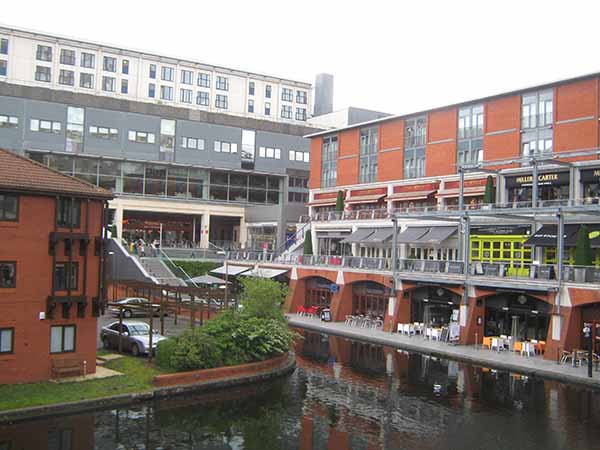 Birmingham has more miles of canals than Venice, which is a fact the city is understandably rather fond of mentioning. Don't expect gondolas and romantic Italian sunsets, though. These are former industrial waterways, originally built to transport coal and goods, and their history is very much part of their appeal.
The canal network around the city centre has been transformed into one of Birmingham's best assets. Walk away from the hustle and bustle of the main shopping streets and suddenly you are beside water, old warehouses, converted industrial buildings, restaurants and bars. Some stretches are genuinely attractive and make you wonder why Birmingham spent so many decades hiding its canals behind industrial grime.
One of the best areas is around Brindleyplace and Gas Street Basin. What was once an industrial landscape is now a lively part of the city with plenty of places to eat and drink. The contrast between the historic waterways and the modern buildings is actually rather effective.
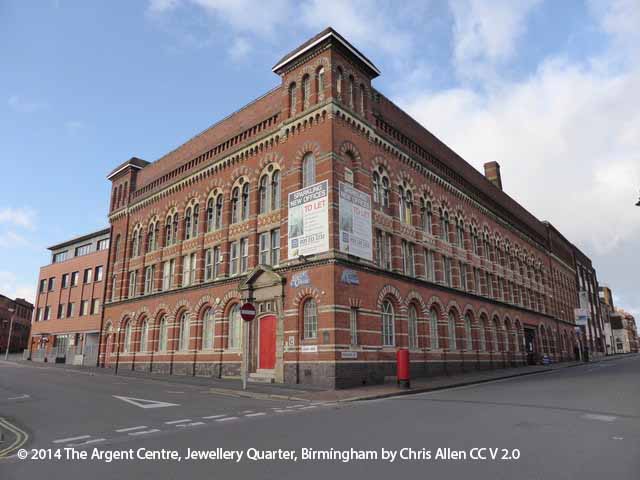 Then there is the Jewellery Quarter, which is probably one of the parts of Birmingham I like most. This is an area with genuine character rather than something manufactured by a developer last Tuesday. Jewellery has been made here for centuries and the streets still contain workshops, historic buildings, independent businesses, pubs and some fascinating little corners.
It is worth wandering around without a particular destination. Birmingham is at its best when you get away from the obvious shopping areas and discover the bits that aren't necessarily featured on every tourist leaflet.
The city centre itself has undergone a considerable transformation. The Bullring is now one of Britain's major shopping destinations, dominated by the rather strange but instantly recognisable Selfridges building. Whether you consider it a work of architectural genius or a gigantic collection of silver blobs is entirely a matter of personal taste, but it certainly isn't boring.
Next door is Birmingham's famous Bull Ring markets, where the city has been trading for centuries. The modern markets are a reminder that Birmingham isn't just shopping centres and office blocks; it remains a working city with a strong commercial tradition.
The city also has an impressive cultural side.
The Birmingham Museum & Art Gallery has long been one of the city's major attractions, with collections covering art, archaeology, local history and much more. The city also has the Birmingham Museum at Aston Hall, while the Ikon Gallery provides contemporary art for those who like that sort of thing — and if you don't, there are plenty of canals to look at instead.
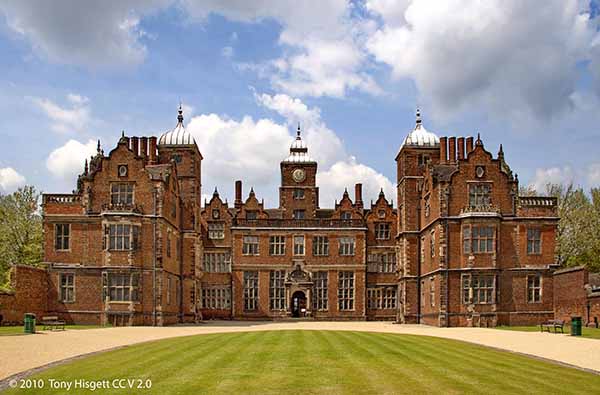 For me, one of Birmingham's real treasures is Aston Hall. This magnificent Jacobean mansion sits in its own park and provides a fascinating reminder that Birmingham existed long before it became the industrial powerhouse of the nineteenth century.
And talking of history, you cannot really understand Birmingham without acknowledging its industrial past.
The city was at the heart of the Industrial Revolution and became famous for manufacturing almost everything imaginable. Its workshops and factories produced buttons, jewellery, weapons, engines, machinery and countless other products. Birmingham's reputation as the "City of a Thousand Trades" wasn't just a marketing slogan — it reflected the extraordinary variety of industries operating here.
The Birmingham Back to Backs are another excellent reminder of what life was like for ordinary working people. These tiny houses, built back-to-back around courtyards, survived the wholesale redevelopment that destroyed so much of the city's historic housing. They provide a fascinating glimpse into the cramped conditions in which generations of Birmingham's workers lived.
If you have any interest in the Industrial Revolution, Birmingham is therefore much more rewarding than its modern appearance initially suggests.
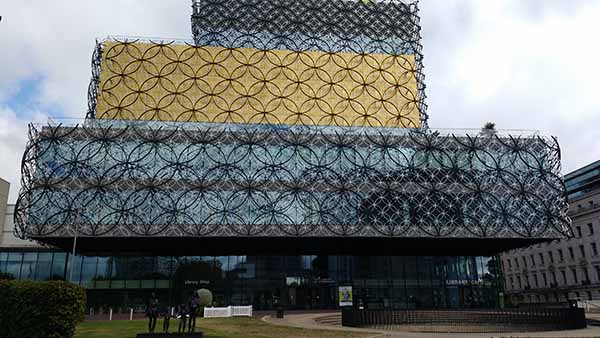 The city also has a rather impressive musical heritage. The Symphony Hall is regarded as one of the finest concert halls in the country, while the Birmingham Hippodrome is a major theatre. And then there is the city's association with heavy metal, thanks largely to Black Sabbath. Quite how a city that produced Ozzy Osbourne and the Black Country's industrial landscape managed to produce anything else is perhaps the bigger mystery.
Food is another Birmingham strength, particularly if you like Indian cuisine. The Balti Triangle in the south of the city became famous for the Birmingham-style balti, and there are countless Asian restaurants throughout the city. Birmingham's multicultural population has given it a food scene that is far more interesting than the traditional British city-centre fare.
The problem, as with almost every large British city, is that Birmingham can still be hard work.
Traffic can be dreadful, the road system is not exactly designed to encourage a relaxed exploration of the city, and some of the architecture remains spectacularly ugly. For every attractive restored building there seems to be another slab of concrete that makes you wonder what the architect had against windows.
And the city is enormous. Don't make the mistake of thinking you can see Birmingham properly by wandering around the Bullring for an afternoon. There is far too much spread across the wider city.
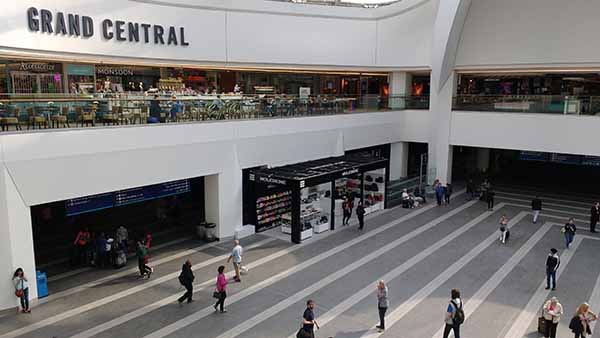 Fortunately, Birmingham has an excellent public transport network, including trams, trains and buses, making it much easier to explore without having to take your life in your hands on the inner-city roads.
For a green escape, Cannon Hill Park is one of the city's best-known parks, while Sutton Park, on the northern edge of the city, is enormous. Sutton Park is particularly impressive, with woodland, heathland, lakes and open countryside covering more than 2,000 acres. It is astonishing to think that such a large rural landscape exists within a major city.
And that, really, is the Birmingham story.
It isn't a conventionally beautiful city. Anyone who tells you otherwise is probably trying to sell you a hotel room. Birmingham has some superb buildings, attractive districts and fascinating historic areas, but it also has its fair share of architectural disasters.
What it does have is character.
Scratch beneath the concrete, glass and traffic and you find an extraordinary industrial heritage, a remarkable canal network, excellent museums and galleries, superb music and theatre, fantastic food and a population that has transformed the city into one of Britain's most culturally diverse places.
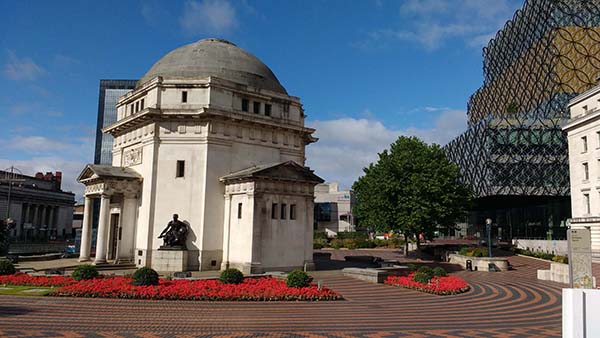 Birmingham is also a city that has had to reinvent itself several times. The industrial powerhouse declined, the old factories disappeared, the city centre was remodelled, and then much of that redevelopment itself began to look tired. Now another generation of regeneration is underway.
Whether it gets everything right is another matter.
But perhaps Birmingham no longer needs to apologise for what it is. It isn't London, Manchester, Liverpool or Edinburgh, and trying to pretend that it is will always miss the point.
It is Birmingham — an enormous, energetic, sometimes frustrating, occasionally ugly, frequently fascinating city that has played a huge part in creating modern Britain.
Old Moaner's verdict: Birmingham is worth visiting, particularly if you get beyond the shopping centre and explore its canals, Jewellery Quarter, industrial heritage, museums and parks. It may never win a beauty contest, but beauty isn't everything. There is plenty here to discover, and considerably more to like than the old Birmingham deservedly notorious for its concrete jungle reputation.
Just don't ask me to drive through the centre at rush hour.
Return to West Midlands home page