
Capri
Capri is one of those places that has been photographed, painted and written about so often that you might wonder whether it could possibly live up to the publicity. Fortunately, it can.
The island sits in the Bay of Naples, just off the Sorrento Peninsula, and has been attracting visitors since Roman emperors discovered that it was a rather nice place to escape to. Today it attracts rather more visitors than it did in Roman times, but the beauty is still there.
The first thing you notice is the setting. Capri rises dramatically from the Mediterranean, with steep cliffs, rocky coves and brilliantly blue water. It is a small island, but the landscape makes it feel much larger.
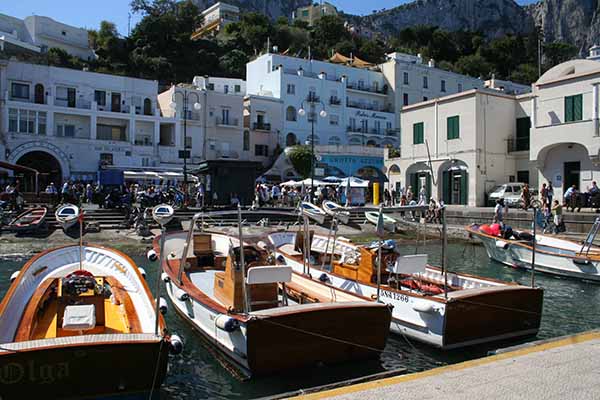 Most visitors arrive at Marina Grande, the main port, which can look slightly overwhelming when the ferries disgorge their passengers. From here you can take the funicular railway up to Capri town, avoiding a fairly serious uphill walk.
And this is where Capri starts looking like the Capri of the postcards.
The town of Capri is centred around the Piazza Umberto I, usually known simply as the Piazzetta. It is surrounded by cafés and restaurants and is very much the place to sit, have a drink and watch the world go by.
You will also discover that Capri is not cheap.
In fact, Capri makes some of the other expensive parts of Italy look positively reasonable. The island has long been a playground for the wealthy, and the shops, restaurants and hotels are aimed accordingly. You can visit without spending a fortune, but you need to be selective.
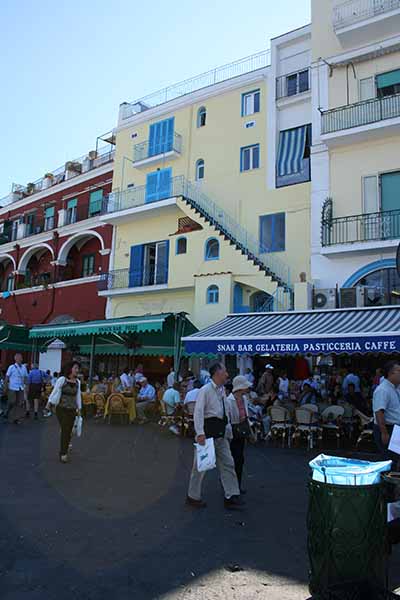 The main shopping streets are lined with designer boutiques and expensive shops, although there are also plenty of smaller stores selling the traditional Capri sandals, ceramics, limoncello and other souvenirs.
Away from the Piazzetta, things become considerably more interesting.
One of the best walks takes you towards the Gardens of Augustus, where you get magnificent views over the Faraglioni rocks and the coastline. The famous Via Krupp, a spectacular zigzagging pathway cut into the cliffside, was designed to connect the gardens with Marina Piccola. Unfortunately, it is periodically closed because of rockfalls, so don't be disappointed if you find it shut.
The Faraglioni are perhaps Capri's most recognisable natural feature. These three enormous rocks rising dramatically from the sea have become the symbol of the island. Seeing them from the shore is impressive enough, but the best way to appreciate them is from a boat.
And that brings us to one of Capri's great tourist experiences — a boat trip around the island.
It is the best way to see Capri properly. The cliffs, caves, beaches and rock formations look completely different from the water, and you get a much better appreciation of just how dramatic the coastline is.
The most famous attraction is, of course, the Blue Grotto.
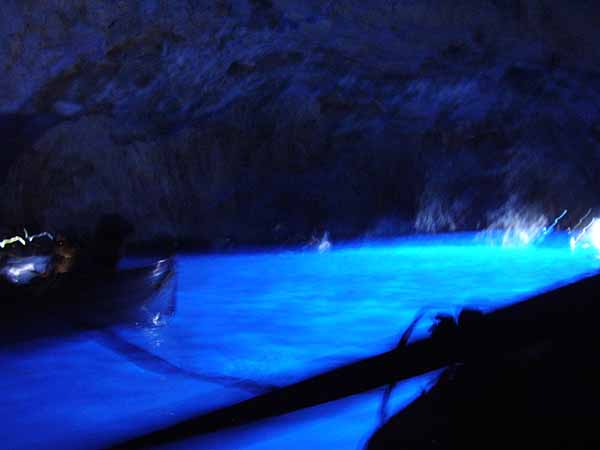 This tiny sea cave is famous for the extraordinary blue light that fills the interior. Boats enter through a very low opening and, when conditions are right, the sunlight filtering through the water produces an almost unnatural blue glow.
It is spectacular.
It is also extremely touristy.
You may have to queue, wait for suitable sea conditions and then pay extra for a few minutes inside the cave. Whether it is worth it is probably a matter of personal opinion, but if you've come all this way you may as well see what the fuss is about.
For me, the coastline itself is every bit as impressive.
The other side of the island is Anacapri, which is considerably quieter than Capri town and, in my opinion, more relaxed. It has its own attractions, including Villa San Michele, built by the Swedish doctor and author Axel Munthe, and the chairlift to Monte Solaro.
The chairlift is well worth doing. It takes you to the highest point on Capri and the views from the summit are superb, stretching across the island, the Bay of Naples and the surrounding Mediterranean.
Anacapri also gives you a chance to escape some of the designer shops and celebrity atmosphere of Capri itself.
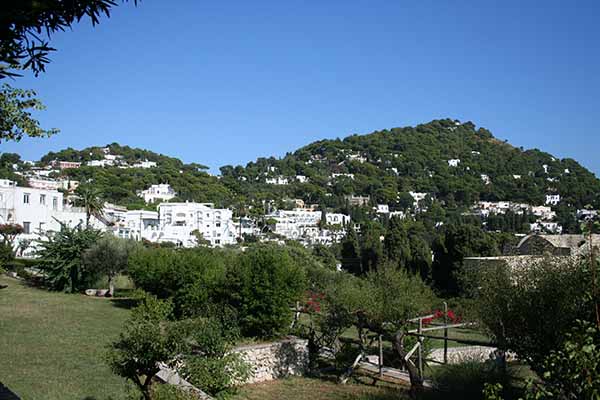 And then there are the villas.
Capri has attracted emperors, artists, writers, actors and assorted wealthy people for centuries. The Roman Emperor Tiberius famously spent his later years on the island, and the remains of his enormous Villa Jovis can still be visited. Perched high above the sea, it is another place where the views are almost as impressive as the history.
The island's great weakness is obvious.
Crowds.
Capri is tiny, and it receives a huge number of visitors. During the summer, Marina Grande, the funicular, the Piazzetta and the main walking routes can become absolutely packed. Day-trippers arrive in the morning and disappear again later in the afternoon, so there is a very good argument for staying overnight.
Once the day-trippers have gone, Capri becomes a completely different place.
The streets quieten down, restaurants become more relaxed and you can wander around without constantly having to dodge another tour group. If your budget allows it, staying overnight is definitely the better way to experience the island.
There is also the question of whether Capri is overrated.
I would say no — but it is certainly overcrowded.
There is a difference.
The island really is beautiful. The cliffs, sea, Faraglioni, gardens and views are genuinely spectacular. What can spoil the experience is having thousands of other people trying to enjoy exactly the same thing at exactly the same time.
So, if you're visiting Capri, go early, explore beyond the obvious attractions, consider taking a boat around the island and, if possible, stay overnight.
Capri is expensive, crowded and undeniably touristy.
But when you are standing above the Mediterranean, looking across those impossibly blue waters towards the Faraglioni, it is very difficult to complain.
Capri really is as beautiful as everyone says it is. It just wishes everyone would stop turning up at the same time.
Return to Italy Home Page