
Cardiff (Caerdydd)
Cardiff is one of those cities that has undergone a remarkable transformation during the last few decades. Once largely regarded as a rather grim industrial port with a rugby stadium in the middle of it, the Welsh capital has reinvented itself as a lively, attractive and surprisingly varied city. I say surprisingly because Cardiff is still small enough to explore on foot, yet has more than enough attractions to keep visitors occupied for several days.
And I confess to a certain bias here, because I lived in Cardiff for several years. That inevitably colours my view, although having spent enough time there to discover both its virtues and its irritations, I think I can still be reasonably objective. Well, reasonably!
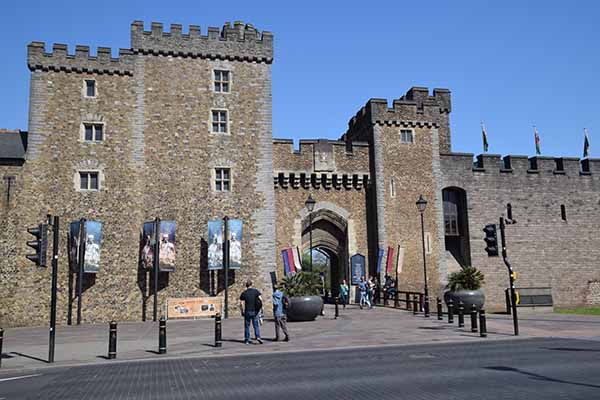 The obvious place to start is Cardiff Castle, right in the heart of the city. It is an extraordinary mixture of history, architecture and Victorian eccentricity. The castle's origins go back to Roman times, while the medieval keep and later additions tell the story of Cardiff's development. But it is the work of the Bute family and architect William Burges in the nineteenth century that really makes the place special. The interiors are spectacular, lavish and completely over the top — precisely the sort of thing that makes you wonder what people were smoking when they designed them. The Clock Tower and surrounding Animal Wall are also Cardiff landmarks.
Opening Times (March – October) Monday – Friday: Open 10:00 last entry 17:00 closes 18:00. Saturday – Sunday: Open 09:00 AM, last entry 17:00, closes 18:00
Opening Times (November – February) Monday – Friday: Open 10:00 last entry 16:00, closes 17:00. Saturday – Sunday: Open 09:00 last entry 16:00 closes 17:00 Note: Closed on Christmas Day, Boxing Day, and New Year's Day.
Admission Costs: - Adults (Standard Ticket): £16.50 Children: £11.00
Walk south from the castle and you reach the Principality Stadium, formerly and still commonly known as the Millennium Stadium. It dominates the city centre and, when a major rugby match is taking place, dominates absolutely everything else as well. Cardiff on match day is an experience in itself, with tens of thousands of supporters filling the streets. Even if you have absolutely no interest in rugby — and I appreciate that some people don't — the stadium is an impressive piece of engineering.
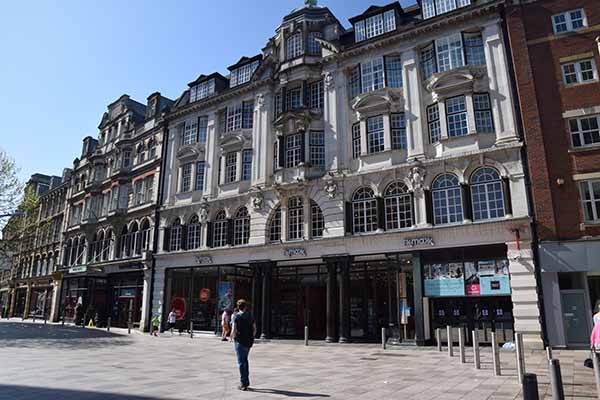 Cardiff's city centre is compact and generally easy to explore. Queen Street provides much of the mainstream shopping, while St Mary Street and the surrounding streets offer restaurants, pubs and nightlife. Then there is The Hayes, which has developed into one of the city's more attractive pedestrianised areas. The striking modern Central Library sits here, alongside shops and cafés.
For a slightly more traditional experience, head for Cardiff Market, a Victorian covered market that has been serving the city for generations. It is the sort of place where you can still find independent traders alongside food stalls and the inevitable modern additions. It provides a welcome contrast to the standard chain-store shopping experience.
Just north of the city centre lies Bute Park, and this is one of Cardiff's greatest assets. Stretching along the River Taff beside the castle, it provides an enormous expanse of greenery remarkably close to the centre. Walk, cycle, sit beside the river or simply escape the city for an hour. The park is particularly good when the weather behaves itself — something in Wales that should never be taken for granted.
A little further north is National Museum Cardiff, home to an impressive collection covering art, natural history and Welsh history. The art galleries contain works by some major European artists, while the natural-history displays provide an excellent introduction to the wildlife and geology of Wales. Best of all, general admission is free, which is always a word that gets my attention.
Opening Times:- Monday: Closed, Tuesday to Sunday: 10:00 – 17:00 PM (Galleries close at 16:45). Admission is free
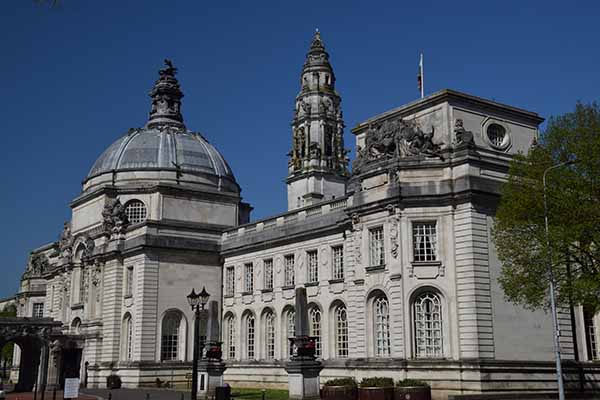 The surrounding Civic Centre is worth exploring in its own right. The magnificent City Hall, Law Courts, National Museum and other grand buildings create one of the finest civic ensembles in Britain. It is rather more elegant than you might expect from a city that grew primarily from coal and industry.
But Cardiff's history is inseparable from the docks, and for that you need to head south to Cardiff Bay. This area has changed almost beyond recognition. Once one of the world's busiest coal-exporting ports, the old docks declined dramatically as the coal trade disappeared. Today, the waterfront has been transformed into a major leisure and cultural district.
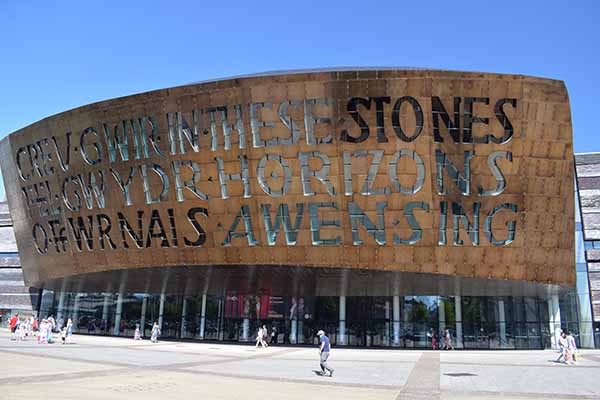
The centrepiece is the Wales Millennium Centre, an impressive building with its famous Welsh inscription across the façade. It hosts theatre, opera, dance and concerts and has become one of the defining landmarks of modern Cardiff.
 Nearby is the Senedd, the home of the Welsh Parliament. Its striking modern architecture makes it an interesting contrast with the Victorian and industrial buildings elsewhere in the city. Cardiff Bay is also home to the Norwegian Church, a reminder of the area's international maritime connections. Roald Dahl was baptised here, and the famous author was born in Cardiff to Norwegian parents.
The Bay is particularly pleasant around the waterfront, although it can sometimes feel rather too polished and regenerated compared with the gritty industrial landscape that preceded it. Nevertheless, the transformation is remarkable and has given Cardiff a completely new face.
One attraction that shouldn't be missed is Techniquest, particularly if you're travelling with children. It is an interactive science centre where you're encouraged to press things, pull things, push things and generally behave like a child regardless of your actual age.
Opening Times: - variable check their website
Admission Costs :- Adult (Age 16+): £17.00 (with donation) / £15.45 (standard) , Child (Age 3–15): £15.00 (with donation) / £13.63 (standard), Under 3s (Age 0–2): Free, Concession: £15.00 (with donation) / £13.63 (standard)
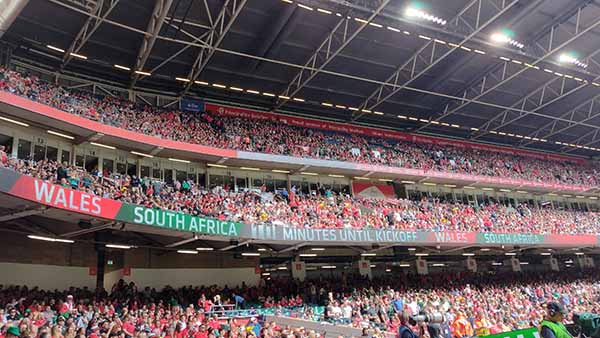 And then there is the Welsh national institution of rugby. Even if you don't understand the rules, you cannot spend much time in Cardiff without becoming aware that rugby is rather important here. On international match days the whole city changes character. Pubs fill, flags appear, singing starts and the atmosphere can be extraordinary. Cardiff manages to combine the friendliness of a relatively small city with the excitement of a major sporting occasion.
What I particularly like about Cardiff is that it doesn't try too hard to be something it isn't. It is not London, Birmingham or Manchester, and nor should it attempt to be. Cardiff has its own personality, shaped by Wales, the docks, the valleys, rugby, the university and its role as the national capital.
It also has its rougher edges. Some parts of the city centre can feel tired, the traffic can be distinctly Welsh in its ability to appear from nowhere, and the inevitable modern redevelopment has occasionally produced architecture that will probably look better in another thirty years. But these are minor complaints.
For me, Cardiff remains a city with character. It has history without being overwhelmed by it, modern attractions without becoming soulless, and enough green space to prevent you feeling trapped in an urban jungle. Add the Bay, the castle, the museums, the parks, the shopping and — whether you like it or not — the rugby, and there is plenty to see.
And perhaps my biggest recommendation is this: don't just visit Cardiff as a gateway to Wales. Give it some time. Walk around the centre, explore the castle, wander through Bute Park, head down to the Bay and soak up the atmosphere.
I may be biased, having lived there, but I think Cardiff deserves rather more credit than it sometimes receives. It is a capital city that remains remarkably approachable — and, importantly, still feels like a Welsh city rather than merely a capital that happens to be in Wales.
(prices quoted correct as at September 2026)
Return to Coast Flint to Chepstow
Return to Wales Home page