
Chatsworth House
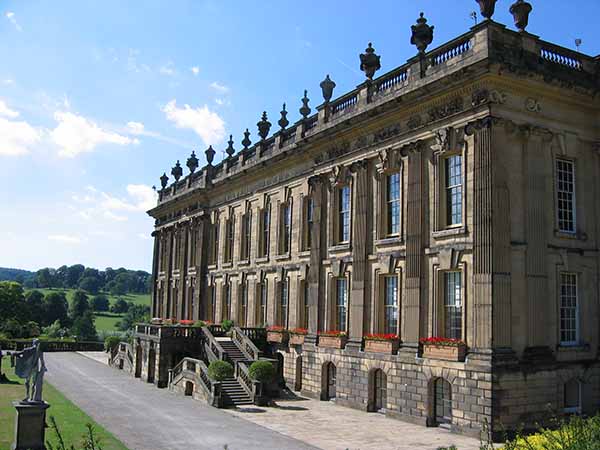 Chatsworth is quite simply one of England's great country houses. Sitting in the beautiful Derbyshire countryside beside the River Derwent, with the dramatic hills of the Peak District rising behind it, this enormous estate has everything you could reasonably want from a stately home — magnificent architecture, superb interiors, extraordinary gardens, extensive parkland and more history than you can shake a stick at.
It has been the home of the Cavendish family, the Dukes of Devonshire, since the 16th century, and generation after generation has altered, extended and improved the estate. The result is not a house frozen in one particular period but an extraordinary mixture of architectural styles, with each generation seemingly determined to leave its mark.
The story really begins in the 1550s when Bess of Hardwick, one of the most remarkable women of Elizabethan England, began transforming the original house. Her second marriage was to Sir William Cavendish, and their descendants eventually became the Dukes of Devonshire. Bess was a formidable character and something of a property tycoon in Tudor England, and her influence can still be felt throughout the estate.
The present house is largely the work of later generations, particularly the 1st, 2nd and 4th Dukes of Devonshire, who turned Chatsworth into the magnificent Baroque and later classical palace we see today. The exterior is impressive enough, but walking inside is where Chatsworth really comes into its own.
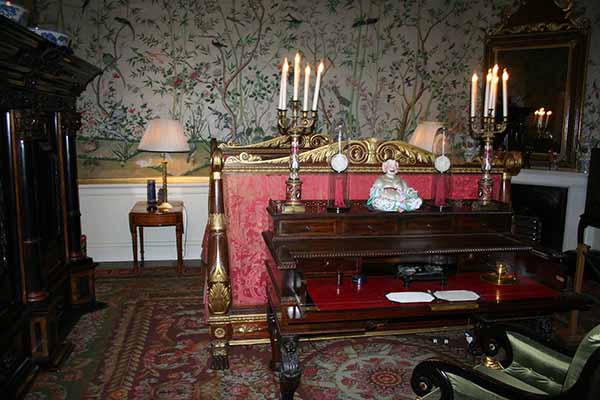 The interiors contain an extraordinary collection of paintings, sculpture, furniture, tapestries and other treasures. There are grand state rooms designed to impress visiting royalty and important guests, but there are also more intimate rooms that reveal something of everyday aristocratic life. The collection includes works by some of Europe's greatest artists, making Chatsworth as much an art gallery as a country house.
The Painted Hall is one of the most spectacular rooms, with enormous painted scenes covering the walls and ceiling. It was designed to make an impression, and it certainly succeeds. You can imagine a 17th-century visitor walking into it and thinking that the Cavendishes were clearly not short of money.
The Great Dining Room is another magnificent space, while the State Rooms contain an extraordinary mixture of paintings, furniture and decorative arts. One of the pleasures of Chatsworth is that there is so much to look at that a single visit can barely do it justice.
Then there are the gardens — and they are arguably just as impressive as the house.
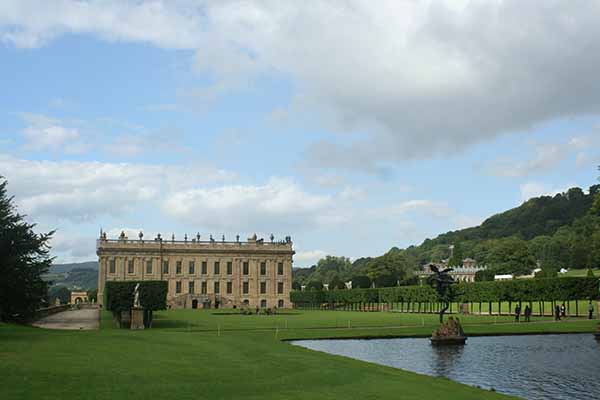 The 105-acre garden has evolved over centuries and contains an extraordinary variety of landscapes. There are formal gardens, lawns, woodland, sculptures, fountains, ponds, cascades and some rather ingenious water features. The gardens manage to combine the formal grandeur expected of a great aristocratic estate with areas that feel surprisingly natural.
The Cascade is probably the most famous feature. Built in the 17th century and subsequently modified, it consists of a series of stone steps down which water tumbles through the garden. It is particularly impressive when viewed from below, and it remains one of Chatsworth's defining sights.
Then there is the Emperor Fountain, an enormous jet of water which can reach a considerable height. It was originally constructed in the 19th century to commemorate a visit by the future Tsar Nicholas I of Russia. It is exactly the sort of feature you would expect from Chatsworth — if you're going to have a fountain, why have a modest one?
The gardens also contain a maze, kitchen gardens, conservatory and a fascinating collection of sculptures. The Sculpture Gallery and outdoor works demonstrate that Chatsworth isn't simply interested in preserving the past; contemporary art has also become an important part of the estate.
For children — and adults who are still children at heart — the Adventure Playground provides something rather less refined than wandering around the State Rooms. It is enormous and makes Chatsworth much more of a family destination than many stately homes.
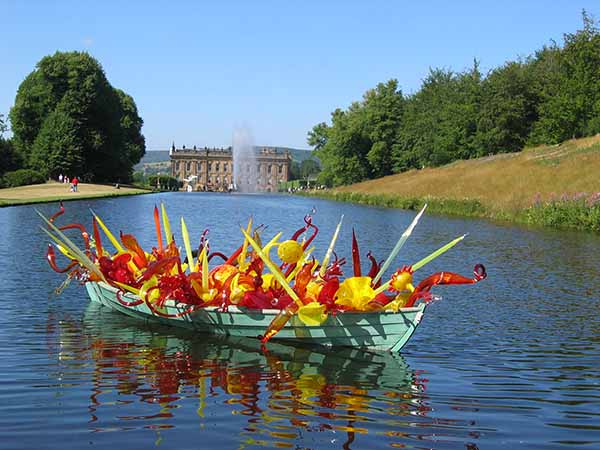 Beyond the formal gardens lies the vast Chatsworth Park, stretching across thousands of acres of beautiful Derbyshire countryside. The landscape was largely shaped by the famous landscape designer Lancelot 'Capability' Brown, who transformed the park in the 18th century. His trademark approach of sweeping lawns, carefully positioned trees and natural-looking lakes works particularly well here because of the spectacular natural setting.
The park is home to herds of red and fallow deer, which can often be seen grazing across the landscape. There are numerous walking routes, and simply looking back at Chatsworth from the surrounding park gives you some wonderful views of the house against the hills.
The wider estate extends far beyond the immediate park, covering a huge area of the Peak District. This makes Chatsworth an excellent destination for those who don't want their visit to consist solely of looking at grand rooms. You can combine the house and gardens with a proper countryside walk and experience the landscape that has helped make the estate so famous.
Chatsworth has also had its moments in popular culture. The house has appeared in numerous films and television productions, most famously perhaps as Pemberley in the 2005 film adaptation of Pride and Prejudice. The connection with Jane Austen's fictional Mr Darcy has undoubtedly added another layer of fame, although the house was already one of Britain's most celebrated stately homes long before Hollywood came calling.
The estate has also played host to royalty and some extremely distinguished visitors over the centuries. Maintaining somewhere on this scale is an enormous undertaking, and the Cavendish family has had to adapt the estate repeatedly to changing times. Unlike some historic houses, Chatsworth remains a family home, while also operating as a major visitor attraction.
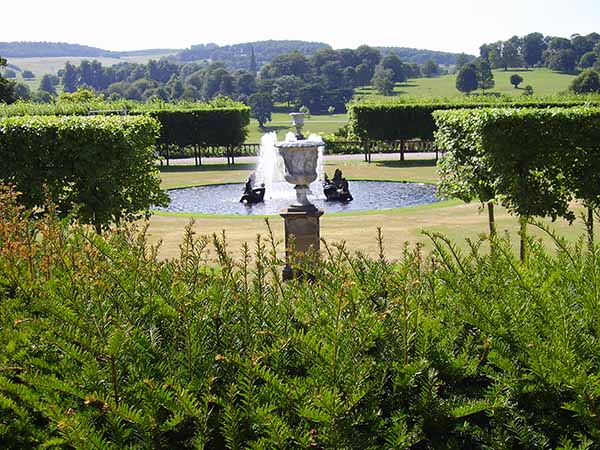 And that is perhaps what makes Chatsworth so successful. It manages to be grand without becoming completely sterile. You can admire the magnificent rooms, wander through the gardens, watch the deer in the park and then find yourself confronted by something wonderfully eccentric, whether it's an elaborate piece of sculpture or an outrageously ambitious water feature.
There is, inevitably, a downside. Chatsworth isn't exactly a secret. It can get extremely busy, particularly during weekends, holidays and major events, and you need plenty of time to do the place justice. Trying to squeeze the house, gardens and park into a couple of hours is rather like visiting the Louvre and allowing yourself fifteen minutes.
But if you choose your time carefully and give yourself most of a day, Chatsworth is difficult to beat.
The combination of one of Britain's finest stately homes, world-class art, magnificent gardens, spectacular water features, deer-filled parkland and the Peak District landscape makes Chatsworth a genuinely outstanding destination.
It may be grand, expensive and undeniably popular, but unlike some famous attractions that have become victims of their own reputation, Chatsworth really does deserve the fuss. There is an enormous amount to see, and even after several visits you are likely to discover something you missed the previous time.
In short, if you are touring the East Midlands and only have time for one grand country house, make it Chatsworth. Just allow yourself plenty of time — and preferably wear sensible shoes. There is a lot of Derbyshire to walk around.
Opening TimesHouse: 10:00 – 16:30 (Last entry at 15:30) Garden & Farmyard: 10:00 – 17:30 (Last entry at 16:30) Car Park: 09:00 – 18:00
Admission: House and Garden Adult £35.00 Child £12.00, Gardens only Adult £20.00 Child £12.00. Car parking £10.00, free if booked in advance
Prices correct as at September 2026
Return to East Midlands home page