
Chester
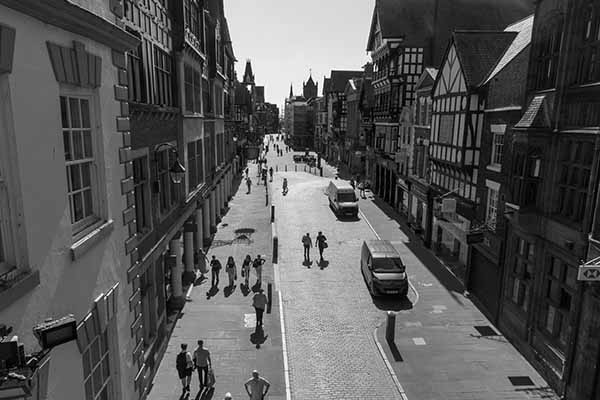 Chester is one of those cities that seems almost too neat to be real. Walk through its centre and you encounter Roman remains, medieval streets, black-and-white timbered buildings, an impressive cathedral, ancient city walls and the famous Chester Rows, all within a remarkably compact area. It is historic, attractive and very easy to explore on foot. In fact, Chester is probably one of the few British cities where getting lost is actually rather enjoyable.
The city's origins go right back to Roman times, when Deva Victrix was established as a major fortress. Its position on the River Dee made it strategically important, and the Romans clearly regarded Chester as somewhere worth defending. Much of the modern city still follows the Roman street plan, while remains of the fortress can be found scattered around the centre. The Roman Amphitheatre is particularly impressive, although only part of the original structure survives. It was once the largest known Roman amphitheatre in Britain and would have provided entertainment of a considerably more brutal variety than today's theatre.
For a better understanding of Roman Chester, the Grosvenor Museum is well worth visiting. It contains an excellent collection of Roman artefacts, together with displays covering the city's later history. It is exactly the sort of museum that helps bring the stones you see around the city to life.
But Roman Chester is only the beginning. The medieval city is what gives Chester much of its character, and the best way to appreciate it is to walk the city walls. The circuit is about two miles and provides constantly changing views over the city. You pass ancient gateways, towers and sections of wall while looking down into streets that have developed over many centuries.
The walls also provide a particularly good perspective on Chester Cathedral. Originally a Benedictine abbey, it has been transformed and rebuilt over the centuries, producing a mixture of architectural styles. The red sandstone exterior is impressive, but the interior is perhaps even better, with beautiful medieval woodwork, stained glass and a remarkably peaceful atmosphere despite its position in the heart of the city.
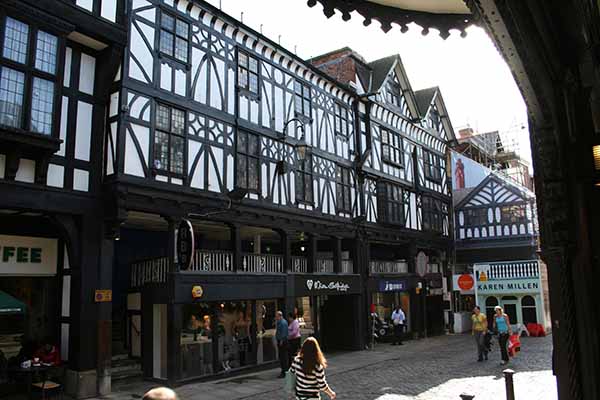 Then there are the Rows, probably Chester's most famous feature. These unusual two-level galleries run along several of the principal shopping streets, with shops and businesses occupying both levels. Their origins are medieval, although the buildings have been altered repeatedly over the centuries. Walking along the upper level while shoppers and traffic pass below is one of those wonderfully peculiar experiences that Chester has made entirely normal.
The Rows also make Chester an excellent place for a bit of retail therapy. There are plenty of familiar names, but the independent shops and small businesses are what make wandering around the centre worthwhile. And because so much of the shopping area is contained within historic buildings, even the otherwise mundane activity of buying something you probably don't need can become rather picturesque.
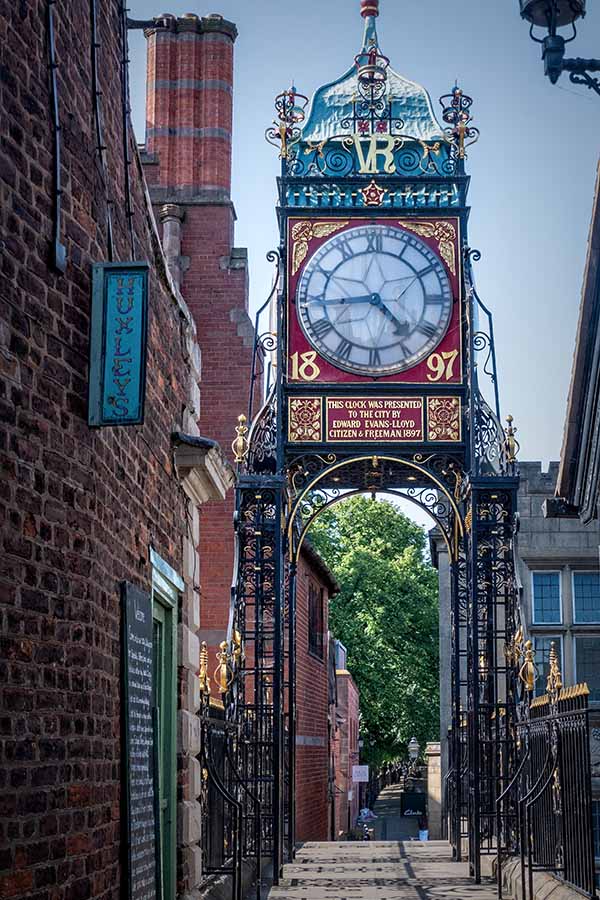 At the centre of the city stands Eastgate, topped by the Eastgate Clock. The clock is one of Chester's most recognisable landmarks and was erected in 1897 to commemorate Queen Victoria's Diamond Jubilee. It sits above the medieval gateway in a rather improbable combination of ancient fortress and Victorian civic pride.
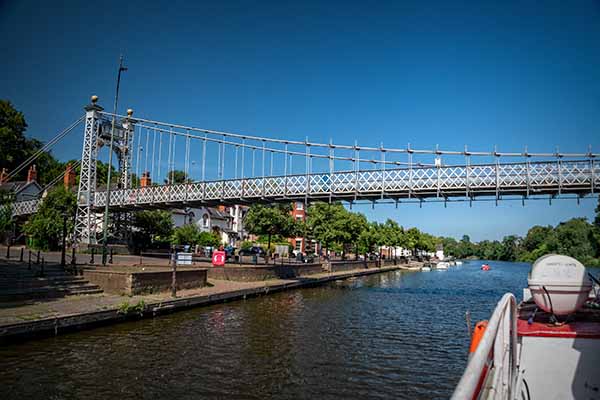
The River Dee provides another reason to slow down. The riverside is a pleasant place for a walk, with opportunities for boat trips and plenty of green space. The Grosvenor Park is nearby and is one of the finest examples of a Victorian public park. It is particularly attractive in summer, with landscaped gardens, mature trees and views towards the river.
One of Chester's more unusual attractions is the Chester Roman Gardens, where reconstructed Roman columns and architectural fragments give an impression of the city's Roman past. It is also a pleasant little green space close to the river and the amphitheatre.
Chester has its fair share of historic pubs too, and after walking the walls and exploring the Rows, finding one is hardly difficult. Some have been serving customers for centuries, although whether the beer is any better because the building is old is, as always, a matter for personal judgement.
The city also makes an excellent base for exploring the surrounding area. Chester Zoo is only a short distance away and is one of Britain's major zoos, while the Cheshire countryside is on the doorstep. But there is enough within Chester itself to occupy a full day without needing to escape to the surrounding countryside.
 Perhaps Chester's greatest strength is its sheer walkability. You don't need a complicated itinerary or a car park map worthy of a military operation. Park up, start walking and the city unfolds naturally around you. Roman remains lead to medieval streets, medieval streets lead to the cathedral, the cathedral leads to the walls and the walls eventually bring you back to somewhere that looks interesting enough to investigate.
Old Moaner's verdict: Chester is a gem. It isn't enormous and it doesn't pretend to be, but what it does have is an extraordinary concentration of history and character. The Romans provided the foundations, the medieval period supplied the Rows and walls, the Victorians added their grand civic buildings and gardens, and modern Chester has sensibly kept most of it intact.
It can get busy, particularly at weekends and during the summer, and some of the central streets can feel rather dominated by shopping and tourists. But find a quieter corner, walk part of the walls or sit beside the Dee and the crowds seem a long way away.
For a city break where you can leave the car behind and spend the day wandering through nearly two thousand years of history, Chester is hard to beat.
(prices quoted correct as at August 2026)
Return to North West home page