
Crete
Crete is not really an island in the conventional sense.
It is enormous.
In fact, after spending a few days travelling around Crete, you may begin to wonder whether somebody has made a serious mistake and accidentally attached a large chunk of Greece to the Mediterranean.
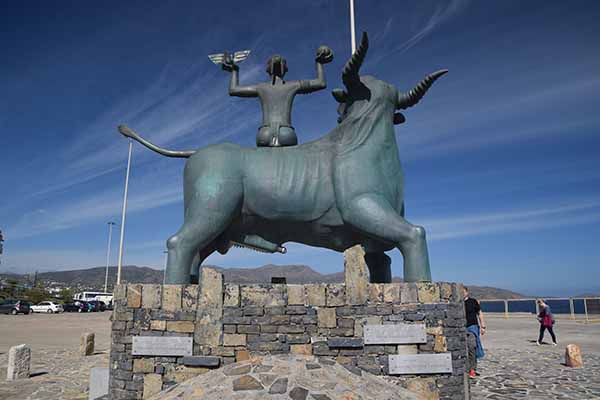 Crete is the largest of the Greek islands and it is a place of extraordinary variety. There are spectacular beaches, enormous mountains, ancient ruins, historic towns, sleepy villages, busy resorts, deep gorges, olive groves and enough tavernas to ensure that you will never need to eat anything other than Greek food for the duration of your stay.
And unlike Santorini and Mykonos, Crete hasn't completely surrendered itself to mass tourism.
Don't get me wrong — there are plenty of tourist resorts, plenty of hotels and plenty of people wandering around wearing shorts that really shouldn't be worn in public.
But Crete is big enough to absorb them.
That is probably one of its greatest advantages.
You can be sitting in a busy resort one minute and, half an hour later, find yourself driving through mountains where the only people you see are farmers, goats and the occasional elderly Cretan who looks as though he has absolutely no intention of allowing you to overtake him.
Crete is a proper island.
Heraklion
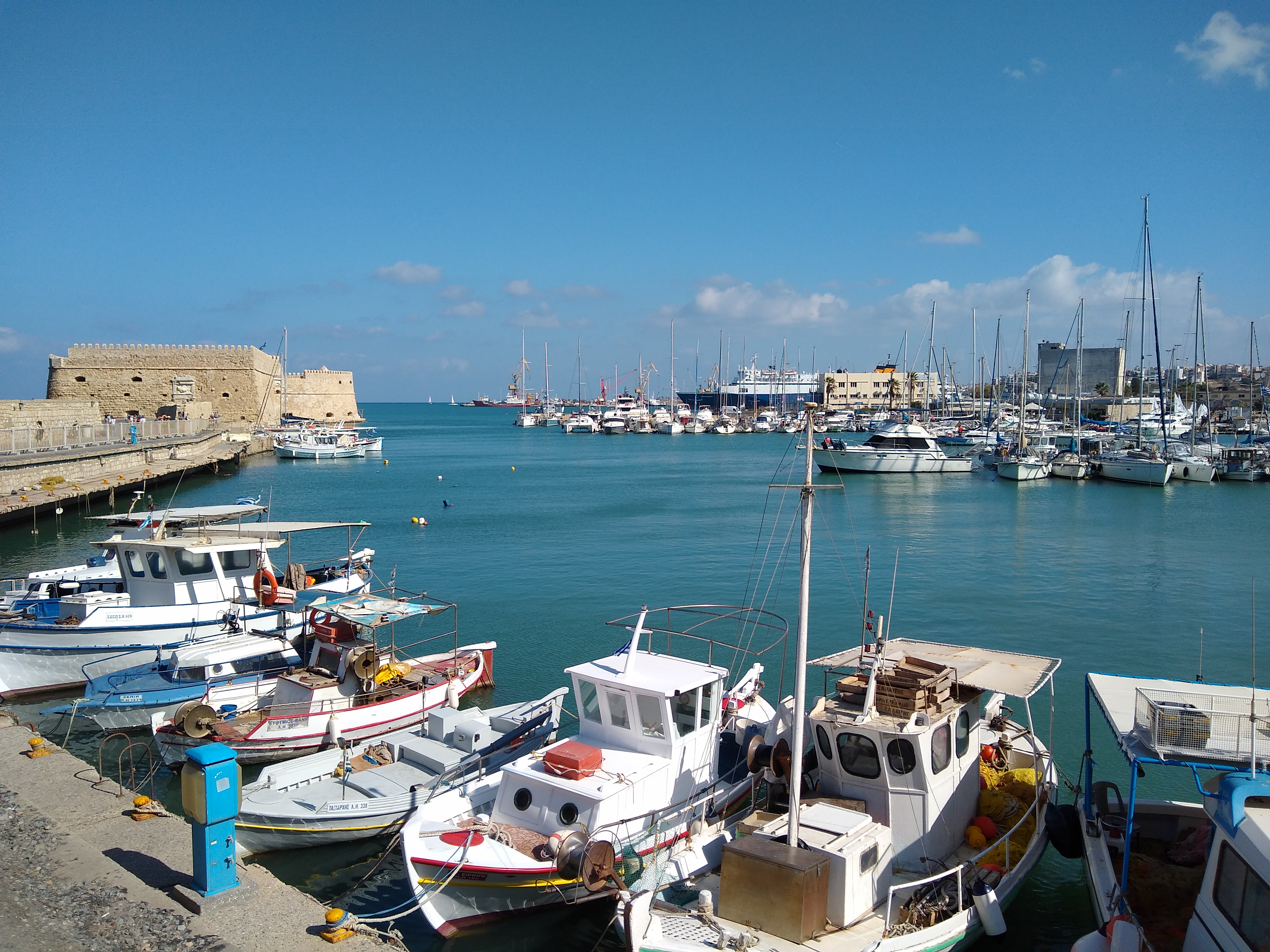 For many visitors, Heraklion is their first experience of Crete.
It isn't necessarily love at first sight.
Heraklion is busy, noisy and decidedly more urban than the picture-postcard Greek island experience many visitors have in mind. Traffic can be chaotic, pavements appear to have been designed as an optional extra and crossing a road can sometimes feel like an Olympic event.
But give it a chance.
The city has a long and fascinating history and there is plenty to see.
The Venetian harbour is one of the most attractive parts, with the old fortress of Koules standing at the entrance. The harbour area is a pleasant place to wander, particularly in the evening when the temperature begins to drop and everybody emerges from their air-conditioned hiding places.
Then there is the Archaeological Museum of Heraklion, which contains an extraordinary collection of Minoan artefacts.
And that brings us to one of Crete's greatest attractions.
Knossos
If there is one historical site you should visit in Crete, Knossos is probably it.
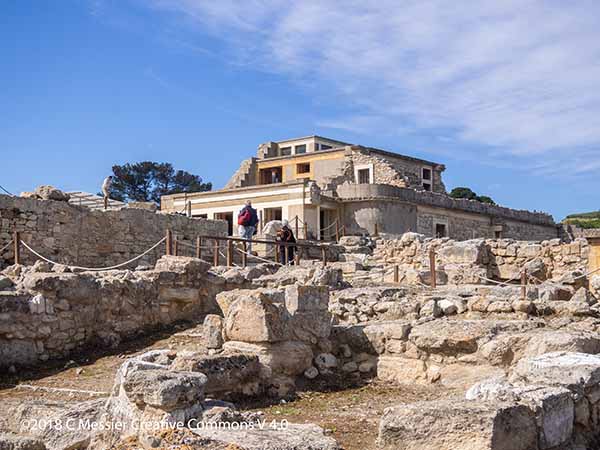 This was the centre of the ancient Minoan civilisation and is closely associated with the legendary story of King Minos, the Minotaur and the labyrinth.
The real history is considerably more complicated than the legend, but it is every bit as fascinating. The site is enormous and gives you an idea of just how sophisticated the Minoan civilisation was thousands of years ago.
There are courtyards, staircases, storage rooms, frescoes and the remains of an enormous palace complex.
It is also one of those places where you really need to use your imagination.
Much of what you see today is reconstructed, and some of the reconstruction has been controversial. Even so, standing among the ruins and thinking about people living here thousands of years ago is an extraordinary experience.
Just remember that Crete gets very hot, there isn't an enormous amount of shade. So wandering around an archaeological site in the middle of a Cretan summer while wearing inappropriate footwear and carrying half a litre of water is an excellent way of discovering the difference between history and heatstroke.
Take water, wear sensible shoes.
The Old Moaner occasionally has to be practical.
Chania
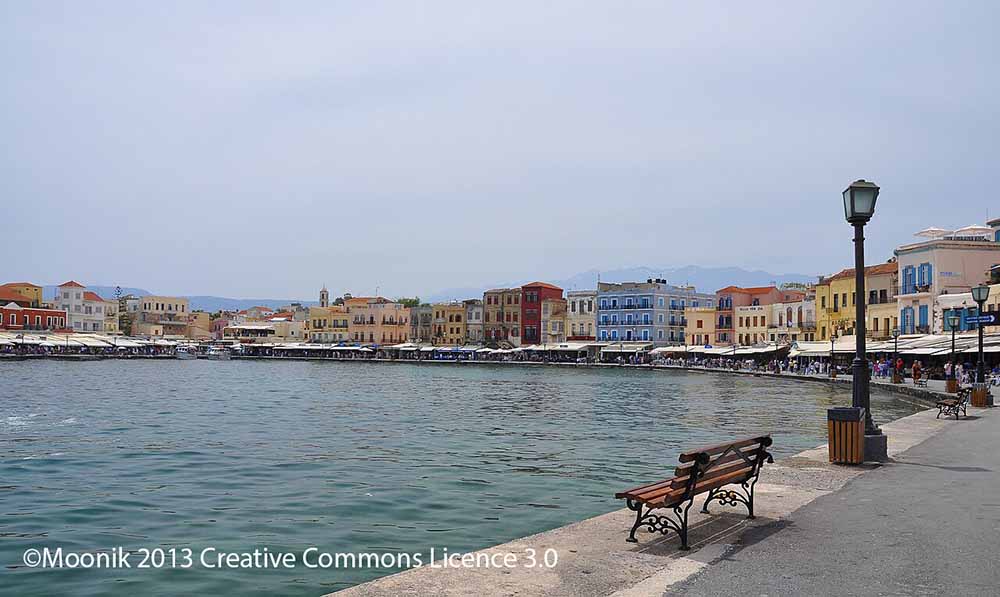 If Heraklion is Crete's busy commercial heart, Chania is the beautiful one.
The old Venetian harbour is magnificent. Colourful buildings line the waterfront, the lighthouse stands at the end of the harbour and the narrow streets behind it are full of shops, cafés, restaurants and little surprises.
Chania is the sort of place where you can happily spend hours simply wandering around.
The architecture reflects the extraordinary history of Crete, with Venetian and Ottoman influences sitting alongside traditional Greek buildings. And this is one of those places where getting lost is actually rather enjoyable.
You will eventually find your way back to the harbour.
Probably.
Chania is also particularly attractive in the evening. The waterfront fills with people, restaurants become busy and the whole place takes on a much more relaxed atmosphere. Of course, the restaurants know that you are enjoying yourself. And they have menus accordingly.
Rethymno
Rethymno sits somewhere between Heraklion and Chania and is another of Crete's real gems. Its old town is full of narrow streets, Venetian buildings, Ottoman-era features and small squares.
The Venetian fortress dominates the city from above and provides excellent views across the surrounding area.
Rethymno has a slightly more relaxed atmosphere than Chania and is a particularly pleasant place to explore on foot.
The Beaches
Now we come to one of Crete's biggest attractions.
The beaches.
There are an extraordinary number of them and because Crete is so large, they come in almost every variety imaginable.
There are long sandy beaches, secluded coves, pebbly beaches and beaches backed by mountains.
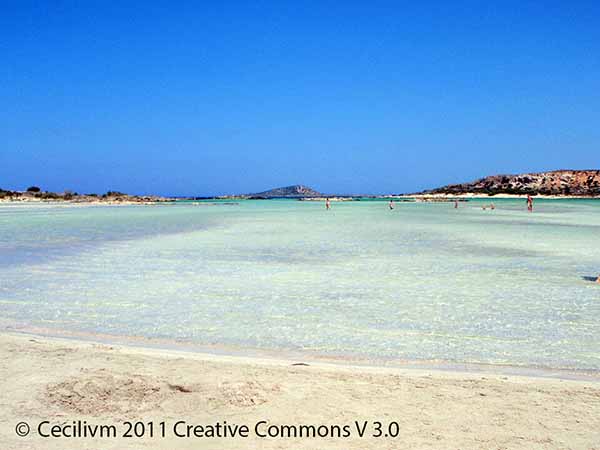 One of the most famous is Elafonissi in the southwest.
The pinkish sand and turquoise water have made it one of the most photographed beaches on the island.
It is beautiful, it is also extremely popular. Which means that the moment somewhere is described as a "hidden paradise", you can be fairly certain that several thousand people have already found it.
Balos Lagoon is another spectacular location - the water is an extraordinary mixture of blues and greens and the scenery is magnificent.
Getting there, however, can involve something of an adventure. The road is rough and the final approach isn't exactly what you'd call a luxury transfer. But the view makes the effort worthwhile.
Then there is Vai, in the east of Crete, famous for its palm forest, a palm forest in Europe sounds rather improbable, but there it is. The beach is attractive, the palms provide shade and the whole place has a slightly exotic appearance.
Crete does this sort of thing rather well.
The South Coast
One of the best things about Crete is that much of the southern coast remains considerably quieter than the northern tourist belt.
Places such as Plakias, Agia Galini and Matala have their own distinctive character and can provide a welcome escape from the larger resorts.
Matala is particularly interesting. It became famous in the 1960s and 1970s when hippies lived in caves overlooking the beach.
Today it is considerably more commercialised, but the caves remain and the village still has a slightly alternative atmosphere. It is also a good place to remind yourself that Greece hasn't always been about package holidays, all-inclusive hotels and people fighting over sun loungers.
The Mountains
This is where Crete really distinguishes itself from many other Greek islands.
Crete is mountainous, very mountainous. The island is dominated by several major mountain ranges, and the landscape changes dramatically as you travel inland. The roads climb into the mountains, villages cling to hillsides and spectacular views open up across the valleys.
Then you encounter a goat, the goat will be standing in the middle of the road, it will have absolutely no intention of moving.
You will wait, the goat will look at you. You will begin to wonder whether the goat actually owns the road. Eventually, it will wander off.
The mountains also contain some remarkable villages where traditional Cretan life remains much more visible than in the coastal resorts.
The Samaria Gorge
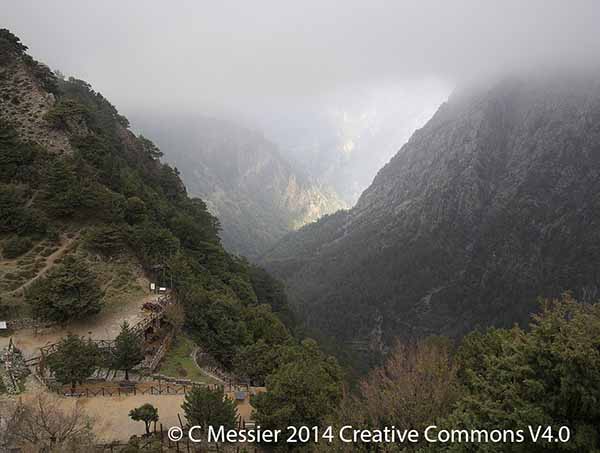 For anyone who enjoys walking, the Samaria Gorge is one of Crete's great experiences.
It is one of Europe's most famous gorges and runs through the spectacular White Mountains.
The walk is long - very long.
And it is largely downhill at the beginning, which sounds wonderful until you realise that downhill eventually has to become something else.
The scenery is spectacular, though, with enormous cliffs rising on either side.
The gorge is also home to the famous Cretan wild goat, the kri-kri.
And if you are lucky enough to see one, it is worth remembering that you are looking at an animal that is considerably better equipped for climbing mountains than you are.
If you're not a keen walker, don't feel guilty about giving the gorge a miss.Crete has plenty of scenery that can be enjoyed without destroying your knees.
Cretan Food
Food is one of the great reasons to visit Crete.
Cretan cuisine is simple, fresh and absolutely delicious.
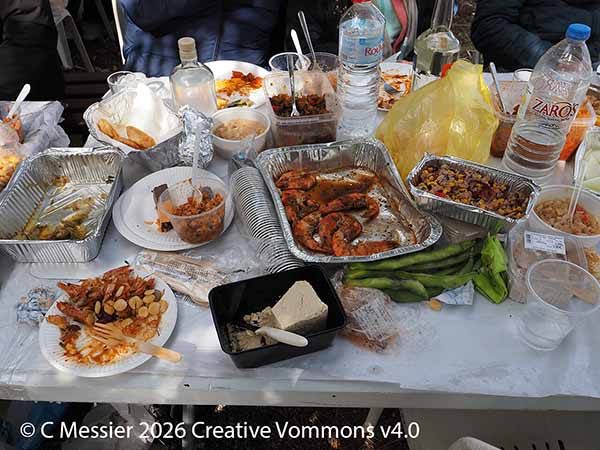 There is plenty of olive oil, a lot of olive oil.
Then there is fresh vegetables, cheese, bread, seafood, lamb, chicken, herbs and an impressive range of dishes that somehow taste considerably better when eaten in a village taverna.
Try dakos, a traditional Cretan dish made with barley rusks, tomato and cheese.
Try kalitsounia, little pastries filled with cheese or other fillings.
Actually, just order whatever the taverna recommends.
Fresh ingredients, good cooking and a bottle of something cold are generally all that's required.
And unlike some of the more fashionable Greek islands, you can still find places where dinner doesn't require a small mortgage.
The Cretan Way of Life
One of the things that makes Crete different is the strength of its local identity.
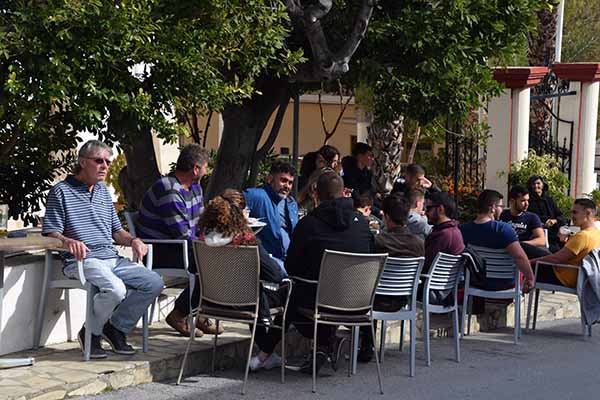 Cretans are fiercely proud of their island. They have their own traditions, music, food and dialect, and a history that includes centuries of occupation and resistance.
The island has been ruled by Romans, Byzantines, Venetians and Ottomans, and endured German occupation during the Second World War.
That history is still visible.
You will find Venetian fortresses, Ottoman buildings, monasteries and war memorials scattered throughout the island.
And then there are the villages.
In some of them, elderly men still sit together in the village square drinking coffee and watching the world go by. You get the distinct impression that they have been doing exactly the same thing for the last fifty years.
And good luck getting them to move.
The Resorts
Of course, Crete has plenty of conventional holiday resorts.
Malia is probably the most notorious.
It has developed a reputation for nightlife and attracts a younger crowd looking for cheap drinks and late nights.
If that sounds like your idea of heaven, Malia will happily accommodate you.
If it doesn't, there are plenty of alternatives.
Hersonissos, Stalis, Agios Nikolaos and numerous smaller coastal resorts offer everything from lively family holidays to considerably more peaceful breaks.
Driving Around Crete
If you want to see the real Crete, hiring a car is probably the best option.
But be warned, driving in Crete can be an experience.
The main roads are generally fine, but once you leave them you can encounter narrow mountain roads, hairpin bends, precipitous drops and local drivers who appear to regard speed limits as a suggestion rather than a rule.
The distances can also be deceptive.
The island doesn't look enormous on a map, but those mountains have a habit of getting in the way. A journey that looks straightforward can take considerably longer than expected.
Don't try to see the entire island in a couple of days. You will spend your holiday in a car and eventually begin shouting at the sat-nav.
Crete deserves time.
The Weather
Crete has a superb climate for much of the year.
Summers are hot, dry and generally extremely sunny.
Perhaps a little too sunny if you're foolish enough to spend six hours walking around Knossos without adequate protection.
Spring and autumn can be particularly pleasant, with warmer temperatures than much of northern Europe but fewer crowds.
Winter is a different proposition.
Crete doesn't completely shut down in winter, but many tourist businesses operate seasonally.
The island does, however, have a genuine year-round population, unlike some smaller holiday islands that can feel almost deserted once the summer visitors disappear.
So, Is Crete Worth Visiting?
Absolutely.
Of all the Greek islands, Crete is probably one of the easiest to recommend because it offers something for almost everyone.
If you want beaches, you've got them.
 History? You've got thousands of years of it.
Mountains? Plenty.
Food? Excellent.
Villages? Loads.
Nightlife? If that's what you want.
Quiet? You'll find it if you look.
Crete is also large enough that you can visit several times and still discover somewhere new. That is perhaps its greatest attraction.
Santorini is spectacular, but you can see the highlights relatively quickly.
Mykonos is beautiful, but it is relatively small and heavily focused on tourism.
Crete is different.
It feels like a real place.
A big, untidy, occasionally chaotic, wonderfully beautiful real place.
It isn't perfect.
The roads can be interesting. The driving can be terrifying. The tourist resorts can be horribly commercial.Some beaches are packed.
Some attractions are overpriced.
Return to Greece Home Page