
Dublin
Dublin is one of those cities that seems determined to make you feel at home. It is compact, easy to explore and blessed with a personality that is considerably bigger than its size. Add in the Irish sense of humour, plenty of history, some excellent pubs and the River Liffey running through the middle, and you have a city that is hard not to enjoy.
It isn't, however, perfect. Dublin has become expensive, particularly when it comes to accommodation, and some parts of the city centre can be rather scruffy. There is also a fair amount of litter, graffiti and general urban untidiness. But unlike some cities where that completely overwhelms the experience, Dublin somehow manages to retain its charm.
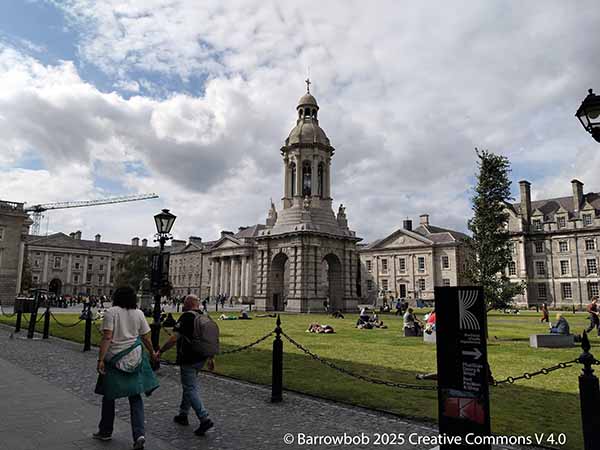 The obvious place to begin is Trinity College, right in the centre of the city. The university itself is beautiful, with its cobbled squares and historic buildings, but most visitors come to see the Book of Kells. The illuminated manuscript is over a thousand years old and is rightly regarded as one of Ireland's greatest treasures.
The exhibition is interesting, but the real wow factor comes when you enter the Long Room, the magnificent old library with its enormous collection of books lining the shelves. It is one of those places where you can simply stand and look upwards for a while. And yes, it does look every bit as impressive in real life as it does in photographs.
Entry to the grounds is free. General tickets for the Book of Kell start at around €26.00 (£22.25), which includes entry to the Old Library's Long Room and the digital exhibition in the Red Pavilion. A guided tour costs from €39.00 (£33.50) and if you only want to see the Book of Kells, that's from €19.00 (£16.25)
From Trinity, it is an easy walk to Dublin Castle, which has played an important role in Irish history for centuries. The castle isn't the fairytale variety you find in France, but the State Apartments and historic buildings make it well worth a visit. The nearby Chester Beatty is also worth considering, particularly for its remarkable collection of manuscripts, books and artworks from around the world.
Then there is St Patrick's Cathedral, Ireland's largest cathedral, and Christ Church Cathedral, which is even older. Both are impressive buildings and both provide a useful reminder that Dublin's history goes back considerably further than the famous pubs that tend to dominate the tourist advertising.
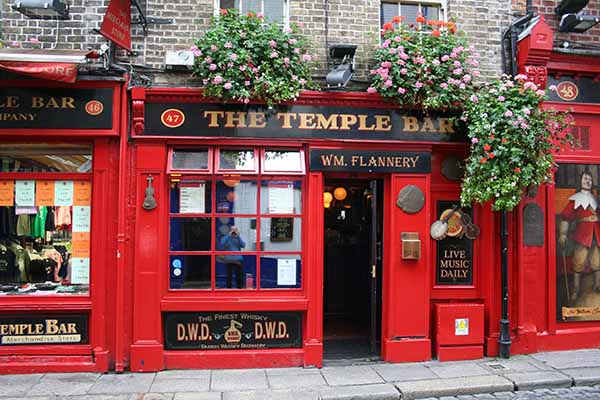 Speaking of which, sooner or later you will end up in Temple Bar.
This is Dublin's most famous nightlife district, with its cobbled streets, colourful pubs and almost permanent supply of tourists. It looks wonderful in photographs, and it certainly has atmosphere, but here's the Old Moaner warning: Temple Bar is expensive. Very expensive. It is perfectly possible to have a drink there, enjoy the music and soak up the atmosphere, but don't assume that because you are in Ireland you will be getting a cheap pint.
Personally, I'd wander through Temple Bar, enjoy the spectacle and then find a pub somewhere else.
The great Dublin pub experience isn't necessarily about finding the most famous establishment. Some of the best evenings can be had in smaller, traditional pubs away from the main tourist routes, where the Guinness is cold, the conversation is lively and there isn't somebody taking photographs of their pint every thirty seconds.
And, naturally, we have to talk about Guinness.
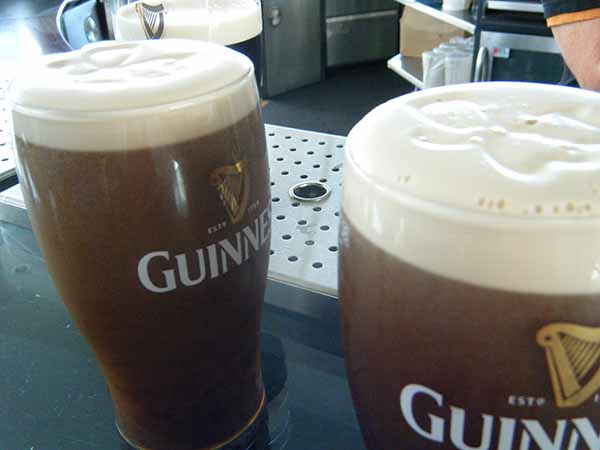 The Guinness Storehouse is one of Dublin's biggest tourist attractions and is housed in the original brewery buildings at St James's Gate. It is more of an immersive visitor experience than a conventional brewery tour, covering the history of Guinness, how it is made and the rather extraordinary worldwide success of the brand.
The highlight for many people is reaching the Gravity Bar, where you can enjoy a pint while looking across Dublin from the top of the building.
Whether you actually like Guinness is another matter. Prices range from €24.00 (£20.50) to €48.00 (£41.00), depending on how special you want the visit to be.
For me, the real attraction of Dublin is simply wandering around. Grafton Street, the pedestrianised shopping area, is lively and usually full of street performers. Nearby St Stephen's Green provides a lovely patch of greenery and is an excellent place to escape the crowds for half an hour.
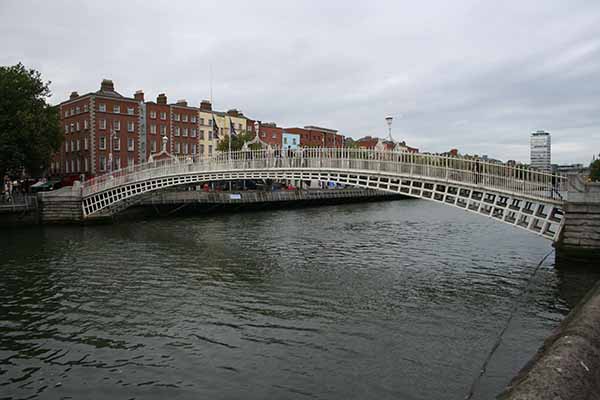
The River Liffey is another constant presence. The famous Ha'penny Bridge is probably the most photographed of the city's bridges, and walking along the river provides a good way of appreciating how compact the centre really is.
If you want to get away from the city centre, Phoenix Park is enormous — one of the largest enclosed public parks in any European capital. It is home to Dublin Zoo, the Wellington Monument and, famously, a large population of fallow deer. You could easily spend several hours here, particularly if the weather behaves itself.
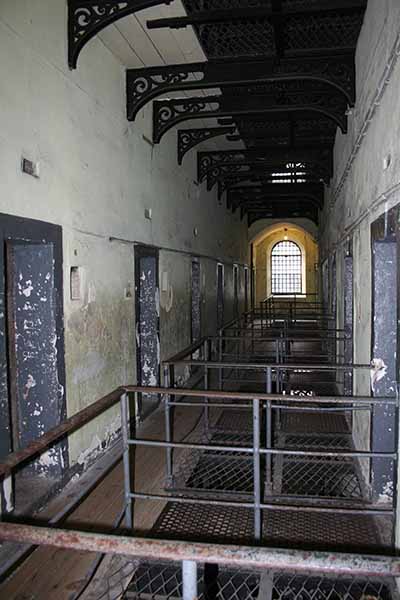 For anyone interested in Irish history, Dublin has plenty to offer. Kilmainham Gaol is one of the most important historical sites in the city and tells the story of some of the most significant events in Ireland's struggle for independence. It is a serious and sometimes sombre visit, but a fascinating one.
 You will also encounter reminders of Ireland's more recent history throughout the city, from statues and memorials to buildings associated with the Easter Rising and the subsequent struggle for independence.
Booking is strictly in advance and is a one hour guided tour. Adults €8.00 (£6.85), concessions €6.00 (£5.20), children (12-17) €4.00 (£3.40), under 12's free but must be booked
Food has improved enormously in Dublin over the years. You are no longer restricted to variations on Irish stew and potatoes, although you can certainly still find them. There is an increasingly good selection of restaurants, cafés and international cuisine, although, like everything else in Dublin, prices can be a little eye-watering.
And that really is the biggest downside.
Dublin isn't cheap.
Accommodation can be particularly painful, and a family trying to eat, drink and visit attractions can burn through money remarkably quickly. You don't need to spend a fortune to enjoy the city, but you do need to keep an eye on the wallet.
 What makes Dublin work, though, is its atmosphere. The city has a friendliness and humour that is difficult to manufacture. People are generally happy to chat, the pubs are lively, the music is everywhere and there is a sense that you're visiting a city that doesn't take itself quite as seriously as some of its European counterparts.
Dublin may not have the monumental grandeur of Paris or the spectacular architecture of some European capitals, but that isn't really the point.
Dublin's greatest attraction is Dublin itself.
It's historic without being stuffy, lively without being overwhelming and, despite its faults, incredibly welcoming.
Just remember to take plenty of money, don't spend all of it in Temple Bar, and leave some time for a proper pint of Guinness.
Sláinte!
Prices quoted correct as of August 2026
Return to Ireland Home Page