
Gozo
If Malta is the busy, bustling and occasionally exasperating big brother, Gozo is the quieter sibling who has sensibly decided not to get involved.
Gozo is Malta's second-largest island and, although only a short ferry ride from Malta, it feels distinctly different. There is less traffic, less development, fewer crowds and considerably more countryside. Life moves at a slower pace here, and that is precisely its appeal.
Don't come to Gozo expecting a long list of spectacular cities. Come for the villages, the coastline, the scenery, the ancient history and, above all, the opportunity to slow down.
Victoria and the Citadel
The island's capital is Victoria, although many people still call it by its old name, Rabat.
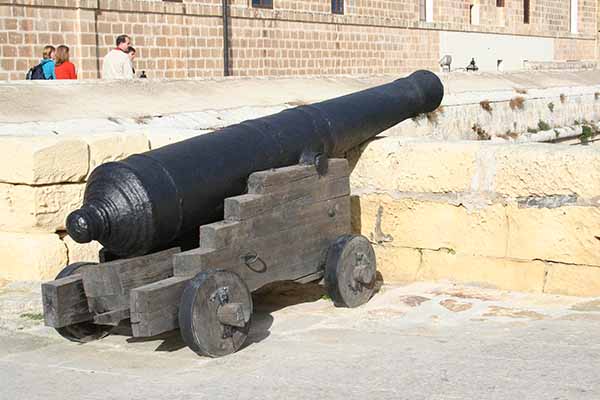 Dominating the town is the magnificent Citadel, perched on a hilltop and visible from much of the surrounding countryside. The site has been fortified for centuries, although the present buildings owe much to the Knights of St John.
Wander through the narrow streets inside the Citadel and you will find the Cathedral, museums, old houses and plenty of places to stop and admire the views.
The real attraction, however, is the panorama. From the ramparts you can look across much of Gozo, and it becomes immediately obvious just how much more rural the island is than Malta.
Victoria itself is pleasant rather than spectacular, but it makes an excellent base for exploring the island.
The Ggantija Temples
Gozo's great historical treasure is the Ġgantija Temples.
These enormous megalithic structures are among the oldest surviving free-standing buildings anywhere in the world, dating back roughly 5,500 years. That puts them considerably earlier than the Egyptian pyramids.
The name comes from the Maltese word for giant, which is hardly surprising when you see some of the enormous stones used in their construction.
Standing beside these massive blocks and trying to imagine a society capable of building them thousands of years before modern machinery is quite humbling.
Gozo has plenty of ancient history, but Ġgantija is the showstopper.
The coastline
Gozo's coastline is arguably its greatest pleasure.
There are cliffs, rocky bays, caves, tiny beaches and dramatic headlands, with the Mediterranean providing the backdrop almost everywhere you go.
Dwejra is particularly spectacular. This was once home to the famous Azure Window, the enormous natural limestone arch that became one of Gozo's best-known landmarks and appeared in countless photographs and even on television.
Sadly, the Azure Window collapsed during a storm in 2017.
It is tempting to think that this means Dwejra is no longer worth visiting. It absolutely is.
The enormous cliffs, Inland Sea and Fungus Rock remain spectacular, and the landscape is still one of the most impressive on the island.
The Inland Sea is a small lagoon connected to the Mediterranean through a narrow tunnel in the cliffs. Boat trips through the tunnel provide an excellent way of seeing the coastline from sea level.
Ramla Bay
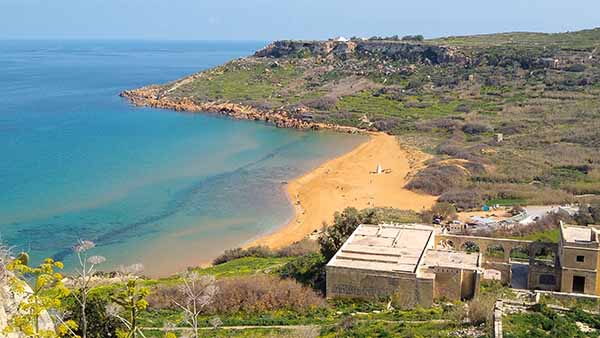 Gozo isn't blessed with endless sandy beaches, but Ramla Bay is the exception and is arguably the island's finest.
The sand has a distinctive reddish-golden colour and the bay is surrounded by relatively undeveloped countryside.
Above the beach is Calypso Cave, traditionally associated with the story of Odysseus and the nymph Calypso. Whether Homer actually had Gozo in mind is another matter, but the view over Ramla Bay is impressive enough without needing a Greek legend attached to it.
The salt pans
On the northern coast, near Xwejni, are the remarkable salt pans.
For centuries, salt has been harvested from shallow pools carved into the flat limestone beside the sea. When conditions are right, the pans form a remarkable geometric pattern stretching along the coastline.
They are still used today, although on a relatively small scale.
It is another example of Gozo's charm: rather than simply being a tourist attraction, this is a landscape that developed from ordinary island life and traditional methods of making a living.
Ta' Pinu Basilica
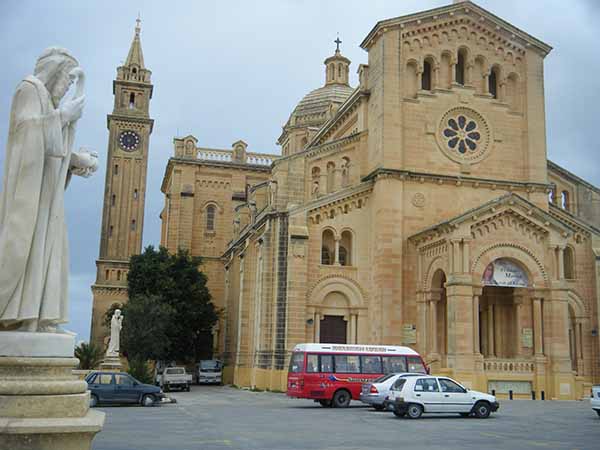 The Basilica of the National Shrine of the Blessed Virgin of Ta' Pinu stands dramatically in the countryside near Għarb.
Even if you aren't particularly interested in churches, it is difficult not to be impressed by its setting. The enormous stone building rises from otherwise open countryside and has become one of Gozo's most recognisable landmarks.
The basilica is also an important place of pilgrimage, and the interior contains numerous offerings and reminders of people who believe they have received help or healing.
For photographers, the surrounding landscape is just as interesting as the church itself.
The villages
Perhaps the best thing about Gozo is simply driving or wandering around its villages.
Għarb, Għasri, Xagħra, Nadur and the other communities each have their own character, but all share the familiar Gozitan combination of limestone buildings, colourful balconies and enormous parish churches.
Nadur is particularly interesting and has a strong agricultural tradition, while Xagħra provides access to the Ġgantija Temples.
The villages are where you get the strongest feeling that Gozo is a place where people actually live rather than simply somewhere designed for tourists.
Sit in a village square with a coffee and watch the world go by. There is no need to rush because, frankly, nobody else seems to be.
Gozo's countryside
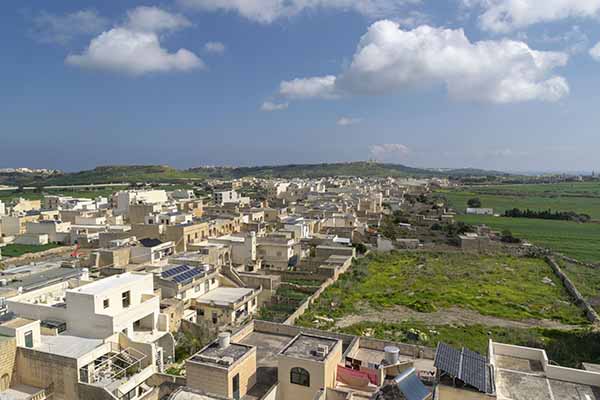
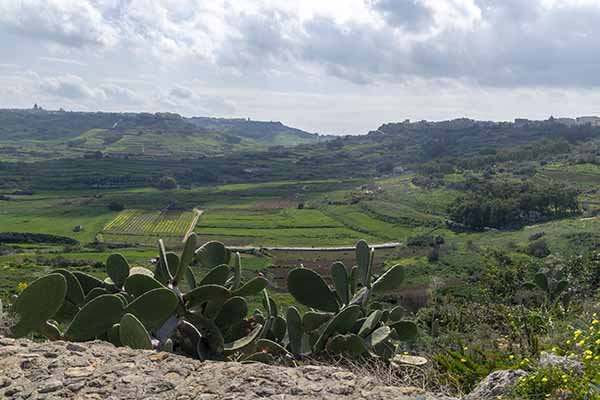 Compared with Malta, Gozo is remarkably green, particularly after the winter rains.
Fields are divided by traditional dry-stone walls, and the landscape has an almost patchwork appearance. In spring, wildflowers add colour to the countryside.
There are walking trails throughout the island, many following the coastline or passing through farmland and small villages.
This is where Gozo really comes into its own. If Malta sometimes feels as though somebody has tried to squeeze an entire country into a construction site, Gozo feels considerably more spacious.
Food and the Gozitan way of life
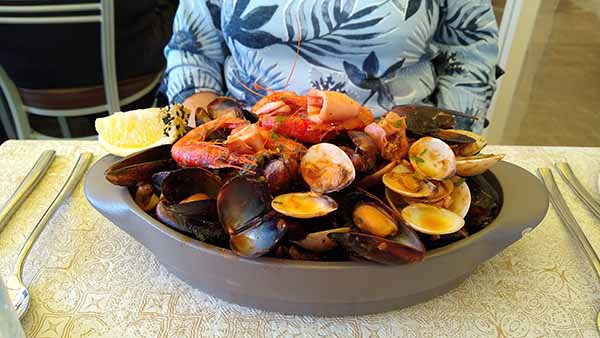 Gozitan food is broadly similar to Maltese cuisine, but local produce is given considerable prominence.
Look out for Gozitan cheese, particularly ġbejna, as well as honey, olives, tomatoes and the inevitable rabbit.
Not forgetting fantastic seafood.
There are also excellent local wines and plenty of small restaurants serving traditional dishes.
And then there are pastizzi. You cannot spend time in Malta or Gozo without eating them. They are cheap, filling and dangerously easy to consume.
Gozo's food culture is much more about simple local ingredients than culinary theatre, and that suits the island perfectly.
Getting around
The ferry from Malta makes Gozo an easy destination to visit, although I would strongly recommend spending more than a few hours here if you possibly can.
A day trip will allow you to see the principal sights, but staying overnight gives you the opportunity to experience the island after the day visitors have gone.
 Driving is useful, although the island is small enough to explore by bus, taxi or organised excursion. For the more energetic, walking and cycling are excellent ways of discovering the quieter corners.
And remember: Gozo's roads can be narrow, winding and occasionally entertaining. Take your time.
So, is Gozo worth visiting?
Without question.
In fact, for anyone who finds Malta itself a little too busy, Gozo may be the part of the Maltese islands they enjoy most.
It doesn't have Valletta's grand architecture or Malta's sheer concentration of historic attractions, but that isn't really the point.
Gozo's appeal is its atmosphere. It feels slower, quieter and more traditional. The countryside is beautiful, the coastline is spectacular and the ancient sites are genuinely extraordinary.
The great danger is that you arrive thinking you'll spend a few hours here, only to discover that you rather like the place.
And that is Gozo's secret weapon.
Malta may have the big sights, but Gozo has the peace and quiet — and sometimes that is considerably more valuable.
Return to Malta home page