
Hong Kong
Hong Kong is one of those places that is difficult to describe without resorting to clichés, because virtually every cliché about it happens to be true. It is crowded, noisy, frantic, exciting, visually spectacular and completely exhausting.
It is also one of the most fascinating cities you are likely to visit.
The first thing that strikes you is the sheer scale of the place.
Hong Kong seems to have decided that there is no such thing as a building that is too tall or a street that is too busy. Skyscrapers tower over narrow streets, thousands of people appear to be going somewhere in a tremendous hurry and traffic, trams, buses and pedestrians somehow manage to operate in an organised chaos that makes you wonder how anyone ever gets anywhere.
And yet, remarkably, they do.
The Skyline
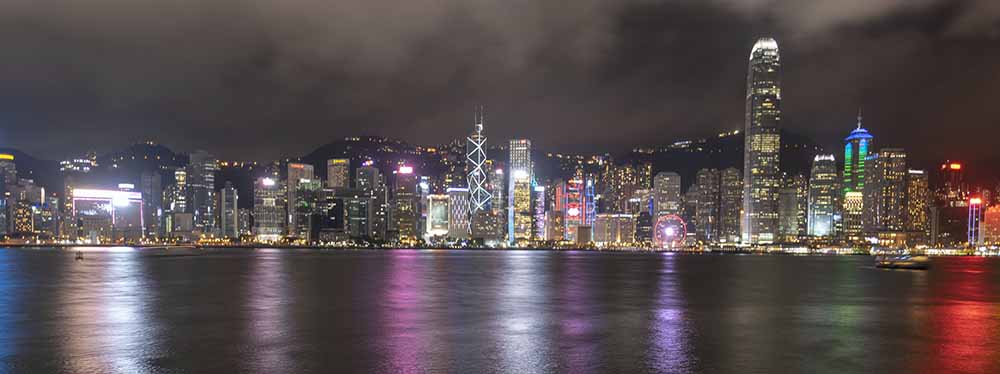
Hong Kong's skyline is one of its great attractions and it really does look like the pictures.
The combination of towering skyscrapers, mountains and the waters of Victoria Harbour produces a view that is difficult to beat. It is particularly impressive after dark when the buildings light up and the whole waterfront becomes a mass of illumination.
For the classic view, head across Victoria Harbour and look back towards Hong Kong Island. The skyline is enormous and it is easy to understand why Hong Kong has become one of the world's most recognisable cities.
The Star Ferry is another Hong Kong institution and, despite the city's obsession with modern technology, remains a wonderfully simple way of crossing the harbour. It is cheap, quick and gives you a superb view of the city from the water.
Sometimes the old-fashioned solutions are still the best ones.
Victoria Peak
For an even better view, make your way up to Victoria Peak.
The journey itself is part of the experience, particularly if you use the Peak Tram. At the top you get one of those views that makes you understand the geography of Hong Kong far better than any map ever could.
The skyscrapers stretch away below you, Victoria Harbour sits between the two sides of the city and the surrounding mountains remind you that Hong Kong isn't simply a collection of enormous buildings.
It is a city squeezed into a remarkably dramatic landscape.
The only problem is that everybody else knows about the view as well. Don't expect to have it to yourself.
Central Hong Kong
Central is where Hong Kong's modern personality is most obvious. Towering office blocks, expensive shops, banks and hotels dominate the area, while the streets below are permanently busy.
It can feel almost overwhelming at first.
Walk a little further, however, and the character changes. Small shops, markets, restaurants and older buildings appear amongst the modern development. Hong Kong is particularly good at putting the old and new alongside one another, sometimes with barely a street separating them.
The city also has some excellent public transport. The MTR is fast, efficient and remarkably easy to use, although during busy periods you may find yourself travelling in a rather intimate relationship with several thousand complete strangers.
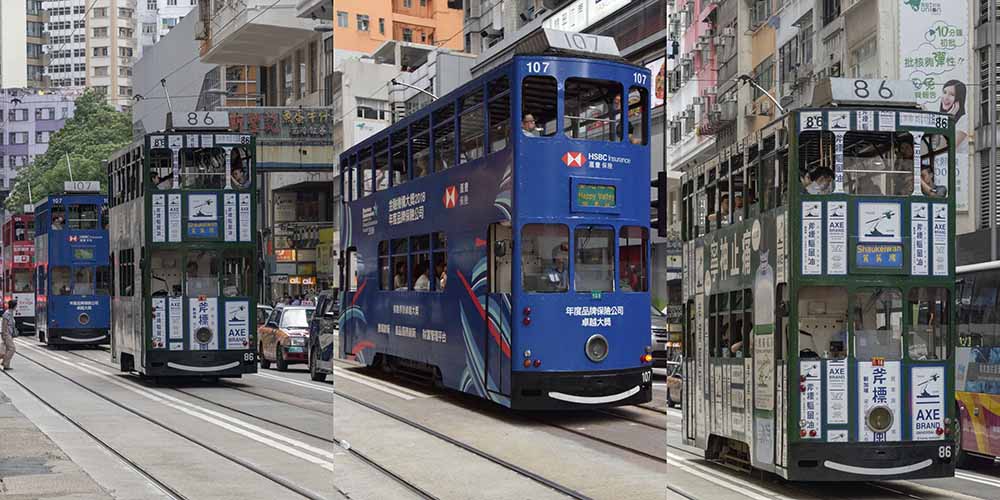
Or for a more relaxed and very slow means of travel have a go on the iconic double deck trams, you could probably walk faster but what's the fun of that, especially on a humid day.
Crowds are simply part of Hong Kong.
If you dislike people, Hong Kong may not be your idea of paradise.
The Markets
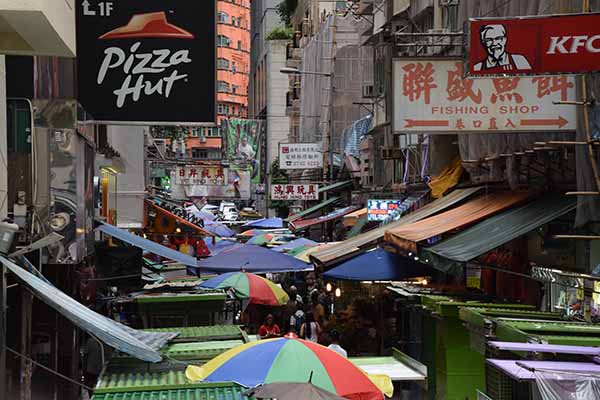 Hong Kong's markets are another essential part of the experience.
They are busy, colourful and occasionally rather chaotic, with everything from clothing and souvenirs to food and all manner of things you probably didn't know you needed.
This is where the city feels very different from the polished skyscraper districts. The markets are noisy and full of life, and bargaining is often expected.
You will almost certainly be approached by somebody wanting to sell you something. A firm "no" is generally more effective than entering into a lengthy negotiation about whether you really need another watch.
Lantau Island and the Big Buddha
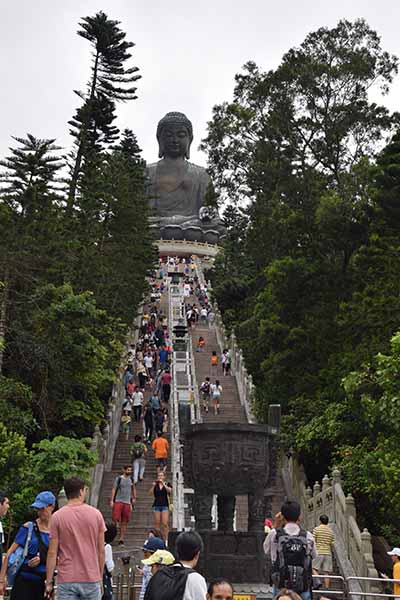 One of the biggest surprises about Hong Kong is how quickly the city can disappear.
Take a trip to Lantau Island and you can find yourself surrounded by countryside, mountains and considerably more peace and quiet than you might expect from somewhere that is technically part of Hong Kong.
The main attraction for many visitors is the Tian Tan Buddha, generally known simply as the Big Buddha.
And it really is big.
The enormous bronze statue sits high on a hill and is reached by climbing a considerable number of steps. By the time you reach the top, you may find yourself less concerned with the spiritual significance of the Buddha and considerably more interested in whether there is somewhere to sit down.
But it is an impressive sight and the setting makes the trip worthwhile.
The views across the surrounding countryside are excellent and provide a complete contrast to the skyscrapers of central Hong Kong.
This is one of the things I particularly liked about Hong Kong. Within a relatively short journey you can go from one of the most densely developed urban areas on the planet to somewhere that feels remarkably remote.
Stanley
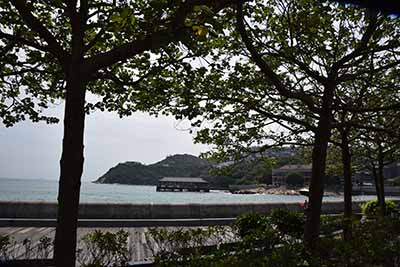 If the chaos of central Hong Kong becomes too much, head for Stanley on the southern side of Hong Kong Island.
Stanley has a much more relaxed atmosphere and feels almost like a different destination altogether.
There is a pleasant waterfront, restaurants, shops and the famous Stanley Market, where you can browse for souvenirs, clothes, artwork and the usual assortment of things that seemed like a good idea at the time.
The market can be busy, but the overall atmosphere is considerably more relaxed than central Hong Kong.
It is also worth wandering around the waterfront rather than simply arriving, going to the market and leaving again. Stanley has a completely different character from the skyscraper districts and is a good reminder that Hong Kong isn't just about concrete and glass.
For me, that contrast is one of its greatest strengths.
Victoria Harbour
Whatever else you do in Hong Kong, spend some time around Victoria Harbour.
The harbour is the heart of the city and provides some magnificent views in both directions.
During the day you can watch the ferries and boats moving between Hong Kong Island and Kowloon, while at night the skyline becomes even more impressive.
There is also the famous Symphony of Lights, when buildings around the harbour are illuminated as part of a light and music display.
Whether you think it is spectacular or slightly overdone probably depends on your tolerance for flashing lights and loud music.
Personally, I'd say the skyline itself is impressive enough without needing quite so much assistance.
Food
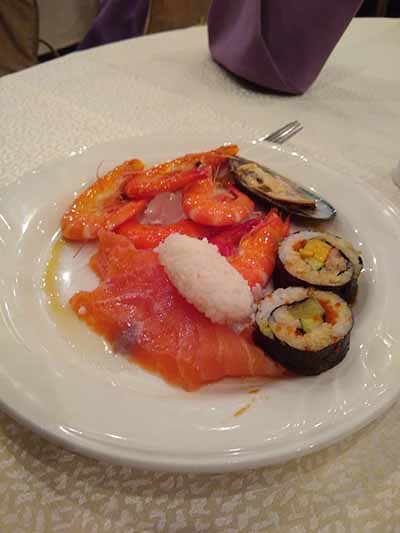 Hong Kong is also somewhere you should make an effort to eat locally.
Dim sum is obviously one of the great Hong Kong experiences, and there is a huge variety of Chinese food available. From smart restaurants to tiny establishments where you may have absolutely no idea what you have ordered, eating in Hong Kong can be an adventure.
The street food and markets provide plenty of opportunities to try things you wouldn't necessarily encounter at home.
Just don't expect everything to be familiar.
Hong Kong isn't really a destination for somebody who wants a sausage, chips and peas every evening.
Shopping
Shopping is another major part of Hong Kong's appeal, particularly if you enjoy wandering around enormous shopping centres where you can buy virtually anything.
There are luxury brands, electronics, markets, traditional Chinese goods and plenty of shops aimed specifically at tourists.
Personally, I have never understood the attraction of spending half a holiday inside a shopping centre, but Hong Kong manages to make even shopping part of the experience.
There is something strangely entertaining about seeing just how much commercial activity can be squeezed into one city.
The Crowds
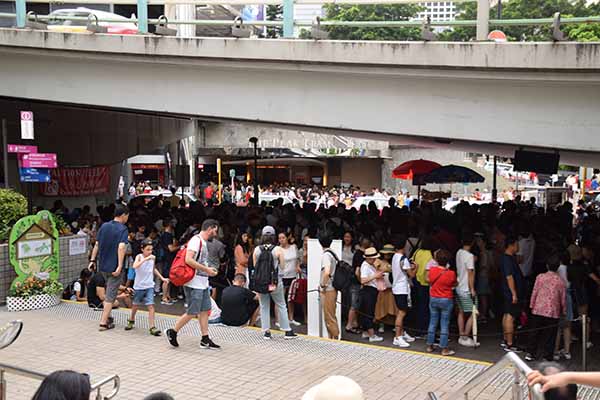 There is, however, one major warning about Hong Kong.
It is busy.
Very busy.
If you are expecting a relaxing city break where you can stroll along empty streets and admire the architecture in peace and quiet, you have chosen the wrong place.
People are everywhere. Trains are crowded, streets are crowded, markets are crowded and popular attractions are crowded.
At times it can become exhausting.
But there is another way of looking at it. The crowds are also what give Hong Kong its energy. The city never really seems to stop. Even when you think it should be winding down, there is still traffic, still movement and still somebody trying to sell you something.
It is alive.
My Verdict
Hong Kong is not a city I would describe as relaxing.
It is noisy, crowded, expensive in places and capable of making you feel completely worn out by the end of the day.
But it is also spectacular.
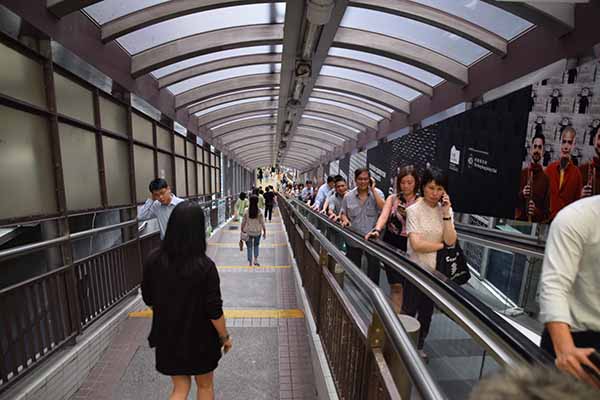 The skyscrapers, Victoria Harbour, the Peak, the Star Ferry, the markets and the food would be enough to make it interesting. Add in the completely different experiences of Lantau Island and the Big Buddha, followed by the more relaxed atmosphere of Stanley, and you begin to appreciate just how much variety there is.
What makes Hong Kong particularly memorable is the contrast.
One minute you are surrounded by some of the world's tallest buildings and thousands of people; the next you can be looking across mountains and countryside. Modern skyscrapers stand alongside traditional buildings, ancient culture exists alongside cutting-edge technology and busy urban streets eventually give way to beaches and rural areas.
It is certainly not for everybody.
If you don't like crowds, noise or cities that appear to operate at 100 miles an hour, you may find Hong Kong rather hard work.
But if you can embrace the chaos, Hong Kong is one of those places that gets under your skin.
It is an extraordinary city in an extraordinary setting — and even if you end up needing a holiday to recover from your holiday, it is a place I am very glad I visited.
Return to World Menu