
Kennet & Avon Canal: Bradford On Avon - Bristol
Section Length: 28.72 miles (45.1 km)
Time Taken: 9 hrs 55 mins
Dates Walked: 18th May 14th and 15th June 2018
Logistics: This section of the walk was completed in three parts.
The first from Bradford on AVon to Bath (9.89 miles). For this I was parked in Bradford on Avon then caught a train back from Bath
The second part was Bath to Keynsham (8.83 miles). For this I drove to Keynsham , then caught a train to Bath then stayed overnight in Keynsham.
The final leg was Keynsham to Bristol (10 miles) Due to parking issues I ended up parking in Bath, getting a train to Keynsham then a train back to Bath from Bristol
Time Taken: 9 hrs 55 mins
Dates Walked: 18th May 14th and 15th June 2018
Logistics: This section of the walk was completed in three parts.
The first from Bradford on AVon to Bath (9.89 miles). For this I was parked in Bradford on Avon then caught a train back from Bath
The second part was Bath to Keynsham (8.83 miles). For this I drove to Keynsham , then caught a train to Bath then stayed overnight in Keynsham.
The final leg was Keynsham to Bristol (10 miles) Due to parking issues I ended up parking in Bath, getting a train to Keynsham then a train back to Bath from Bristol
Previous Hungerford to Bradford Upon Avon Return To Kennet and Avon Home Page
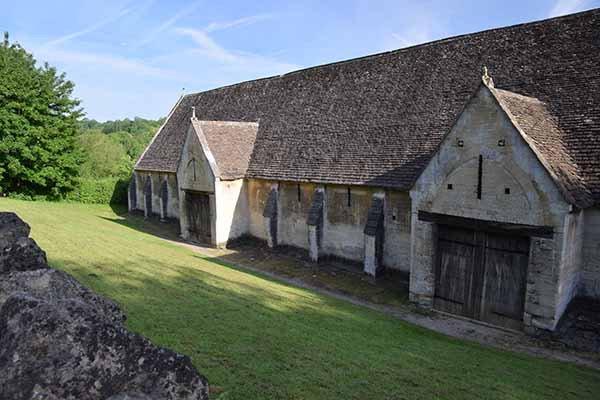 Leaving Bradford-on-Avon, the canal immediately enters one of the prettiest sections of the whole Kennet and Avon. The town itself is worth lingering around, with its old stone buildings and the River Avon, but once on the towpath the surroundings quickly become much more rural.
The first couple of miles are particularly pleasant as the canal follows the side of the Avon Valley. There is plenty of greenery and, although the railway is never far away, it doesn't dominate the scenery.
Then comes Avoncliff Aqueduct.
This is one of those canal structures which looks impressive from a distance but becomes even more impressive when you actually walk across it. The aqueduct carries the canal over both the River Avon and the railway, and the towpath takes you across the top. It is quite an odd feeling walking along a canal while looking down at a river and railway line considerably below you.
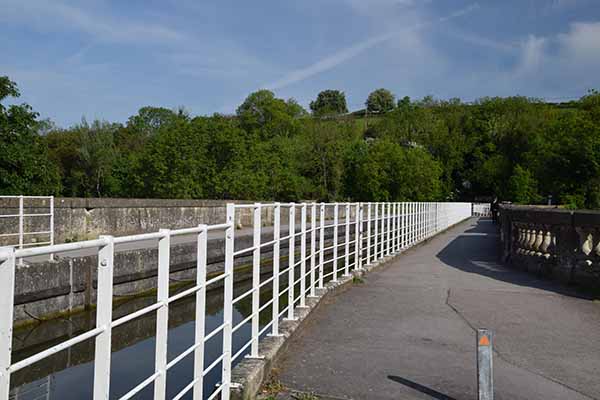 The canal was designed by John Rennie and the aqueduct was completed in the early nineteenth century. It is about 330 feet long and has a substantial central arch.
Unfortunately, the walker doesn't simply carry straight on after crossing the aqueduct. The towpath has to descend and pass underneath the canal before climbing back up to the other side. It is one of those occasions when you wonder why the engineers couldn't have made things slightly easier for the people who would eventually walk beside their canal.
From Avoncliff onwards the canal continues through the wooded Avon Valley. This is a very different experience from the open countryside around Caen Hill and Devizes. Here the valley sides close in around you and the canal feels almost hidden from the outside world.
The next major landmark is Dundas Aqueduct.
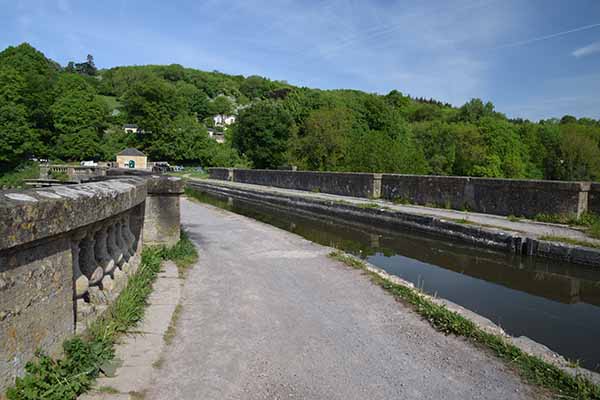 Once again the canal crosses the River Avon and railway, but Dundas has a rather different character. It is built from the warm-coloured Bath stone and is an impressive piece of engineering in its own right. It is also the junction with the old Somersetshire Coal Canal, which once provided a connection to the coalfields of Somerset.
The aqueduct is a particularly good place to stop for a while. There is the canal, the river, the railway and the old coal canal all coming together, so there is plenty to look at without having to walk another mile.
Beyond Dundas the canal continues through the valley towards Claverton. The Claverton Pumping Station is another reminder that canals are rather more complicated than they sometimes appear. It uses water power from the River Avon to pump water uphill into the canal, and is one of those slightly eccentric pieces of engineering which makes you appreciate just how much effort went into creating the K&A.
The canal continues towards Bathampton and, gradually, the countryside begins to give way to the outskirts of Bath.
Bath is something of a landmark on the whole Kennet and Avon journey. After all those miles of towpath, locks and rural scenery, suddenly you are alongside a major city.
The canal passes through Bath without actually giving you the full tourist experience of the city. There is no need to wander off in search of the Roman Baths or Royal Crescent if you're determined to stick to the route, although by this stage you may be tempted to abandon the canal altogether and find somewhere selling food.
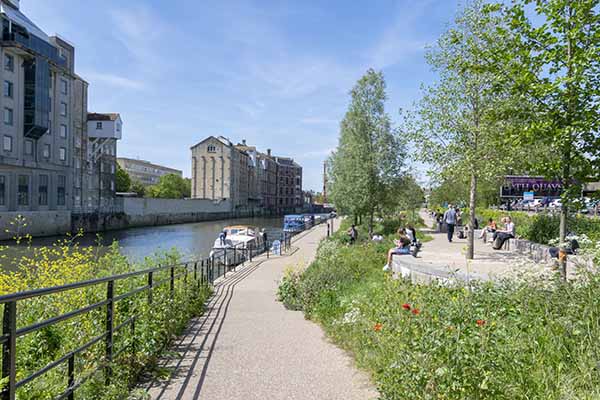 Instead the canal continues towards the River Avon and the transition from canal to river becomes apparent.
This is also where the walk becomes less obviously a canal walk. From Bath the route towards Bristol follows the River Avon, using a series of locks and weirs to make the river navigable. The river section between Bath and Bristol is about twelve miles long and includes locks at Bath, Weston, Kelston, Saltford, Swineford, Keynsham and Hanham.
The surroundings become a mixture of countryside and suburban development. There are some lovely stretches, particularly around Saltford and Kelston, although you are now very definitely heading towards a city again.
At Saltford there is another reminder of the area's industrial past, while the river itself provides plenty of interest. Narrowboats share the water with the natural flow of the Avon and there is something rather satisfying about watching a boat making its way downstream after seeing so many of them laboriously negotiating canal locks.
Keynsham is the next substantial settlement and another point where the countryside gives way to more urban surroundings. The river remains attractive, however, and there are still plenty of stretches where it is easy to forget that Bristol is getting closer.
Then comes Hanham Lock.
This is effectively the gateway to Bristol. Beyond Hanham the river becomes tidal, and the character of the walk changes once again.
From here the route heads into the Bristol urban area and the amount of concrete gradually increases. After the peaceful countryside around Avoncliff and Dundas it can feel a little like civilisation has suddenly arrived with a vengeance.
Eventually you reach the Bristol Floating Harbour, where the waterway becomes very much part of the city. Boats, old warehouses, modern buildings, bridges and the general activity of Bristol replace the quiet towpath.
And this is where I would have been tempted to call it a day.
 But the destination is the Clifton Suspension Bridge.
So onwards.
The route through Bristol takes you through some of the city's historic waterfront before eventually bringing you towards the Avon Gorge. Suddenly the surroundings change again. The river is now far below and the sides of the gorge rise dramatically on either side.
And then, finally, there it is.
The Clifton Suspension Bridge.
After walking all the way from Bradford-on-Avon, it is a suitably spectacular finishing point. Brunel's famous bridge spans the Avon Gorge and is one of those structures which still manages to look impressive despite having been photographed approximately seventeen billion times.
Previous Hungerford to Bradford Upon Avon Return To Kennet and Avon Home Page
Leaving Bradford-on-Avon, the canal immediately enters one of the prettiest sections of the whole Kennet and Avon. The town itself is worth lingering around, with its old stone buildings and the River Avon, but once on the towpath the surroundings quickly become much more rural.The first couple of miles are particularly pleasant as the canal follows the side of the Avon Valley. There is plenty of greenery and, although the railway is never far away, it doesn't dominate the scenery.
Then comes Avoncliff Aqueduct.
This is one of those canal structures which looks impressive from a distance but becomes even more impressive when you actually walk across it. The aqueduct carries the canal over both the River Avon and the railway, and the towpath takes you across the top. It is quite an odd feeling walking along a canal while looking down at a river and railway line considerably below you.
The canal was designed by John Rennie and the aqueduct was completed in the early nineteenth century. It is about 330 feet long and has a substantial central arch.Unfortunately, the walker doesn't simply carry straight on after crossing the aqueduct. The towpath has to descend and pass underneath the canal before climbing back up to the other side. It is one of those occasions when you wonder why the engineers couldn't have made things slightly easier for the people who would eventually walk beside their canal.
From Avoncliff onwards the canal continues through the wooded Avon Valley. This is a very different experience from the open countryside around Caen Hill and Devizes. Here the valley sides close in around you and the canal feels almost hidden from the outside world.
The next major landmark is Dundas Aqueduct.
Once again the canal crosses the River Avon and railway, but Dundas has a rather different character. It is built from the warm-coloured Bath stone and is an impressive piece of engineering in its own right. It is also the junction with the old Somersetshire Coal Canal, which once provided a connection to the coalfields of Somerset.The aqueduct is a particularly good place to stop for a while. There is the canal, the river, the railway and the old coal canal all coming together, so there is plenty to look at without having to walk another mile.
Beyond Dundas the canal continues through the valley towards Claverton. The Claverton Pumping Station is another reminder that canals are rather more complicated than they sometimes appear. It uses water power from the River Avon to pump water uphill into the canal, and is one of those slightly eccentric pieces of engineering which makes you appreciate just how much effort went into creating the K&A.
The canal continues towards Bathampton and, gradually, the countryside begins to give way to the outskirts of Bath.
Bath is something of a landmark on the whole Kennet and Avon journey. After all those miles of towpath, locks and rural scenery, suddenly you are alongside a major city.
The canal passes through Bath without actually giving you the full tourist experience of the city. There is no need to wander off in search of the Roman Baths or Royal Crescent if you're determined to stick to the route, although by this stage you may be tempted to abandon the canal altogether and find somewhere selling food.
Instead the canal continues towards the River Avon and the transition from canal to river becomes apparent.This is also where the walk becomes less obviously a canal walk. From Bath the route towards Bristol follows the River Avon, using a series of locks and weirs to make the river navigable. The river section between Bath and Bristol is about twelve miles long and includes locks at Bath, Weston, Kelston, Saltford, Swineford, Keynsham and Hanham.
The surroundings become a mixture of countryside and suburban development. There are some lovely stretches, particularly around Saltford and Kelston, although you are now very definitely heading towards a city again.
At Saltford there is another reminder of the area's industrial past, while the river itself provides plenty of interest. Narrowboats share the water with the natural flow of the Avon and there is something rather satisfying about watching a boat making its way downstream after seeing so many of them laboriously negotiating canal locks.
Keynsham is the next substantial settlement and another point where the countryside gives way to more urban surroundings. The river remains attractive, however, and there are still plenty of stretches where it is easy to forget that Bristol is getting closer.
Then comes Hanham Lock.
This is effectively the gateway to Bristol. Beyond Hanham the river becomes tidal, and the character of the walk changes once again.
From here the route heads into the Bristol urban area and the amount of concrete gradually increases. After the peaceful countryside around Avoncliff and Dundas it can feel a little like civilisation has suddenly arrived with a vengeance.
Eventually you reach the Bristol Floating Harbour, where the waterway becomes very much part of the city. Boats, old warehouses, modern buildings, bridges and the general activity of Bristol replace the quiet towpath.
And this is where I would have been tempted to call it a day.
But the destination is the Clifton Suspension Bridge.So onwards.
The route through Bristol takes you through some of the city's historic waterfront before eventually bringing you towards the Avon Gorge. Suddenly the surroundings change again. The river is now far below and the sides of the gorge rise dramatically on either side.
And then, finally, there it is.
The Clifton Suspension Bridge.
After walking all the way from Bradford-on-Avon, it is a suitably spectacular finishing point. Brunel's famous bridge spans the Avon Gorge and is one of those structures which still manages to look impressive despite having been photographed approximately seventeen billion times.
Previous Hungerford to Bradford Upon Avon Return To Kennet and Avon Home Page