
Kennet & Avon Canal: Reading - Hungerford
Section Length: 29.29 miles (47.13 km)
Time Taken: 10 hrs 5 mins
Dates Walked: 5th, 18th and 26th April 2018
Logistics: This section of the walk was completed in three parts.
The first from Reading to Theale (8 miles). For this I parked in Theale then caught a train to the start in Reading
The second part was Theale to Newbury (12.6 miles). For this I drove to Newbury then caught a train to Theale.
The final leg was Newbury to Hungerford (8.69 miles) I drove to Hungerford then caught a train to Newbury
Time Taken: 10 hrs 5 mins
Dates Walked: 5th, 18th and 26th April 2018
Logistics: This section of the walk was completed in three parts.
The first from Reading to Theale (8 miles). For this I parked in Theale then caught a train to the start in Reading
The second part was Theale to Newbury (12.6 miles). For this I drove to Newbury then caught a train to Theale.
The final leg was Newbury to Hungerford (8.69 miles) I drove to Hungerford then caught a train to Newbury
Return to Kennet and Avon Home Page Next Hungerford to Bradford on Avon
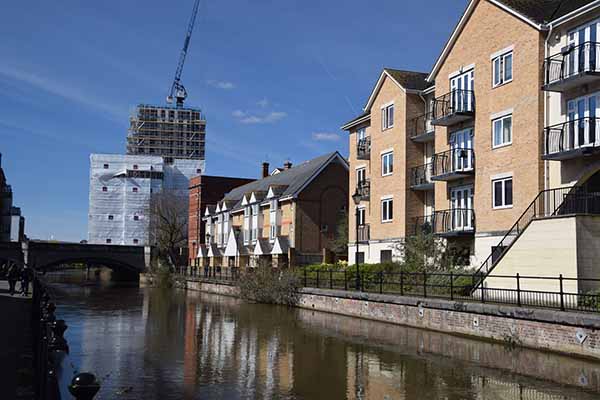 The canal starts its journey westwards through Reading, passing through the town centre where the canal and river are very much part of the urban landscape. There are plenty of reminders that this was once a busy working waterway, although these days the boats are much more likely to be carrying holidaymakers than cargo.
One of the more interesting parts of the Reading section is the passage past the ruins of Reading Abbey and the former Reading Prison. It is an unusual combination of history and waterway, and certainly more interesting than simply trudging through the town.
Eventually the buildings begin to thin out and the canal heads into the countryside. This is where the walk really starts to become enjoyable. The towpath settles into the sort of gentle, largely level walking that canals are famous for, with the canal winding through green countryside and the River Kennet often nearby.
There is plenty of wildlife to keep an eye out for as well. Swans, ducks, geese, moorhens and the occasional heron are all regular residents, although of course the wildlife has a habit of disappearing just when you get the camera ready.
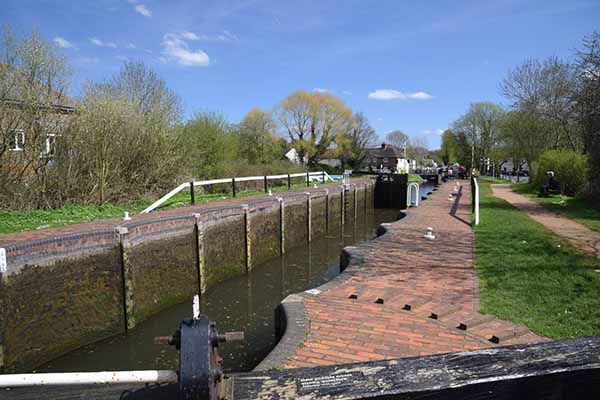 As you head towards Aldermaston Wharf the canal becomes much more obviously rural. The old wharf is a reminder of the canal's working days and makes a useful stopping point. From here onwards the scenery becomes increasingly attractive, with trees, fields and the occasional canal-side building replacing the suburbs.
The canal continues through Woolhampton and on towards Thatcham, with the towpath providing relatively easy walking. There are plenty of bridges and locks to break up the journey and, inevitably, the occasional narrowboat providing an excuse to stop for a few minutes and watch somebody else doing the hard work of getting through a lock.
Eventually Newbury appears and the canal passes right through the heart of the town. This is quite a contrast to the countryside that has just been left behind. The canal is particularly attractive around Newbury Wharf and Victoria Park, and there are plenty of places where you can leave the towpath if you fancy a coffee or something to eat.
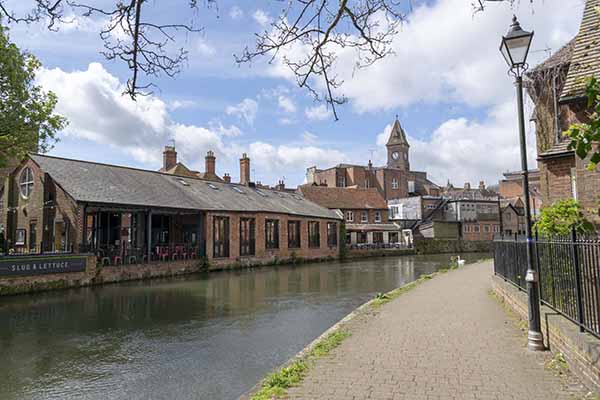 Newbury is also where the Kennet and Avon really starts to feel like a proper canal rather than simply a waterway passing through the landscape. The locks, bridges and old canal buildings give the place some character and there is plenty of evidence of the canal's former importance to the town.
Leaving Newbury behind, the scenery soon becomes rural again. This is probably my favourite part of the walk, as the canal settles into the Kennet Valley with fields and water meadows replacing the town. The River Kennet runs alongside the canal in places, giving the impression that you have two waterways for the price of one.
There are numerous locks along this stretch and, unlike some canal walks where you can walk for miles without much changing, here there is usually something coming along to break the monotony. The locks are also useful places to stop for a breather, particularly if the towpath has become a little less comfortable underfoot.
Eventually you reach Kintbury, one of those villages that seems almost designed to have a canal running through it. Once an important canal wharf, it is now a particularly peaceful place and the canal provides a very attractive approach.
Kintbury is also a good indication that you are getting close to Hungerford, although there is still several miles to go. The canal continues through increasingly pleasant countryside, with trees and water meadows providing a much more attractive backdrop than the urban surroundings of the start of the walk.
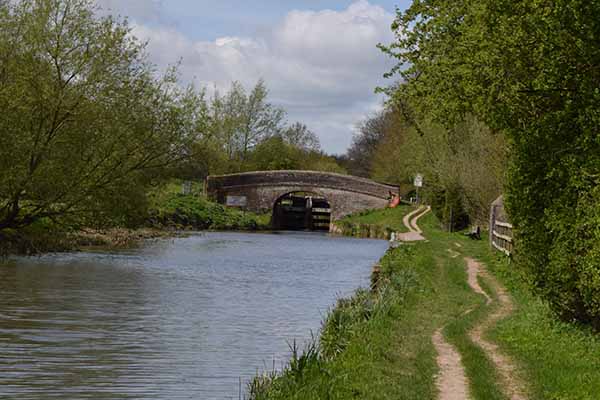 This section also has plenty of bridges and locks, and the canal occasionally disappears behind thick vegetation before reappearing a few hundred yards further on. In summer the vegetation can become particularly dense, although this does add to the feeling that you are walking through genuine countryside rather than along a man-made waterway.
The final approach to Hungerford is another pleasant stretch, with the canal passing through the town and close to the railway station. Hungerford itself is a traditional market town and, after all those miles of towpath, it is a welcome sight.
As usual with canal walking, the biggest danger is probably convincing yourself that the next lock, bridge or bend must surely be the end of the walk. It rarely is.
Return to Kennet and Avon Home Page Next Hungerford to Bradford on Avon
The canal starts its journey westwards through Reading, passing through the town centre where the canal and river are very much part of the urban landscape. There are plenty of reminders that this was once a busy working waterway, although these days the boats are much more likely to be carrying holidaymakers than cargo.One of the more interesting parts of the Reading section is the passage past the ruins of Reading Abbey and the former Reading Prison. It is an unusual combination of history and waterway, and certainly more interesting than simply trudging through the town.
Eventually the buildings begin to thin out and the canal heads into the countryside. This is where the walk really starts to become enjoyable. The towpath settles into the sort of gentle, largely level walking that canals are famous for, with the canal winding through green countryside and the River Kennet often nearby.
There is plenty of wildlife to keep an eye out for as well. Swans, ducks, geese, moorhens and the occasional heron are all regular residents, although of course the wildlife has a habit of disappearing just when you get the camera ready.
As you head towards Aldermaston Wharf the canal becomes much more obviously rural. The old wharf is a reminder of the canal's working days and makes a useful stopping point. From here onwards the scenery becomes increasingly attractive, with trees, fields and the occasional canal-side building replacing the suburbs.The canal continues through Woolhampton and on towards Thatcham, with the towpath providing relatively easy walking. There are plenty of bridges and locks to break up the journey and, inevitably, the occasional narrowboat providing an excuse to stop for a few minutes and watch somebody else doing the hard work of getting through a lock.
Eventually Newbury appears and the canal passes right through the heart of the town. This is quite a contrast to the countryside that has just been left behind. The canal is particularly attractive around Newbury Wharf and Victoria Park, and there are plenty of places where you can leave the towpath if you fancy a coffee or something to eat.
Newbury is also where the Kennet and Avon really starts to feel like a proper canal rather than simply a waterway passing through the landscape. The locks, bridges and old canal buildings give the place some character and there is plenty of evidence of the canal's former importance to the town.Leaving Newbury behind, the scenery soon becomes rural again. This is probably my favourite part of the walk, as the canal settles into the Kennet Valley with fields and water meadows replacing the town. The River Kennet runs alongside the canal in places, giving the impression that you have two waterways for the price of one.
There are numerous locks along this stretch and, unlike some canal walks where you can walk for miles without much changing, here there is usually something coming along to break the monotony. The locks are also useful places to stop for a breather, particularly if the towpath has become a little less comfortable underfoot.
Eventually you reach Kintbury, one of those villages that seems almost designed to have a canal running through it. Once an important canal wharf, it is now a particularly peaceful place and the canal provides a very attractive approach.
Kintbury is also a good indication that you are getting close to Hungerford, although there is still several miles to go. The canal continues through increasingly pleasant countryside, with trees and water meadows providing a much more attractive backdrop than the urban surroundings of the start of the walk.
This section also has plenty of bridges and locks, and the canal occasionally disappears behind thick vegetation before reappearing a few hundred yards further on. In summer the vegetation can become particularly dense, although this does add to the feeling that you are walking through genuine countryside rather than along a man-made waterway.The final approach to Hungerford is another pleasant stretch, with the canal passing through the town and close to the railway station. Hungerford itself is a traditional market town and, after all those miles of towpath, it is a welcome sight.
As usual with canal walking, the biggest danger is probably convincing yourself that the next lock, bridge or bend must surely be the end of the walk. It rarely is.
Return to Kennet and Avon Home Page Next Hungerford to Bradford on Avon