
Leicester
Leicester is one of those cities that has never quite received the credit it deserves. Mention Leicester to most people and you will probably get one of three responses: Richard III, Leicester City Football Club, or possibly the space centre. And while all three are perfectly valid reasons to visit, they barely scratch the surface of a city with Roman origins, medieval history, a remarkable industrial past and one of the most diverse populations in Britain.
It isn't the prettiest city in England, and I'm not going to pretend otherwise. Parts of the centre are decidedly functional rather than beautiful, with the usual collection of modern shopping centres, office blocks and buildings that should probably have been demolished before they were built. But dig beneath the modern Leicester and there is plenty to discover.
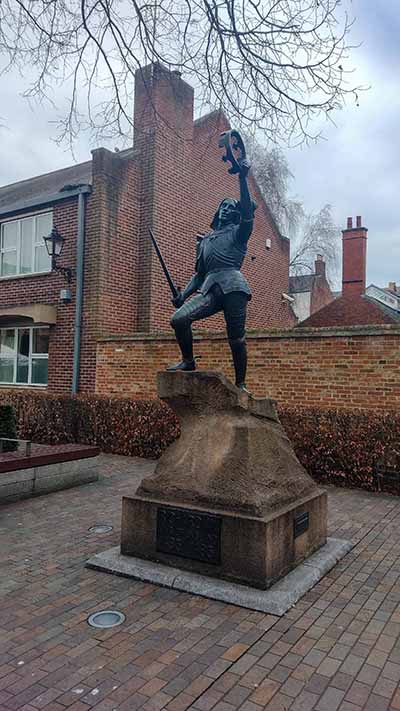 The big story, of course, is Richard III. The last Plantagenet king was killed at the Battle of Bosworth in 1485 and was subsequently buried at Greyfriars in Leicester. For centuries his whereabouts were unknown until his remains were spectacularly rediscovered beneath a car park in 2012.
The story captured the public imagination and transformed Leicester's relationship with its most famous former resident. His remains are now buried in Leicester Cathedral, beneath an impressive tomb, and the nearby King Richard III Visitor Centre tells the story of the discovery and his final battle.
You don't have to be a Ricardian to find the whole story fascinating. The fact that one of England's kings was found underneath a modern car park is the sort of historical oddity that sounds like something from a television drama.
The cathedral itself is worth seeing, while the surrounding Cathedral Quarter contains some of the city's more attractive historic streets.
For an even older Leicester, head towards the Jewry Wall, one of the largest pieces of Roman masonry still surviving in Britain. Leicester was an important Roman settlement known as Ratae Corieltauvorum, and the remains provide a fascinating glimpse of the city nearly 2,000 years ago.
The Leicester Museum & Art Gallery is another worthwhile stop, with collections ranging from dinosaurs and ancient Egypt to local history and art. It is one of those museums that is considerably better than you might expect from the outside.
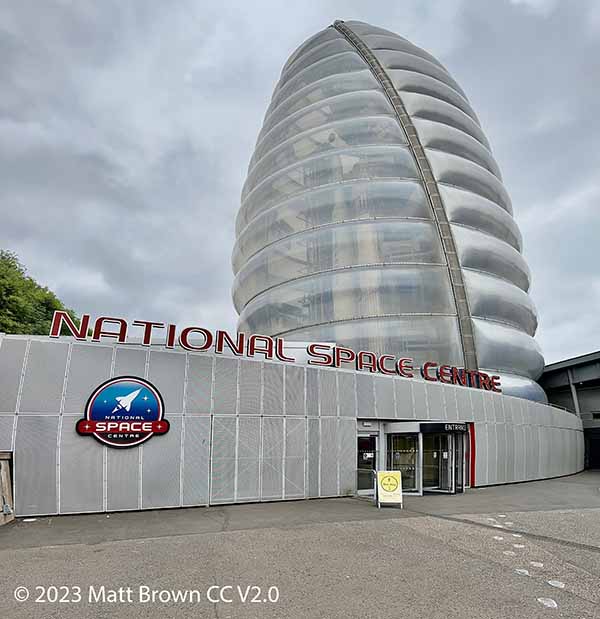 And then there is the National Space Centre, which is difficult to miss thanks to its enormous rocket tower. This is one of Leicester's best attractions and certainly one of the most unusual. Even if you aren't particularly interested in space exploration, the exhibitions are well presented and there is enough here to keep both children and adults occupied.
Opening Times: - Monday – Friday (Term Time): 10:00 – 16:00, Saturday – Sunday: 10:00 – 17:00. School Holidays: Often open daily with extended hours
Ticket Prices (Includes Free Annual Pass Upgrade) Adult (16+): £22.00 online / £23.00 on the door. Child (5–15) / Concession: £20.00 online / £21.00 on the door. Under 5s: Free (with a full-paying ticket)
Additional Planetarium Show: £5.00 on the door. Car Parking: £4.00 for the day (09:00–17:00)
Leicester's industrial history is equally interesting.
The city became famous for hosiery, textiles and engineering, and its factories helped transform Leicester during the Industrial Revolution. The New Walk Museum and surrounding heritage provide reminders of that manufacturing past, while the Great Central Railway just outside the city offers a chance to see another important part of Britain's industrial heritage.
One of Leicester's greatest strengths today is its cultural diversity.
The city has substantial South Asian, African and Caribbean communities, and this is reflected in its shops, restaurants, festivals and everyday life. The Golden Mile is particularly well known for its Indian jewellery shops, clothing stores, restaurants and food businesses. It is one of the places where Leicester feels distinctly different from many other British cities.
And if you like Indian food, you're in the right place. Leicester has an enormous choice, from inexpensive cafés to excellent restaurants, and the multicultural character of the city is one of its biggest assets.
For some greenery, Abbey Park is an excellent escape from the city centre. It combines formal gardens with open parkland and the remains of Leicester Abbey, while the River Soar provides an attractive setting.
The University of Leicester and De Montfort University also give the city a youthful character. There is a good selection of theatres, cafés, bars and cultural venues, although, as with Durham, you may occasionally find the student population rather more enthusiastic than you were hoping for.
And then there is football.
Leicester City became the stuff of sporting legend by winning the Premier League in 2016 against odds that made the achievement one of the greatest shocks in sporting history. Their home at the King Power Stadium is now very much part of the city's identity.
Even if football leaves you cold, you have to admire what happened. Leicester had managed the sporting equivalent of buying a lottery ticket and discovering that someone had accidentally put the winning numbers on it.
More important is Leicester Tigers a Premiership Rugby team, more successful than the football team
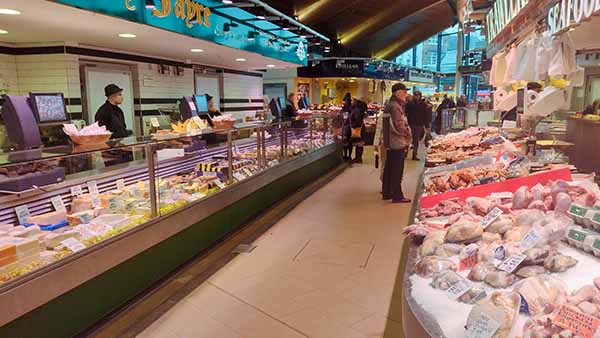 The city centre itself is a mixture of old and new. Leicester Market has been operating for centuries and remains an important part of the city, while the Clock Tower remains one of Leicester's best-known landmarks.
The pedestrianised centre makes exploring relatively easy, although some of the modern development is uninspiring. Leicester has, like many British cities, struggled at times with empty shops and tired urban areas. Regeneration has improved parts of the centre, but there is still work to do.
The good news is that Leicester's attractions are relatively close together, so it is possible to explore much of the historic centre on foot. The city also makes a useful base for exploring the wider county, including Bradgate Park, Charnwood Forest and the battlefield at Bosworth.
And that is probably the best way to approach Leicester.
Don't come expecting another York or Bath. It isn't that sort of city. Leicester's appeal lies in its layers — Roman Leicester, medieval Leicester, industrial Leicester and the remarkably multicultural modern city all sitting on top of one another.
It is a city that rewards curiosity.
Old Moaner's verdict: Leicester isn't going to win the prize for Britain's most beautiful city, but it has an extraordinary amount going for it. Richard III, Roman remains, the National Space Centre, museums, markets, industrial heritage, excellent food and a genuinely multicultural atmosphere give it far more substance than its reputation suggests.
Give it a day, explore the historic centre, visit Richard III and the Space Centre, eat something considerably more interesting than a burger and you may well discover that Leicester is rather better than you expected.
Recommended — and definitely worth rescuing from the list of cities people think they already know.
Prices correct as at September 2026
Return to East Midlands home page