
Liguria
Liguria is one of those parts of Italy that seems to have been designed specifically to make motorists stop every few minutes for another photograph. Wedged between the mountains and the Mediterranean in north-west Italy, this narrow coastal region stretches from the French border almost to Tuscany and contains a remarkable mixture of sophisticated cities, colourful fishing villages, mountain scenery and some of Italy's most spectacular coastline.
And then, of course, there is Cinque Terre.
But before getting to the five villages that tend to dominate the tourist brochures, there is considerably more to Liguria than five very pretty places.
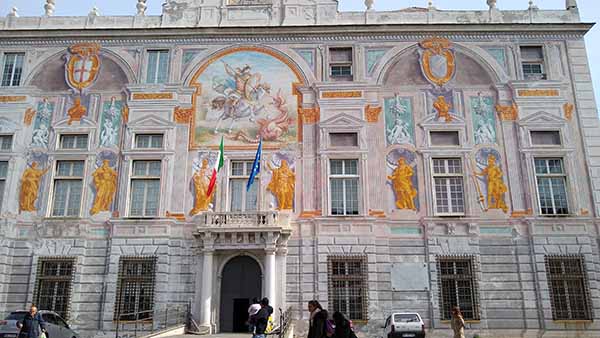 The regional capital is Genoa, and it is probably the biggest surprise of the lot. Genoa has a rather undeserved reputation for being industrial and uninteresting, but spend some time there and you will discover a fascinating historic city with magnificent palaces, churches and one of Italy's most important ports.
The old town is a maze of narrow streets known as caruggi, where you can wander around and never be quite sure where you are going to emerge. Some streets are elegant, others decidedly less so, but that is part of Genoa's character.
The Via Garibaldi, with its magnificent palaces, is particularly impressive. Several of these buildings form part of the UNESCO-listed historic centre and demonstrate just how wealthy Genoa became during its days as one of the Mediterranean's great maritime powers.
The Porto Antico has also been transformed and is now a pleasant waterfront area with restaurants, shops and attractions. It is a good place to appreciate Genoa's relationship with the sea.
And yes, Genoa is also the home of pesto.
You really should try it here. Pesto alla Genovese was born in Liguria and is traditionally made with basil, pine nuts, garlic, Parmesan, pecorino and olive oil. It is considerably better than the stuff that comes out of a supermarket jar.
Heading east from Genoa, the coastline becomes increasingly attractive, with a succession of resorts and fishing villages tucked between the mountains and the sea.
Camogli is a particular favourite. It is a colourful seaside town with tall, narrow houses painted in the traditional Ligurian style and a pleasant waterfront. It feels considerably more relaxed than some of the region's better-known destinations.
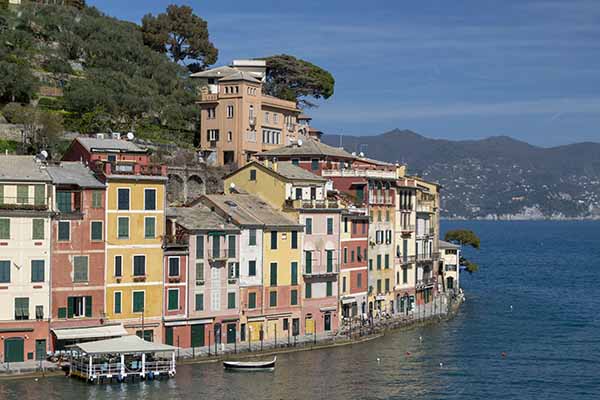 Nearby is Portofino, which is probably the most famous of Liguria's glamorous resorts. The tiny harbour, surrounded by colourful buildings and expensive restaurants, is undeniably beautiful.
It is also undeniably expensive.
Portofino has long been associated with celebrities and the wealthy, and the prices reflect it. But you don't have to spend a fortune to enjoy the place. Walk around the harbour, admire the yachts and enjoy the scenery before retreating somewhere slightly less expensive.
The nearby Abbazia di San Fruttuoso is another wonderful destination and can be reached by boat or on foot. The tiny abbey sits in a secluded cove surrounded by steep wooded hills, making it one of those places that feels almost hidden despite being a popular excursion.
Then we arrive at Cinque Terre.
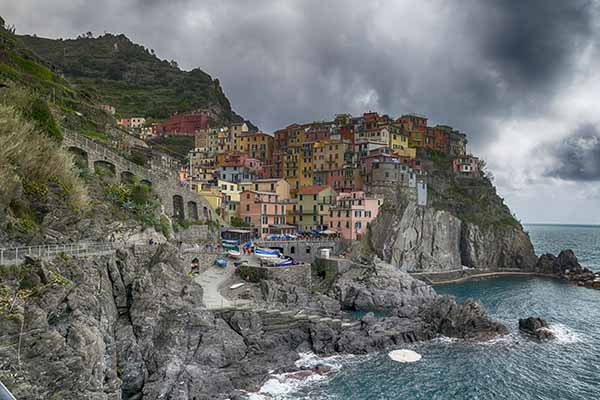 Literally meaning Five Lands, Cinque Terre consists of five villages — Monterosso al Mare, Vernazza, Corniglia, Manarola and Riomaggiore — strung along a spectacular section of coastline.
And yes, they really are as pretty as the photographs suggest.
The brightly coloured houses cling to steep hillsides above the Mediterranean, vineyards cover impossibly steep terraces and tiny harbours provide somewhere for fishing boats to shelter. It is almost ridiculously picturesque.
Vernazza is probably the star of the five. Its tiny harbour, colourful houses and church make it the classic Cinque Terre photograph.
Manarola is another favourite, particularly when viewed from the coastal path. The village seems to tumble down the hillside towards the sea.
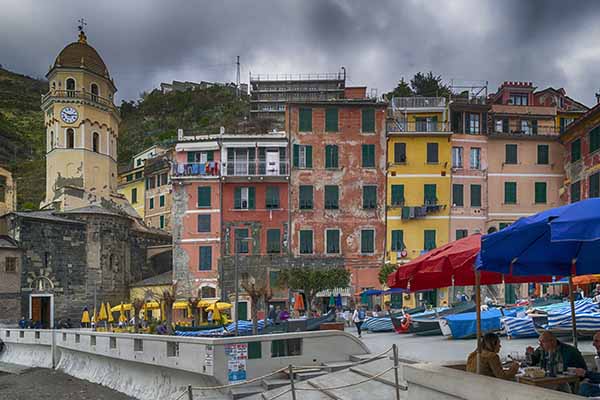 Riomaggiore has the same colourful vertical character, while Monterosso is more spread out and has the best beach of the five.
Corniglia is the odd one out because it sits high above the sea rather than directly beside it. Reaching it involves climbing a rather impressive number of steps from the railway station, although there is also a shuttle bus if you don't fancy testing your knees.
The traditional way to explore Cinque Terre is by train or on foot.
And I strongly recommend the train.
The railway connects all five villages and is infinitely easier than trying to drive. In fact, attempting to explore Cinque Terre by car is a good way of turning a beautiful holiday into an exercise in frustration. The roads are narrow, parking is limited and the villages are not designed for modern traffic.
Walking between the villages can be spectacular, although some sections of the famous coastal trails can close because of landslides or maintenance, so check conditions before setting off.
There is one rather large catch with Cinque Terre.
It is no longer a secret.
The villages can become absolutely packed in high season, particularly when cruise ships disgorge thousands of visitors into an area that was never designed for them. Vernazza can feel more like a railway station at rush hour than a sleepy Italian fishing village.
The answer is simple: go early, visit outside the peak season if possible and, ideally, stay overnight.
Once the day-trippers have gone, the villages become much more enjoyable. You can sit by the harbour in the evening, have dinner overlooking the sea and actually see the place rather than simply seeing the backs of thousands of other tourists.
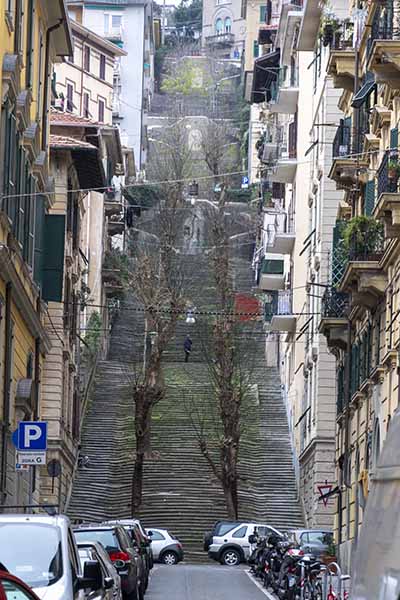 Beyond Cinque Terre, La Spezia is worth a visit in its own right and is an excellent base for exploring the area. It is a working port rather than a postcard village, but it has a pleasant waterfront and a lively atmosphere.
Further east is Lerici, which is another lovely coastal town. Its castle dominates the harbour and the town has a much more relaxed feel than some of the famous resorts. Nearby Tellaro is even smaller and is often described as one of Italy's prettiest villages.
Then there is Sanremo, over towards the French border.
Sanremo has a very different character from Cinque Terre. It is a traditional resort town, famous for its casino, flower production and music festival. The palm-lined waterfront and elegant buildings give it a slightly old-fashioned Mediterranean glamour.
Nearby Bordighera is another attractive resort, while Ventimiglia sits right on the French border and makes an interesting final stop before crossing into France.
Liguria is also a region where you should look inland occasionally.
The mountains rise almost immediately behind the coast, and a short drive inland can take you from busy seaside resorts into tiny villages, olive groves and quiet valleys. The contrast is remarkable.
And then there is the food.
Liguria's cuisine is based heavily around its Mediterranean setting, with seafood, vegetables, olive oil and herbs featuring prominently. Focaccia, especially the famous focaccia from Genoa, is almost compulsory. Pesto is everywhere, while local seafood restaurants make excellent use of what comes out of the Mediterranean.
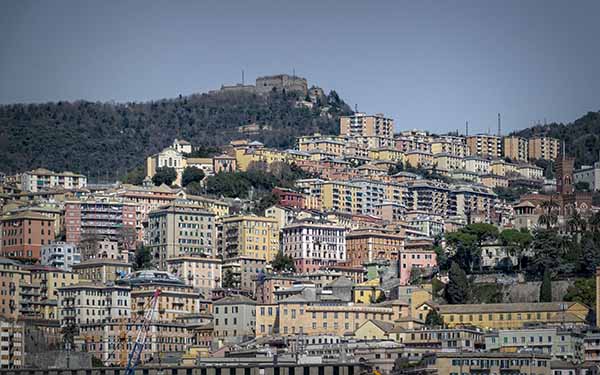 The Ligurian coastline is not particularly good for driving simply because the geography doesn't allow it. Roads twist around mountains and tunnels, towns are often squeezed into tiny strips between sea and hillside, and traffic can be frustrating.
 But that is also why the region is so spectacular. There simply isn't much room for development, so villages climb the hillsides and roads wind dramatically along the coast.
Liguria is therefore a region best explored slowly.
Don't simply tick off Portofino and the five Cinque Terre villages before moving on. Spend time in Genoa, stop at Camogli, explore Lerici and Tellaro, wander through the smaller villages and take a train or boat when the roads become tiresome.
And whatever you do, don't judge Liguria solely by its tourist hotspots.
Cinque Terre is spectacular, Portofino is beautiful and Genoa is fascinating, but the real pleasure of Liguria is discovering what lies between them.
It is colourful, dramatic, occasionally chaotic and often breathtaking.
Just don't expect to have the place to yourself.
Return to Italy Home Page