
Liverpool
Liverpool is a city with attitude. It has always had it, and despite decades of change, regeneration and attempts to make it behave itself, that attitude remains one of its greatest attractions. This is a city that has produced great music, great footballers, great comedians and some very strong opinions. It has also produced one of Britain's finest waterfronts, an extraordinary collection of architecture and a history that reaches far beyond The Beatles and football.
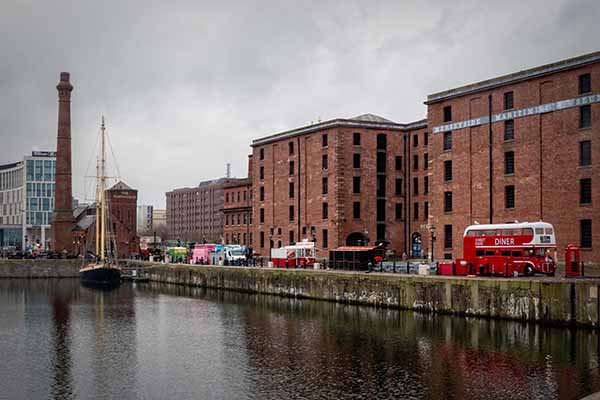 Liverpool's relationship with the River Mersey is fundamental to understanding the city. For centuries the river was Liverpool's gateway to the world, and the city's docks made it one of Britain's great trading ports. The ships brought wealth, people and goods from across the globe, but they also brought some very unpleasant aspects of Britain's history, including Liverpool's significant involvement in the transatlantic slave trade. The city has had to confront that history, and its museums do a good job of explaining both Liverpool's extraordinary rise and the darker side of the trade that helped create its wealth.
The place to start is the Royal Albert Dock. Once one of the busiest dock complexes in the world, it is now the heart of Liverpool's waterfront and probably the city's most successful regeneration project. The enormous brick warehouses remain, but instead of being packed with cargo they now contain museums, galleries, restaurants, bars and shops. The combination of historic architecture and open water makes it a particularly enjoyable place to wander.
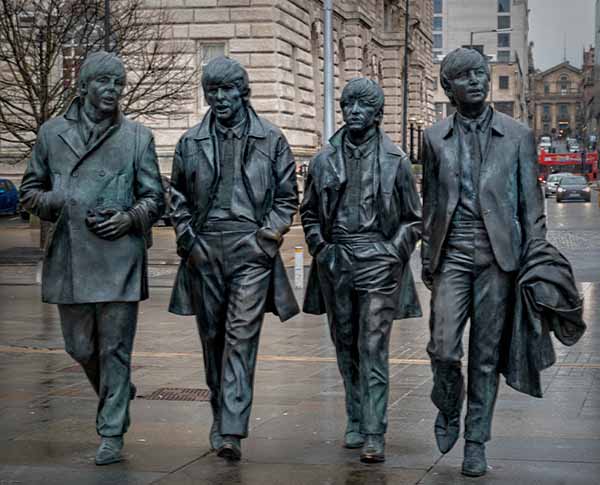
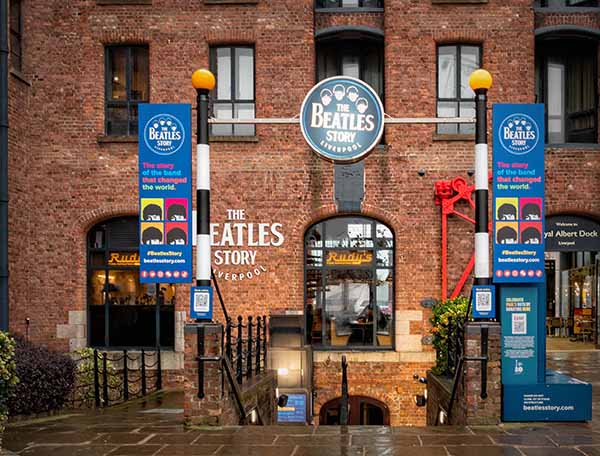 Among the attractions here is the The Beatles Story Museum, Liverpool. If you have even a passing interest in The Beatles, it is worth visiting. It tells the story of four lads from Liverpool who went from playing small clubs to becoming probably the most famous band in the history of popular music. The presentation is suitably theatrical, with reconstructed locations, memorabilia and plenty of nostalgia.
Times are seasonal but summer opening is 09:30 - 18:30, last admission 17:00
Adults (16+) £20.00, Concessions £16.00, Child (5-15) £11.00
And then there is the Cavern Club. Yes, it is touristy. Yes, the original club was demolished and the present version occupies a reconstruction using bricks from the old premises. And yes, you should still go. This is Liverpool's musical equivalent of standing on Abbey Road's zebra crossing: perhaps slightly ridiculous, but somehow compulsory. The Cavern remains a live music venue and is still at the centre of the city's Beatles mythology.
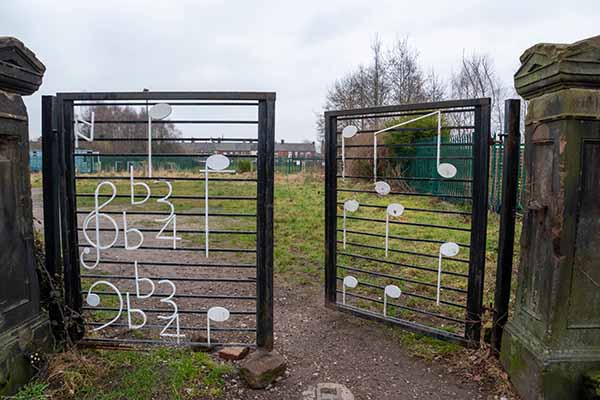 The Beatles story doesn't end in the city centre. Penny Lane, Strawberry Field and the childhood homes of John Lennon and Paul McCartney are all part of the pilgrimage. Strawberry Field is particularly atmospheric, although anyone expecting the famous gates to be surrounded by fields will discover that modern Liverpool has rather got in the way. Still, the song has immortalised the place and the gardens provide a peaceful contrast to the busier city centre.
Liverpool's musical heritage is actually considerably bigger than The Beatles. The city has produced generations of musicians and has a live music scene that remains one of its strengths. The British Music Experience at the waterfront broadens the story to British popular music generally, while the city's clubs and smaller venues continue to produce new talent. So even if you have reached your personal Beatles saturation point, you aren't short of alternatives.
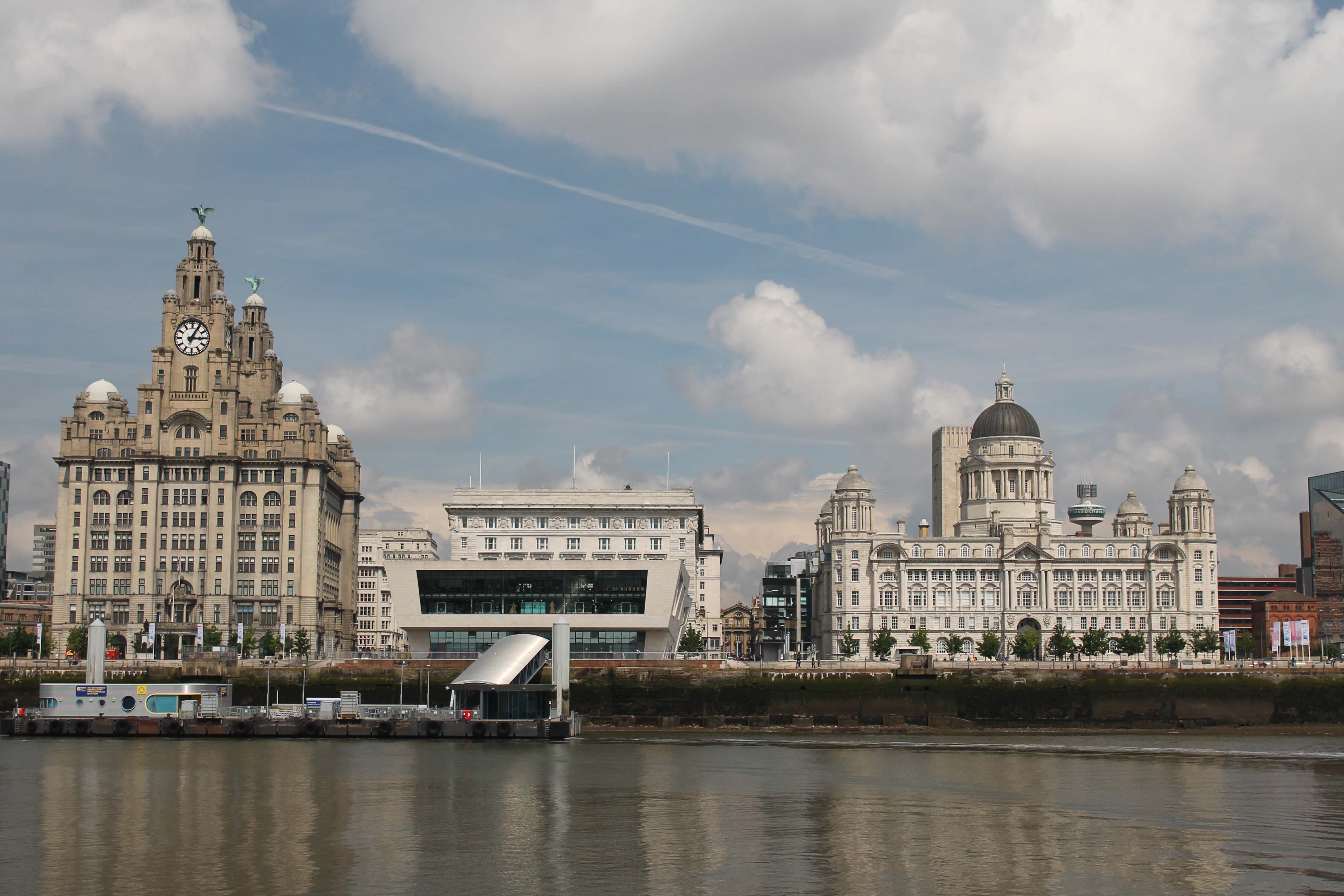 The waterfront itself is dominated by Liverpool's famous Three Graces: the Royal Liver Building, the Cunard Building and the Port of Liverpool Building. Together they form one of Britain's most magnificent urban waterfronts. The Royal Liver Building is the most recognisable, with the two Liver Birds perched on top. Legend says that if the birds ever fly away, Liverpool will cease to exist. Frankly, having seen the Liverpudlians' attachment to their city, I suspect they would simply go up and fetch them.
The Royal Liver Building 360 tour provides access to parts of the building and spectacular views from the clock tower. Those enormous clock faces are actually larger than those of Big Ben, which is another useful fact to deploy whenever somebody starts claiming London has all the good buildings.
The Royal Liver Building 360 Tour generally operates daily with tours starting from around 09:00 and standard opening hours running approximately from 10:00 to 16:00 PM (though schedules vary by season). Adult tickets cost around £16 to £17.50
No visit to Liverpool is complete without a trip across the Mersey. The famous ferry is not merely a means of getting from A to B; it is an attraction in its own right. The skyline looks particularly impressive from the water, and you gain a much better understanding of how the city developed around its docks and river. Even if you don't sing "Ferry Cross the Mersey", somebody nearby almost certainly will.
The circular River Explorer Cruise lasts around fifty minutes, departing hourly from the Pier Head before calling at Seacombe and Woodside on the Wirral. Adults (16+) £14.00, Concessions £12.50, Child (5-15) £9.00. Evening sunset cruises with prosecco and live music operate Friday, Saturday and Sundays from May to October, obviously times vary, cost is £25.00 a head and the cruise lasts around 2½ hours
For history beyond ships and pop music, head into the city centre and you will find the Museum of Liverpool. This is where the story of the city and its people is brought together, covering everything from the port and migration to social history, sport, music and everyday life. It is one of the places that helps explain why Liverpool is quite so different from many other British cities.
Nearby, the Maritime Museum explores Liverpool's extraordinary maritime past. The International Slavery Museum adds the difficult but essential story of the city's involvement in the slave trade and its legacy. At present, the International Slavery Museum and Maritime Museum are undergoing major works, so check arrangements before visiting.
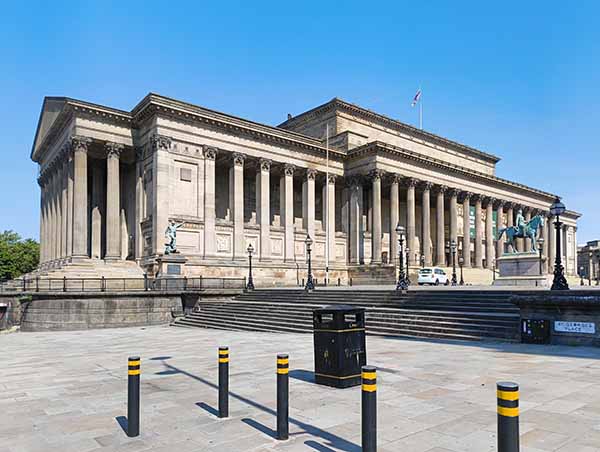 Liverpool is blessed with some magnificent public buildings. St George's Hall is arguably the finest of them all. Standing opposite Lime Street Station, this enormous neoclassical building is almost ridiculously grand. You step out of the station and there it is, as though Liverpool decided that arriving by train should feel like entering an imperial capital.
The surrounding St George's Quarter is equally impressive, with the Walker Art Gallery and World Museum nearby. World Museum is one of those places where you can wander in intending to spend half an hour and emerge several hours later wondering where the afternoon went. Its collections cover natural history, archaeology, world cultures, science and much more. Liverpool is particularly good at museums, and many of them are free, which is always an attractive word when travelling.
The Walker Art Gallery is another gem, with an impressive collection of paintings and sculpture. Together with the nearby World Museum and St George's Hall, it makes this part of the city particularly good for anyone who thinks a city break should involve something more substantial than shopping and drinking.
Then there are Liverpool's two cathedrals, which could hardly be more different.
Liverpool Cathedral, the Anglican cathedral, is an enormous Gothic Revival masterpiece. It dominates the skyline and is on such a scale that calling it merely a church seems rather inadequate. The interior is vast, dramatic and surprisingly light, and the tower provides superb views over the city. It is officially the largest cathedral in Britain, and standing inside it you won't find that particularly difficult to believe.
Admission to the cathedral is free. If you're reasonably fit, consider paying the small additional charge to visit the Cathedral Tower. (£7.00)
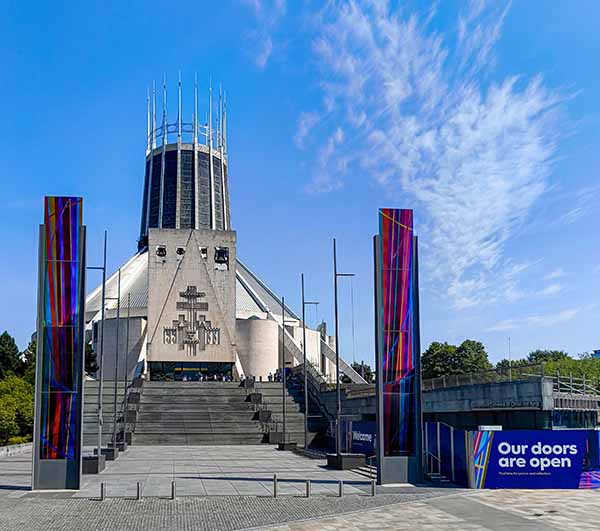 At the other end of Hope Street is the Metropolitan Cathedral of Christ the King, affectionately known by locals as Paddy's Wigwam. Its huge circular form, crown-like lantern and extraordinary stained glass make it one of the most distinctive modern churches in Britain. Having two such completely different cathedrals within walking distance of one another is one of Liverpool's architectural curiosities.
Hope Street itself is worth exploring, particularly for its restaurants and Georgian architecture. The Georgian Quarter is one of the city's most attractive areas and provides a welcome contrast to the more heavily redeveloped centre.
Another fascinating reminder of Liverpool's wartime importance is Western Approaches. Hidden beneath the city centre, this enormous underground wartime command centre played a crucial role in the Battle of the Atlantic. It is wonderfully atmospheric and far removed from the polished waterfront attractions. If you like military history, this is one of Liverpool's less obvious but particularly worthwhile visits.
For greenery, Liverpool is better provided for than you might expect. Sefton Park is the great favourite, a huge Victorian park south of the city centre. The Palm House is the star attraction, while the lake and extensive grounds provide plenty of space to escape the traffic. Liverpool's parks are another reminder that this is not simply a collection of docks, warehouses and city streets.
And then there is Speke Hall. This splendid timber-framed Tudor house sits surprisingly close to Liverpool's airport and provides another complete change of atmosphere. The house, gardens and estate offer a glimpse of what the area was like long before modern Liverpool swallowed it up. It is one of those places that is easily overlooked when visitors concentrate exclusively on the city centre.
Liverpool's shopping has changed dramatically over the years. Liverpool ONE transformed a substantial area of the city centre and is now packed with shops, restaurants, bars and entertainment. It is modern, busy and perfectly competent, although personally I would spend rather more time looking at Liverpool's buildings than looking at another branch of a shop you can find in Milton Keynes.
The Baltic Triangle is rather more interesting. Once an industrial area, it has become Liverpool's creative quarter, with street art, independent businesses, food, music and nightlife. It is the sort of place where Liverpool's ability to reinvent itself is particularly obvious.
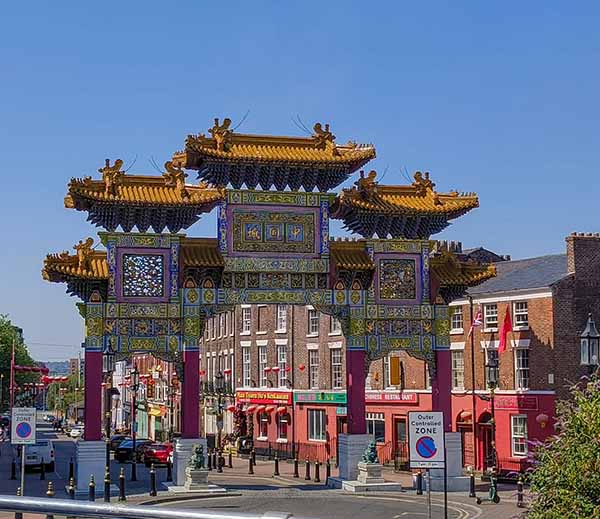 Chinatown is another part of the city worth seeing. Liverpool has one of Europe's oldest Chinese communities, and the enormous Chinese Arch at the entrance is an impressive landmark. Again, it demonstrates that Liverpool's history is inseparable from migration and its connections with the wider world.
Football, of course, cannot be ignored entirely. Liverpool has two famous clubs, Liverpool FC and Everton, and football is deeply embedded in the city's identity. Even if, like me, you regard football as something that happens while you're trying to get somewhere else, the atmosphere around match days is difficult to ignore. Anfield offers stadium tours for those who are interested, while Everton's new waterfront stadium adds another striking feature to the city's changing skyline.
But Liverpool's greatest strength isn't any individual attraction. It is the sheer variety packed into a relatively compact city. You can spend the morning exploring a Tudor warship's maritime heritage, the afternoon following The Beatles, visit an enormous cathedral, wander through a Victorian park, inspect a collection of world-class art and finish the day listening to live music.
And perhaps most importantly, Liverpool has personality. Some cities are beautiful but rather sterile. Liverpool can be scruffy around the edges, but it has character in abundance. The accent alone tells you that you are somewhere different, and the humour is wonderfully direct. Liverpudlians have a reputation for being friendly, and in my experience it is well deserved — although asking someone which football team they support may result in a conversation considerably longer than you intended.
 There are parts of Liverpool that have not aged gracefully, and some regeneration projects have produced areas that feel rather too sanitised. But the city has retained enough of its old character to prevent it becoming another identikit modern shopping destination.
Old Moaner's verdict: Liverpool is one of Britain's genuinely great cities. It has history, architecture, music, museums, waterfront scenery, parks and more personality than most places could fit into twice the space. The Beatles and football may be the things that initially put it on the map for many visitors, but they are only part of the story.
Come for the Beatles, by all means. Visit the Cavern, stand beside the Liver Birds and cross the Mersey. But then put the music to one side and explore the rest of the city. Discover the cathedrals, museums, Georgian streets, Victorian parks, old docks and underground tunnels.
Liverpool has had its problems and it isn't perfect — far from it — but perhaps that is part of the attraction. It feels like a real city rather than a museum created for tourists.
And that, ultimately, is why Liverpool works so well.
It has soul.
(prices quoted correct as at August 2026)
Return to North West home page
Return to Coast Siloth - Hoylake