
Malta
Malta is one of those places that manages to pack an extraordinary amount into a remarkably small space. It is tiny — you can cross much of the island in little more than an hour — but wherever you go there seems to be another church, fortress, ancient ruin, spectacular coastline or historic town demanding your attention. Add sunshine, warm seas and a distinctly Mediterranean atmosphere and you have a pretty compelling destination.
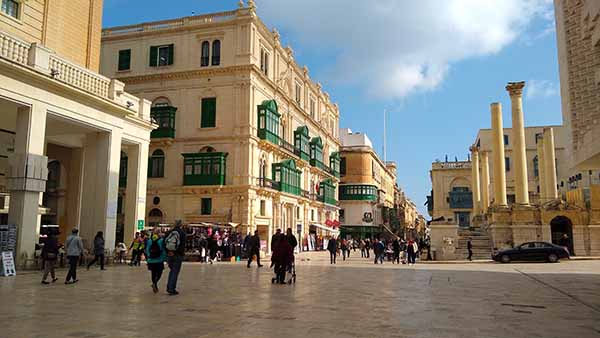 The first thing that strikes you is that Malta doesn't really look like anywhere else. The buildings are predominantly constructed from the island's distinctive honey-coloured limestone, which gives towns and villages a wonderfully warm appearance in the sunshine. Then you notice the balconies — brightly painted, enclosed wooden structures jutting out over the streets — and the churches, which seem to have been built on the principle that one enormous dome is never quite enough.
And then there is the history. Malta has been fought over, occupied and influenced by an extraordinary succession of civilisations. Phoenicians, Carthaginians, Romans, Arabs, Normans and the Knights of St John have all left their mark, followed eventually by the French and the British. The result is a cultural mish-mash which is fascinating rather than confusing.
The island's prehistoric history is particularly remarkable. Malta is home to some of the world's oldest free-standing stone structures, considerably older than Stonehenge or the Egyptian pyramids. The megalithic temples at Ħaġar Qim and Mnajdra are astonishing survivals from a prehistoric civilisation that flourished thousands of years ago. Quite what these people were up to remains partly a mystery, but they certainly knew how to build things that lasted.
Valletta
The obvious place to start is Valletta, the capital and one of Europe's great historic cities. It is compact enough to explore on foot, although some of those streets have gradients that remind you that the Knights of St John clearly weren't particularly concerned about accessibility.
 Valletta was built by the Knights following the Great Siege of 1565, when the Ottoman Empire attempted to take Malta. The Knights survived, the Ottomans departed, and the rather grand city that followed was their thank-you present to themselves.
The result is a magnificent collection of limestone buildings, grand palaces, churches and fortifications packed into a relatively small area.
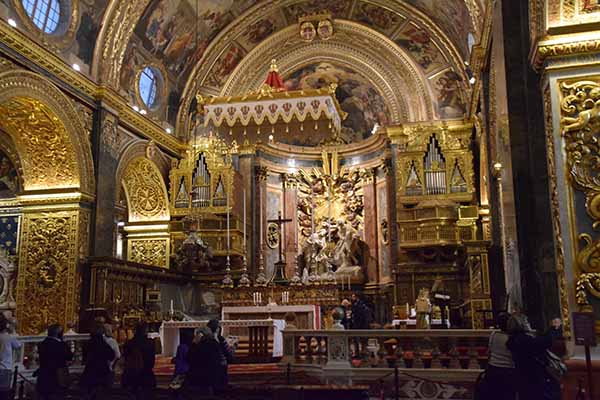
The star attraction is St John's Co-Cathedral. From outside it is impressive enough, but inside it is almost ridiculously ornate. Gold, marble, paintings and decoration are everywhere. It contains Caravaggio's enormous The Beheading of Saint John the Baptist, one of the artist's greatest works.
General admission to St. John's Co-Cathedral costs €15.00 (£12.75) for adults and €12.00 (£10.25) for seniors and students, with free entry for children under 12.
The Upper Barrakka Gardens provide one of the finest views on the island, looking across the Grand Harbour towards the historic Three Cities. The harbour itself is worth exploring, either by boat or simply by finding somewhere to sit and watching the constant comings and goings.
Valletta also has an excellent selection of cafés, restaurants and bars, although prices in the more touristy parts can be considerably less charming than the architecture.
The Three Cities
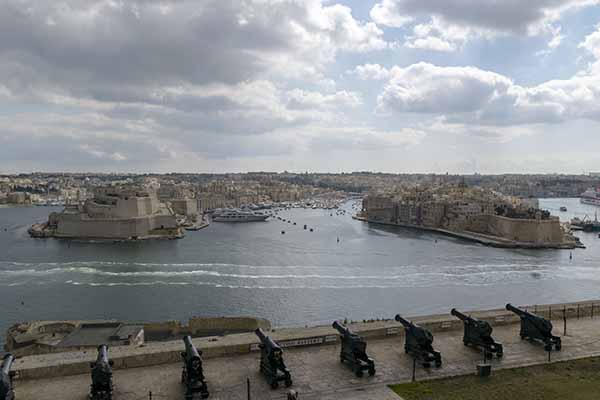 Across the Grand Harbour lie the Three Cities — Vittoriosa, Senglea and Cospicua — and these are well worth visiting rather than simply admiring them from Valletta.
Vittoriosa, also known as Birgu, is probably the most attractive of the three, with narrow streets, old buildings and a strong maritime atmosphere. It was the Knights' original base before Valletta was constructed.
Senglea occupies a narrow peninsula and has spectacular harbour views, while Cospicua completes the trio.
They are quieter and, in places, feel considerably more authentic than the centre of Valletta. If Valletta feels like Malta's grand historical showcase, the Three Cities provide more of a glimpse of ordinary Maltese life.
Mdina
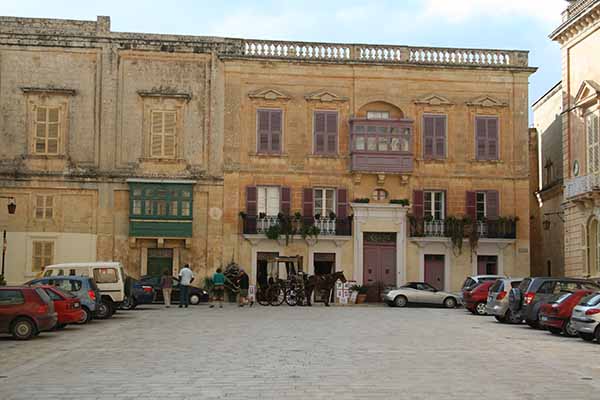 Then there is Mdina, the wonderfully atmospheric former capital of Malta.
Known as the "Silent City", Mdina is almost entirely enclosed within its ancient walls. Enter through the grand city gate and you find a maze of narrow, winding streets, magnificent palaces and rather lovely limestone buildings.
It is one of those places where wandering around without a particular objective is probably the best way to experience it.
Next door is Rabat, which is considerably less glamorous but has its own attractions, particularly the extensive catacombs beneath the town.
Mdina is particularly impressive towards evening when the heat of the day begins to disappear and the golden limestone takes on an even richer colour. It can, however, become extremely busy during the day, so arriving early or staying later is a good idea.
Mosta and the Rotunda
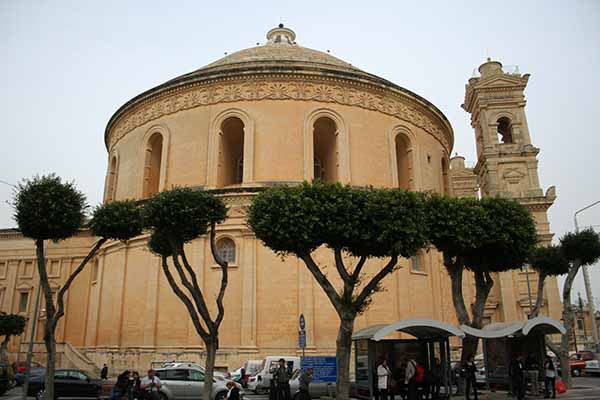 Mosta is dominated by one of Malta's most spectacular buildings, the Mosta Rotunda, officially the Basilica of the Assumption of Our Lady. Built between 1833 and 1860, this enormous neoclassical church has a dome almost 40 metres across internally, making it one of the largest unsupported domes in the world.
But it isn't simply the size of the dome that makes the Rotunda so memorable. On 9 April 1942, during the Second World War, a 500kg bomb crashed through the dome while around 300 people were inside attending a service. The bomb failed to explode and, incredibly, nobody was killed. The Maltese regard it as the Miracle of Mosta, and a replica of the bomb can be seen inside the church.
Mosta is therefore far more than a quick stop to photograph a big church. It combines remarkable architecture with one of the most extraordinary survival stories of the Second World War — and for once, the word miracle doesn't seem entirely out of place.
The Blue Grotto and the coast
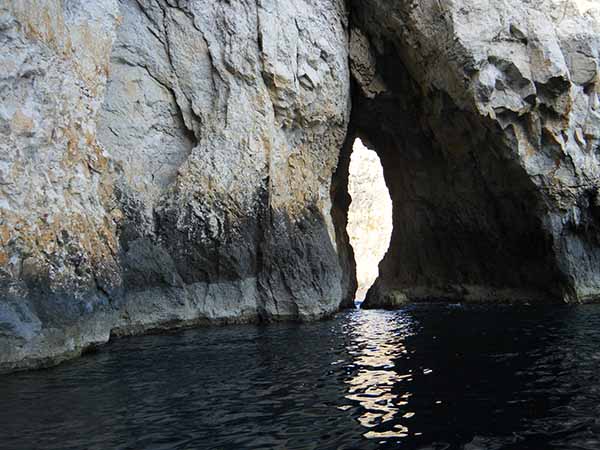 Malta's coastline is another major attraction. The Blue Grotto on the south coast is the most famous, with a series of sea caves and spectacularly clear blue water. Boat trips take visitors into the caves when sea conditions permit.
Nearby Ħaġar Qim and Mnajdra combine the scenery with Malta's prehistoric heritage, sitting dramatically above the Mediterranean.
There are plenty of other bays and rocky stretches of coastline to discover, although Malta isn't blessed with endless sandy beaches. Much of the coastline is rugged limestone, which makes it excellent for swimming and snorkelling but somewhat less ideal if your idea of a beach holiday involves acres of soft sand.
A standard boat trip inside the Blue Grotto costs €10.00 (£8.50) to €12.00 (£10.25) for adults and €5.00 (£4.25) to €8.00 (£6.75) for children, while infants ride for free
The Maltese villages
One of Malta's pleasures is simply driving around the island and stopping in some of its villages.
Most have a large parish church dominating the centre, often accompanied by a surprisingly grand square. Maltese village churches are frequently enormous compared with the communities they serve, and local pride in them is obvious.
The village festas are particularly spectacular, with streets decorated, bands playing and fireworks being launched with the sort of enthusiasm that suggests nobody has mentioned noise restrictions.
The Maltese also have a rather wonderful habit of decorating their balconies and houses in different colours, making even quite ordinary streets surprisingly photogenic.
Marsaxlokk
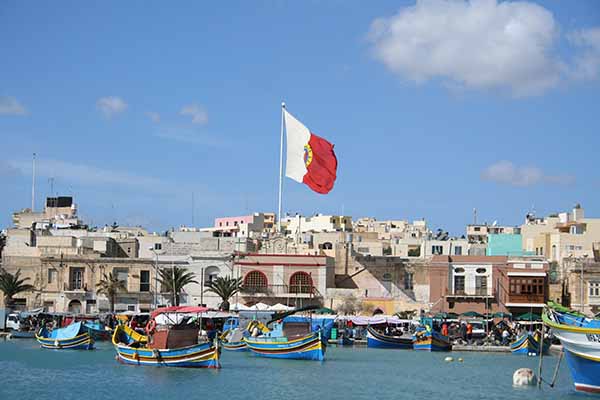 Marsaxlokk is Malta's traditional fishing village and one of the places that still provides a strong connection with the island's maritime past.
The harbour is filled with colourful luzzus, the traditional Maltese fishing boats, usually painted in bright shades and recognisable by the distinctive eyes painted on their bows.
The Sunday market attracts plenty of visitors, so it isn't exactly undiscovered, but the harbour remains an attractive place for a stroll and a seafood lunch.
The prehistoric temples
Malta's prehistoric monuments deserve more than a passing mention because they are genuinely extraordinary.
The temples at Ħaġar Qim and Mnajdra date back thousands of years, while the Tarxien Temples and the remarkable underground Ħal Saflieni Hypogeum provide further evidence of a sophisticated prehistoric culture.
The Hypogeum is particularly fascinating — an underground complex carved out of the rock and believed to have served both ritual and burial purposes. Access is limited, so advance planning is essential.
For anyone interested in ancient history, Malta is rather extraordinary. You can spend the morning looking at a British military installation, the afternoon wandering around a medieval city and then contemplate monuments built before the pyramids.
The food
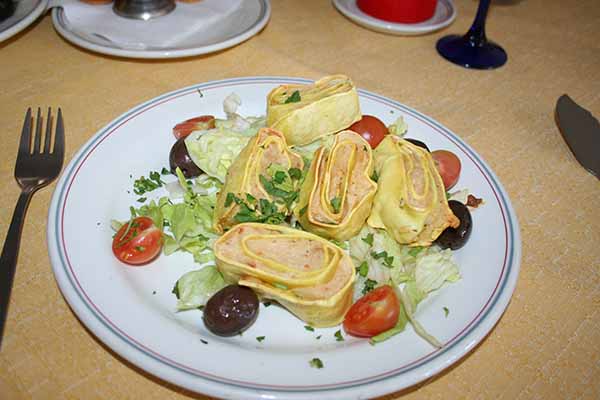 Maltese food is another interesting mixture of influences. Rabbit is traditionally regarded as the national dish, while pastizzi — little flaky pastries filled with ricotta or mushy peas — are practically compulsory.
There is also plenty of fresh fish and seafood, together with Italian, North African and British influences.
And naturally there is bread. Maltese bread is taken seriously, and quite rightly so.
The food is generally hearty rather than pretentious, although the tourist areas have developed the usual collection of restaurants offering menus designed to satisfy everybody from the adventurous traveller to somebody who apparently thinks eating abroad means ordering fish and chips.
Getting around
Malta is small, but don't assume that means getting around is always easy.
The roads can be busy and potholes are an accepted hazard, parking can be an absolute nightmare and Maltese driving occasionally operates according to a set of rules known only to the driver involved. Public buses cover the island and can be useful, although journey times can be surprisingly long when traffic is heavy.
Malta used to be famous for its iconic buses, some in better condition than others, it used to be an experience looking through a hole in the floor as the bus hurtled around corners. Now, because of EU regulations, Malta buses are no different than buses elsewhere and that's a crying shame.
Hiring a car gives you considerably more freedom, but whether you actually want the responsibility is another matter.
The good news is that nothing is particularly far away. With a bit of planning you can see a remarkable amount of Malta in a relatively short stay.
Malta's biggest problem
Malta isn't perfect.
The island is heavily developed, particularly around the main urban areas, and construction seems to be a permanent feature of the landscape. Traffic can be dreadful and some areas have suffered from rather too much concrete and rather too little planning.
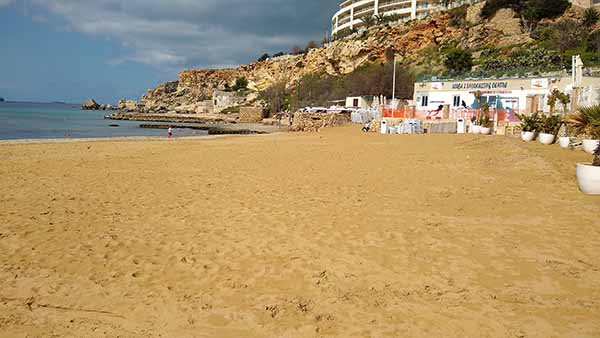 It can also become extremely busy during the summer months. Malta is no longer the quiet Mediterranean backwater that some people may remember from decades ago.
But that is balanced by an astonishing concentration of history, beautiful coastline, friendly people, excellent food and some genuinely spectacular sights.
And perhaps that is the best way to sum up Malta. It is small, busy, occasionally frustrating and sometimes undeniably overdeveloped — but underneath all that is an island with an extraordinary story.
You can come here for the sunshine and beaches, but that would be selling Malta rather short. Come for the history, the architecture, the harbours, the prehistoric monuments and the sheer variety packed into such a small piece of land.
Just don't try to see everything in a day. Malta may be small, but it has been around for a very, very long time and has accumulated an awful lot along the way.
(prices quoted correct as at September 2026)
Return to Malta home page