
Manchester
Manchester is a city that has never been afraid of hard work, and you can still see the evidence everywhere. It was the world's first industrial city in many respects, built on cotton, engineering, canals, warehouses and the remarkable ingenuity of people who apparently thought that if something couldn't be done, the answer was to invent a machine that could do it.
Today Manchester is a very different city, but its industrial past remains one of its greatest assets. Old warehouses have become apartments, mills have become cultural venues and canals that once carried coal and cotton now provide pleasant walks through the centre. Add some excellent museums, impressive Victorian architecture, a thriving music scene and a good selection of restaurants and bars, and Manchester makes a particularly interesting city break.
The obvious place to start is Castlefield, where the city's Roman origins meet its industrial heritage. This is where the Roman fort of Mamucium was established, and reconstructed sections give an idea of the settlement that stood here nearly 2,000 years ago. The area later became a major transport hub, with canals and railways converging on the city.
Today Castlefield is one of Manchester's most attractive areas. The canals are lined with old warehouses, bridges and converted buildings, while paths make it possible to explore without constantly having to dodge traffic. It is a particularly good place for a walk on a sunny day — although Manchester's reputation for rain remains stubbornly intact.
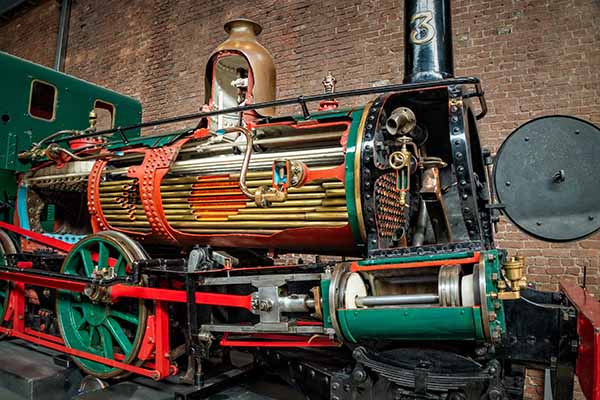 The Science and Industry Museum is nearby and is probably the single best place to understand why Manchester became so important. Housed partly in the world's oldest surviving passenger railway station, it tells the story of Manchester's industrial revolution and its contribution to science, engineering and technology. Steam engines, locomotives, machinery and textile exhibits demonstrate how dramatically the city changed the world.
The most interesting exhibit for me was a cutaway of a steam railway engine which illustrates how complex they are.
The museum is open daily from 10:00 - 17:00. Admission is free but with a suggested donation of £5.00, which I suggest is worth every penny.
The People's History Museum provides a different perspective, exploring Britain's political and social history, particularly the development of democracy, trade unionism and working-class movements. It is a very appropriate museum for Manchester, a city with a long tradition of challenging the establishment. It is very interesting with some excellent displays, although you may come away either impressed or mildly irritated, depending on where you sit on the political spectrum. It's certainly presented from a particular political standpoint.
The museum is open 10:00 - 17:00 Wednesday - Monday, admission is free with a suggested donation of £10.00
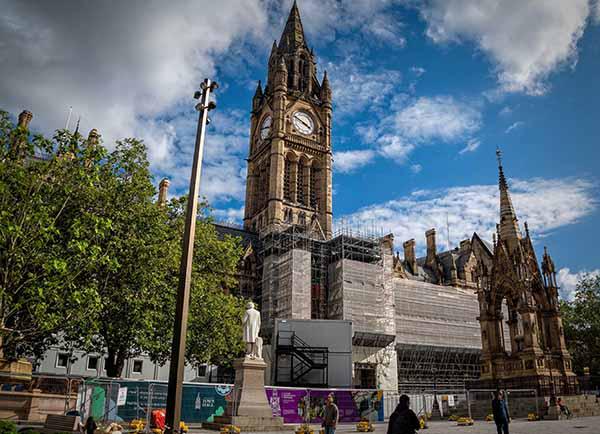 Manchester's civic architecture is equally impressive. Manchester Town Hall is one of Britain's finest Victorian Gothic buildings, with its magnificent tower and elaborate decoration. Unfortunately, major restoration works have meant that visitors have had to admire it from outside for several years, but the building remains an extraordinary sight.
Fortunately, Manchester has no shortage of other grand buildings. The John Rylands Library is particularly spectacular. Its Gothic reading room looks more like the interior of a cathedral than a library, and the collections contain some extraordinarily valuable manuscripts and books. Even people who normally regard libraries as places to return books can find this one impressive.
The city centre is also home to Manchester Cathedral, whose origins are medieval. It has been extensively restored over the centuries, particularly after wartime damage, but retains a strong sense of history. Its position beside the modern city is another example of Manchester's mixture of old and new. It is set in the impressive medieval quarter, which provides quite a contrast to the predominant red brick elsewhere in the city.
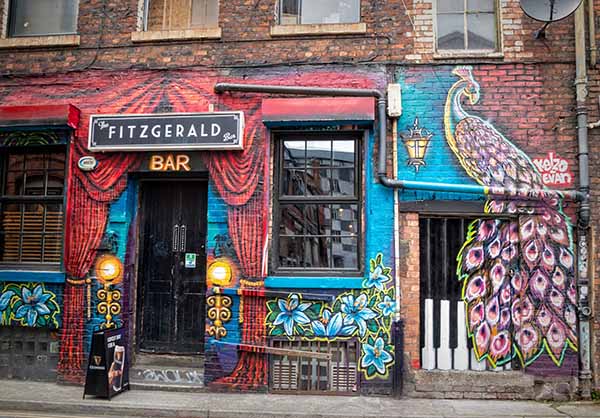 Then there is the Northern Quarter, which is probably the part of Manchester most likely to appeal to anyone who likes independent shops, cafés, bars, street art and music. Former warehouses and small industrial buildings have been turned into a lively neighbourhood full of character.
It is also an area where Manchester's musical heritage becomes obvious. The city has produced an extraordinary list of bands and artists, from Joy Division and New Order to Oasis, The Smiths and countless others. Manchester's music scene is not simply something that belongs in a museum; live music remains an important part of the city's identity.
The National Football Museum sits beside Manchester Cathedral and, despite my usual reluctance to encourage football tourism, deserves a mention simply because it is an impressive museum. You don't need to understand the offside rule to appreciate the social and cultural history surrounding the sport.
For those who do want football, of course, Manchester has two clubs with global followings. Stadium tours are available at both Manchester United's Old Trafford and Manchester City's Etihad Stadium. For everyone else, the important thing to remember is that mentioning one club in the wrong pub can be considerably more dangerous than visiting a museum about them. For those like me there are other sports, cricket at Old Trafford cricket ground and Premiership Rugby's Sale Sharks.
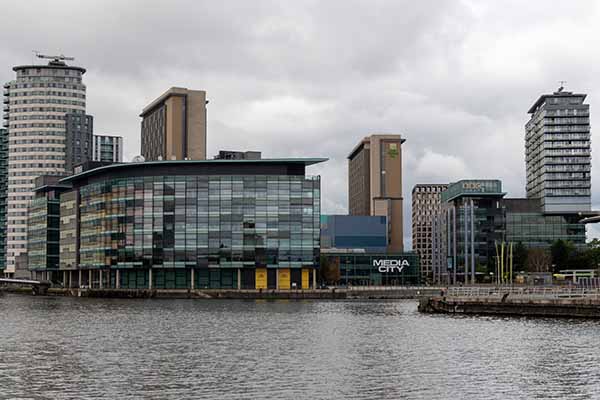 One of Manchester's most successful transformations can be seen around Salford Quays. Once a heavily industrial dock area, it has been transformed into a modern waterfront district with cultural attractions, offices, restaurants and apartments.
The star attraction is The Lowry, named after artist L. S. Lowry and containing galleries, theatres and performance spaces. Nearby is the Imperial War Museum North, housed in Daniel Libeskind's striking building. Its exhibitions explore the impact of conflict on people's lives, and the building itself is worth seeing even before you go inside.
The BBC's base at MediaCityUK has also helped transform Salford Quays into a major media and creative centre. The contrast between the old docks and the modern skyline is particularly striking.
Manchester is also a city of canals. The Bridgewater Canal, opened in 1761, was revolutionary because it allowed coal to be transported cheaply from the Duke of Bridgewater's mines. It is often regarded as Britain's first true canal and helped trigger the canal-building boom that followed.
Today, the canals are considerably more peaceful. Walking beside them provides a pleasant way of seeing the city from a different angle, and the old industrial buildings that line their banks are a reminder that Manchester's prosperity was built on transport as much as factories.
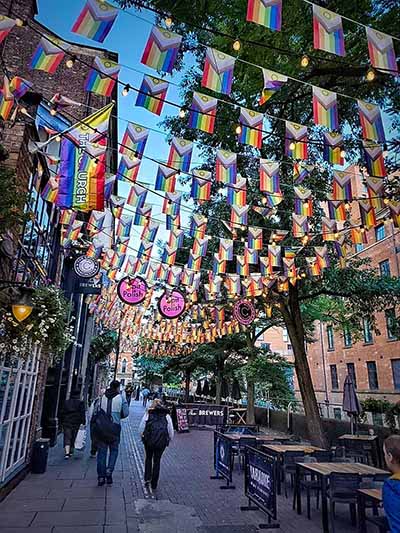 Manchester’s Gay Village is centred around Canal Street, right in the heart of the city, and is one of Manchester’s liveliest and most colourful areas. Lined with bars, clubs, cafés and restaurants, the canal itself provides a pleasant backdrop, particularly when the area comes alive after dark. The Village has a long history as an important centre for Manchester’s LGBTQ+ community and played a significant part in the city’s reputation for being open-minded and welcoming. It’s not just about nightlife either; the area is a good place to wander during the day, with plenty of interesting architecture and street art to discover. For an even bigger dose of the Village, visit during Manchester Pride, when Canal Street and the surrounding streets become the focus of one of the UK’s largest Pride celebrations.
Shopping is well catered for too. The city centre has the Arndale Centre and the pedestrianised Market Street, while King Street offers a more upmarket selection. The independent businesses of the Northern Quarter provide something rather more interesting if you have no desire to spend your day in another shopping centre. Further out, the Trafford Centre is one of the UK's premier shopping centres.
Manchester's food scene has developed enormously. There is everything from traditional northern pubs to restaurants representing cuisines from around the world, reflecting the city's long history of immigration. Curry Mile in Rusholme is particularly famous, although these days the term covers a much broader range of Middle Eastern, South Asian and other restaurants than the name might suggest.
One of Manchester's strengths is that it isn't trying to be beautiful in the conventional sense. Parts of the centre are modern and rather functional, while other areas still bear the scars of industrial decline. But look more closely and there is an enormous amount of architectural interest.
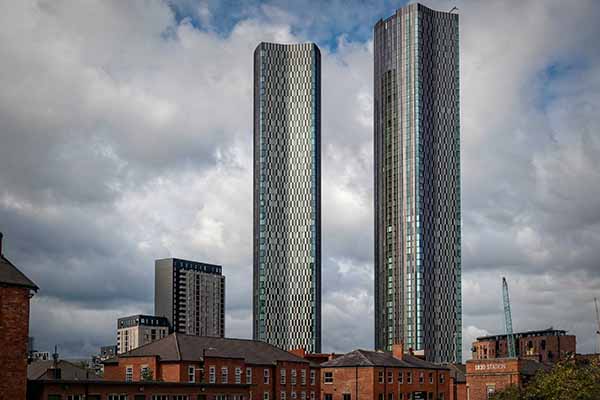 The Manchester School of Architecture has long had an important influence on the city, while Victorian commercial buildings, former warehouses, railway stations and industrial structures provide a remarkably varied streetscape, not to mention some very impressive modern tower blocks..
Manchester also has plenty of green space. Heaton Park, north of the city centre, is one of the largest municipal parks in Europe and contains gardens, woodland, a boating lake and Heaton Hall. It is an excellent escape from the city and hosts major outdoor events.
The city also makes a good base for exploring the surrounding countryside. The Peak District is not far away, while the Pennines provide plenty of opportunities for walking. You can therefore combine a city break with some proper countryside without having to spend half the holiday travelling.
And Manchester is remarkably well connected. The railway network brings you into the centre at Manchester Piccadilly, while trams provide an extensive Metrolink network around the city and surrounding areas. The system isn't perfect — this is public transport, after all — but it makes getting around considerably easier than relying on a car.
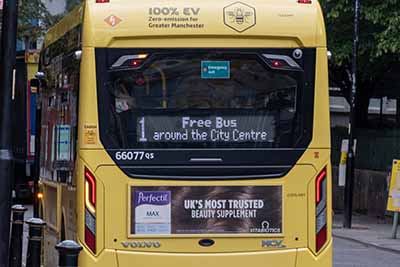 One great asset are two free bus routes linking the city centre attractions, so if you don't feel like walking they are a great way to move between locations.
There are, inevitably, things to moan about. Manchester has undergone enormous redevelopment and some parts of the city centre now feel rather too dominated by apartment blocks, chains and construction sites. Traffic can be dreadful, particularly when roadworks decide to coincide with a football match, concert and rainstorm.
The weather also remains Manchester's favourite joke. It doesn't actually rain constantly, but the city's reputation has become so firmly established that a sunny afternoon feels like a special event.
Yet the regeneration has also saved huge amounts of historic architecture and given old industrial areas a new purpose. Manchester is a city that has repeatedly reinvented itself, and that ability to adapt is probably its greatest characteristic.
Old Moaner's verdict: Manchester is one of Britain's most interesting cities. It doesn't have the obvious prettiness of York or Bath, but it has something arguably more valuable — a story.
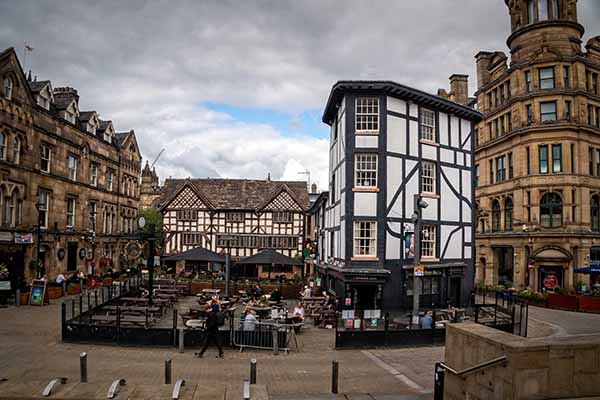 It was at the heart of the Industrial Revolution, helped create the modern canal and railway networks, became a global centre for cotton, developed a powerful political and cultural identity and later reinvented itself as a centre for music, media, education, science and the arts.
Don't come here expecting a tidy collection of historic buildings surrounded by flower beds. Come expecting a proper city, with grand architecture alongside industrial grit, old canals beside modern skyscrapers and museums explaining how Manchester helped change the world.
And whatever your feelings about football, don't let two enormous stadiums convince you that Manchester is all about sport.
The cotton mills, canals, libraries, museums, music, architecture and people tell a much more interesting story.
Manchester may not always be pretty.
But it is fascinating — and that is considerably better.
(prices quoted correct as at September 2026)
Return to North West home page