
Milan
Milan is Italy’s second city and, in many ways, feels rather different from the Italy that most visitors imagine. Forget the rolling Tuscan countryside, ancient ruins and sleepy hilltop villages for a moment because Milan is Italy at its most modern, fashionable and businesslike. It is a large, busy city, but fortunately it has enough history, architecture and character to stop it becoming just another European metropolis.
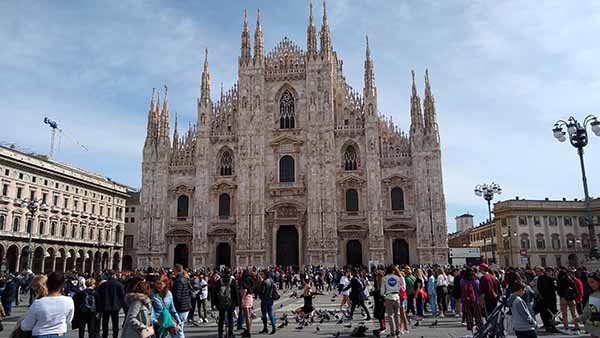 The obvious place to start is the Duomo, and there is no getting away from it because it dominates the centre of Milan. It is an enormous Gothic masterpiece, covered in an extraordinary number of statues and pinnacles. From ground level it is impressive enough, but the real treat is getting up onto the roof, where you can wander among the spires and statues with magnificent views across the city. On a clear day you can even see the Alps in the distance. It is one of those places where the photographs really don't do it justice.
Right next door is the Galleria Vittorio Emanuele II, one of Europe's grandest shopping arcades.
The huge glass roof, elegant mosaics and ornate architecture make it worth visiting even if, like me, you have absolutely no intention of buying anything from the rather expensive shops inside.
Look down at the famous mosaic of the bull and you will see tourists performing the traditional ritual of spinning around on its rather worn-out testicles. Quite why this became a Milanese tradition is anyone's guess, but apparently it brings good luck.
It is full of designer stores, if you're looking for C&A, M&S or, dare I say, Primark then this is definitely not the place for you.
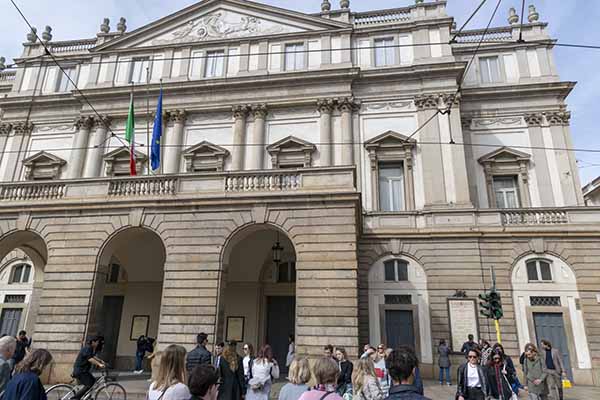 At the far end of the Galleria is La Scala, one of the world's most famous opera houses.
 The exterior is surprisingly restrained considering its reputation, (and very easy to miss if you aren't paying attention) but inside it is a different story. Even if opera isn't your thing, it is worth seeing simply for the history of the place and the extraordinary list of composers, singers and performers associated with it.
Milan also has its fair share of impressive churches. Santa Maria delle Grazie is particularly important because it contains Leonardo da Vinci's The Last Supper. This is one of those attractions where you really do need to plan ahead because access is strictly controlled and tickets are limited. The painting itself has had a rather troubled history, but seeing Leonardo's work in the place for which it was created is undoubtedly one of Milan's highlights.
For something rather more imposing, head for Castello Sforzesco. This enormous red-brick castle was once home to the powerful Sforza family and now houses several museums and collections. The castle itself is impressive, but I particularly enjoyed wandering around the grounds and through the surrounding Parco Sempione, which provides a welcome escape from the traffic and bustle of the city.
And then there is Milan's other great passion — fashion. This is one of the world's fashion capitals and the wealthy certainly like to demonstrate the fact. The Quadrilatero della Moda, or Fashion Quadrilateral, contains some of the biggest names in Italian and international fashion. Even if your budget stretches no further than Primark, it is entertaining to wander around and admire the shops, displays and occasionally ridiculous prices.
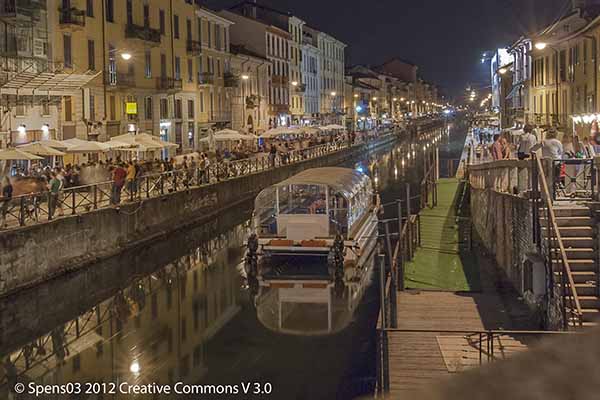 Milan is also a good city for simply wandering. The historic centre is reasonably compact and there are plenty of attractive streets, squares and buildings away from the major sights. The Navigli district is particularly pleasant, built around Milan's old canals and packed with restaurants, bars and cafés. It is probably at its best in the evening when the canals are illuminated and everyone seems to come out for dinner and drinks.
Food, unsurprisingly, is another reason to visit. Milan has its own specialities, including risotto alla Milanese, traditionally flavoured and coloured with saffron, and ossobuco, a slow-cooked veal dish. Then there is panettone, which originated here and has become an Italian Christmas institution. Milan may be a sophisticated city, but thankfully you don't have to eat in a designer restaurant to get a decent meal.
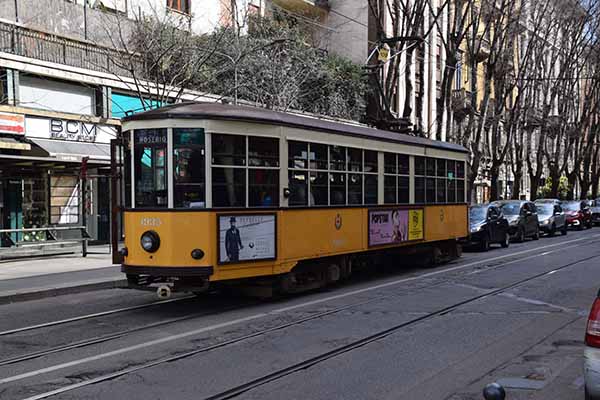 Transport around Milan is also relatively straightforward. The Metro, trams and buses make getting around easy, although the city is perfectly manageable on foot in the central areas.
 Milan's railway connections also make it an excellent base for exploring northern Italy, with places such as Lake Como, Lake Maggiore, Bergamo and Verona within easy reach.
Also Milan Central station has to be one of the most attractive railway stations in the world.
There is, however, a slight problem with Milan — it isn't cheap. Hotels can be expensive, particularly during major fashion and business events, and eating and drinking in the central areas can make a noticeable dent in the wallet. The fashion capital of Italy isn't exactly going to apologise for charging you more than you expected.
Milan also lacks some of the instant charm of cities such as Florence or Venice. It is a working city rather than an enormous open-air museum, and some areas are distinctly ordinary. But I think that is actually part of its appeal. Milan gives you a chance to see a different side of Italy — modern, prosperous, fashionable and energetic, while still retaining some superb historic buildings and works of art.
It isn't necessarily the city that will make you fall instantly in love with Italy, but give Milan a little time and there is plenty to discover. The Duomo alone is spectacular, the Last Supper is a genuine cultural heavyweight, and the combination of grand architecture, fashion, food and Italian life makes Milan well worth a visit.
Old Moaner verdict: Milan is not the prettiest city in Italy and it can be expensive, busy and decidedly metropolitan. But beneath the designer shops and business suits there is plenty of history, culture and Italian character. Don't come expecting Florence — come expecting Milan, and you'll probably enjoy it considerably more.
Return to Italy Home Page