
Milton Keynes
Much More Than Concrete Cows and Roundabouts
Mention Milton Keynes to many people and you can almost guarantee the response: "Ah yes, concrete cows and roundabouts."
And, to be fair, Milton Keynes does have both.
It also has shopping centres, dual carriageways, grid roads, an occasionally bewildering collection of roundabouts and enough junction numbers to keep the sat-nav permanently employed.
But to dismiss Milton Keynes as a giant experiment in traffic management would be doing it a considerable injustice.
Because beneath all that concrete is an enormous amount of green space, and that is one of the things that makes Milton Keynes rather different from most other new towns.
Milton Keynes tagline is "better by design" and you know what , they're pretty spot on with that.
A City Built on a Different Idea
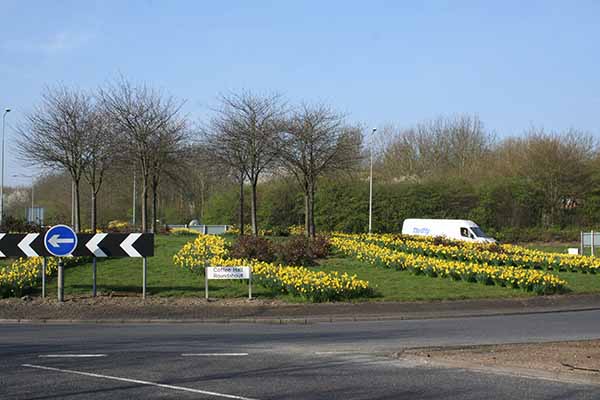 Milton Keynes was designated as a new town in 1967, with the idea of creating somewhere that could accommodate a rapidly growing population while avoiding many of the problems associated with overcrowded cities.
The planners came up with something rather radical for Britain at the time: a city based around a grid of roads, with extensive open space, separated pedestrian and cycle routes and plenty of room between developments.
It certainly wasn't everyone's cup of tea.The architecture can sometimes be, shall we say, interesting, and the grid system has produced an urban landscape that can initially leave visitors wondering whether they've accidentally driven into a very large board game.
But the fundamental idea was actually rather clever.
The Green City
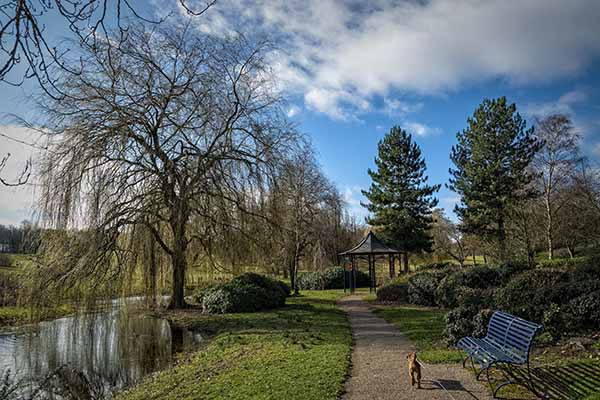 The real secret of Milton Keynes is the green space.
Around a quarter of the city is made up of parks, woodland, lakes and other open areas, much of it managed by The Parks Trust.
And this isn't simply a matter of putting a few flower beds beside the road and calling it a park.
Milton Keynes has extensive parks, riverside walks, woodlands, lakes and open countryside woven throughout the city. You can be surrounded by houses and offices one minute and, a few minutes later, find yourself walking through what feels remarkably like countryside.
Campbell Park, right in the heart of the city, is probably the best-known example. It provides a huge open space close to the centre, with lawns, planting, sculptures, water features and paths.
Then there is Willen Lake, one of the city's major recreational areas, where you can walk, cycle, enjoy water sports or simply sit beside the lake and watch everybody else having a more energetic day than you are.
The Parks Trust
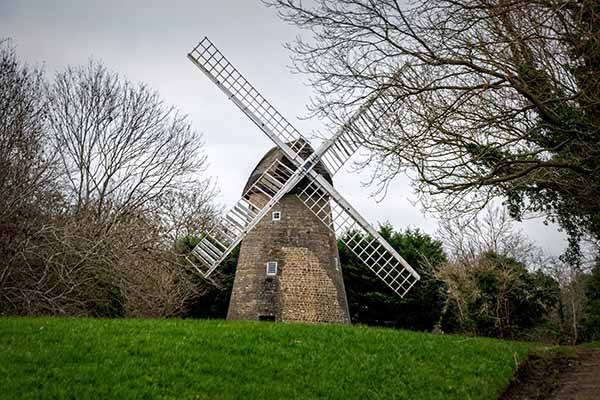 The Parks Trust deserves considerable credit for maintaining this green infrastructure. Established as an independent charity, it manages thousands of acres of parkland, woodland and other green spaces across Milton Keynes.
This is one of the things that visitors don't always appreciate.
The trees and fields you see while driving around Milton Keynes aren't necessarily accidental leftovers between building sites. Much of the landscape was deliberately incorporated into the design of the city and has been maintained as part of its long-term vision.
It gives Milton Keynes something rather unusual for a modern city: space.
And lots of it.
The Redways
Another particularly clever feature is Milton Keynes' network of Redways.These shared pedestrian and cycle routes run through parks and alongside roads, providing a way of getting around the city without having to compete directly with the traffic on the grid roads.
They are extensive, and if you enjoy walking or cycling they reveal a completely different side of Milton Keynes.
You can travel surprisingly long distances while barely noticing the roads. For a city designed around the motor car, that's quite an achievement.
Concrete Cows – Obviously
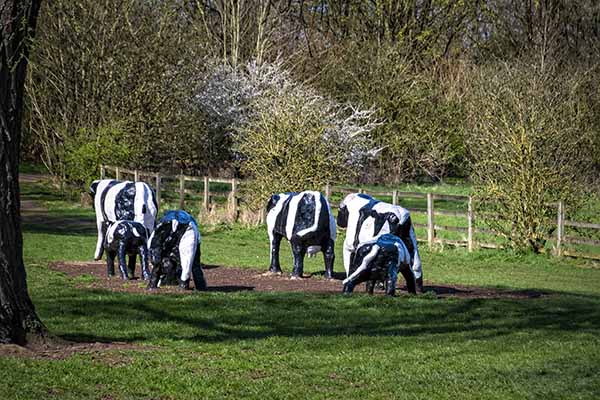 Now, we can't possibly discuss Milton Keynes without mentioning the cows.
The famous Concrete Cows of Milton Keynes were created by artist Liz Leyh in 1978 and have become probably the city's most recognisable unofficial symbol. They were never intended to represent everything Milton Keynes stood for, but they have certainly acquired a life of their own.
And let's be honest, they're rather fun.
Every city should have something slightly ridiculous that visitors can photograph.
London has the ravens at the Tower, Liverpool has the Liver Birds, Milton Keynes has concrete cows.
I'll take that.
Shopping and Entertainment
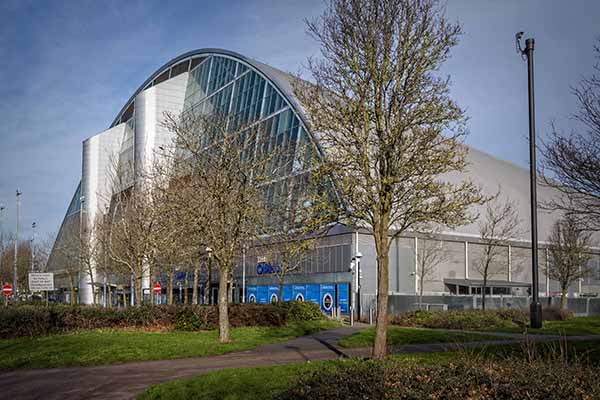 Milton Keynes also has one of the largest shopping centres in the region, right in the heart of the city.
Whatever you think about shopping centres, it is undeniably impressive in scale, and the central area has developed considerably since the early days of the new town.
There is also Xscape, with skiing, climbing, cinema and other entertainment, while the theatre, music and arts scene provides rather more cultural activity than the old jokes about MK would have you believe.
And then there is Bletchley Park, just outside the central area, which is one of the country's most important historic sites and a major attraction in its own right.
Bletchley Park
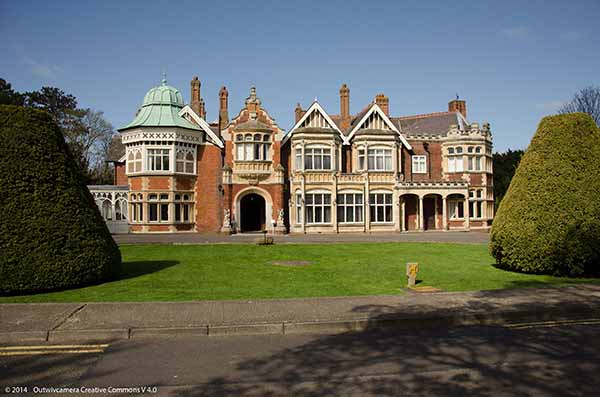 The wartime codebreaking story associated with Bletchley Park is extraordinary.
It was here that people such as Alan Turing and thousands of others worked in secret to break German and other Axis codes during the Second World War.
The site has been carefully preserved and developed as a museum, and it is one of those places where the history is so remarkable that you don't need much embellishment.
As well as the codebreakers Bletchley Park is also home to the National Museum of Computing.
If you are visiting Milton Keynes and haven't been, put it on the list.
The Grand Union Canal
Then there is the Grand Union Canal, which passes through the City.
The towpath provides another excellent walking and cycling route, while the canal itself offers a reminder that Britain's transport network existed long before Milton Keynes was even a twinkle in a town planner's eye.
It is also a particularly pleasant place for a stroll, with boats, locks, bridges and waterside pubs adding a touch of traditional England to the modern city.
Old Milton Keynes
And just to confuse matters, Milton Keynes isn't actually all that new. The name comes from the original village of Milton Keynes, now generally known as Milton Keynes Village or Middleton (just to confuse you even more), which dates back many centuries. The old village has a completely different character from the planned city, with traditional stone and brick cottages, a village green, an ancient church and narrow lanes. It is a lovely reminder that before the grid roads and roundabouts arrived, this was simply quiet Buckinghamshire countryside.
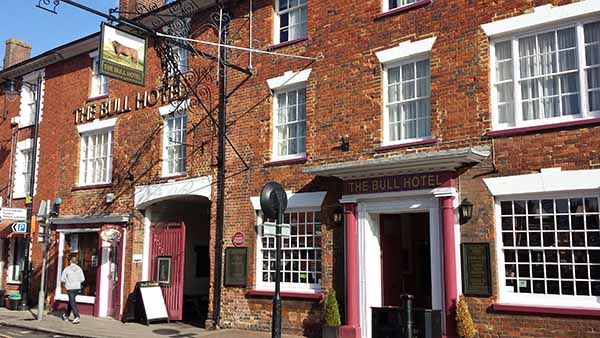 Several other historic villages were incorporated into the new city, including Bletchley, Wolverton, Stony Stratford, Newport Pagnell, Woughton, Great Linford and Loughton.
 Most have retained their original character, and they are well worth exploring if you want to see the older side of the area.
Stony Stratford, in particular, has an attractive old High Street lined with historic buildings, while Great Linford has an impressive manor, church and village green.
Wolverton has a fascinating railway heritage, having grown around the great Victorian railway works, while Newport Pagnell is an ancient market town with a history stretching back well before the arrival of the new city.
So, although Milton Keynes is rightly described as a planned 20th-century city, underneath it are centuries of Buckinghamshire history.
The planners didn't wipe the old places off the map; they built around them. And that gives Milton Keynes an unusual mixture of the very old and the decidedly modern — something which, in my opinion, makes the place considerably more interesting.
So What Is Milton Keynes Really Like?
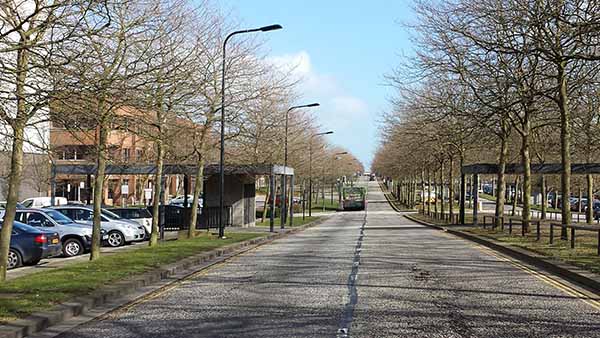 Well, it is different, there is no getting away from that.
It doesn't have the compact historic centre of York, the Georgian elegance of Bath or the Victorian grandeur of Manchester.
It was deliberately designed as a modern city, and sometimes that modernity works brilliantly and sometimes it produces buildings that make you wonder what the architect was drinking.
But that's part of its character.
And if you take the time to explore rather than simply drive through it on the way to somewhere else, you discover a city with an extraordinary amount of open space, an excellent network of paths, lakes, parks and woodland, plenty to do and a fascinating history.
The Verdict
Milton Keynes has spent decades being the butt of jokes about roundabouts, concrete cows and being designed by people with a ruler.
Some of the jokes are deserved. But the city has matured, and it has developed into somewhere considerably more interesting than its reputation suggests.
The Parks Trust's green spaces are a huge asset, giving Milton Keynes a quality of life that many older and much more densely built-up cities would probably kill for.
Add the Redways, Willen Lake, Campbell Park, the Grand Union Canal, Bletchley Park, shopping, entertainment and a surprisingly lively cultural scene, and there is plenty here to keep a visitor occupied.
So next time somebody says:
"Milton Keynes? That's just concrete cows and roundabouts."
You can tell them they're only half right, the cows are concrete, the roundabouts are real but there is a hell of a lot of green in between them.
Return to South East home page