
National Arboretum
If you are expecting another grand National Trust house surrounded by immaculately clipped lawns, you can forget it. The National Memorial Arboretum at Alrewas in Staffordshire is something altogether different — 150 acres of woodland, gardens and open spaces containing more than 400 memorials, all created to remember people and organisations connected with military service, conflict, emergency services and much more. Entry itself is free, which is always a good start.
And free really does mean free, although you will have to pay to park, currently £5 if booked in advance or £8 on the day.
The first thing that strikes you is the sheer size of the place. This isn't somewhere you nip around in half an hour, tick a box and head off for lunch. There are miles of paths winding through trees, lawns and landscaped areas, with memorials appearing almost everywhere you look. Some are huge and monumental, others are remarkably small and personal. The sheer variety is one of the most interesting aspects of the Arboretum.
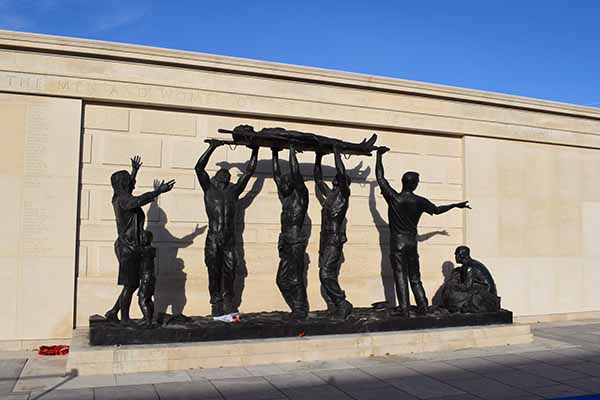 The centrepiece, and probably the part that most visitors will already have heard of, is the Armed Forces Memorial. It is an impressive and rather sobering structure, dedicated to members of the British Armed Forces who have died in service or as a result of conflict since the end of the Second World War. The names and dates give the memorial a very human dimension and make it far more than simply an attractive piece of architecture.
But don't make the mistake of thinking that the Armed Forces Memorial is all there is. Far from it.
Wander around and you encounter memorials to individual regiments, military units, police forces, firefighters, ambulance personnel and many other organisations and groups. There are also memorials relating to particular conflicts and events. Some are grand, some understated, and some are intensely personal. The result is a landscape where history isn't confined to information boards — it is literally sitting beside the path.
There is something particularly moving about the smaller memorials. A large national monument is impressive, but a simple stone or bench commemorating an individual or a small group can sometimes stop you in your tracks. It reminds you that behind all the statistics about wars and conflicts were real people with families, friends and lives that were suddenly changed forever.
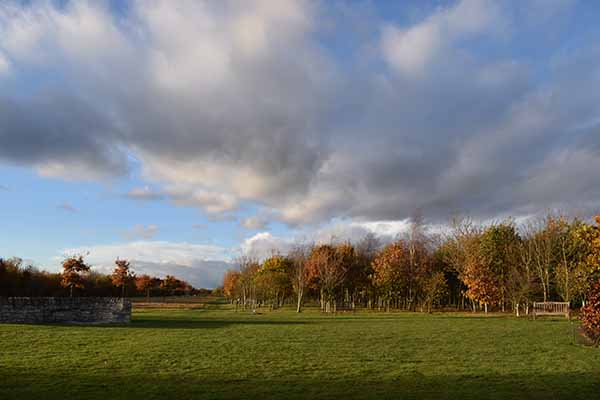 The landscaping itself is very good. Despite its purpose, the Arboretum isn't gloomy. Trees, water, flowers and open grassland make it an attractive place to walk, and as the seasons change so does the character of the site. Spring brings new growth, summer provides plenty of colour and autumn must be particularly impressive when the trees begin to turn.
It is also exceptionally well organised. The paths are largely flat and hard surfaced, making the site considerably easier to explore than you might expect from somewhere covering 150 acres. There are guided walks, self-guided trails and even land train and buggy tours for those who don't fancy walking the whole thing.
And believe me, unless you are considerably fitter than I am, you probably won't want to walk every single corner on your first visit.
The Remembrance Centre provides a useful starting point, with information and facilities before you head outside. There is also a restaurant serving the usual selection of hot meals, sandwiches, soups and cakes, so you won't need to survive on a packet of crisps halfway round the estate.
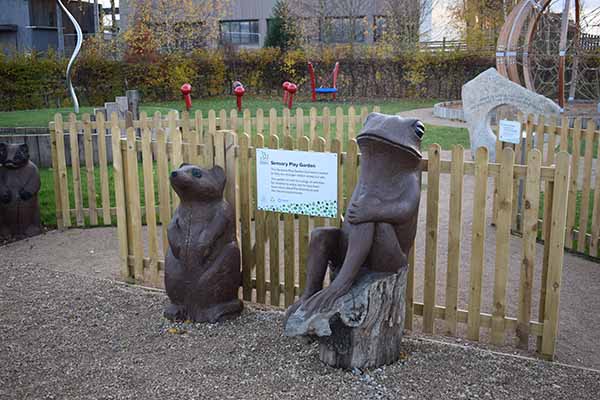 Families are catered for too, although I would emphasise that this isn't primarily an entertainment attraction. Children can certainly enjoy the outdoor environment, but there is an important distinction between somewhere that happens to welcome families and somewhere designed purely to keep the little darlings occupied.
Dogs are also welcome, provided they are kept on a short lead, although there are restrictions around some of the more sensitive areas and buildings.
One of the great strengths of the Arboretum is that you can make your visit whatever you want it to be. You can concentrate on the major memorials, follow one of the recommended routes, take a guided tour or simply wander around and see what catches your eye. With more than 400 memorials, you're unlikely to see everything in a single visit anyway.
And perhaps that's exactly how it should be.
This is not somewhere to rush around photographing everything before moving on to the next attraction. Some places demand that you slow down, read the inscriptions and think about what you're looking at. The National Memorial Arboretum is definitely one of them.
There is also something rather British about the way the place manages to combine remembrance with an attractive landscape. You can spend time at a solemn memorial, walk through a woodland, sit beside a lake and then discover something completely unexpected a few hundred yards further on. It doesn't feel like a traditional cemetery, nor does it feel like a conventional arboretum. It has created its own rather unique category.
And that's ultimately why I would recommend it.
 You don't have to be particularly interested in military history to appreciate the National Memorial Arboretum. You don't have to know the difference between one regiment and another, or understand the history behind every memorial. The underlying message is universal: ordinary people have done extraordinary things, and many have paid the ultimate price.
It is also one of those attractions that becomes more interesting the more you know about it. A second visit would almost certainly reveal things you missed the first time, particularly if you use the memorial listings and guidebooks to seek out particular subjects or people.
Old Moaner's verdict: this is an excellent day out, but don't come expecting a traditional tourist attraction. Come prepared to walk, explore and, occasionally, stop and reflect. It is beautifully maintained without becoming sterile, impressive without being overblown and, most importantly, it succeeds in what it was created to do — remembering.
And for once, Old Moaner has very little to moan about. Highly recommended.
Opening Hours:- Daily Hours: 10.00 – 17.00, Winter Hours: 10.00 – 16.00 (during winter months) Closures: Closed only on Christmas Day
Return to West Midlands home page