
Newcastle Upon Tyne
Newcastle is one of those cities that seems to have been designed with a proper sense of humour. It has a magnificent river, an impressive collection of bridges, grand Victorian buildings, medieval remnants, a lively nightlife and enough Geordie character to make you realise very quickly that you are no longer in the south of England.
And quite frankly, that's part of the attraction.
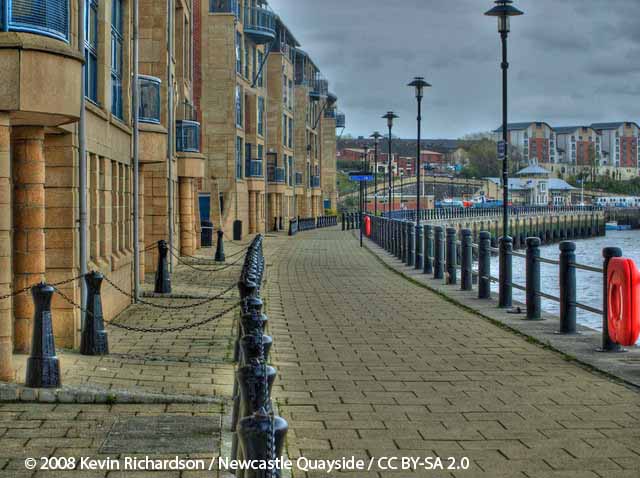 The first thing most visitors notice is the River Tyne, and Newcastle makes the most of it. The Quayside is the city's great showpiece, with the famous bridges straddling the river and the magnificent sweep of the waterfront providing a backdrop that is difficult to beat.
The Tyne Bridge is probably the best known, although it has some extremely impressive competition. The Gateshead Millennium Bridge, with its distinctive tilting design, is the modern addition, while the High Level Bridge and Swing Bridge provide reminders of the engineering achievements that helped make this one of Britain's great industrial centres.
Walk along the Quayside and you get a rather good mixture of old and new. Former warehouses and industrial buildings have found new lives as restaurants, bars and apartments, while modern developments have filled in some of the gaps. It is one of those places that is particularly attractive in the evening when the bridges and riverside buildings begin to light up.
The city itself sits on a hill above the river, which means that Newcastle is not short of slopes. If you have dodgy knees, you may want to plan your route carefully. Geordies presumably acquire the necessary climbing equipment during childhood.
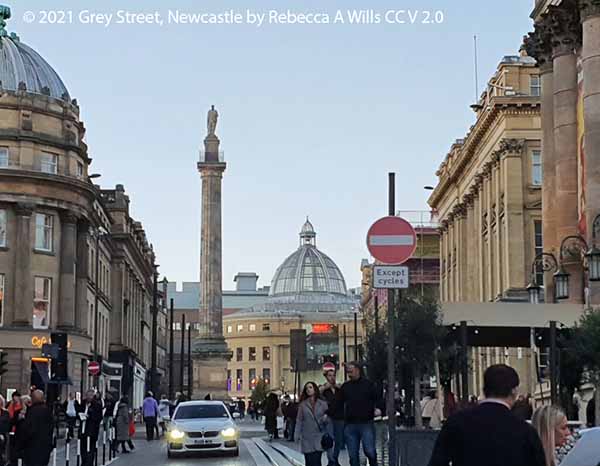 At the top is Grey Street, and this is where Newcastle really shows off. Frequently described as one of the finest streets in Britain, it is lined with elegant nineteenth-century buildings in a graceful curve down towards the river. The architecture is remarkably consistent and gives the city centre a grandeur that you wouldn't necessarily expect.
Nearby is Grainger Town, developed during the nineteenth century and containing some of the city's finest buildings. The Theatre Royal, Central Arcade and Grey's Monument are all within easy reach.
The Monument itself commemorates Charles Grey, the Prime Minister associated with the Great Reform Act. It also provides a useful meeting point, although quite why so many British cities seem to require a giant statue in the middle of their busiest shopping area is another question.
Newcastle's history goes back much further than the Victorian expansion, of course. The city takes its name from the castle built here by the Normans, although what survives today is largely the medieval castle keep and the nearby Black Gate.
The Newcastle Castle Keep is well worth visiting. It occupies a commanding position above the Tyne and provides excellent views across the city and river. It is a useful reminder that Newcastle was once a strategically important fortified town rather than the shopping and nightlife destination it is today.
Then there is the Cathedral Church of St Nicholas, instantly recognisable thanks to its unusual lantern tower. It is one of the city's most distinctive buildings and sits rather neatly among the surrounding streets.
For a completely different side of Newcastle, head to Jesmond. This leafy suburb has elegant houses, attractive streets and plenty of restaurants, cafés and bars. Jesmond Dene provides an even better escape from the urban environment, with woodland, a stream, bridges and paths winding through the valley.
And if you want something considerably more industrial, Newcastle's relationship with the surrounding Tyneside area is impossible to ignore.
The city and its neighbours grew enormously through coal mining, shipbuilding, engineering and heavy industry. The Tyne was once crowded with shipyards, and vessels built along the river sailed all over the world. Much of that industry has disappeared, but the river remains a constant reminder of what Newcastle once was.
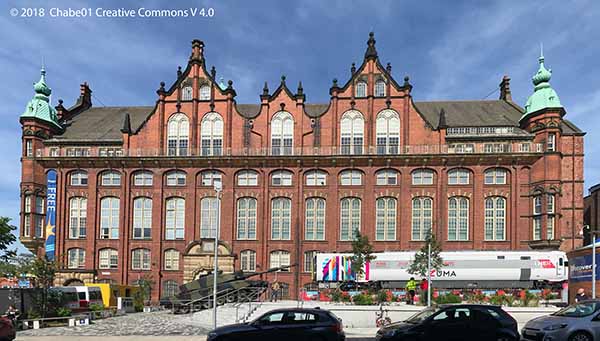 The Discovery Museum is particularly good for understanding this industrial heritage, while the Great North Museum: Hancock offers a much wider collection covering natural history, archaeology and ancient civilisations.
There is also Life Science Centre, aimed more at families but perfectly capable of keeping adults occupied too. Newcastle has never been short of museums, and most are considerably more interesting than wandering around yet another shopping centre.
Speaking of shopping, Newcastle's city centre is certainly well supplied. Eldon Square and the surrounding streets provide all the usual high-street suspects, while the Grainger Market is considerably more interesting. It has been trading since the nineteenth century and retains something of the atmosphere of a traditional covered market.
But Newcastle's greatest asset may actually be its people.
The famous Geordie friendliness is not entirely mythical. Visitors are generally made to feel welcome, and there is a strong sense of local identity that you don't always find in larger English cities. Newcastle may have its problems, but nobody could accuse it of lacking personality.
And then, of course, there is the nightlife.
Newcastle has an almost legendary reputation for it. The city centre is packed with pubs, bars and clubs, particularly around the Bigg Market, Quayside and surrounding streets. Whether you consider this an essential part of a visit or something to avoid at all costs depends rather on your age and tolerance for people wearing very little clothing in February.
One thing Newcastle certainly doesn't lack is confidence.
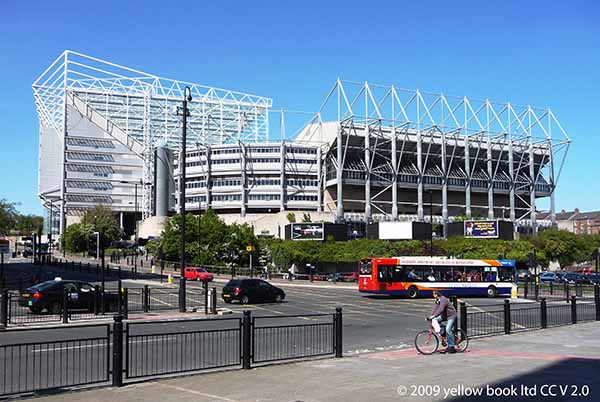 Football is a huge part of the city's identity thanks to Newcastle United and St James' Park, which dominates the skyline above the city centre. Even if football isn't your thing — and I know there are people who regard it as little more than 22 men chasing an inflated leather sphere — it is difficult not to appreciate how deeply the club is woven into Newcastle life.
Outside the centre, the wider region provides plenty more to see. The coast is close, with places such as Tynemouth and Whitley Bay offering beaches and seaside attractions, while further inland the spectacular landscapes of Northumberland begin to open up.
And that is another advantage of Newcastle: it makes an excellent base.
You can enjoy the city in the morning, wander along the Tyne in the afternoon and be looking at castles, beaches or open countryside before the day is over.
Newcastle isn't perfect, naturally.
Some parts of the city centre have suffered from the usual problems of modern British cities, with tired shopping areas, empty premises and buildings that desperately need somebody to take an interest in them. Traffic can be irritating, and the hills certainly don't make walking particularly relaxing.
But the good bits are very good indeed.
The Quayside is spectacular, Grey Street is genuinely beautiful, the historic centre is fascinating and the surrounding area provides enough attractions to keep you occupied for several days. Most importantly, Newcastle has retained a distinct identity. It hasn't become a bland collection of shopping centres, offices and chain restaurants that could be almost anywhere.
It still feels like Newcastle.
And perhaps that is why I have a soft spot for it. It has history without being stuck in the past, modern attractions without losing its heritage, and a sense of humour that seems to survive even when the weather is doing its best to drown everyone.
Old Moaner's verdict: Newcastle is one of Britain's better city breaks. The Quayside and bridges alone make it worth seeing, but add Grey Street, the castle, museums, Jesmond, the markets and the surrounding coast and countryside and you've got a city with considerably more to offer than its old industrial reputation suggests.
Just remember: if someone tells you they're going out for "a quiet drink", don't believe a word of it.
Highly recommended — and preferably with a decent pair of walking shoes.
Return to North East home page