
Orkney
There are islands, and then there is Orkney.
Sitting just off the northern tip of mainland Scotland, Orkney feels remote without being impossibly difficult to reach. It is a land of wide open skies, windswept beaches, green fields, dramatic cliffs and scattered farms, but what really sets it apart is its extraordinary history.
This isn't simply somewhere with a few old stones lying around.
Orkney contains some of the most remarkable prehistoric remains in Britain, including settlements, tombs and stone circles that were already ancient when the Romans were still getting themselves organised.
Add in superb wildlife, fascinating wartime history, beautiful little villages and some excellent beaches, and you have an archipelago that deserves considerably more attention than it sometimes receives.
Getting to Orkney
Getting there is part of the adventure.
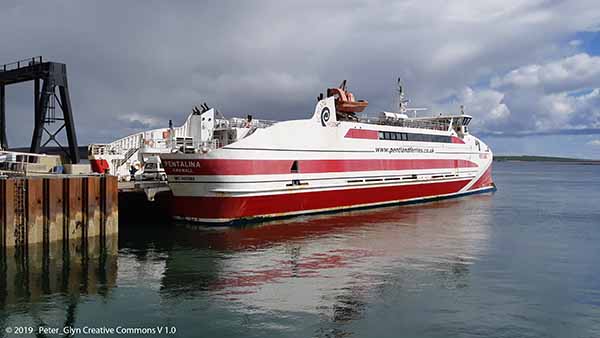 Most visitors arrive by ferry from mainland Scotland, with services from Scrabster to Stromness and Gills Bay to St Margaret's Hope, while there are also flights to Kirkwall.
The ferry is my preferred approach.
There is something rather satisfying about leaving the Scottish mainland behind and watching the Orkney islands gradually appear on the horizon.
You also get a proper appreciation of the geography. Orkney isn't one island but an archipelago of around 70 islands, although only around 20 are inhabited.
And once you arrive, everything immediately feels different.
There are no towering Highland mountains here. Instead, the landscape is generally low, open and rolling, with the sea almost constantly visible.
Kirkwall
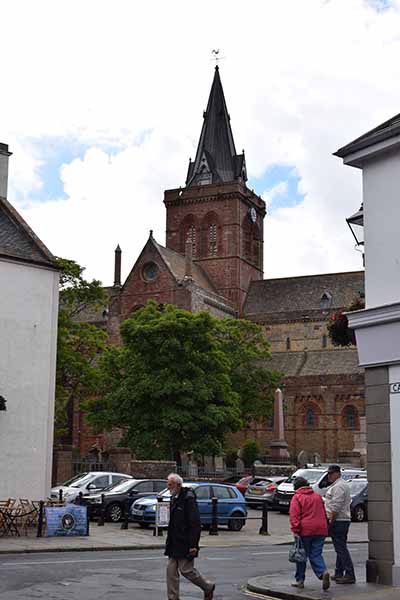 The main town and administrative centre is Kirkwall, sitting on Mainland Orkney.
It is a pleasant little town with narrow streets, traditional buildings, shops and a surprisingly impressive cathedral.
St Magnus Cathedral dominates Kirkwall and is one of the finest medieval buildings in Scotland.
Construction began in the twelfth century and the red and yellow sandstone gives the building a wonderfully warm appearance.
The cathedral was founded in honour of St Magnus, the Orkney earl who was murdered in 1117.
Kirkwall is also home to the Bishop's and Earl's Palaces, now atmospheric ruins beside the cathedral.
The town makes an excellent base for exploring the islands and is worth spending some time in rather than simply treating it as somewhere to buy supplies.
The Heart of Neolithic Orkney
Now we get to the really extraordinary stuff.
The Heart of Neolithic Orkney is a UNESCO World Heritage Site containing some of the most important prehistoric monuments in Europe.
And they are absolutely remarkable.
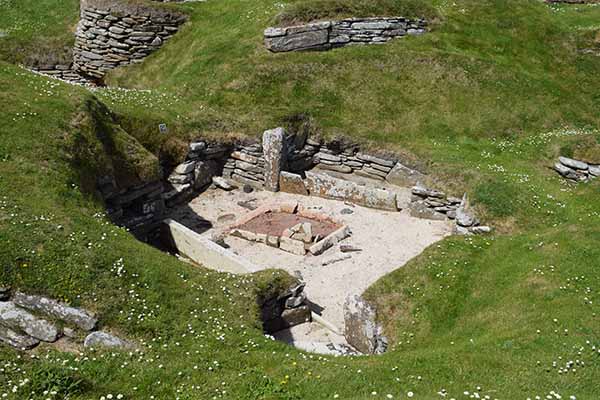 The centrepiece is Skara Brae, a remarkably preserved Stone Age settlement on the shore of Skaill Bay.
The houses were built around 5,000 years ago, long before Stonehenge and the Egyptian pyramids as we know them.
What makes Skara Brae so extraordinary is the detail that survives. Stone beds, dressers, hearths and passageways are still visible.
You can stand there looking at the remains and suddenly realise that these weren't just primitive people living in caves.
They had homes, they had furniture, they had organised communities.
They had been living here thousands of years before recorded history had properly got started.
It is one of those places where the age of Britain becomes almost difficult to comprehend.
The Ring of Brodgar
Then there is the Ring of Brodgar.
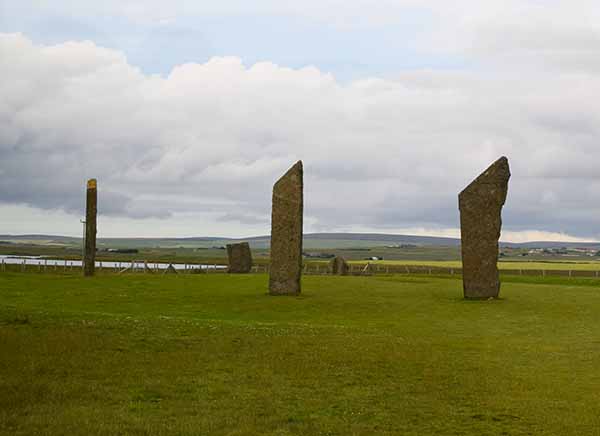 This enormous stone circle sits within a dramatic natural landscape between the Lochs of Harray and Stenness.
Originally there may have been around 60 stones; a little over 20 survive today.
Standing inside the circle is an impressive experience, particularly when the weather is doing what Orkney weather does best.
Wind sweeping across the landscape, enormous skies and ancient stones make the place feel almost other-worldly.
Nearby is the Stones of Stenness, another prehistoric monument dating back more than 5,000 years.
When you visit all these sites together, you begin to appreciate just how important Orkney was to prehistoric Britain.
The Italian Chapel
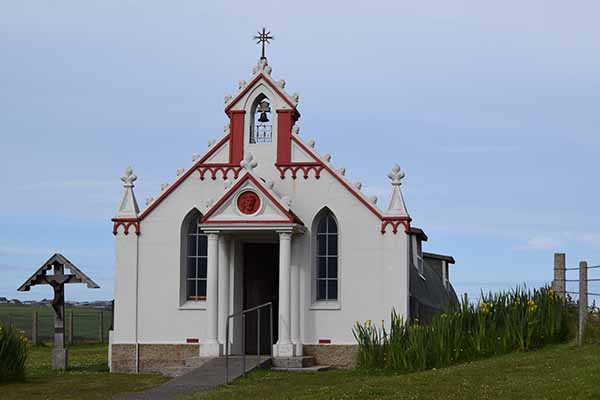 Moving forward several thousand years, Orkney has another extraordinary attraction.
On the tiny island of Lamb Holm stands the Italian Chapel, built by Italian prisoners of war during the Second World War.
The prisoners were brought to Orkney to work on the Churchill Barriers, a series of enormous defensive causeways designed to protect the naval anchorage at Scapa Flow.
The prisoners transformed two Nissen huts into a beautiful little chapel, decorating the interior with astonishing skill.
From the outside it looks rather ordinary.
Inside, it is anything but.
The chapel is a touching reminder that even during wartime, people found ways of creating something beautiful.
Scapa Flow
The Churchill Barriers themselves are another fascinating piece of Orkney's wartime history.
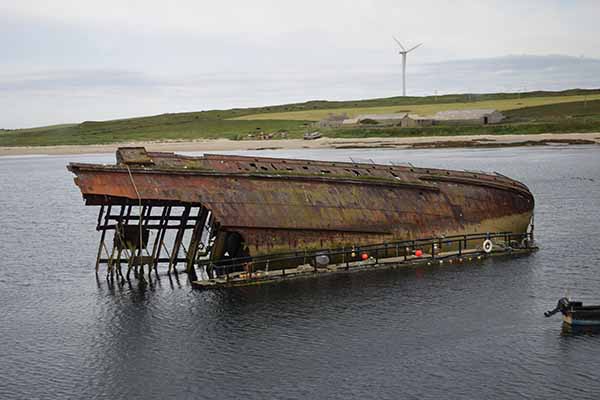 The enormous concrete causeways connect several of the southern islands and were constructed to prevent enemy submarines entering Scapa Flow, the great natural harbour used by the British Grand Fleet.
Scapa Flow was strategically vital during both World Wars.
It was also the scene of one of the most remarkable episodes in naval history.
After the First World War, the German High Seas Fleet was interned at Scapa Flow. In June 1919, the German crews deliberately scuttled their own ships, sending more than 50 vessels to the bottom rather than allowing them to be divided among the victorious Allied powers.
Many of the wrecks have subsequently been salvaged, but Scapa Flow remains one of the world's great underwater archaeological sites.
For divers, it is exceptional.
For the rest of us, the story is fascinating enough.
Orkney's Wildlife
If history isn't your thing, Orkney has another enormous attraction – wildlife.
 The coastline is superb for seabirds, with cliffs and offshore stacks providing nesting sites for enormous colonies.
Puffins are among the stars during the breeding season, while guillemots, razorbills, fulmars and kittiwakes can be seen around the cliffs.
The best-known birdwatching location is probably Marwick Head, where dramatic cliffs provide both spectacular scenery and abundant birdlife.
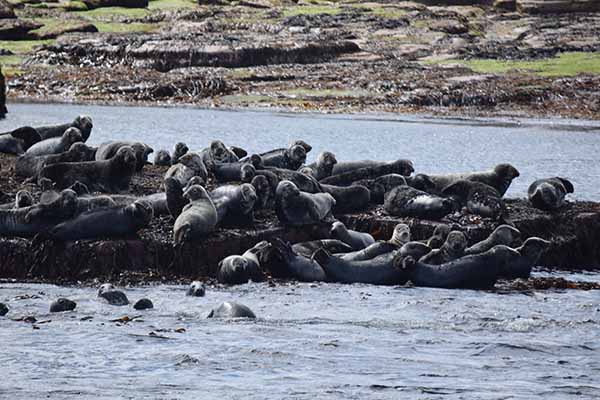
There are also seals around the islands, while otters can sometimes be spotted along the coastline.
And then there are the whales and dolphins.
The waters around Orkney are rich in marine life, and boat trips can provide encounters with dolphins, porpoises and occasionally whales.
The Beaches
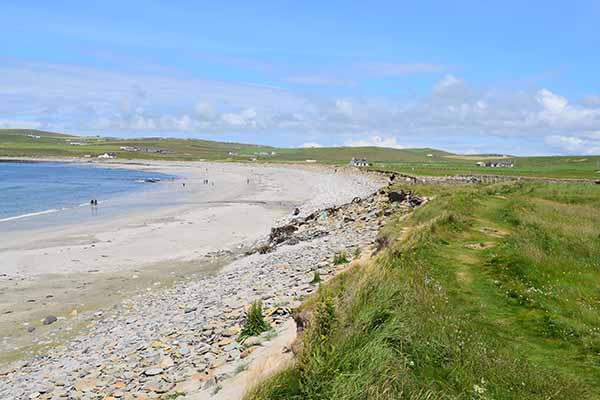 Orkney also has some surprisingly beautiful beaches.
Birsay, Skaill Bay, Yesnaby and Rackwick on Hoy all provide magnificent coastal scenery.
The beaches can be broad, sandy and almost empty.
The water, unsurprisingly, is not exactly Mediterranean.
But on a sunny day, with blue sky and turquoise water, you could almost convince yourself you were somewhere considerably further south.
Then the wind arrives and puts you straight.
The Island of Hoy
Of all the smaller Orkney islands, Hoy is perhaps the most dramatic.
Unlike much of Orkney, Hoy has genuinely mountainous scenery, with high cliffs and hills creating an entirely different landscape.
The Old Man of Hoy, an enormous sea stack standing dramatically offshore, is one of Scotland's most famous natural landmarks.
It rises more than 130 metres from the sea and is a spectacular sight from the surrounding cliffs or from a boat.
Hoy is also an excellent place for wildlife and walking, although you need to remember that remote island walking is not the same thing as a stroll around the local park.
Take appropriate clothing.
And preferably a map.
Stromness
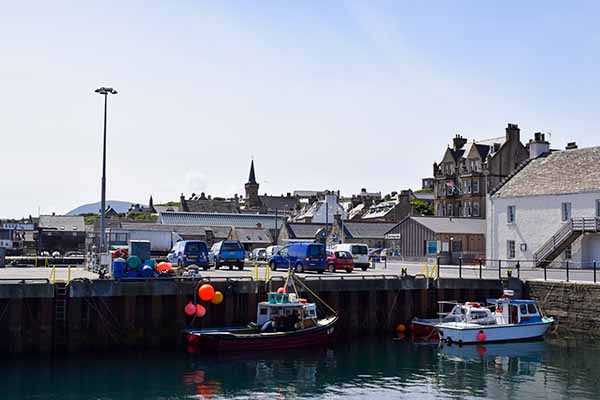 Back on Mainland Orkney, Stromness is one of the islands' most attractive settlements.
The town stretches along the waterfront, with narrow lanes and traditional stone houses climbing up the hillside.
It has a strong maritime heritage and has long been an important harbour.
Compared with Kirkwall, Stromness feels more intimate and village-like.
It is a lovely place simply to wander around.
The Orkney Way of Life
Perhaps the most enjoyable thing about Orkney is the pace of life.
It feels unhurried.
People still wave to each other, communities remain important and there is a strong sense of local identity.
The islands have their own traditions, music, food and dialect, while the influence of both Scotland and Scandinavia remains obvious.
The Vikings left an enormous mark on Orkney, and the islands were part of the Norse world for centuries before becoming part of Scotland.
That Scandinavian influence is still visible in place names and culture.
The Weather – Naturally
And now for the unavoidable subject.
The weather.
Orkney is windy, very windy. Sometimes extraordinarily windy.
But the wind is part of the character of the place. It has shaped the landscape, the buildings and even the way people live.
The advantage is that the air is incredibly clean and the skies can be enormous.
On a calm summer evening, Orkney can be absolutely magical.
In winter, it becomes something else entirely.
Dark, wild and wonderfully atmospheric.
Old Moaner Verdict
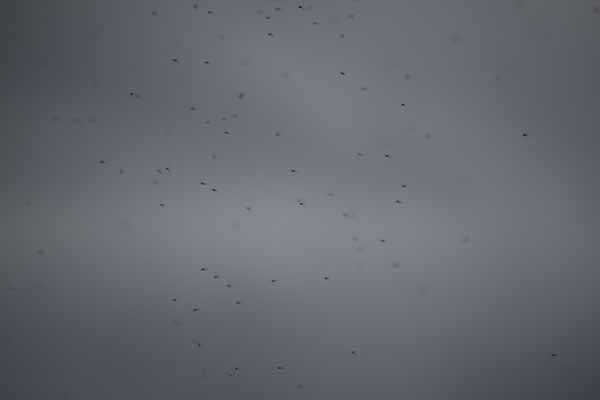 Orkney is one of those places where the Old Moaner has remarkably little to complain about, apart from the midges - oh did I forget to mention them. There are lots of midges.
Yes, getting there takes effort.
Yes, the weather can be brutal.
Yes, the ferries don't operate with the frequency of a London bus.
But that is part of the charm.
Orkney has an extraordinary combination of ancient history, spectacular coastline, fascinating wartime heritage, wildlife and genuine remoteness.
Where else can you stand in a 5,000-year-old Stone Age settlement in the morning, visit a Second World War chapel in the afternoon and finish the day watching seals or seabirds beside the Atlantic?
It is quite simply one of Scotland's great destinations.
(prices quoted correct as at August 2026)
Return to UK Islands Home Page