
Portsmouth
Portsmouth is one of those places that has never been particularly interested in pretending to be something it isn't. It is a working city, a naval city and a seaside city, all rolled into one, and its relationship with the sea has shaped almost everything about it. There are no grand illusions here: Portsmouth was built around ships, sailors, dockyards and defence, and it wears that history rather proudly.
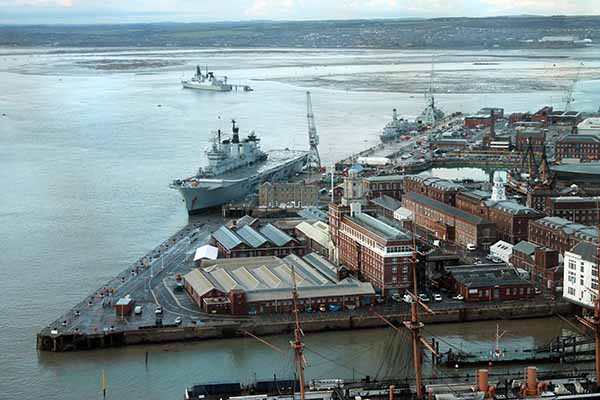 For a visitor, the obvious starting point is Portsmouth Historic Dockyard, and frankly it would be rather foolish to come to Portsmouth and miss it. This is the heavyweight attraction and could occupy most of a day on its own. The star attractions include HMS Victory, Nelson's famous flagship at the Battle of Trafalgar, HMS Warrior, an impressive Victorian warship, and the superb Mary Rose Museum, built around the remains of Henry VIII's ill-fated warship. The Dockyard brings several centuries of Britain's naval history together in one place and does a remarkably good job of making it interesting rather than turning it into a dusty history lesson.
The Mary Rose is particularly fascinating. Raised from the Solent in 1982 after more than four centuries underwater, the surviving timbers and thousands of artefacts provide an extraordinary glimpse into Tudor life. You can see everything from weapons and navigational equipment to personal possessions belonging to the men who went down with the ship. It is history on a very human scale, rather than simply another old boat. Mary Rose Museum
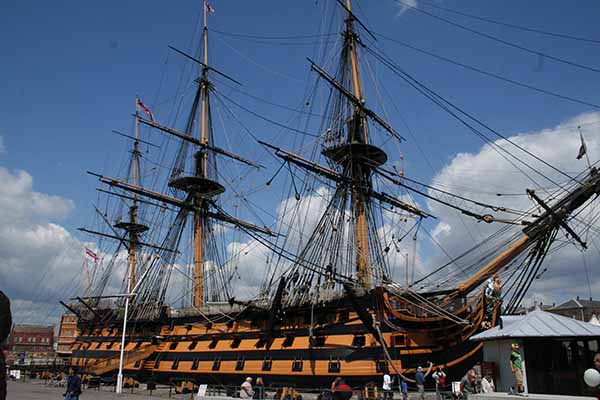 Then there is HMS Victory. Standing beneath the enormous masts and wandering through the cramped decks gives you a much better appreciation of what life aboard a Georgian warship was actually like. Somewhere between the guns, hammocks and remarkably small living quarters it becomes obvious that Nelson and his men were not enjoying a luxury cruise.
HMS Warrior provides a fascinating contrast. Launched in 1860, she represents the transition from the age of sail to steam and iron, and her size and engineering are impressive even by modern standards. Together, Victory, Warrior and Mary Rose tell a rather remarkable story of naval technology spanning more than three centuries.
Opening TimesSummer (April – October): 10:00 – 17:30 (last entry 16:30).Winter (November – March): 10:00 – 17:00 (last entry at 16:00).
Cost: - Tickets provide 1-year access to the dockyard attractions including HMS Victory, HMS Warrior, and the Mary Rose Museum.
Adult / Senior / Student: £51.00 Child (3–15 years): £36.0 0Family (1 Adult + 3 Children): £99.00 Family (2 Adults + 3 Children): £120.00
And if you haven't had enough ships by then, Portsmouth provides yet more. The National Museum of the Royal Navy and harbour tours add considerably to the experience, while across the harbour in Gosport you can visit HMS Alliance at the Royal Navy Submarine Museum. You really do get the feeling that Portsmouth has accumulated just about every significant chapter of Britain's naval story and then parked it beside the water.
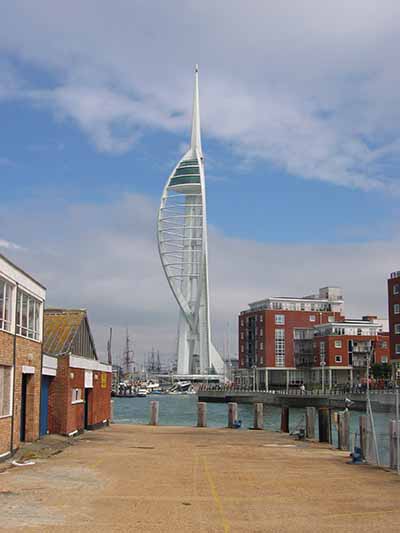 For something considerably more modern, head for Spinnaker Tower at Gunwharf Quays. The 170-metre tower has become Portsmouth's most recognisable modern landmark, although its slightly eccentric sail-like appearance still divides opinion. The views, however, are difficult to argue with. On a clear day you can see across Portsmouth Harbour, over the Solent towards the Isle of Wight and inland across Hampshire.
Opening Times: - Monday – Sunday: 10:00 – 18:00 (Last Entry: 17:30)
Ticket Costs (All Day Admission) Adult (16+): From £12.00, Child (3–15 yrs): From £10.00, Student / Senior: From £12.00
Local PO postcode resident rates are also available starting from £9.00 for adults and £7.50 for children with valid ID.
At its foot is Gunwharf Quays, where history gives way rather abruptly to designer outlet shopping, restaurants, bars and entertainment. It occupies the former naval armaments depot and is now one of the city's busiest visitor areas, with more than 90 outlet shops and a substantial collection of places to eat and drink.
It is a particularly good example of Portsmouth's ability to mix the old and new. You can spend the morning looking at Nelson's flagship and the afternoon wandering around shops selling designer clothing at supposedly irresistible discounts. Whether you actually need another shirt is, of course, entirely your problem.
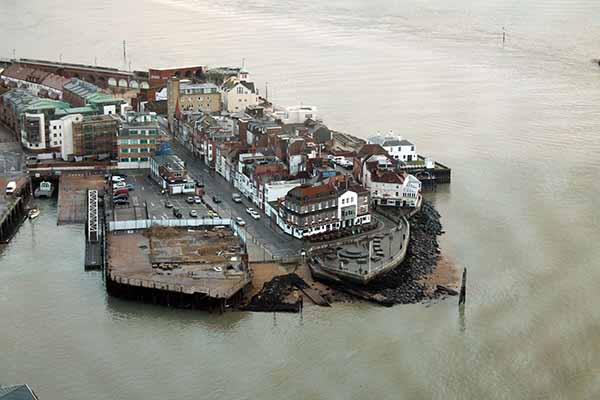 From Gunwharf it is an easy walk into Old Portsmouth, which is where the city starts to feel rather different. The cobbled streets, old pubs, fortifications and harbour frontage provide a welcome antidote to the modern shopping centre. The area around The Point has a particularly fine position where Portsmouth Harbour meets the Solent, and it is a good place simply to stand and watch the ships coming and going.
The old defensive works are a reminder that Portsmouth was not merely a convenient naval base but a city that had to defend itself. The Round Tower is one of the surviving fortifications, while the Royal Garrison Church is another fascinating survivor. Portsmouth's defences were repeatedly strengthened over the centuries because an attack from France was considered a very real possibility. Round Tower
Then there is Southsea, which gives Portsmouth its seaside personality. Southsea Common is a huge open stretch of grass beside the Solent and is a splendid place for a stroll, especially when the weather is behaving itself. The promenade continues along the waterfront, with views across the water and plenty of opportunities to watch ferries, yachts and warships.
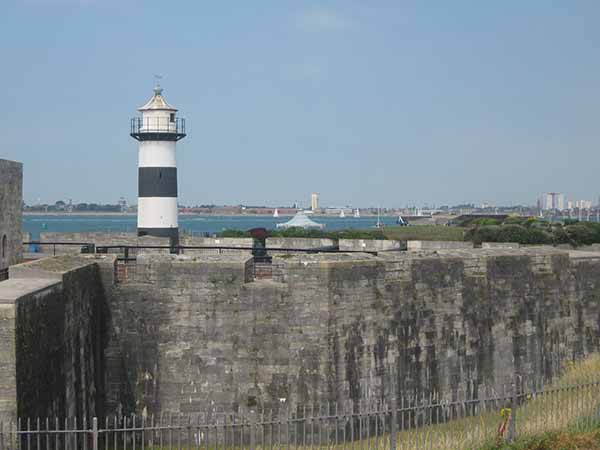 Southsea Castle is another piece of the city's military story. Built by Henry VIII in the sixteenth century, it formed part of the coastal defences and famously witnessed the sinking of the Mary Rose in 1545. Today it provides a rather more peaceful experience, with excellent views over the Solent.
Opening TimesSeason: April to October (closed during the winter months from November to March).
Days: Tuesday through Sunday (plus Bank Holiday Mondays; closed regular Mondays). Hours: 10:00 – 17:00.
For a more sobering experience, visit The D-Day Story. Portsmouth played a crucial role in the preparations for the Normandy landings, and the museum tells the story of D-Day through objects, photographs, film and personal accounts. It is difficult to visit without gaining a greater appreciation of the scale and complexity of the operation. The presence of the enormous Overlord Embroidery makes the experience particularly memorable.
Opening Times:- April to September: 10:00 – 17:30 daily (Last admission to LCT 7074 at 16:00, and 16:30 for the museum galleries). October to March: 10:00 – 17:00 daily (Last admission to LCT 7074 at 16:00, and 16:30 for the museum).
Closures: Closed on 24, 25, and 26 December.
Ticket CostsAdult: £18.25, Child (Ages 5–17) / Student: £9.15, Senior: £14.55, Second World War Veterans: Free
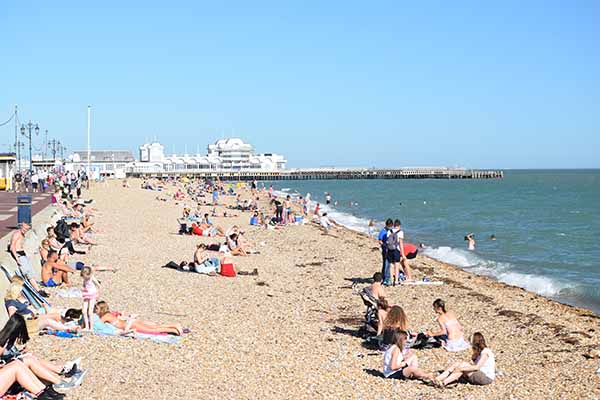 Southsea also has plenty of attractions aimed at those who don't want their entire holiday devoted to military history. There is the beach, Clarence Pier, amusement attractions, cafes and restaurants, while the promenade makes for an enjoyable walk even when you have absolutely no intention of going anywhere near the water.
One of the pleasures of Portsmouth is that many of the principal sights are surprisingly close together. The city is flat and compact, and the Millennium Promenade provides a pleasant route from the Historic Dockyard through Gunwharf and Old Portsmouth towards Southsea. At about 2.6 miles, it is long enough to make a decent walk without becoming an expedition.
There are also a few attractions just outside the immediate centre worth considering. Royal Armouries: Fort Nelson sits on Portsdown Hill and combines impressive fortifications with a substantial collection of artillery. The hilltop position also provides superb views back towards Portsmouth and the Solent.
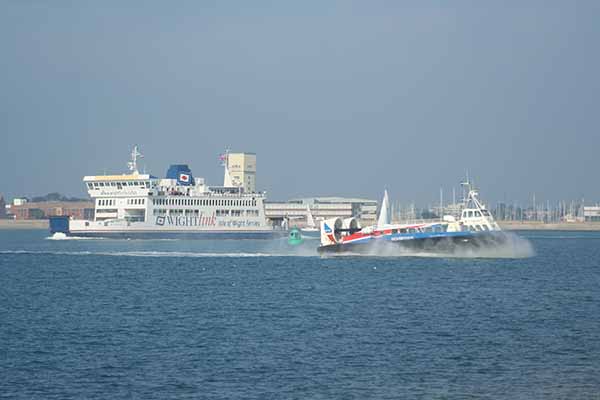 And then there is Portsmouth's great advantage for anyone with a little more time: the water. Ferries and hovercraft provide links to the Isle of Wight, while boat trips around Portsmouth Harbour offer a completely different perspective on the dockyard and naval base. Watching a modern warship manoeuvring around the harbour is considerably more interesting than watching yet another bus crawl through city traffic.
Portsmouth is also a city that rewards simply wandering. It has its grand attractions, certainly, but some of its character is found in the less polished areas between them. It is a city that has been bombed, rebuilt, expanded, modernised and continually adapted to the changing needs of the Navy and the sea. Parts are attractive, parts are decidedly functional and parts could certainly do with a little more TLC — but that is Portsmouth.
It would be easy to dismiss it as merely a naval museum with a ferry terminal attached. That would be a mistake. The Historic Dockyard alone is exceptional, but add Old Portsmouth, Southsea, Gunwharf Quays, the D-Day Story, the fortifications and the views across the Solent and there is enough here for several days.
Old Moaner's verdict
Portsmouth may not be the prettiest city in Britain and it certainly isn't trying to be Bath or York. What it does have is character, history and an extraordinary relationship with the sea. It is a city where you can stand beside a Tudor warship in the morning, shop for designer trainers in the afternoon and watch the sun go down over the Solent in the evening. And frankly, that is a pretty good combination.
(prices quoted correct as at September 2026)
Return to South East home page
Return to Coast Portsmouth to Dover