
Singapore
Singapore is one of those places that leaves you slightly confused as to whether you have arrived in a country, a city, a shopping centre or some sort of gigantic, highly organised experiment in how to run a civilisation.
It is all of them.
This tiny island nation at the southern tip of the Malay Peninsula has somehow managed to become one of the richest, cleanest and most efficient places on earth, while retaining a fascinating mixture of Chinese, Malay, Indian and European influences. It is also relentlessly modern. In parts, Singapore looks less like somewhere that has evolved over centuries and more like somebody has been given a very large budget and told to design a futuristic city from scratch.
And, to be fair, they have done a remarkably good job.
There is very little rubbish, very little graffiti, very little chaos and seemingly very little that happens without somebody having first produced a regulation explaining exactly how it should happen. Singapore is famous for its rules, and there are plenty of things you shouldn't do. Smoking where you shouldn't, dropping litter and various other misdemeanours can attract fines.
The Singaporeans clearly have a simple philosophy: if something can be banned, regulated, cleaned or organised, why on earth wouldn't you?
For the Old Moaner, this presents something of a problem.
There isn't actually that much to moan about.
Changi Airport – An Airport Worth Visiting
I'm going to start with Changi Airport.
Normally I wouldn't devote much space in a travel review to an airport. Airports are generally places you endure.
You arrive, check in, queue, remove your shoes, put your laptop in a tray, queue again, find a seat, pay £7 for a sandwich and then spend three hours wondering why somebody has designed an airport chair specifically to make your backside hurt.
Changi is different, Changi is an attraction in its own right.
It is quite possibly the best airport in the world.
And Singapore clearly agrees with the idea that an airport should be something more than a giant shed containing aeroplanes.
There are gardens, waterfalls, restaurants, shops, entertainment facilities and enough things to see and do to make you wonder whether you should have booked a holiday there rather than merely catching a flight.
 And then there is Jewel.
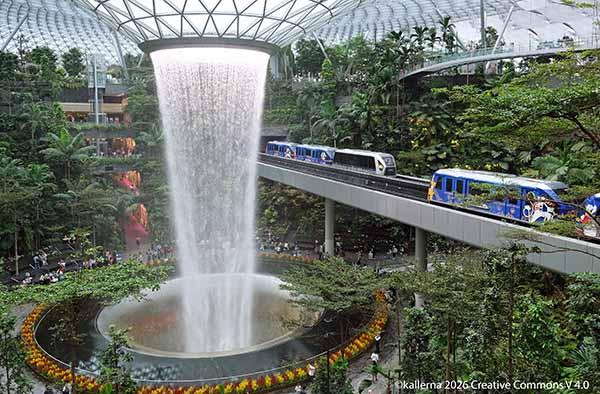
Jewel Changi is the spectacular centrepiece, and the first thing that hits you is the Rain Vortex.
This is a 40-metre-high indoor waterfall, the world's tallest indoor waterfall, cascading down through the centre of the building.
It is completely bonkers, it is also magnificent.
Surrounding it is the Forest Valley, with enormous quantities of greenery growing inside what is effectively a gigantic glass building.
There are gardens, walking trails, shops, restaurants and attractions including Canopy Park, the Mirror Maze, Hedge Maze and various suspended nets.
There are even gardens elsewhere within Changi itself, including the Butterfly Garden.
Yes - a butterfly garden - In an airport.
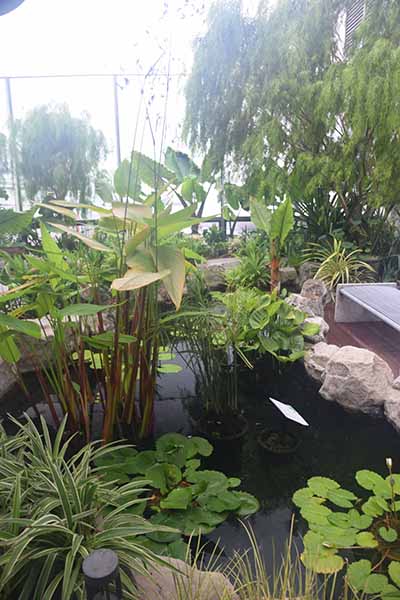 Most airports struggle to keep a pot plant alive.
Changi has apparently decided that what passengers really need before boarding a 13-hour flight is a tropical garden.
And why not?
The remarkable thing about Changi is that none of this feels like an afterthought. The airport has been designed around the passenger experience.
Even arriving passengers get treated to gardens and greenery. The Terminal 1 Arrival Garden, for example, contains a substantial indoor garden and gives arriving passengers a view towards Jewel's Rain Vortex.
The Rain Vortex is particularly impressive at night, when it becomes part of a light and music presentation.
And this is where Singapore really sums itself up.
It takes something that most countries regard as a necessary evil — an airport — and turns it into something people actually want to visit.
That is quite an achievement.
Getting Around
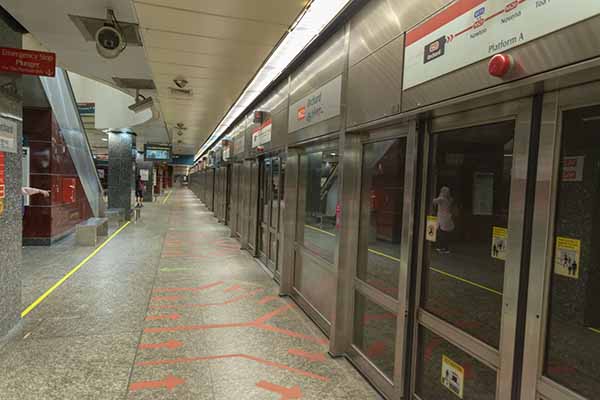 If you are fit and healthy you could get by on shanks pony, but as you will find out later in this review, Singaport is hot, very humid and when it rains it rains.
There are air conditions buses.
There is an air conditioned Metro
There are air conditiioned taxis.
Why walk, unless you a fan of saunas.
Marina Bay
If you want to see the modern face of Singapore, head for Marina Bay.
This is Singapore at its most spectacular, with skyscrapers, immaculate waterfront promenades and the extraordinary Marina Bay Sands dominating the skyline. The entire area is the result of decades of planning and land reclamation, and today it forms one of the city's great showpieces.
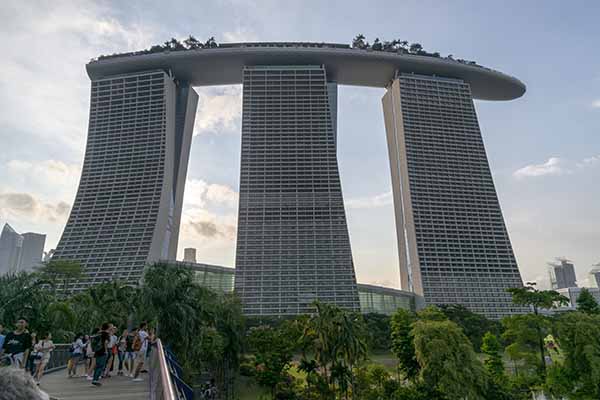 Marina Bay Sands is difficult to miss. Three enormous towers support what appears to be a gigantic ship balanced on top of them. It is one of those buildings that sounds ridiculous when you describe it but looks remarkably impressive when you actually see it.
There is an infinity pool on the roof, as well as bars and restaurants.
Nearby is the ArtScience Museum, with its distinctive lotus-like shape, while across the bay stands the Merlion.
The Merlion is one of those tourist attractions that you feel obliged to photograph even though it is essentially a large statue of a mythical creature with water coming out of its mouth.
There is something rather endearing about it.
The real joy of Marina Bay, however, is simply walking around it. Singapore's skyline is particularly impressive after dark, when the buildings are illuminated and the whole place starts to look like the set of a very expensive science-fiction film.
Gardens by the Bay
Then there are the Supertrees.
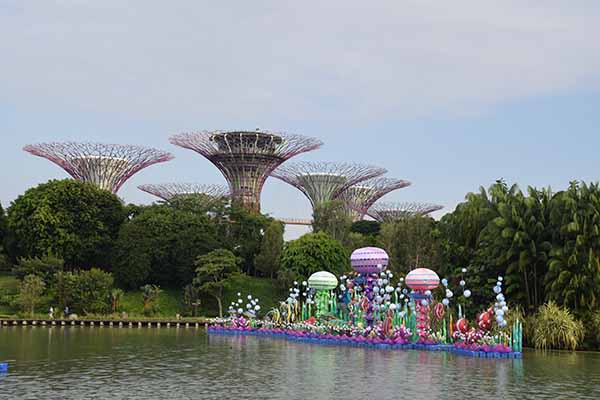 No, I haven't been drinking.
The Gardens by the Bay are home to these enormous tree-like structures which tower above the gardens and look as though they have escaped from a science-fiction film.
They are one of Singapore's most recognisable sights and, despite their slightly bonkers appearance, they work.
At night they are particularly spectacular when illuminated, and the whole area becomes a rather magical combination of trees, lights, water and futuristic architecture.
Singapore has always been rather good at creating green spaces in unlikely places, and this is perhaps the best example.
You could spend a considerable amount of time wandering around the gardens and still not quite believe that you are standing in the middle of one of the world's busiest cities.
Chinatown
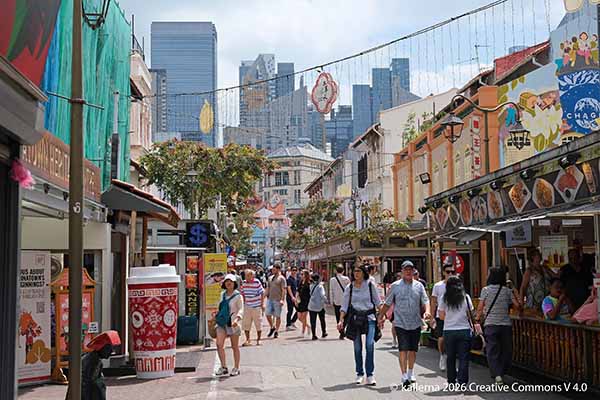 Singapore's Chinatown provides a welcome change from all the glass and steel. There are colourful shophouses, temples, markets and plenty of places to eat. The Buddha Tooth Relic Temple is particularly impressive, although whether it actually contains what its name suggests is probably something best left to the experts.
Chinatown is also one of the places where you begin to appreciate what makes Singapore different from many modern Asian cities.
The old and the new sit almost on top of one another. You can stand in a traditional street surrounded by old shophouses, turn around and find a forest of modern skyscrapers in the distance.
That contrast is one of Singapore's greatest attractions.
Little India
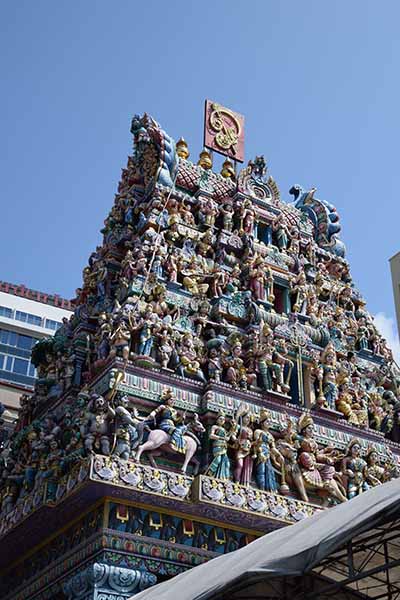 If Chinatown provides the Chinese influence, Little India provides another very important part of Singapore's character.
This is a much more colourful and lively part of the city, with temples, shops, restaurants, spices, fabrics and plenty of colour.
The Sri Veeramakaliamman Temple is particularly striking and is almost impossible to miss.
And then there is the food.
Singapore is one of the world's great eating destinations and you don't need to spend a fortune to eat extremely well. The hawker centres are perhaps the best example of this.
These are not glamorous restaurants, they are food stalls.
But some of the food is superb.
You can eat remarkably cheaply and, if you are anything like me, spend the next several hours wondering why you have just eaten something that you couldn't pronounce but which was absolutely delicious.
Kampong Gelam
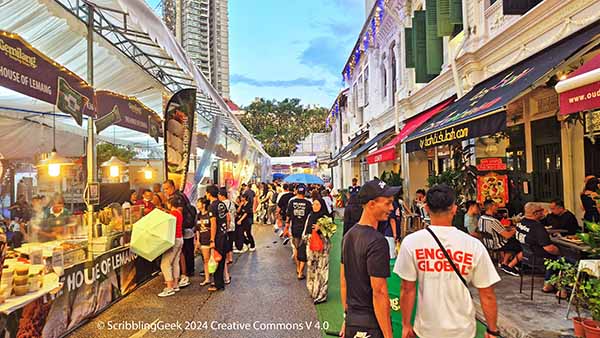 Another fascinating area is Kampong Gelam, the traditional Malay and Muslim quarter.
The Sultan Mosque is the obvious landmark, with its enormous golden domes, while the surrounding streets contain colourful shophouses, restaurants, cafés and independent shops.
Arab Street and Haji Lane are particularly interesting.
Haji Lane is almost the complete opposite of the immaculate, corporate Singapore found around Marina Bay. It is colourful, quirky and full of independent businesses and street art.
It is also proof that Singapore hasn't managed to remove every last bit of character in its pursuit of perfection.
Thank goodness.
Raffles Hotel
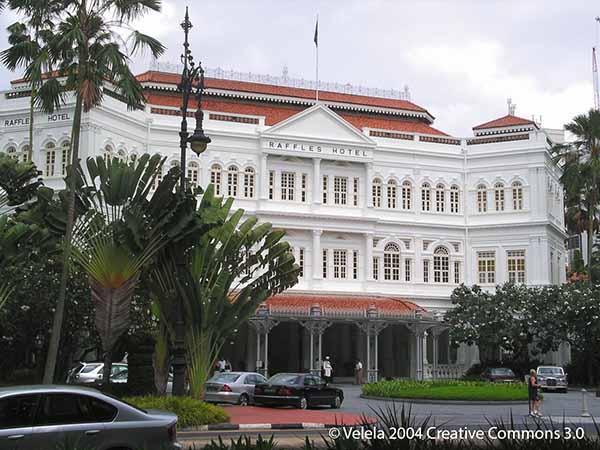 No visit to Singapore would be complete without at least seeing Raffles Hotel.
This is one of those places where you can immediately tell that history happened here because everything looks as though it has been deliberately preserved to look historical.
It is famous for the Singapore Sling, which apparently has been responsible for keeping generations of tourists suitably lubricated.
You can have one if you wish, just don't expect it to be cheap.
This is Raffles, after all.
You aren't merely buying a drink. You are buying a drink with heritage.
Orchard Road
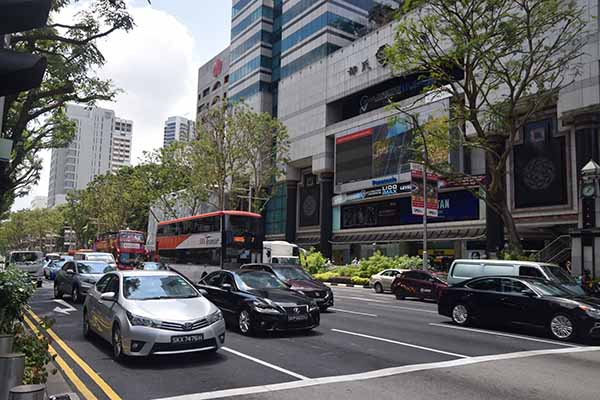 If shopping is your idea of heaven, Singapore has another little surprise for you.
It is lined with enormous shopping centres and designer stores and appears to operate on the principle that there is no such thing as too much retail space.
The Singapore Tourism Board describes it rather enthusiastically as a place to shop "to your heart's content".
Personally, after about two minutes of looking at shops I can't afford to buy anything from, my heart is generally quite content to leave.
Still, even if shopping isn't your thing, Orchard Road is worth seeing simply because of its scale.
Singapore Botanic Gardens and National Orchid Garden
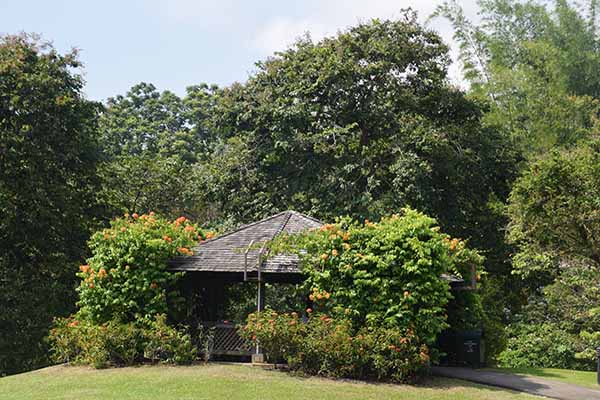 If you need a break from Singapore's skyscrapers, shopping centres and futuristic architecture, the Singapore Botanic Gardens are an absolute delight.
Established in 1859, the Gardens cover around 82 hectares and are far more than simply a collection of flower beds. There is rainforest, lakes, themed gardens, enormous old trees and an impressive variety of tropical plants. It is also Singapore's first and only UNESCO World Heritage Site. Best of all, entry to the main Botanic Gardens is completely free.
Within the Gardens is the National Orchid Garden, and this is the bit you really shouldn't miss.
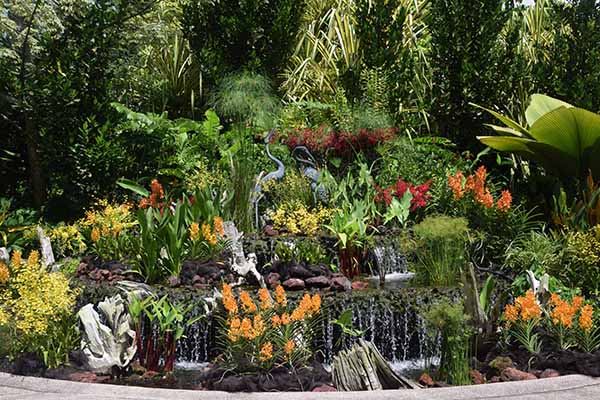 Orchids are something of a national obsession in Singapore and the Orchid Garden contains an extraordinary collection, with more than 3,000 plants on display. The colours and variety are spectacular, with orchids arranged throughout beautifully landscaped tropical surroundings.
There is even a VIP Orchid Garden, where orchid hybrids have been named after visiting heads of state and other distinguished visitors. Apparently, if you are sufficiently important, Singapore will name an orchid after you. I'm still waiting for the Dendrobium Oldmoaneriensis.
The Orchid Garden does charge an admission fee, unlike the main Gardens, but it is money well spent. Admission is S$15 (£8.66) for foreign adults S$3 (£1.73) for foreign seniors LOcals get free admission.
The only problem, as with almost everything outdoors in Singapore, is the heat. Walking around looking at thousands of beautiful orchids while sweating profusely isn't necessarily the most elegant way to appreciate horticulture.
Nevertheless, the Botanic Gardens and National Orchid Garden are well worth putting on your Singapore itinerary. They provide a wonderful contrast to the concrete, glass and steel of the city and are another example of Singapore's remarkable ability to combine a modern metropolis with an extraordinary amount of greenery.
Sentosa
Then there is Sentosa, Singapore's resort island.
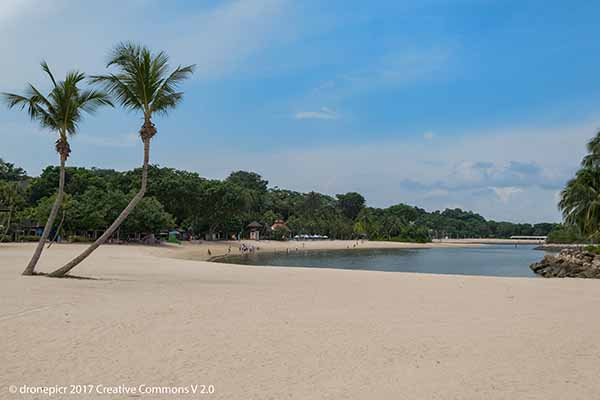 It is only a short distance from the city but feels like a completely different world, with beaches, attractions, hotels, golf and theme-park entertainment. Sentosa covers around 500 hectares and has developed from a former military area into Singapore's principal island resort.
It is home to Universal Studios Singapore, the Singapore Oceanarium and a host of other attractions.
Whether you actually want to spend your holiday in Singapore queueing for rides is another matter.
For me, the real attraction of Sentosa is simply having somewhere to escape the skyscrapers for a while.
And yes, it has beaches.
They may not be the first beaches that spring to mind when you think of Singapore, but they are perfectly pleasant.
The Weather
And now we reach Singapore's principal disadvantage.
The weather - Singapore is hot. Not "it's a nice warm day" hot. It is hot in a way that makes you wonder whether you have accidentally walked into a greenhouse.
Then it is humid - very humid.
You can leave your hotel looking respectable and arrive somewhere five minutes later looking as though you've just completed the London Marathon.
The good news is that virtually everything is air-conditioned.
The bad news is that you spend your day moving between an outdoor climate that resembles a sauna and indoor environments that resemble a refrigerated warehouse.
Eventually your body simply gives up trying to work out what temperature it is supposed to be.
And then it rains - when it rains in Singapore, it really rains.
Fortunately, the showers are often spectacular rather than endless, and the city is extremely well prepared for them.
Singapore's Food
Food deserves a mention of its own because Singapore is, quite simply, one of the great food cities.
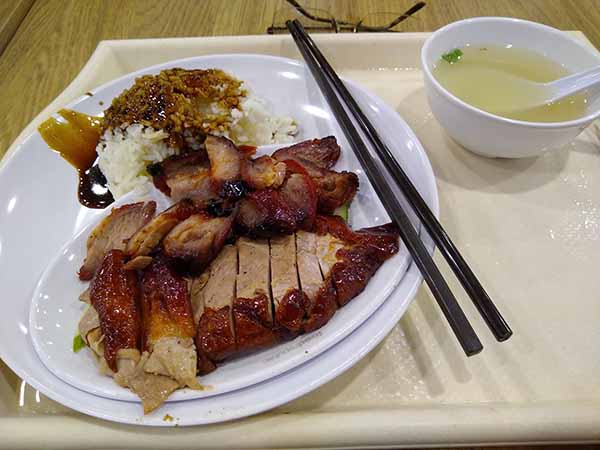 Chinese, Malay, Indian and other Asian influences have produced an extraordinary variety of dishes.
And then there are the hawker centres. These are one of the things I particularly like about Singapore.
You don't have to dress up, sit in an expensive restaurant and hand over half your holiday budget to eat excellent food. You can sit down at a fairly ordinary-looking stall and have something genuinely memorable.
Even food courts in shopping centres offer fantastic food at very reasonable prices, OK you may have to share a table with strangers but so what?
Chicken rice, laksa, chilli crab, satay and numerous dishes whose names I couldn't possibly pronounce are all waiting for you.
The only difficulty is deciding what to have.
And then deciding what to have next.
So, Is Singapore Worth Visiting?
Absolutely.
Singapore is clean, efficient, safe, fascinating and remarkably easy to get around.
It is also a strange place. It is simultaneously Asian and Western, traditional and futuristic, intensely urban and surprisingly green.
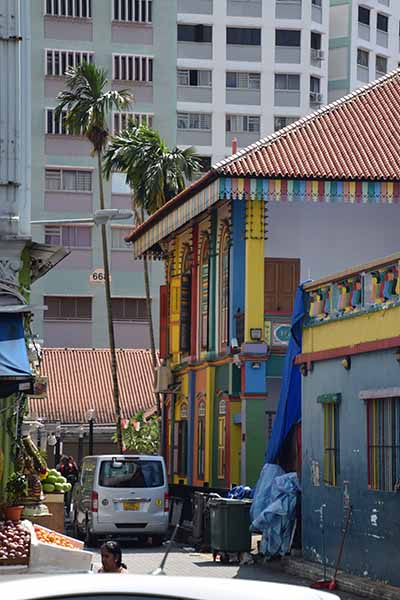 There are old temples sitting beneath skyscrapers, traditional food stalls alongside luxury shopping centres and colonial buildings surrounded by some of the most futuristic architecture you will see anywhere.
It can occasionally feel a little too controlled.
You sometimes wonder whether the city could relax just a tiny bit.
But then you look around and realise that this extraordinary little country has achieved something that many much larger nations have failed to achieve.
It works.
And it works remarkably well.
Just remember to take plenty of water.
And don't forget Changi.
Because when your holiday is over and you are sitting at the airport waiting for your flight home, you may well find yourself thinking something rather unusual: - I actually don't mind being at the airport.
Now that really is something.
Prices correct as of August 2026
Return to World Menu