
Stowe Gardens
Stowe is one of those places where you can spend a few hours walking around thinking you've stumbled onto the grounds of some particularly eccentric aristocrat who simply couldn't resist building another temple every time he got bored.
And, in a way, that's exactly what happened.
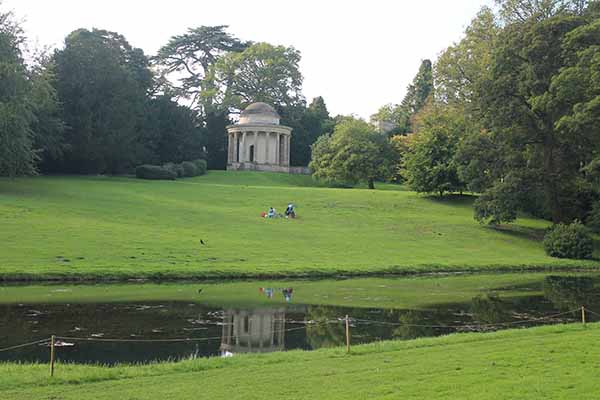 The gardens at Stowe in Buckinghamshire are not your conventional formal gardens. They are an enormous landscape of lawns, lakes, woodland, temples, bridges and monuments, designed over several centuries by some of the finest landscape designers Britain has produced.
The scale is the first thing that strikes you. This isn't somewhere you simply wander around a few flower beds and declare yourself finished. Stowe covers hundreds of acres and is designed as a series of vistas, with something unexpected appearing around almost every corner.
The gardens were developed principally in the eighteenth century when the Temple family decided that an ordinary country estate simply wasn't good enough. They employed some of the great names of British landscape design, including Charles Bridgeman, William Kent and later Capability Brown.
The result is one of the finest examples of the English landscape garden.
And there are some spectacular buildings.
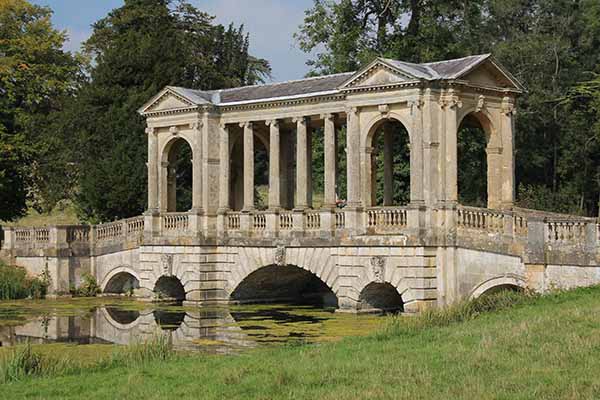 The Temple of Concord and Victory, the Temple of Venus, the Temple of Ancient Virtue and the Palladian Bridge are just some of the highlights. There are also monuments, columns and statues scattered throughout the landscape.
The clever bit is that these aren't simply plonked down in the middle of a lawn. They are positioned to create carefully calculated views. Walk around a lake, turn a corner and suddenly a classical temple appears in the distance. Continue along a path and another monument comes into view.
It makes exploring the gardens rather like wandering through an enormous open-air art gallery.
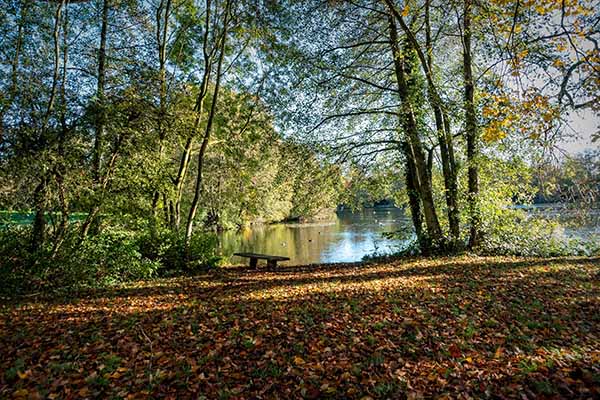 The lakes and water features add considerably to the effect. Reflections of the buildings in the water, wooded slopes and broad lawns create some genuinely beautiful views, particularly when the weather behaves itself.
Capability Brown's influence can be seen in the sweeping lawns, serpentine lakes and natural-looking landscape. Of course, "natural-looking" is doing rather a lot of work here because creating a landscape this carefully controlled takes an enormous amount of planning.
Stowe isn't all about grand vistas, either. There are quieter woodland walks and hidden corners where you can get away from the main routes. This is one of the reasons I would allow several hours for a visit rather than treating it as somewhere to pop into for an hour.
The New Inn at the entrance is another interesting part of the estate. Originally built as an inn to accommodate visitors to Stowe, it is now used as the visitor centre and provides useful information before you set off exploring.
And then there is Stowe House itself.
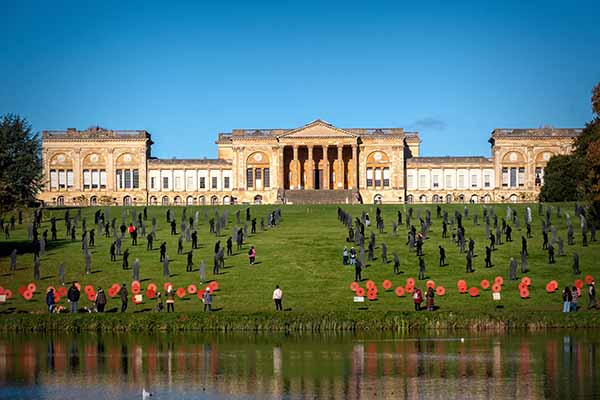 The magnificent Palladian house sits at the heart of the estate and is every bit as grand as you would expect. It has undergone extensive restoration and is well worth including in your visit when it is open. The house and gardens together give a much fuller picture of the ambitions — and enormous wealth — of the people who created Stowe.
The downside?
Well, size.
If you don't like walking, Stowe may become something of a punishment. There is a lot of ground to cover and the whole point is really to explore rather than rush around ticking off the major monuments.
The weather can also make a considerable difference. On a sunny spring or autumn day, Stowe can be glorious. On a wet and windy afternoon, several hundred acres of landscaped parkland suddenly seems considerably larger.
But that's hardly Stowe's fault.
There is also the perennial Old Moaner question of cost. National Trust membership makes life considerably easier for regular visitors, while non-members will need to weigh up the admission price against the fact that Stowe is somewhere you can comfortably spend half a day or more.
And that is the key to enjoying it.
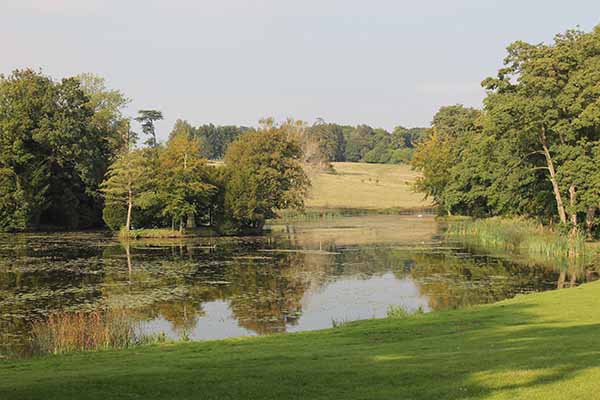 Don't come expecting a conventional garden. Stowe is a landscape to be explored, and the pleasure comes from discovering the views and monuments rather than simply admiring individual flower borders.
It is also one of those places that rewards repeat visits. The seasons completely change its character, and because there is so much to see you will inevitably miss things on your first visit.
Old Moaner's verdict: Stowe is magnificent. The gardens are enormous, beautifully designed and packed with extraordinary temples, monuments and vistas. It is history, architecture and landscape gardening rolled into one rather spectacular package.
Wear sensible shoes, allow plenty of time and don't just follow the obvious path. The best bits are often the ones you discover when you take a little detour.
Highly recommended — and quite possibly the only garden where you can spend the afternoon admiring a Greek temple, a Palladian bridge and a fake ruin without anybody thinking you've taken a wrong turn.
Opening Hours:- Gardens, Park & Café: Open daily from 10:00 to 17:00. Winter Hours: Closing time shifts earlier to 16:00.
Admission PricesAdult: £15.00 – £16.50 (prices can vary slightly depending on Gift Aid inclusion).Child (5–17): £7.50 – £8.30.Under 5s: Free. National Trust Members: Free.
Prices correct as at September 2016
Return to South East home page