
Valencia
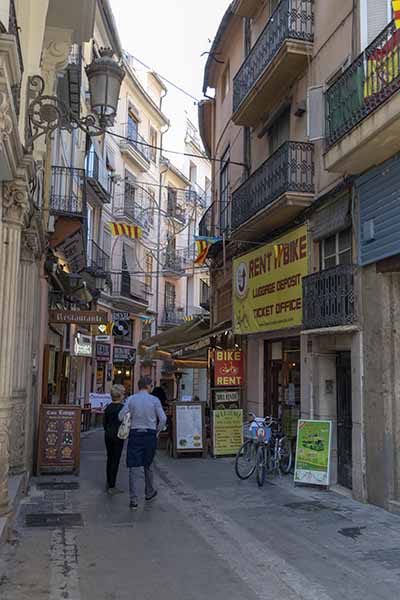 Valencia is one of those Spanish cities that doesn't seem to get quite the attention it deserves. Barcelona gets the crowds, Madrid gets the capital-city treatment and the Costa del Sol gets most of the package holidays, while Valencia quietly gets on with being a rather excellent place to visit. It has history, beaches, a superb old town, excellent food, some remarkable modern architecture and, perhaps most importantly, a considerably more relaxed atmosphere than Barcelona.
Situated on Spain's Mediterranean coast, Valencia is Spain's third-largest city and has been around for a very long time. It was founded by the Romans in 138 BC, subsequently occupied by the Moors and eventually reconquered by the Christians. The result is a city with an interesting mixture of architectural styles and a history that is visible almost everywhere.
The best place to start is the Ciutat Vella, or Old Town. This is where Valencia's history really comes alive, with narrow streets, attractive squares, historic buildings and some splendid churches. The magnificent Valencia Cathedral dominates the centre and is an impressive mixture of architectural styles, reflecting the various periods of its construction. Like many Spanish cathedrals, it is considerably more interesting inside than you might expect from the outside.
Nearby is the Miguelete, the cathedral's rather impressive bell tower. There are quite a few steps to the top, but if you are prepared to put in the effort, the views across the city make the climb worthwhile.
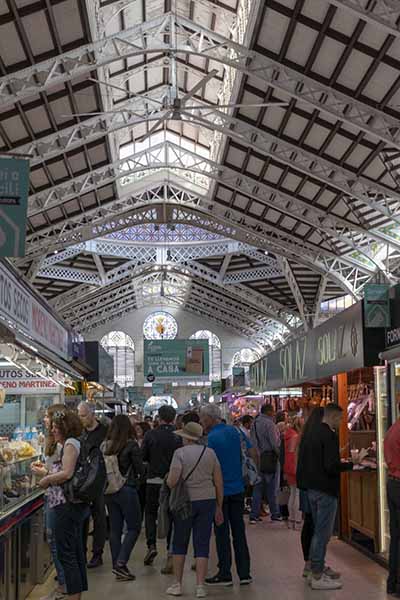 One of Valencia's most interesting sights is the Mercado Central, the enormous covered central market. If you enjoyed Barcelona's La Boqueria, you will find plenty to like here. The building itself is a splendid example of Valencian modernist architecture, while inside there is an astonishing selection of fresh produce, meat, fish, fruit, vegetables, cheeses and local delicacies. It is not simply a tourist attraction either; locals still use it as a genuine working market. This makes it considerably more enjoyable than some of the sanitised markets that have become little more than tourist shopping centres.
Valencia is also famous for one particular food — paella. This is its spiritual home, and ordering a plate of paella here is almost obligatory.
The traditional Valencian version is not necessarily the seafood-loaded dish many visitors associate with the name; the original is made with ingredients such as chicken, rabbit and green beans. Seafood versions are certainly available, but if you want the authentic local experience, try the Valencian variety.
And then Valencia does something rather clever. It combines all this old history with some astonishingly modern architecture.
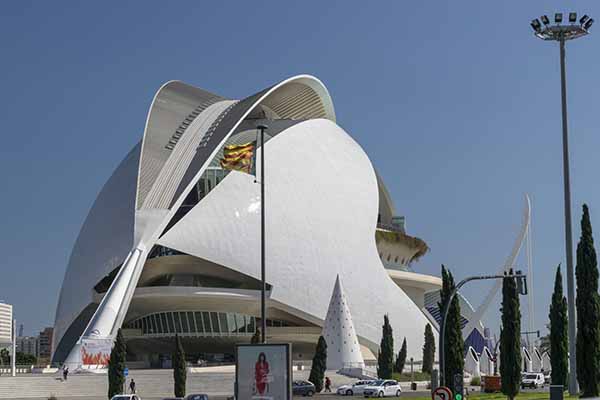 The City of Arts and Sciences is the city's great modern landmark, a spectacular complex of futuristic white buildings designed by Santiago Calatrava. It includes museums, exhibition spaces, an IMAX-style cinema and the Oceanogràfic, one of Europe's largest aquariums.
 Whatever your opinion of modern architecture, it is difficult not to be impressed by the sheer scale and ambition of the place.
The contrast between the old city and this futuristic complex is particularly striking. One minute you can be wandering through medieval streets and the next you are looking at buildings that appear to have arrived from the future. It gives Valencia a character all of its own.
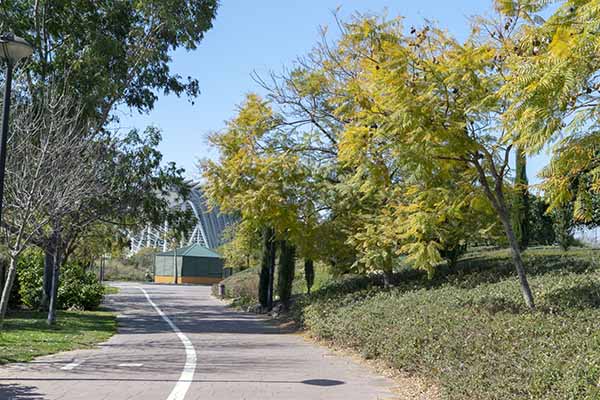 The city also has an unusual feature running through it — the Turia Gardens. The Turia River used to run through the centre of Valencia, but after a devastating flood in 1957 its course was diverted. The old riverbed was subsequently transformed into a huge linear park, stretching for several kilometres through the city. It is now one of Valencia's great assets, providing walking and cycling routes, gardens, sports facilities and plenty of space to escape the traffic.
Eventually the gardens lead towards the City of Arts and Sciences, making it possible to explore a considerable part of Valencia without having to spend your entire day dodging cars.
Then there are the beaches. Valencia is unusual among major European cities in having genuinely useful beaches close to the centre. Malvarrosa Beach is the most famous, with a broad sweep of golden sand and a promenade lined with restaurants and cafés. Nearby Las Arenas provides another popular stretch of coast.
They are not necessarily the most beautiful beaches in Spain, but they are convenient, spacious and perfectly pleasant. The Mediterranean is right on the city's doorstep, and that makes a considerable difference to the atmosphere.
Valencia also knows how to have a party. The most famous event is Las Fallas, held every March. For several days the city erupts into an extraordinary mixture of enormous sculptures, fireworks, processions, music and general mayhem. Huge figures known as fallas are constructed throughout the city before being ceremonially burned. It is spectacular, noisy and not remotely suitable for anyone looking for a quiet weekend away!
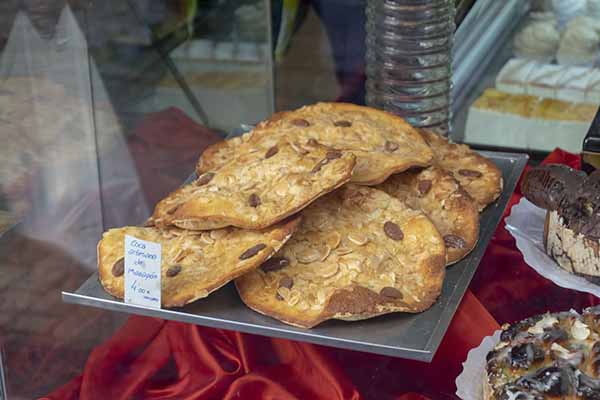 Away from the major attractions, Valencia is simply an enjoyable city to wander around. There are plenty of cafés and tapas bars, attractive squares and a much more relaxed pace than Barcelona. The Plaza de la Virgen and Plaza de la Reina are particularly pleasant areas for sitting down with a drink and watching the world go by.
Valencia isn't without its problems. Some parts of the city are looking a little tired, and the modern City of Arts and Sciences complex has had its share of controversy over cost and maintenance. During the summer the heat can also become rather oppressive, particularly if you are trying to see everything on foot.
But compared with Barcelona, Valencia can feel positively civilised. It has many of the things visitors want from Spain without quite the same level of international tourism. You get history without having to fight through quite such enormous crowds, beaches without having to stay in a purpose-built resort, and excellent food without every restaurant having to cater for tourists.
Perhaps Valencia's greatest strength is that it feels like a real city rather than simply a tourist attraction. People live and work here, the markets are genuine, the parks are used by locals and the restaurants serve the local population as well as visitors.
Old Moaner verdict: Valencia is one of Spain's better surprises. It has everything from Roman and Moorish history to futuristic architecture, a superb market, excellent food, beaches and a huge park running through the middle of the city. It may not have Barcelona's international glamour, but that might actually be part of its charm. If you are travelling through Spain, don't simply use Valencia as a stop between Barcelona and Alicante — give it a couple of days and it may well turn out to be one of the highlights.
Return to Spain Home Page