
Winchester
England's Ancient Capital
If you want to discover what England looked like before London became the centre of absolutely everything, head for Winchester.
This beautiful Hampshire city was once the capital of England and remains packed with reminders of its extraordinary past. Today it combines a compact historic centre with an impressive cathedral, medieval buildings, ancient streets, museums, riverside walks and enough King Arthur mythology to keep the legends department busy.
And unlike some historic cities, Winchester is small enough to explore comfortably on foot.
The Cathedral
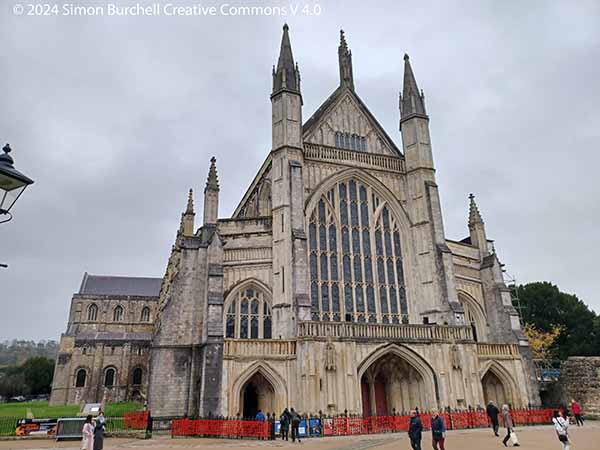 The undisputed star is Winchester Cathedral, and it is an absolute whopper.
Founded in the 11th century, it is one of the largest cathedrals in Europe and has an extraordinary history. The present building was begun in 1079, and over the centuries it has been altered and extended, leaving us with a fascinating mixture of architectural styles.
Inside are magnificent medieval and later features, including the Norman crypt, which occasionally floods and is consequently rather more atmospheric than your average church basement.
The cathedral also contains the tomb of Jane Austen, who died in Winchester in 1817, as well as memorials to other notable figures.
And then there is the sheer scale of the place.
Stand in the nave and look upwards and you get a very good idea of the ambition of medieval church builders. They didn't do things by halves.
King Alfred and the Anglo-Saxons
Long before London became England's dominant city, Winchester was the capital of the Anglo-Saxon kingdom of Wessex and later an important centre of the emerging English kingdom.
The city's most famous early ruler was Alfred the Great, who made Winchester his capital in the 9th century.
A statue of Alfred stands proudly in the city centre, sword in hand, looking as though he has just remembered something rather important that needs sorting out.
Winchester remained one of the most important cities in England after the Norman Conquest, although its political importance gradually declined as London grew.
The city we see today is therefore built on top of layer upon layer of English history.
Winchester Castle and the Great Hall
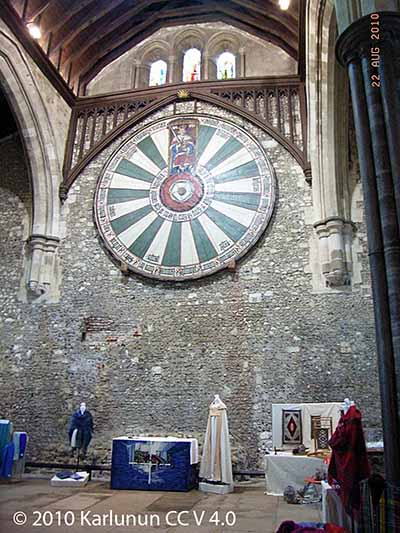 The medieval castle itself has largely disappeared, but the Great Hall remains and is one of Winchester's most atmospheric buildings.
Built in the 13th century, it is an extraordinary survivor, with an enormous medieval timber roof and imposing stone walls.
And hanging on one wall is the Round Table.
Or at least the object that has traditionally been regarded as King Arthur's Round Table.
Whether Arthur actually existed is another matter entirely.
The table dates from much later than the legendary king, but it has been hanging in the Great Hall for centuries and has become one of Winchester's most famous attractions.
It is enormous and beautifully painted, with King Arthur and the Knights of the Round Table represented around its edge.
History? Probably not.
Great story? Absolutely.
The Medieval City
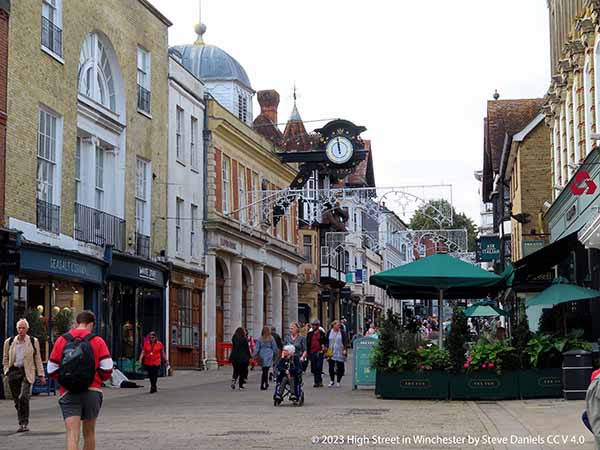 One of the joys of Winchester is simply wandering around.
The old streets contain timber-framed buildings, medieval passages, ancient churches and plenty of attractive shops and pubs.
The Square and High Street form the heart of the city, while the old Buttercross provides another reminder of Winchester's medieval importance.
The Buttercross is a particularly impressive medieval monument, and if you stand beneath it and look around, you can get a pretty good impression of how little the basic layout of the city has changed over the centuries.
Jane Austen
Winchester also has a very strong literary connection.
Jane Austen spent the final weeks of her life in the city and is buried in the cathedral.
Her house in nearby College Street is now marked with a plaque, and the city's association with her attracts visitors from around the world.
It seems rather fitting that somebody who wrote so much about English society should have ended up in a city with such an extraordinary concentration of English history.
The Winchester Watercress Line
And if you've got a bit of extra time, Winchester is also an excellent base for exploring the nearby Watercress Line, officially the Mid Hants Railway.
The preserved railway runs through the Hampshire countryside between New Alresford and Alton, with steam and heritage diesel trains providing a wonderfully nostalgic experience.
It isn't actually in central Winchester, but for railway enthusiasts — and anybody who enjoys the sound and smell of a steam locomotive — it is well worth considering as part of a wider Hampshire visit.
The Verdict
Winchester is one of those cities where history isn't confined to a museum.
It's everywhere.
You can walk through streets that have been used for centuries, stand beneath the walls of a medieval hall, visit one of England's greatest cathedrals, see King Alfred standing guard over the city and then wander beside the River Itchen.
It is also refreshingly manageable.
You don't need a car once you're in the centre, and most of the principal sights are within easy walking distance.
The city can get busy, particularly around the cathedral and High Street, and parking isn't exactly cheap or straightforward. But that's a small price to pay for somewhere with this much history packed into such a compact area.
Winchester may no longer be England's capital, but it remains one of the country's most important historic cities.
And if you want to understand how England developed before London swallowed up the limelight, this is an excellent place to start.
Just remember that when you're standing beneath that enormous cathedral or gazing at King Arthur's legendary Round Table, you're standing in a city that was already important long before most of Britain looked anything like the country we know today.
Return to South East home page