
Almuñécar
Almuñécar is one of those Spanish resorts that doesn't seem to have quite succumbed to the full-on package holiday treatment, and that is probably its biggest attraction. Sitting on the Costa Tropical between Málaga and Almería, it has a much more Spanish feel than some of the larger resorts further along the coast.
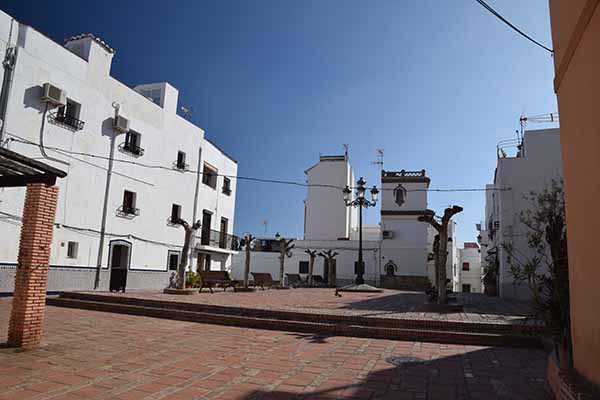 The town has been here for a very long time. The Phoenicians were knocking around more than 2,000 years ago, and the Romans subsequently discovered that this was a rather good place to live. The remains of the Roman fish-salting factories are a reminder that Almuñécar's relationship with tourism and visitors isn't exactly a recent development.
The old town is particularly pleasant, with narrow, winding streets climbing the hillside towards the Castillo de San Miguel. The castle itself is well worth exploring, not least for the superb views across the town and Mediterranean. And, as usual with Spanish hilltop castles, getting there provides a useful reminder that holidays are not necessarily meant to be restful.
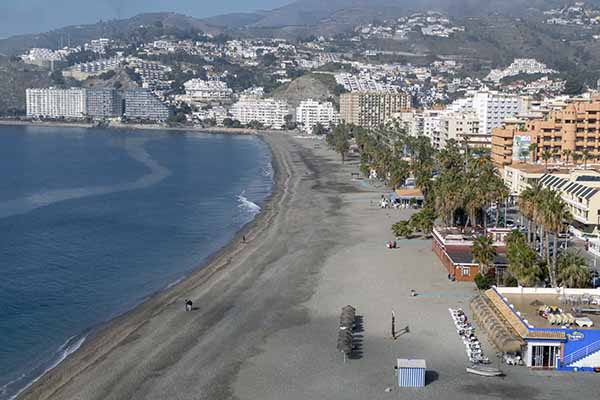 Down at sea level, Almuñécar has a string of beaches and a long promenade lined with bars, restaurants and cafés. Playa San Cristóbal is the main one and is backed by palm trees, hotels and plenty of places to stop for a drink. The beaches aren't the golden-sand variety you might find elsewhere; the Costa Tropical tends to have darker shingle and coarse sand, but the water is generally clear and the setting is attractive.
One of the more unusual sights is Peñones de San Cristóbal, two rocky outcrops jutting dramatically into the sea. They have become something of a symbol of Almuñécar and provide an excellent excuse for another photograph.
Away from the immediate coast, the scenery changes remarkably quickly. The surrounding hills are covered with subtropical crops, particularly avocados, mangoes, custard apples and, of course, the grapes used to produce the local wine. The name Costa Tropical isn't simply marketing — this part of the coast really does have a remarkably mild climate.
 The town also has its share of gardens, with the Parque Botánico El Majuelo sitting below the castle. It contains an impressive collection of tropical and subtropical plants and, rather unusually, the remains of those ancient Roman fish-salting factories.
Almuñécar is not the place to come looking for the enormous nightlife scene of Benidorm, nor is it trying to be. It is much more relaxed, with a mixture of Spanish residents, expatriates and holidaymakers. You can spend the morning wandering around the old town, the afternoon on the beach and the evening sitting outside a restaurant watching the world go by.
And perhaps that's its greatest strength. Almuñécar feels like a proper Spanish town that happens to have a beach attached to it, rather than a holiday resort that happens to have Spaniards living in it.
There are bigger and flashier resorts along the Spanish coast, but if you want somewhere with history, character, decent beaches and a genuine Spanish atmosphere, Almuñécar is well worth considering.
Just don't expect Benidorm — and thank goodness for that.
Return to Andalucia Home Page