
Bath
Bath is one of those places that has been getting tourists for so long that you sometimes wonder whether the Romans are still wandering around looking for the queue.
It is, however, very difficult to dislike Bath.
The city centre is compact, remarkably attractive and stuffed with Georgian buildings made from the local honey-coloured stone. There are Roman remains, an impressive abbey, elegant streets, bridges, museums, shops, pubs and enough tea rooms to keep the entire population of Surrey supplied with cake.
And, of course, there is the water. The Romans discovered the hot springs, the Georgians turned them into the place to be seen, and today you can once again have a bath in them.
Bath is a UNESCO World Heritage city and it certainly looks the part. The downside is that everyone else knows this too, so don't expect to have the place entirely to yourself.
GETTING AROUND
The good news is that you don't really need a car once you're in Bath.
In fact, bringing a car into the centre can result in the sort of experience that makes you question your entire holiday. There are several Park and RIde options and if coming by car they are highly recommended.
The main attractions are within walking distance of each other and Bath Spa railway station is right in the centre.
There are buses, taxis and sightseeing tours if your legs have given up.
For most visitors, though, walking is the best way to see Bath.
Just remember that Bath isn't entirely flat. The centre is manageable, but some of the surrounding streets and viewpoints involve hills.
You have been warned.
THE ROMAN BATHS
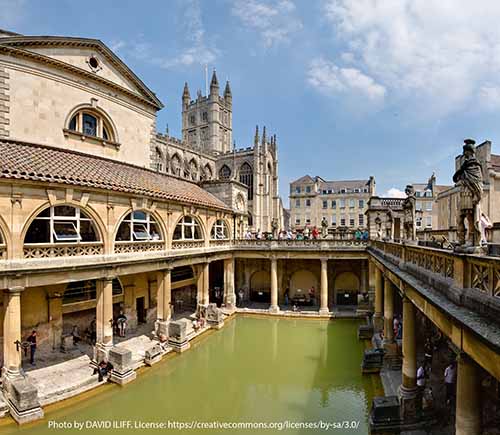 If you're visiting Bath for the first time, you really can't avoid the Roman Baths, nor should you.
The Roman Baths are right in the middle of the city and are remarkably well preserved. The main bath is still filled with steaming spring water, although I wouldn't recommend getting in. The attraction does a good job of explaining what you're looking at, and there is considerably more to it than simply staring at a large green pool.
You'll see the original Roman temple, bathing areas, ancient artefacts and the remains of the complex that made Bath such an important place nearly 2,000 years ago.
It is one of those attractions where you can happily spend an hour or two without feeling that you're being dragged around a museum wondering when it will finish.
The Roman Baths are open from 09:00 - 22:00 during the summer and 09:00 - 18:00 in the winter, with the last entry one hour before closing. Ticket prices range from £22.50 to £32.00 for adults, with discounts for children and families.
BATH ABBEY
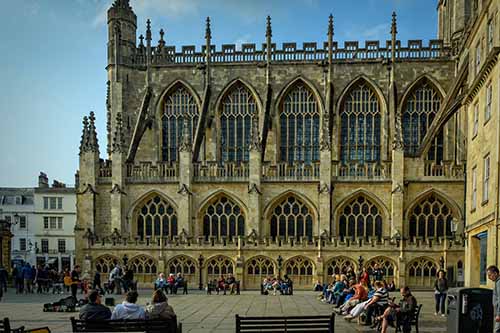 Just next door is Bath Abbey.
From the outside it is impressive enough, but go inside. The vaulted ceiling is particularly spectacular and the building has an interesting history stretching back more than a thousand years.
You can also climb the tower if you're feeling energetic. Personally, I think the phrase "climb the tower" is often used by tourist attractions when what they really mean is "walk up a lot of stairs and subsequently wonder why you did it."
Still, the views are good.
The Abbey also has the considerable advantage of being right next to the Roman Baths, so you don't have to trek halfway across Somerset to get from one attraction to another.
Bath Abbey is open Monday 09:30 - 17:30 (last entry 17:15), Tuesday–Friday 09:00 - 17:30 (last entry 17:15) , Saturday 09:00 - 18:00, and Sunday 13:30 - 14:30 & 16:30 - 18:00. Admission is free but a suggested donation is £4.00 for adults and £2.00 for children and students.
PULTENEY BRIDGE
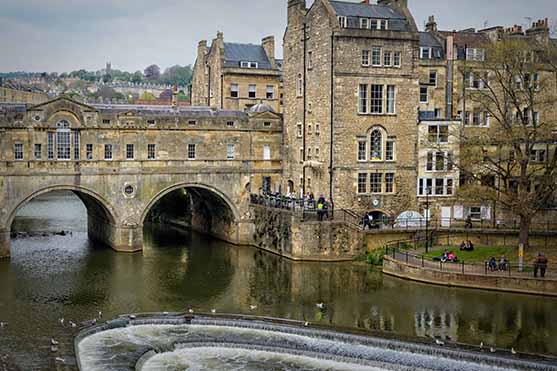 A short walk away is Pulteney Bridge.
This is one of Bath's most recognisable sights and is rather unusual because it has shops built into both sides of the bridge.
It was completed in 1774 and was inspired by Florence's Ponte Vecchio.
It's very pretty, particularly when viewed from the river below, although you will probably spend more time photographing it than actually crossing it.
Next to it is Pulteney Weir, which gives you another excellent view.
This is one of those places where you don't need to spend any money to enjoy yourself, which is always a bonus in a tourist city.
THE ROYAL CRESCENT
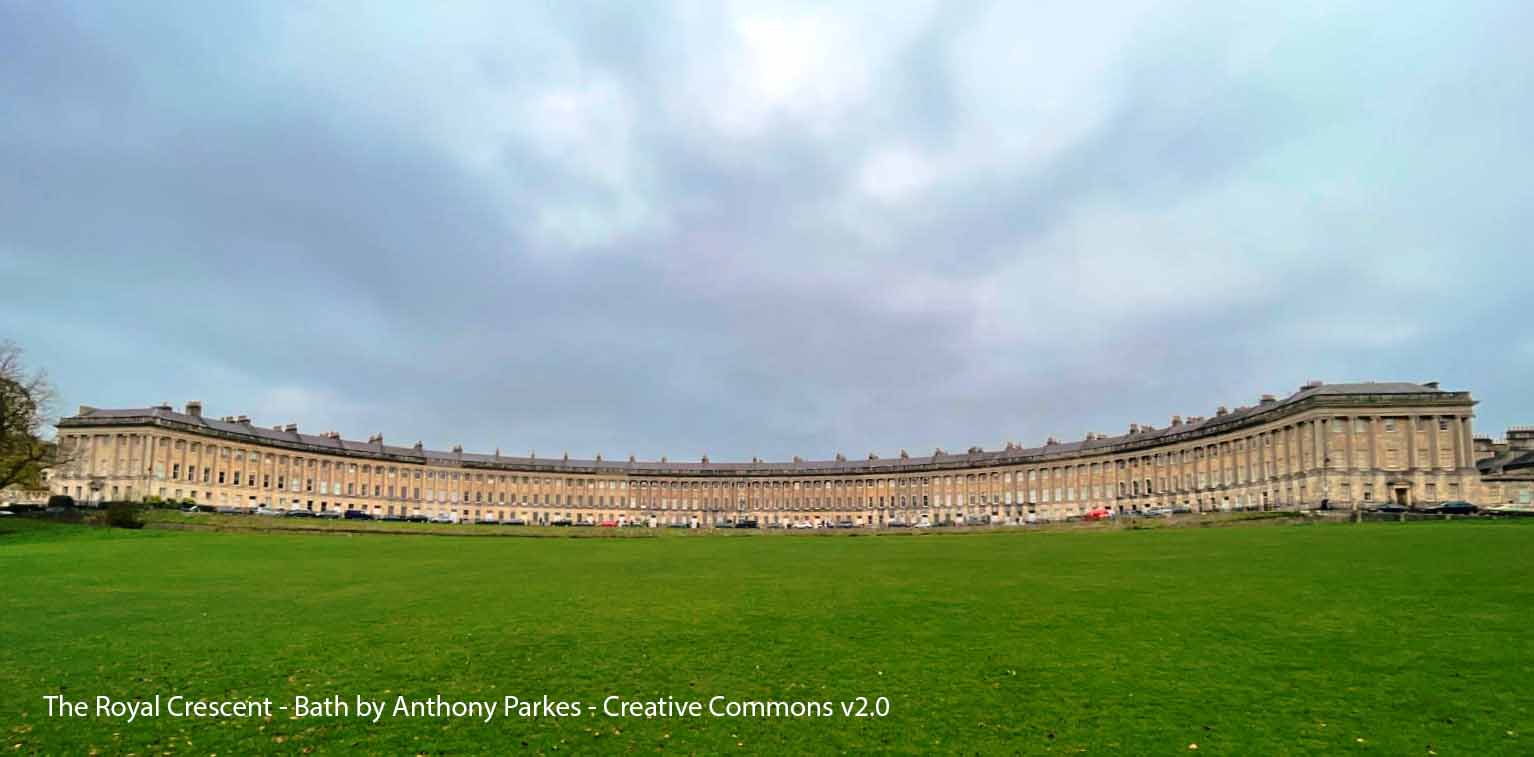 Now we come to the bit where Bath starts showing off.
No. 1 Royal Crescent sits at one end of the famous Royal Crescent, an enormous sweeping row of Georgian houses overlooking Royal Victoria Park.
The Crescent is genuinely impressive.
It is also one of the most photographed buildings in Bath, so expect to find other people standing around taking exactly the same photograph that you're taking.
The houses themselves were built for wealthy Georgians who presumably had considerably more money than sense.
If you want to see how the other half lived, No. 1 Royal Crescent has been restored as a Georgian townhouse and is open to visitors.
You can also simply admire the Crescent from outside, which is considerably cheaper.
THE CIRCUS
From the Royal Crescent, walk towards The Circus.
No, it's not a place where you will find elephants.
The Circus is another masterpiece of Georgian architecture, consisting of three curved blocks of houses arranged around a circular space. The architect John Wood the Elder apparently based the design on classical Roman ideas.
It is one of those places that makes you wonder why modern housing estates couldn't occasionally employ somebody who knew how to make buildings look nice.
Take a walk around it and then continue down towards the centre.
GREAT PULTENEY STREET
Another impressive piece of Georgian overkill is Great Pulteney Street.
It is wide, straight and lined with grand buildings, and eventually takes you towards the Holburne Museum. The street is worth walking even if museums aren't really your thing.
At the end you'll find Sydney Gardens, which provides somewhere to escape from the crowds and sit down for a while.
And you'll probably need it by then.
JANE AUSTEN
Bath has a rather large association with Jane Austen. She lived in Bath and used the city in her novels, so naturally there is a Jane Austen Centre.
Whether you should visit depends rather on how much you like Jane Austen.
If you're a devoted Austen fan, you'll probably love it.
If you're not, you may find yourself wondering why you've paid to look at a collection of things connected with a woman who has been dead for more than 200 years. Bath does rather enjoy its literary connections, though, and the Georgian streets certainly provide an appropriate backdrop.
Open daily from 09:45 - 18:00. Admission prices are £18.00 for adults, £9.95 for children (ages 6-16), and £40.95 for a family ticket (2 adults and up to 3 children)
THE PARKS
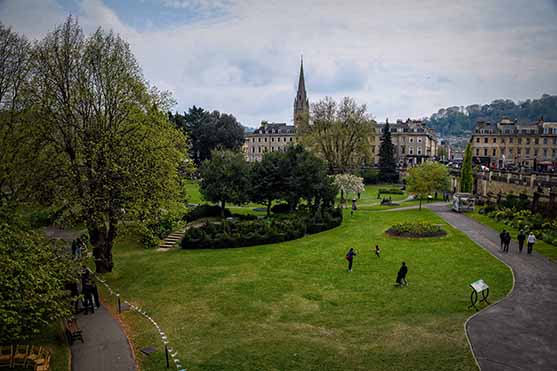 Bath isn't all buildings and tourists.
Royal Victoria Park is a large green space near the Royal Crescent and is a good place for a wander when you've had enough of Georgian architecture.
There are also the Parade Gardens beside the river, although these charge an admission fee.
If you want something a little more energetic, Bath Skyline provides excellent views over the city.
Bath Skyline is particularly good if the weather is behaving itself. Which, being Britain, obviously means you should take a coat.
SHOPPING AND EATING
 Bath has plenty of the usual chain shops, but it also has a good selection of independent businesses.
The central shopping area around Stall Street, Union Street and Milsom Street is easy to explore on foot.
And then there are the cafés, Bath has embraced the café and cake industry with considerable enthusiasm.
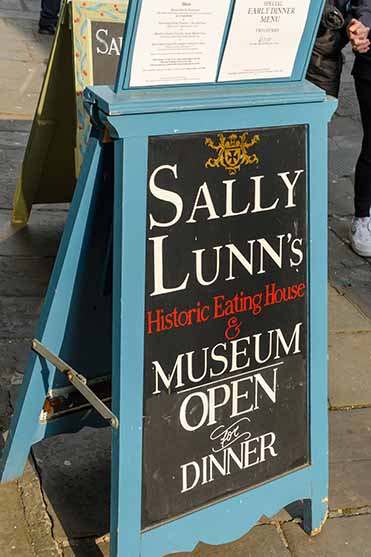
One of the more famous establishments is Sally Lunn's, which claims to be Bath's oldest house and is famous for its large, round Sally Lunn bun.
Try one.
If you don't like it, what is wrong with you, but there are plenty of other places selling cake.
This is Bath, so maybe a Bath bun?
SO, IS BATH WORTH VISITING?
Yes.
It is expensive, busy and occasionally feels as though the entire population of Britain has decided to visit on the same day as you.
But it is also beautiful.
The Roman Baths are genuinely fascinating, the Abbey is impressive, Pulteney Bridge is lovely and the Royal Crescent and Circus are among the finest examples of Georgian architecture you're likely to see anywhere.
The best thing about Bath is that you don't have to spend your entire visit rushing from attraction to attraction.
Watch the tourists taking photographs of the same buildings you've just photographed.
If you have only one day, you can see most of the important bits without needing to sprint around like a contestant on a television game show.
If you have two days, even better.
Bath is one of those cities where the architecture is as much an attraction as the attractions themselves and that's probably why it works so well.
A beautiful city with plenty to see, excellent for wandering around and sufficiently compact that you won't need a Sherpa to get between the sights.
Take your time, wear sensible shoes, take an umbrella and don't spend the entire day looking for the Roman Baths.
They're quite easy to find.
They're the ones surrounded by tourists.
(prices quoted correct as at August 2026)
Return to South West home page