
Bristol
People who live in Bristol like to tell you it's "a vibrant city with a unique identity." That's estate-agent speak for, "It's got graffiti, lots of hills and parking is impossible."
Not that there's anything wrong with Bristol. Quite the opposite, in fact. Spend a day here and you'll find yourself rather liking the place. Spend two days here and you'll be wondering why your calves ache. Spend three days here and you'll have developed a deep and lasting hatred of one-way systems.
Bristol is one of those cities that refuses to fit neatly into a box. It's not as polished as Bath, not as grand as Edinburgh and not as loud as Glasgow, but somehow it has bags more personality than places twice its size. It also seems to have acquired an entire industry based around pointing at walls and saying, "Banksy might have painted that."
Whether he did or not is another matter.
Arriving
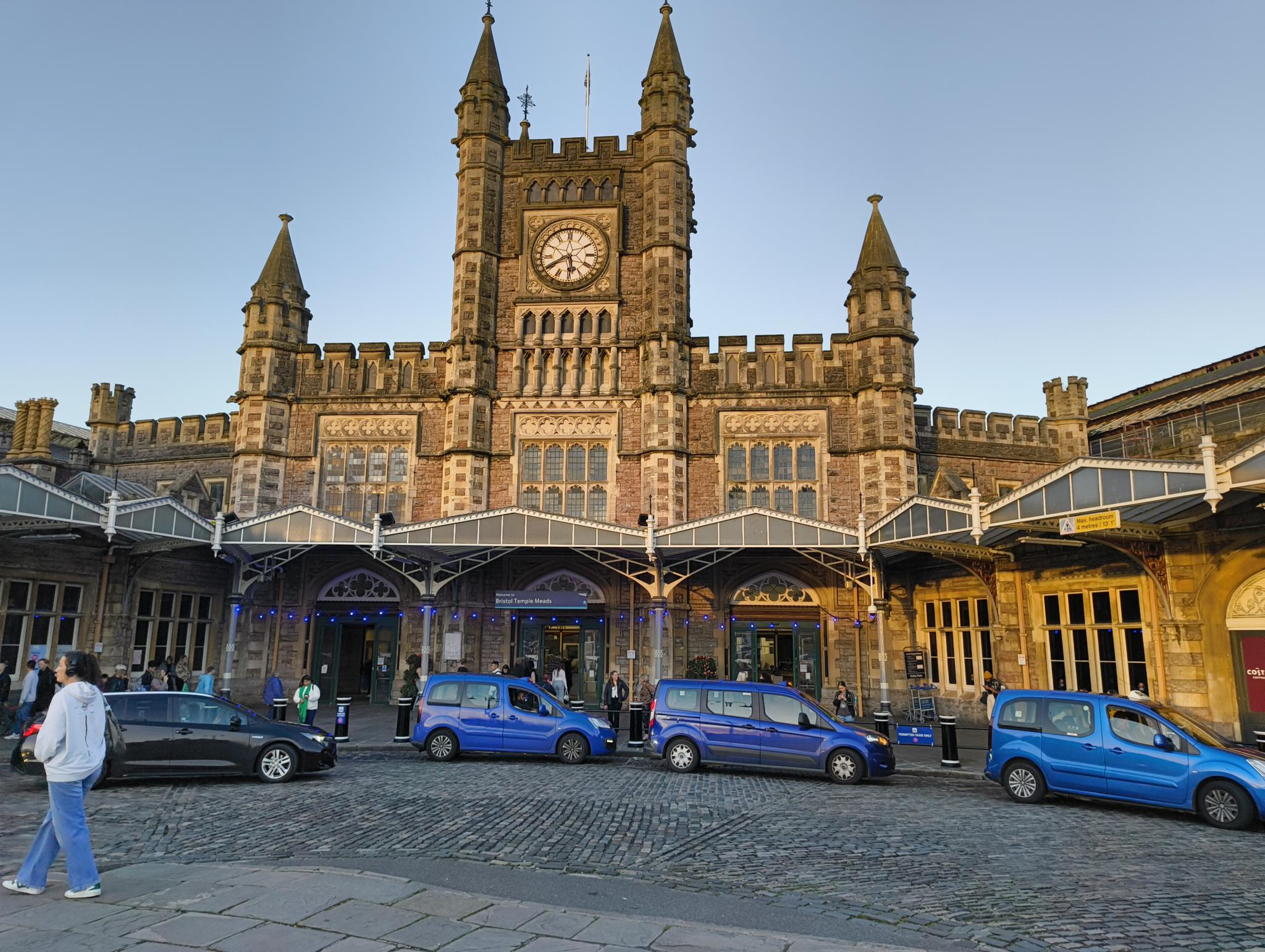 Most visitors arrive at Temple Meads station, a magnificent Victorian building that immediately fills you with confidence. You emerge expecting broad boulevards and obvious signposts.
Instead you're greeted by a bewildering collection of roads, buses, cyclists, floating harbour, bridges and people walking purposefully in every conceivable direction. Within five minutes you've absolutely no idea where north is and you're seriously considering following somebody carrying a shopping bag in the hope they know where the city centre might be.
Temple Meads itself is rather splendid though. Designed by Brunel, it's one of those stations that reminds you Britain once built things properly instead of covering everything in grey cladding and calling it "an exciting transport hub."
Outside, however, the excitement mainly comes from avoiding buses.
Getting About
Like every British city, Bristol firmly believes that roadworks are an essential part of the visitor experience.
No matter when you arrive, somewhere important will be closed, diverted or reduced to one lane by a collection of orange cones that appear to breed overnight.
Parking is expensive, traffic is unpredictable and sat-navs occasionally suffer what can only be described as a nervous breakdown.
Public transport exists.
Sometimes it even turns up when expected.
In fairness, buses have improved over recent years, but locals still discuss them in the same cautious tone normally reserved for weather forecasts.
Walking remains the best option, just remember those hills. You'll certainly know you've visited Bristol when your fitness watch congratulates you for climbing the equivalent of Ben Nevis before lunchtime.
Walking Around
 Bristol is officially described as "walkable."
Whoever wrote that has obviously never attempted it. Yes, you can walk almost everywhere, but nobody mentions that every route appears to involve climbing something. Streets that look perfectly flat on a map suddenly decide to become Alpine halfway along. You set off cheerfully enough and twenty minutes later you're puffing like an asthmatic accordion player while a pensioner with two shopping bags overtakes you without breaking stride.
The locals don't even seem to notice. They glide effortlessly uphill carrying coffee, bicycles, toddlers and occasionally all three.
You, meanwhile, are wondering whether it's acceptable to stop halfway up and ask passing strangers for oxygen.
What To See
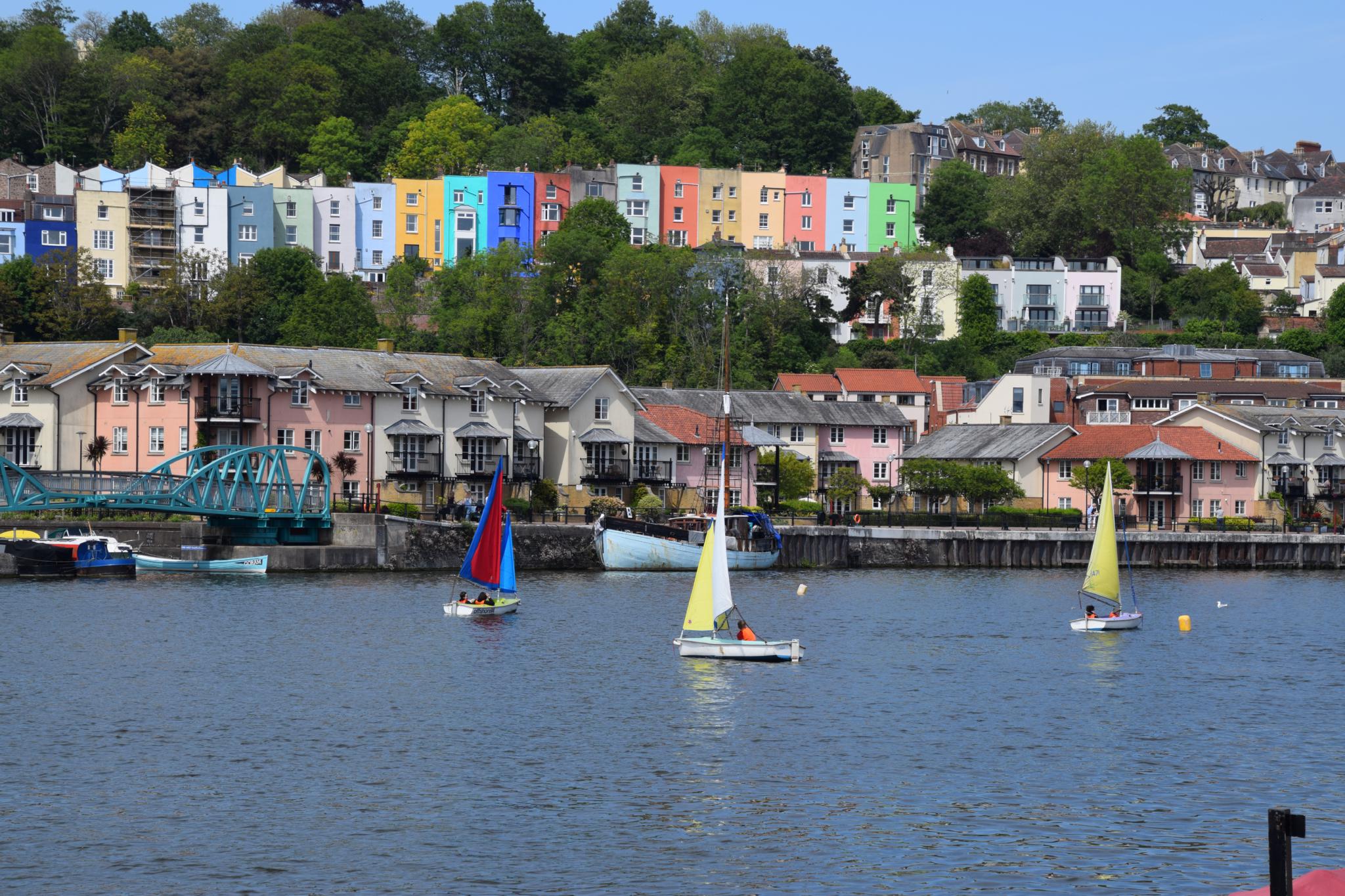
Eventually you'll reach Bristol's floating harbour, one of the city's greatest successes. Like many old docks, it used to be a place where serious business happened. Ships arrived from around the world, goods were unloaded and vast fortunes were made.
Nowadays it's somewhere people eat sourdough pizza while looking at paddleboards.The harbour is packed with cafés, bars, museums and enough waterside seating to convince you that every Bristol resident spends their life drinking artisan coffee in the sunshine.
This illusion generally lasts until it starts raining sideways.
If you fancy seeing the harbour properly you can hop aboard one of the little ferries that potter backwards and forwards all day. They're surprisingly useful and save you discovering that the bridge you wanted is somehow half a mile further away than it looked.
You can't spend long in Bristol without encountering Isambard Kingdom Brunel, he is everywhere.
There's Temple Meads. There's the SS Great Britain. There's the Clifton Suspension Bridge. If he'd lived another ten years he'd probably have designed the bus shelters and the public toilets as well.
Modern celebrities become famous for appearing on reality television, Brunel became famous by casually redesigning Britain.
 If you only pay to visit one attraction in Bristol, make it the SS Great Britain.
From outside it looks like an old ship in a dry dock, Inside it's astonishing.
The restoration is superb, managing to tell the story of Victorian engineering without making you feel you're trapped inside a school history lesson. You can wander through first-class cabins, peer into the cramped accommodation for ordinary passengers and discover that crossing the Atlantic in the 1840s wasn't nearly as glamorous as period dramas would have you believe.
The engine rooms are particularly impressive. They also remind you that Victorian engineers solved problems by adding more iron until nothing could possibly move ever again. There's something reassuringly British about that approach.
Open daily 10:00 - 17:00 Admission: Adult (17+) £22.00, Student £18.50, Child (4-16) £14.50 Tickets give unlimited admission for one year.
Clifton – Where the Houses Cost More Than Small Countries
If Bristol has a posh end, it's Clifton.
You know you've arrived because the cafés stop serving ordinary coffee and begin offering things with names that sound like yoga positions. The cars become newer, the dogs become fluffier and everybody appears to own a striped jumper despite there being no obvious maritime connection.
The Georgian terraces are undeniably beautiful. Row upon row of elegant honey-coloured houses line streets so immaculate that you almost feel guilty walking along them. Window boxes overflow with flowers, the paintwork gleams and even the wheelie bins somehow look respectable.
It's all terribly civilised.
Then you glance in an estate agent's window. The asking prices are enough to make you wonder whether the decimal point has been accidentally omitted. For the cost of a modest Clifton townhouse you could probably buy an entire street somewhere else, along with the pub at the end of it.
Still, it's free to look, which is fortunate because that's all most of us will ever be doing.
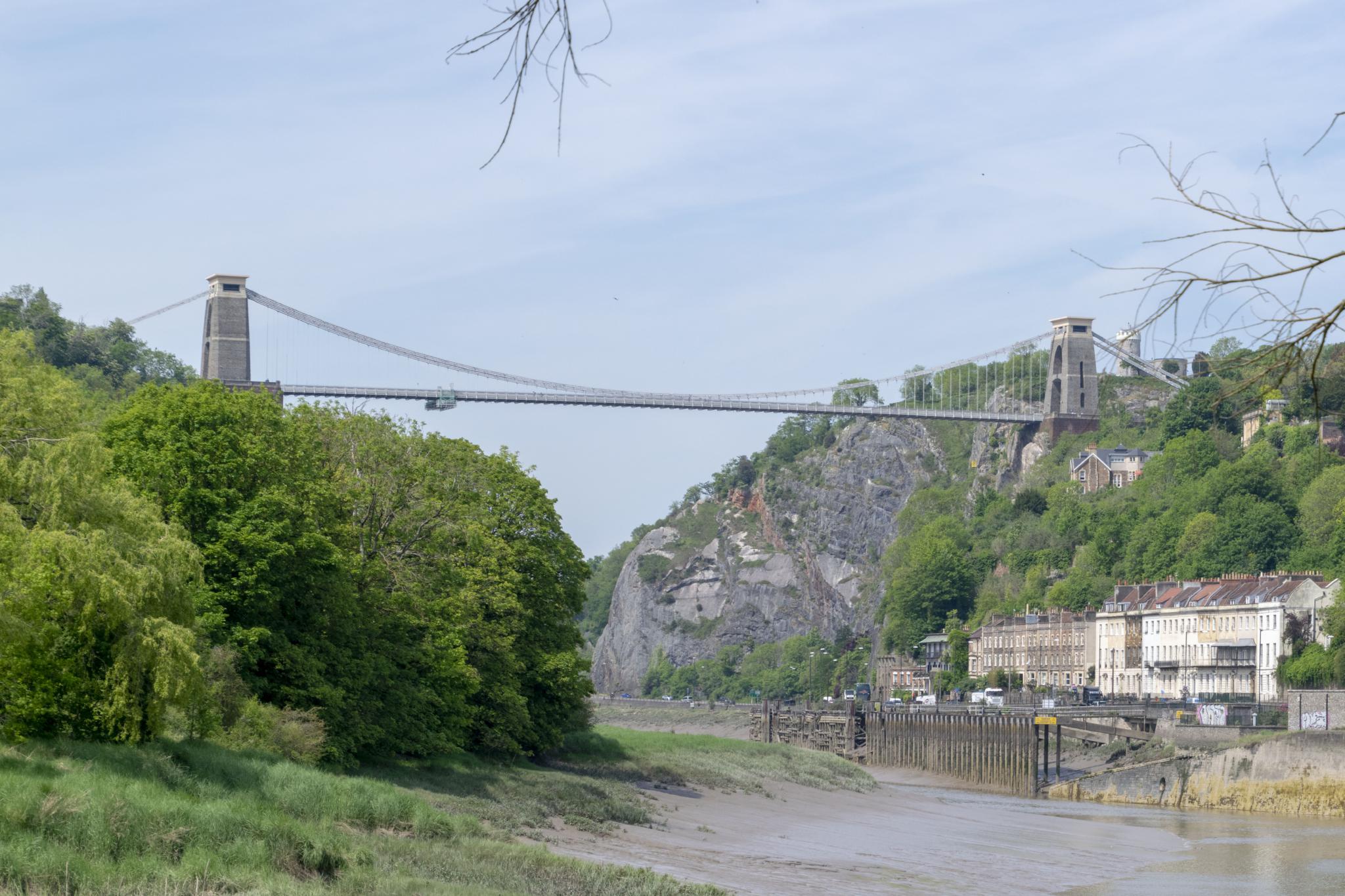 No visit to Bristol is complete without a trip to the Clifton Suspension Bridge.
Every city has that one landmark that appears on every postcard, tea towel and fridge magnet. This is Bristol's.
It really is magnificent.
Spanning the Avon Gorge with an effortless elegance, it somehow manages to look both delicate and immensely strong. Brunel designed it, although rather inconveniently he died before it was completed, which must have been a little annoying after all that effort.
Standing halfway across provides wonderful views in every direction. On one side lies Bristol, spreading across its hills in glorious confusion. On the other, the gorge disappears beneath your feet while tiny boats creep along the river far below.
It's spectacular, it's also surprisingly windy. Loose hats, lightweight scarves and elaborate hairstyles all have a tendency to become airborne. Somewhere at the bottom of the gorge is probably a small mountain of souvenir baseball caps.
Banksy – The City's Favourite Mystery
Bristol is fiercely proud of its connection with Banksy.
Quite right too.
His work helped transform street art from "someone's been at the wall with a spray can again" into something people happily queue to photograph.
The amusing thing is that half the city seems convinced they know who Banksy really is.
"My mate went to school with him."
"My cousin's neighbour definitely knows."
"My barber's aunt used to see him in the Co-op."
Strangely, nobody can actually prove any of this.
Various genuine Banksy works can still be found around Bristol, although you'll often discover a small crowd studying them with intense concentration, as if staring hard enough will reveal the meaning of life.
They're very good, of course.
But you'll also notice plenty of other street art that deserves attention. Bristol has become an outdoor gallery, with colourful murals brightening buildings that would otherwise resemble slightly tired office blocks.
It's one of the few places where graffiti can actually improve the neighbourhood.
Up, Up and Away
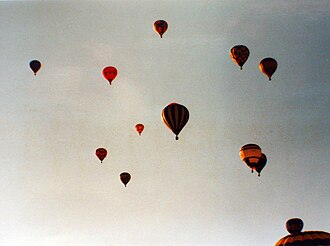 Mention Bristol to most people and sooner or later someone will bring up the balloons.
If you're lucky enough to visit during the Bristol International Balloon Fiesta, the skies fill with dozens of colourful hot-air balloons drifting serenely over the city.
It's one of the most magical sights in Britain.
Even the most hardened cynic has to admit there's something rather special about standing in a field at dawn watching enormous balloons slowly inflate before floating silently into the sky.
Naturally, British weather occasionally intervenes.
Months of planning can be undone by a gust of wind, leaving thousands of spectators staring hopefully upwards while organisers explain that safety must come first.
They're absolutely right, of course, it's just slightly disappointing after getting up at five in the morning.
Bristol's museums deserve far more attention than they sometimes receive.
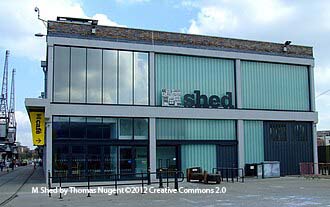 The excellent M Shed tells the story of the city without making you feel as though you've accidentally wandered into a GCSE revision class. You'll learn about Bristol's engineering achievements, maritime history, colourful characters and, importantly, its involvement in the transatlantic slave trade.
The subject is handled honestly and thoughtfully—something the city deserves credit for.
Open Tuesday - Sunday 10:00 - 17:00, admission free but donations appreciated
Elsewhere, Bristol Museum & Art Gallery manages to combine dinosaurs, Egyptian mummies, fine art, local history and the sort of fascinating oddities that have children pointing excitedly while adults pretend they already knew what they were looking at.
Open Tuesday - Sunday 10:00 - 17:00, admission free but donations appreciated
So...Is It Worth It?
Absolutely.
Despite the hills, the traffic, the roadworks, the parking charges, the mysterious one-way systems and cafés where ordering coffee occasionally feels like sitting an entrance exam, Bristol is one of Britain's most enjoyable cities.
It's creative without being pretentious.
Historic without feeling stuck in the past.
Modern without demolishing everything interesting.
You'll arrive expecting graffiti and balloons.
You'll leave remembering Brunel, the harbour, Clifton, excellent pubs and one of the friendliest cities you'll find anywhere in the country.
You'll also leave with slightly sore legs.
But that's Bristol.
It's impossible to visit without climbing something.
(prices quoted correct as at August 2026)
Return to South West home page
Return to Coast Bristol to Portchester