
Cadiz
Cádiz is one of those places that makes you wonder why it doesn't get talked about more. While millions of visitors pile into Barcelona, Madrid and the Costa del Sol, Cádiz sits down in the far southwest of Spain, jutting out into the Atlantic like a rather weather-beaten ship, quietly getting on with being one of the country's most fascinating cities.
And fascinating it certainly is. Cádiz claims to be one of the oldest continuously inhabited cities in Europe, with its origins stretching back more than 3,000 years to the Phoenicians. Over the centuries it has been occupied by Carthaginians, Romans, Visigoths and Moors before eventually becoming part of modern Spain. You don't have to look very hard to find evidence of all those layers of history.
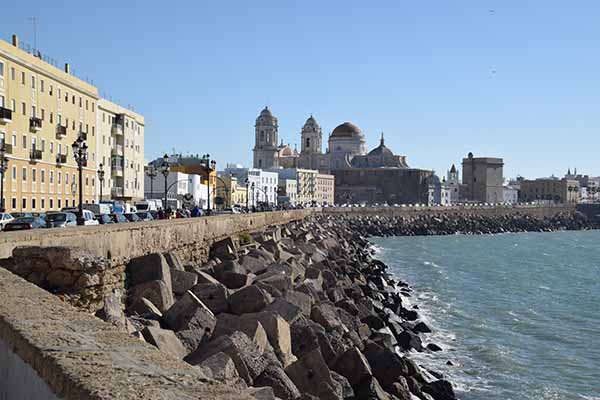 The city itself is wonderfully compact. Cádiz's old town occupies a narrow peninsula, surrounded on three sides by water, so you are never particularly far from the sea. It is a city made for wandering, and wandering is exactly what you should do.
The Cathedral of Cádiz dominates the skyline, its huge golden dome making it impossible to miss. Construction began in 1722 and took more than a century to complete, which perhaps explains why the architects couldn't quite decide whether they were building something Baroque or Neoclassical. Whatever the architectural argument, it is an impressive building, particularly when viewed from the waterfront.
Climb the Torre de Poniente and you get one of those views that makes all the effort worthwhile. The old city spreads out beneath you, with its jumble of rooftops surrounded by the Atlantic. On a clear day you can see for miles.
Nearby is the Roman Theatre, discovered almost by accident in the 1980s beneath the old quarter. Built during the Roman period, it was once capable of holding thousands of spectators. It is a particularly good reminder that Cádiz wasn't some insignificant outpost — this was an important city long before modern Spain existed.
Then there is the Castillo de San Sebastián, sitting dramatically on a small island reached by a causeway extending into the Atlantic. There is also the Castillo de Santa Catalina, guarding another side of the old city. Neither is quite the sort of enormous medieval fortress you might expect, but both make excellent use of Cádiz's extraordinary coastal setting.
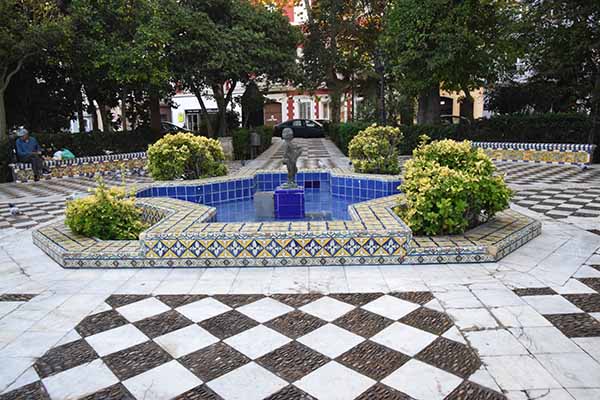 One of the pleasures of Cádiz is simply walking around its squares. Plaza de las Flores is particularly lively, with its flower stalls and cafés, while Plaza de San Antonio provides another good place to sit down and watch Spanish life unfold.
The Mercado Central is another must-visit. It is a proper working market rather than merely a tourist attraction, with stalls piled high with fruit, vegetables, meat and, most importantly, seafood. Cádiz has a long-standing relationship with the Atlantic and the local cuisine makes full use of it.
And if you like seafood, you're in luck.
Fried fish — pescaíto frito — is practically compulsory. The local version is beautifully simple: fresh fish, lightly floured and fried, served hot and usually accompanied by little more than lemon and a cold drink. Don't start looking for complicated sauces; the fish doesn't need them.
 The beaches are another pleasant surprise. Playa de la Caleta is the city's most famous, a relatively small crescent of sand tucked between the two castles. It has an almost theatrical setting and has appeared in films, including Die Another Day. It is particularly attractive towards evening when the sun drops over the Atlantic.
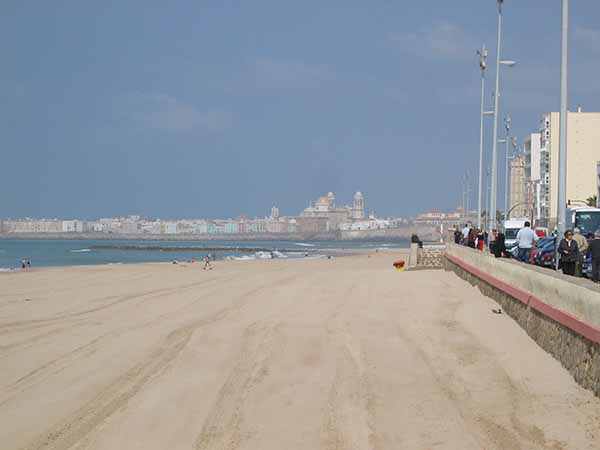
For a much bigger stretch of sand, head for Playa de la Victoria, which runs along the newer part of the city. It is considerably more spacious and is popular with locals as well as visitors.
But Cádiz isn't simply about ancient history and beaches. There is a lively modern city underneath it all, and nowhere is this more obvious than during Carnival. Cádiz Carnival is one of Spain's great celebrations, famous for its costumes, street performances, music and, particularly, the satirical groups known as chirigotas. This is not a polite little parade where everyone stands quietly behind barriers. Cádiz lets its hair down spectacularly.
The city's connection with Spain's maritime history is also important. Cádiz became enormously wealthy during Spain's trade with the Americas, particularly after Seville's monopoly on American trade was gradually transferred here. Christopher Columbus sailed from Cádiz on later voyages, and the city's position made it one of Spain's great ports.
Perhaps the most important moment in its history came in the early 19th century. While much of Spain was occupied by Napoleon's forces, Cádiz remained under Spanish control, protected by its geography and British naval support. In 1812, the Spanish Constitution was proclaimed here, earning it an important place in the development of modern Spain.
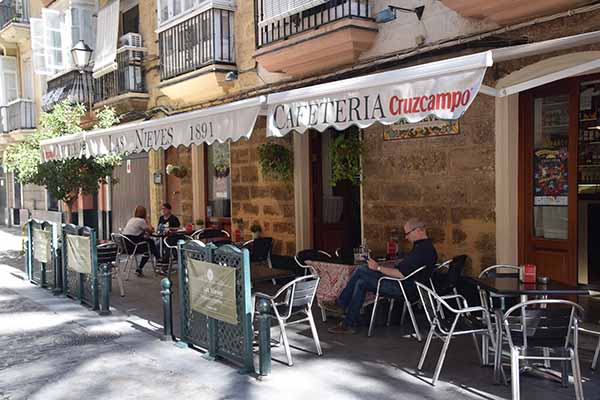 There is also something wonderfully atmospheric about Cádiz itself. The buildings have a slightly faded elegance, balconies are decorated with flowers, narrow streets open unexpectedly onto bright squares and the Atlantic is never far away. It feels less polished than some of Spain's better-known tourist destinations — but that is part of its charm.
The weather can be another matter. Cádiz is exposed to the Atlantic and the infamous Levante wind can turn a perfectly pleasant day into something resembling a wind tunnel. On other days, the Atlantic breeze is exactly what you want. Either way, you soon discover that the locals have learned to live with it.
If there is a criticism, it is that Cádiz can sometimes feel a little tired around the edges. Some buildings desperately need attention and certain streets aren't going to win prizes for architectural perfection. But personally, I'd take that over a resort that has been polished within an inch of its life.
Cádiz isn't trying to be Barcelona, and thank goodness for that.
It is old, slightly scruffy, atmospheric, wonderfully Spanish and surrounded by the Atlantic. You can walk through 3,000 years of history in the morning, eat some of the best seafood in Andalucía for lunch, sit on a beach in the afternoon and then spend the evening in a tapas bar listening to the locals argue about football.
Cádiz is Spain without too much of the tourist packaging — and that makes it rather special.
Return to Andalucia Home Page