
Dundee
For many years, Dundee suffered from a rather unfortunate image. It was the city of jute, jam and journalism, famous for its industrial past, marmalade and the Dundee Courier, but not necessarily somewhere that appeared at the top of anyone's Scottish holiday wish list.
Well, things have changed.
Dundee has undergone a remarkable transformation over recent decades and has reinvented itself as a modern waterfront city, while still retaining plenty of reminders of its industrial and maritime past. It isn't perfect – far from it – but it is certainly much more interesting than its old reputation would suggest.
And, as with so many Scottish cities, you need to look beyond the obvious.
The Waterfront
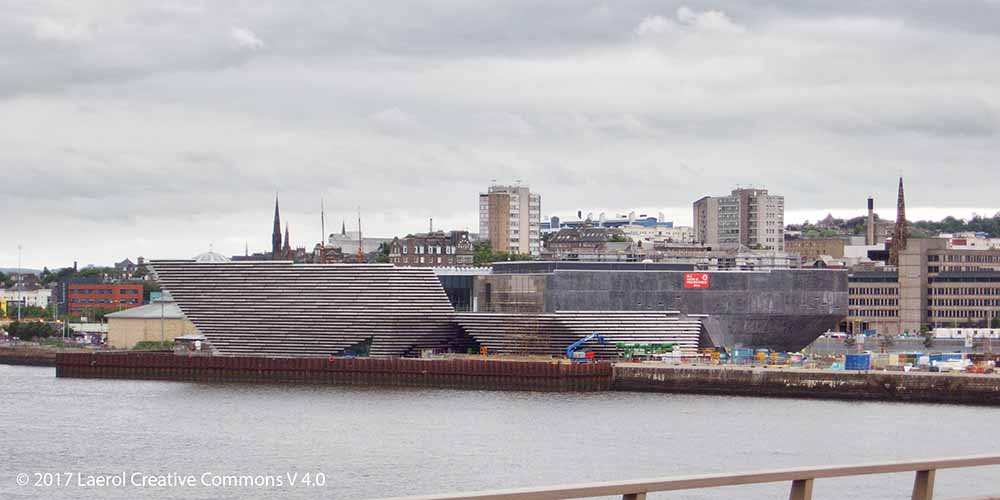
The big transformation has taken place around the River Tay.
The waterfront has been extensively redeveloped, creating a much more attractive connection between the city centre and the river. The star attraction, without question, is the extraordinary V&A Dundee.
Opened in 2018, it is Scotland's first dedicated design museum and its building is an attraction in itself. Inspired by the cliffs of the Scottish east coast, the architecture juts dramatically into the Tay.
You don't have to be a design enthusiast to appreciate the building.
It is spectacular.
And perhaps more importantly, the museum has helped change the way people see Dundee.
RRS Discovery
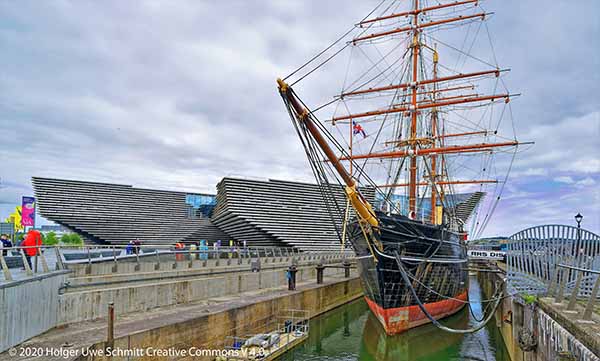 Just along the waterfront is another of Dundee's great attractions – RRS Discovery.
Built in Dundee in 1901 for Captain Robert Falcon Scott's Antarctic expedition, Discovery carried Scott and Ernest Shackleton south into the unknown.
The ship has survived remarkably well and can be explored today.
Standing aboard her and thinking about the conditions those early Antarctic explorers faced makes modern complaints about a delayed train seem rather insignificant.
Nearby is the Discovery Point visitor centre, which tells the story of the ship and the expedition.
HMS Unicorn
If Discovery represents Dundee's connection with exploration, HMS Unicorn represents its naval heritage.
This remarkable surviving wooden warship dates from 1824 and is one of the oldest seaworthy warships in the world. It is now permanently berthed in Dundee and provides a fascinating glimpse into life aboard a nineteenth-century naval vessel.
It is easy to walk past museums like this in favour of the more fashionable attractions, but this is precisely the sort of place that gives Dundee depth.
The McManus
Back in the city centre is The McManus: Dundee's Art Gallery & Museum, housed in one of the city's finest Victorian Gothic buildings.
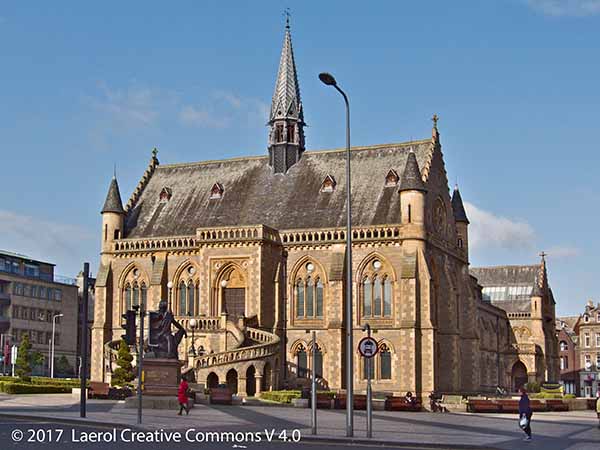 It contains collections covering art, archaeology, natural history and the story of Dundee itself.
If you want to understand the city rather than simply photograph its new waterfront, this is one of the places to do it.
And the building itself is worth seeing.
Dundee's Darker Past – Jute
For much of its history, Dundee was an industrial powerhouse.
The city became internationally important for jute, a fibre imported largely from India and processed into cloth and other products. Dundee's mills dominated the industry, employing thousands of people.
The industry made fortunes for some and provided employment for generations, but the story wasn't entirely rosy. Working conditions could be hard and the prosperity of Dundee's jute industry was closely tied to Britain's colonial economy.
The Verdant Works museum tells this industrial story particularly well.
It is one of those museums where you come away with a much better understanding of why the city looks the way it does.
Marmalade
And then there's the jam.
More accurately, marmalade.
Dundee has long claimed the invention of the famous orange preserve, traditionally associated with Janet Keiller in the eighteenth century. The story is wonderfully Scottish: a consignment of Seville oranges was apparently obtained cheaply after a shipload arrived in Dundee, and the family turned them into marmalade.
Whether every detail of the traditional story is entirely accurate is debatable.
But Dundee has certainly done its best to ensure that nobody forgets the connection.
The Law
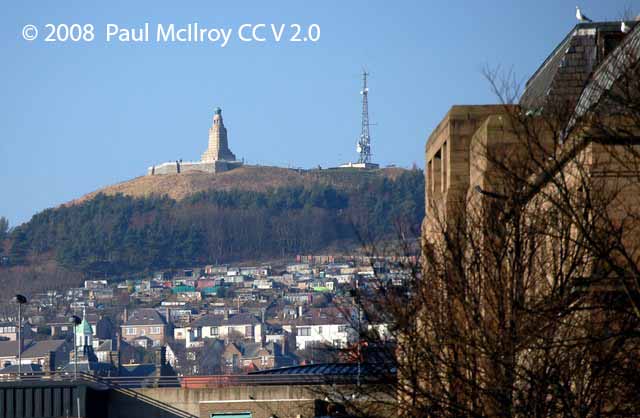 You can't miss Dundee Law.
The extinct volcanic hill rises above the city and provides an excellent viewpoint across Dundee, the River Tay and the surrounding countryside.
The memorial at the summit commemorates those from Dundee who died in the First and Second World Wars.
The view is the real attraction, particularly on a clear day.
And after climbing the hill, you have earned lunch.
Preferably something considerably more substantial than marmalade.
The Tay
The River Tay is central to Dundee's identity.
The enormous estuary gives the city a magnificent setting and the Tay Rail Bridge provides one of the most recognisable views.
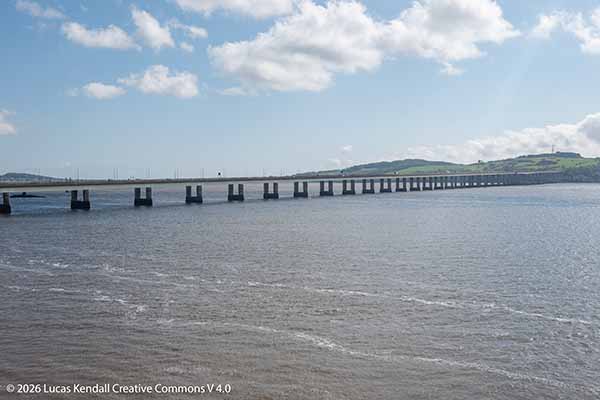 The current bridge replaced the infamous original structure, which collapsed during a storm in 1879 while a train was crossing it.
All 75 people aboard were killed.
The disaster became one of Britain's most notorious railway accidents and inspired William McGonagall to write his notoriously awful poem The Tay Bridge Disaster.
McGonagall's poetry has acquired almost legendary status for being spectacularly bad.
Quite an achievement in itself.
The Tay Road Bridge
Today, the Tay Road Bridge provides the main road connection across the estuary to Fife.
Crossing it gives you an excellent view back towards Dundee, and the journey also opens up the possibility of combining Dundee with St Andrews and the East Neuk of Fife.
So Dundee works particularly well as part of a wider tour rather than necessarily being an isolated destination.
City Centre – The Old Moaner Bit
Now for the inevitable qualification.
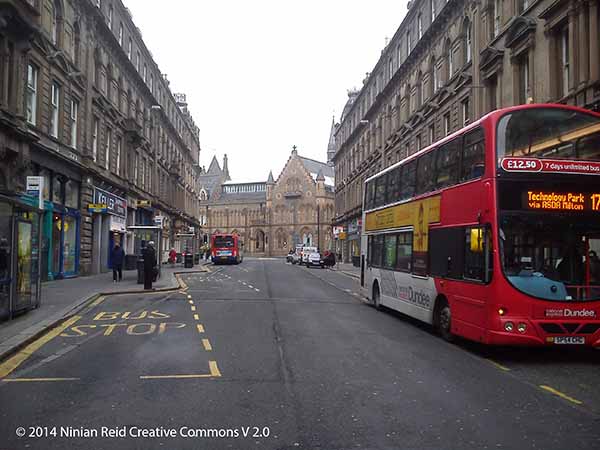 Dundee's regeneration has been impressive, but don't expect every street to look like the shiny new waterfront. There are still tired buildings, empty shops and areas where decades of decline haven't magically disappeared.
The city has also sometimes been guilty of believing that regeneration automatically equals character.
It doesn't.
New buildings are all very well, but what makes a city interesting is the combination of old and new. Fortunately, Dundee still has plenty of the former.
The best thing about the city is that it hasn't completely attempted to erase its industrial past.
A City of Reinvention
Perhaps Dundee's greatest achievement is that it has changed without pretending it was never Dundee. The city has embraced design, technology, science and culture while retaining its maritime and industrial heritage.
The V&A sits beside Discovery.
Modern waterfront developments sit alongside old dockland buildings.
The McManus tells the story of the past while the university and technology sectors look towards the future.
That mixture works.
Dundee – Worth a Visit?
Definitely.
I wouldn't suggest spending a fortnight here, but Dundee makes an excellent couple-of-days destination and a very good base for exploring the surrounding area.
The V&A is the obvious modern attraction, Discovery is a must for anyone interested in exploration, the McManus provides the history and Dundee Law gives you the view.
(prices quoted correct as at August 2026)
Return to Scotland home page
Return to Coast Eymouth to John O'Groats