
Eden Project
There are some attractions where you arrive and immediately think, “Well, I wasn't expecting that.” The Eden Project is definitely one of them.
Tucked into a huge former china-clay pit near St Austell in Cornwall, Eden is an extraordinary combination of science, horticulture, architecture, education and environmentalism. Its enormous biomes have become one of Cornwall's most recognisable landmarks, but what makes Eden really interesting is that the whole place is essentially an experiment in showing how plants, people and the planet are connected.
And, rather wonderfully, it doesn't do this by simply shouting environmental messages at you from a lectern.
Instead, it gives you a tropical rainforest, Mediterranean landscapes, gardens, sculptures, art installations and some spectacular architecture — and lets you work out the message while wandering around.
The biomes
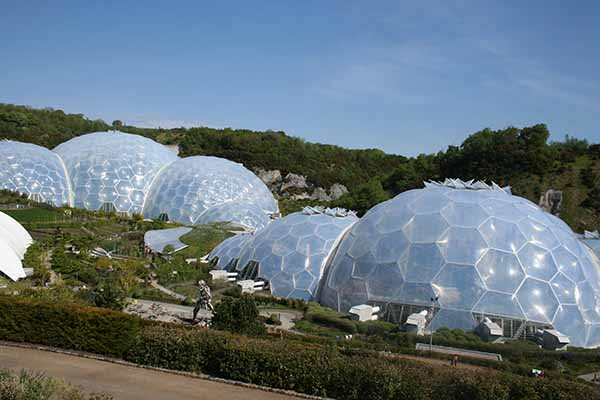 The stars of the show are, of course, the Biomes.
These huge interconnected structures look like something from a science-fiction film and were constructed inside the former clay pit. They consist of hundreds of hexagonal and pentagonal panels supported by steel frames, creating vast enclosed environments.
There are two principal biomes, with the larger one containing the Rainforest Biome.
And this is where Eden really comes alive.
Step inside and you suddenly find yourself in a completely different climate. The temperature rises, the humidity hits you and the vegetation becomes progressively more spectacular as you climb through the landscape.
The Rainforest Biome recreates environments ranging from tropical islands and Southeast Asia to West Africa and tropical South America. Plants grow everywhere — beneath you, beside you and seemingly from every available piece of ground.
There are banana plants, rubber trees, palms, coffee, cocoa and countless other tropical species. Some are enormous, some tiny and some so peculiar that you begin to wonder what evolutionary advantage they possibly have.
The canopy walkway is particularly good, giving you the opportunity to look down over the rainforest rather than simply wandering around at ground level.
And then comes the heat.
Eden deliberately demonstrates how tropical plants live in a hot and humid environment, but visitors occasionally discover that they themselves are considerably less well adapted to tropical conditions. There are places to pause and cool down, which may be regarded as an essential part of the experience rather than an optional extra.
The Mediterranean Biome
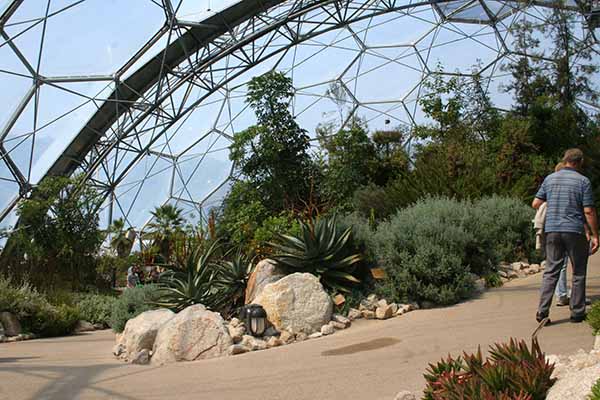 The adjoining Mediterranean Biome is a little more comfortable for British visitors.
Here the climate is based on regions such as the Mediterranean, South Africa and parts of California, with plants adapted to warm, relatively dry conditions.
The contrast with the rainforest is dramatic. Suddenly there are olive trees, vines, citrus fruits, herbs and colourful flowers rather than enormous tropical leaves.
It also demonstrates something important about the Eden concept: this isn't simply about saving rainforests. Different environments support completely different ecosystems, and all of them are vulnerable to changes in climate and human activity.
The crater
The Biomes get all the publicity, but the scale of the old clay pit in which Eden sits is impressive in its own right.
The project transformed an enormous industrial scar into a visitor attraction and living landscape. Where once there was a vast working china-clay pit, there are now gardens, pathways, lakes, woodland and planting.
The transformation is arguably one of Eden's greatest achievements.
Rather than pretending the industrial landscape never existed, Eden has incorporated it into the attraction. You can still appreciate the enormous scale of the crater while seeing how a damaged landscape can be given a new purpose.
There is something rather satisfying about that.
The gardens
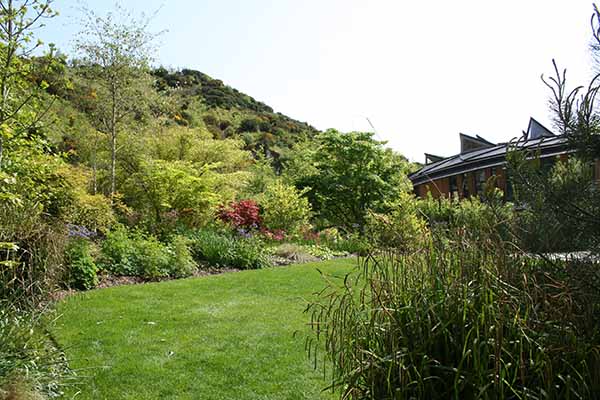 Outside the Biomes, the site becomes a huge garden.
There are themed areas, seasonal displays, sculptures and planting designed to demonstrate different aspects of the relationship between people and plants.
Some areas concentrate on food and agriculture, reminding visitors just how dependent we are on the plant world. Others demonstrate sustainable gardening and ways of growing plants in difficult environments.
There are also plenty of places simply to sit and enjoy the scenery.
This is important because Eden can be quite an intensive experience. There is a huge amount to see, and sometimes the best thing to do is find a bench, look across the crater and appreciate just how extraordinary the transformation has been.
The education bit
Eden takes its environmental responsibilities seriously.
Much of the attraction is designed around subjects such as climate change, biodiversity, sustainable living, conservation and the importance of plants to human civilisation.
For children, this can be an excellent introduction to environmental science because the lessons are presented through things they can actually see and experience.
For adults, it can occasionally feel rather worthy.
But thankfully Eden doesn't rely entirely on information boards telling you that humanity is doomed unless you recycle your yoghurt pot correctly. The sheer scale and beauty of the place do a pretty good job of making the point.
You cannot walk through a rainforest recreated inside an enormous futuristic dome without thinking about the extraordinary diversity of life on Earth.
Art and entertainment
Eden isn't just a botanical garden either.
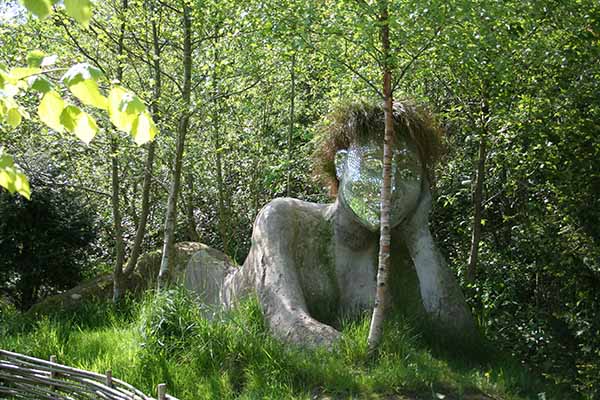 Throughout the site you will find sculptures and artworks, some of which are permanent and others temporary. There are also performances, exhibitions and seasonal events.
One of the most memorable structures is The Seed, a huge stainless-steel sculpture inspired by a plant seed and made from thousands of individual pieces. It is both artwork and symbol, fitting rather neatly into Eden's obsession with the importance of plants.
The site also hosts concerts and major events, meaning that Eden can change character considerably depending on when you visit.
Allow plenty of time
This isn't an attraction to squeeze into a couple of hours between breakfast and afternoon tea.
The site is large and there is a considerable amount of walking involved. The Biomes themselves are enormous, the crater is extensive and there are gardens and attractions spread throughout the site.
Wear sensible footwear.
This may sound obvious, but Eden involves slopes, steps and plenty of walking, and Cornwall's weather has a habit of ensuring that paths occasionally become rather more interesting than planned.
I'd allow at least half a day, and preferably most of a day if you want to see everything without rushing.
Is it worth visiting?
Yes.
Even if you aren't particularly interested in environmental issues, horticulture or botany, Eden is sufficiently spectacular to justify the trip.
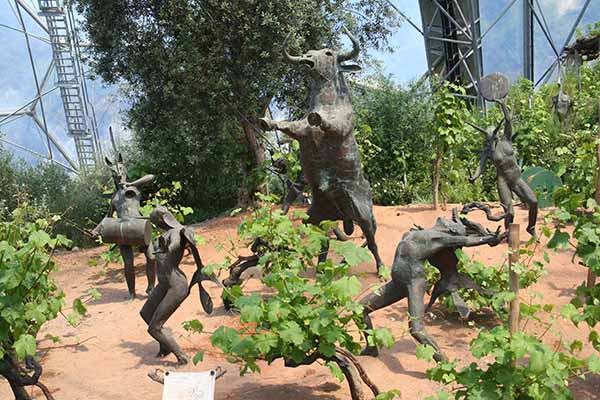 The architecture alone is worth seeing. The rainforest is fascinating. The gardens are beautiful. The transformation of the clay pit is remarkable. And there is something rather uplifting about an attraction that has taken a landscape badly damaged by industry and turned it into something educational and genuinely enjoyable.
There are, inevitably, some things that may irritate.
Eden can be expensive, particularly for a family, and popular days can mean crowds. Some of the environmental messaging can occasionally stray into the territory of being slightly preachy. And because the site is so large, you can leave feeling that you haven't quite seen everything.
But none of that really detracts from the overall experience.
The verdict
The Eden Project is one of those attractions that is difficult to compare with anything else in Britain.
It isn't quite a zoo, although there is an abundance of living things. It isn't quite a botanical garden, although plants are at its heart. It isn't a museum, although there is plenty to learn. And it certainly isn't just an architectural curiosity.
It is all of these things rolled into one enormous, rather eccentric package.
Most importantly, Eden has managed to make its environmental message interesting. Instead of simply telling visitors that the natural world is important, it allows them to walk through it, sweat in it, marvel at it and discover just how dependent we all are upon it.
And that is why those giant bubbles in a Cornish clay pit have become such a success.
The Eden Project is not merely somewhere to look at plants.
It is a remarkable demonstration of what can happen when a damaged landscape is given a completely new lease of life — and one of Cornwall's most worthwhile attractions.
Open every day from 09.45 to 16.00
Admission cost: - Adults (16+): £35.50 in advance, £39.50 on the day. Child £12.50 in advance and £15.00 on the day/ Under 5s: Free (up to four children per accompanying adult).
(prices quoted correct as at August 2026)
Return to South West home page