
Edinburgh
The capital city of Scotland and the most visited UK city outside of London and it's easy to see why, with it's historic Castle, cobble streets and one of the worlds biggest arts festivals every August.
Getting There
Edinburgh International Airport is located 8 miles to the west of the city and has good transport links to the city.
The Airlink 100 bus operates 24 hours a day, roughly every 10 minutes during the day and every 20 minutes overnight. The journey taking around 25 minutes, traffic dependent. Cost Adult £8.50, Child £4.25 and family (up to 2 adults, 3 children) £22.00
An alternate to the Airlink 100 is the tram seervice, operating from 06:30 to 22:52, operating every 7 minutes during the day and taking around 30 minutes to reach the city centre. Adult single fare is £7.90, child £4.00. Day and multi day rover tickets are also available.
For travellers arriving by train Waverley Station is centrally located in the city centre, with frequent services from London and other major UK cities. Travelling by train from London on the East Coast mainline or north eastern cities like Newcastle will involve travelling on one of the most scenic stretches of railway in the UK
What To See
The simple answer is loads and if you are staying for a few days I would recommend taking an open top bus tour which takes in the major sights and gives you a chance to familiarise yourself with the relative locations of the main tourist spots. The buses operate throughout the year The City Centre, Red, route operates every ten minutes during the summer and a full circuit takes around one hour ten minites. The Blue route goes out a far as Leith and operates hourly. Adult prices, around £20 for a 24 hour ticket on the Red route, a 48 hour red route pass is around £25.00 and a 48 hour pass for both routes is around £30.00. Child prices around half the price of an adult ticket.
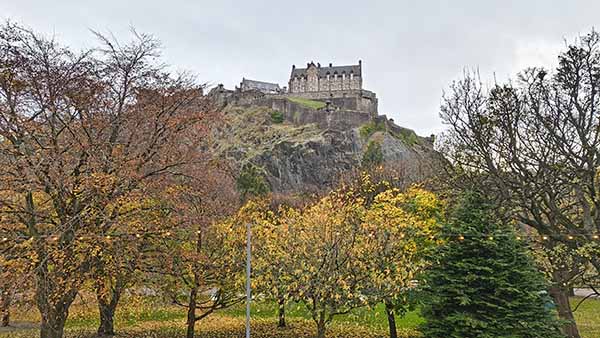 So let's start with the "Big Ticket" site, Edinburgh Castle, perched atop the appropriately named Castle Rock, at the top of the Royal Mile and overlooking the city. Attracting over 1.5 million visitors a year, so if you're thinking of visiting advanced booking is strongly recommended.
 There has been a castle on the site since the 11th century and the UNESCO Workd Heritage site is one of the oldest fortified sites in Europe and the most besieged castle in Britain.
The oldest surviving structure, St. Margaret's Chapel, dates back to approximately 1130. The complex also features the 16th-century Royal Palace—birthplace of James VI, who unified the Scottish and English crowns—and the magnificent Great Hall.
Visitors flock to the castle to view the priceless Honours of Scotland (the Scottish Crown Jewels) and the ancient Stone of Destiny.
Military history is deeply woven into its stone, highlighted by the massive 15th-century Mons Meg cannon and the famous One o'Clock Gun, which fires daily across the city.
Today, it remains an active military base and Scotland’s top paid tourist attraction, offering sweeping panoramic views across the Firth of Forth to the Pentland Hills.
Every August the Castle Esplanade hosts the Edinburgh MIlitary Tattoo.
Admission prices for the Castle, Adults (16-64) £23.50, Concessions (65+) £19.00, Child (7-15) £14.00, Child under 7 Free, Historic Scotland Members - Free
Tattoo tickets from £70.00 through to and even more eye watering £1,150.00
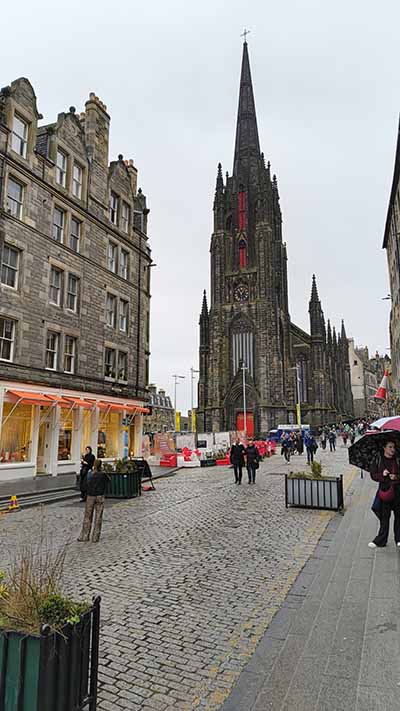 The Royal Mile links Edinburgh Castle and the Palace of Holyrood House. It is actually around 1.12 modern miles long, the term mile being based on the old Scottish measurement of the mile. For a lot of it's length its hilly and cobbled and absolutely rammed with tourists. Beacause of this it is lined with plenty of tourist trap shops and some nice, but expensive cafes, restaurants and pubs.
It actually not a single road but consists of five interconnected roads, Castlehill, Lawnmarket, High Street, Canongate and Abbey Strand.
Castlehill and Castle Esplanade are located closest to Edinburgh Castle and are the oldest part of the Royal Mile, being where the city was originally founded.
The main entrance of the Castle is found in the Castle Esplanade, a large open space which was used to burn the witches at the stake, and where currently the Edinburgh Military Tattoo takes place every summer.
Up until the seventeenth century Lawnmarket was a market-place selling yarn, and used to be part of the High Street. It is 330 feet long and connects The Hub, a Gothic style church now used as a venue hall for the Edinburgh International Festival, to Bank Street. Bank Street was given this name because the road leads to the Bank of Scotland.
Due to its proximity to the Castle, Lawnmarket is where visitors will find infinite souvenir shops. The well preserved seventeenth-century house-museum, Gladstone’s Land is located in number 477b of this same street.
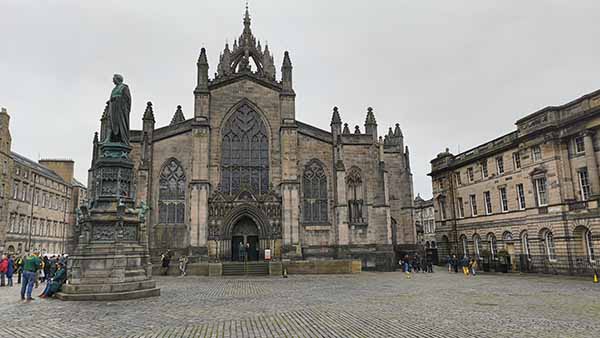 High Street is the most popular part of the Royal Mile. This street houses St Giles’ Cathedral, Tron Kirk, shops and numerous pubs and restaurants, which are often frequented by tourists but also by locals.
Canongate is the least-visited part of the Royal Mile. Until 1856 Canongate was an independent burgh, separated from the city and outside the walls. The wall that divided the burghs was located on Jeffrey Street, between Edinburgh and Canongate.
In the intersection of the Royal Mile with Jeffrey Street there are brass cobbles indicating the city gates’ exact location, while in front is The World’s End, one of the oldest pubs in Edinburgh. The inhabitants of the city believed that there was no world outside the walls and this is why the pub is called “The World’s End”.
At night, this street is very empty; therefore, we recommend visiting it during the day.
Abbey Strand is a small part of the Royal Mile connecting the end of Canongate, where Parliament Square is located, to the Palace of Holyroodhouse.
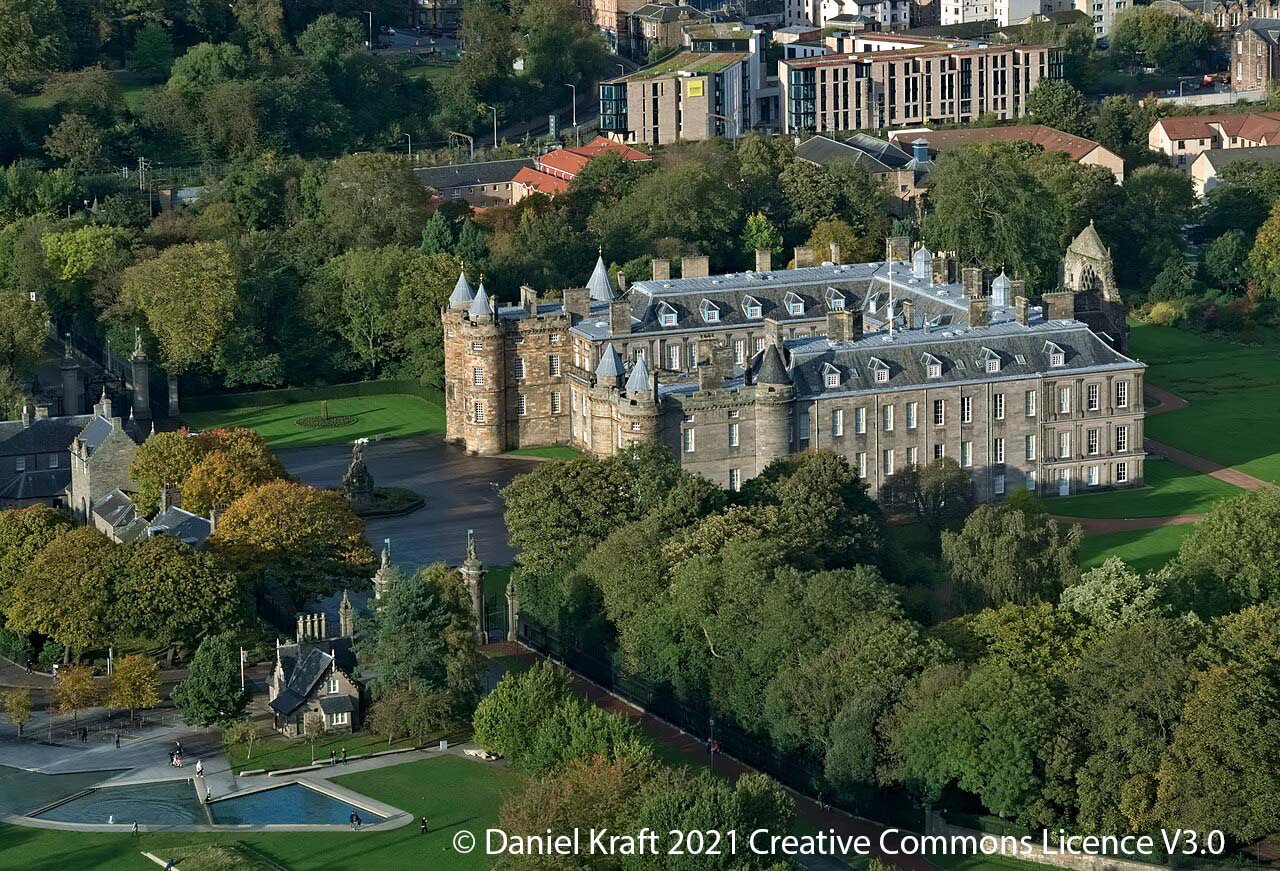 The Palace of Holyroodhouse, also known as Holyrood Palace is the Royal Family’s official residence in Scotland. The impressive building has an impressive Baroque decoration.
During the Middle Ages the monarchy left Edinburgh Castle and settled in the comfortable Holyrood Abbey guesthouse. In 1503 James IV constructed the first palace alongside the Abbey. Many years later, James V built a tower where Mary, Queen of Scots lived between 1561 and 1567.
The Palace is decorated with tapestries, portraits of the Royal Family and antiques. The Queen’s Bedchamber, which is still in use, is magnificent.
One of the most important highlights of the Palace is the Great Gallery. It is the largest room in the Palace and measures 144 feet long (44 m) and is decorated with 96 paintings of the Royal House. King Charles uses this hall for official receptions.
In the oldest part of the palace, visitors can climb the tower where Mary, Queen of Scots lived in.
Admission Adult £26.00 on the day £22.00 in advance, young person (18-24) £14.00 / £17.00 and child (5-17) £11.00 / £13.00. To visit the private Royal appartments add around £50 to the ticket prices
Next to Holyrood Palace is the Scottish Parliament. Free tours are available on selected days but need to be booked in advance.
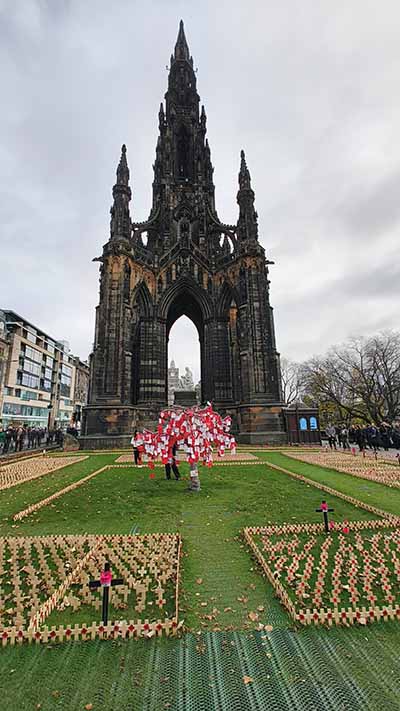 Dominating Princes Street is the 200' (61m) tall Scott Monument, built in a gothic style, not many people realise you can climb to the top of monument to get some spectacular views, however you need to be fit to climb the 287 steps and the final climb is very claustrophobic and rickety. There are four levels to the climb so you can decide how far to go. Admission is £9.00 for adults and £7.00 for children and concessions.
Located in Holyrood Park, towering above the city is the 251m high Arthurs Seat an extinct volcano. There are several paths to the top, of varying degrees of difficulty. For a brisk walker it takes just under an hour to climb via the main path. the views from the top are breathtaking, once you get your breath back. In winter the path may become icy
Moving out to the suburb of Leith you will find the Royal Yacht Britannia, the Royal families floating palace for over 44 years. Built in Scotland and launched in 1953 the ship was decommissioned in 1979. The late Queen Elizabeth considered the ship a home from home and somewhere she could truly relax and family photographs taken on board can be seen by visitors.
Times From January to March: open daily from 10 am to 5 pm, From April to August: open daily from 9:30 am to 6 pm, September: open daily from 10 am to 6 pm, October: open daily from 10 am to 5:30 pm, November and December: open daily from 10 am to 5 pm
Prices Adults £22.00 - £25.00, children £9.50 - £12.50
(prices quoted correct as at July 2026)
Return to Scotland home page
Return to Coast Eymouth to John O'Groats