
France - Brittany
Brittany is one of those parts of France that feels slightly different from the rest of the country. In fact, sometimes it barely feels French at all. With its Celtic heritage, Breton language, distinctive traditions, dramatic coastline and rather stubborn sense of identity, Brittany has developed a character all of its own. It is also somewhere that I think British visitors can feel surprisingly comfortable. We are only a short stretch of water away, and there are plenty of similarities in the landscape, weather and maritime history.
But Brittany is much more than simply the bit of France closest to Britain. With around 2,700 kilometres of coastline, it is a region dominated by the sea, with rocky headlands, sandy beaches, fishing ports, islands and some spectacular coastal scenery.
And then there is the food.
If you like seafood, Brittany is dangerous territory. Oysters, mussels, scallops, fish and, of course, crêpes and galettes are everywhere.
Saint-Malo
For me, Saint-Malo is one of the great introductions to Brittany.
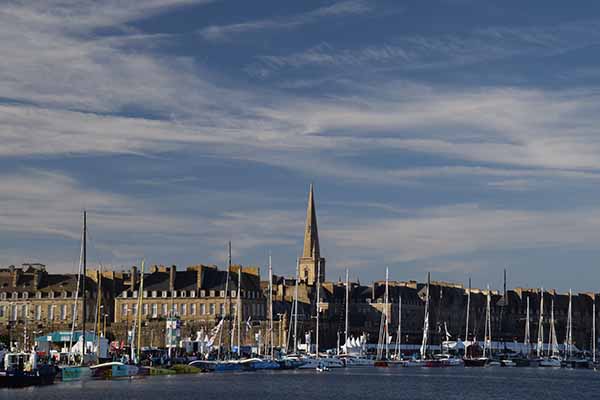 The old walled city sits dramatically beside the sea, with enormous stone ramparts surrounding the historic centre. Walking around those walls gives you wonderful views over the harbour, coastline and surrounding islands.
Saint-Malo has a fascinating maritime history. It was home to privateers who made their fortunes attacking enemy shipping, and that rather adventurous past is still evident in the character of the old city.
The walls are the star attraction, but don't simply walk around them and leave. Get inside the old town and explore the narrow streets, shops, restaurants and squares.
Speaking of restaurants there are many of them - if you're not sure where to eat you could easily spend half an hour choosing one.
There is something particularly enjoyable about Saint-Malo when the weather is doing what it does best in this part of the world — throwing wind and waves at you.
The great tides make the spectacle even more impressive. The difference between high and low tide here can be enormous, and watching the sea charge back towards the shore is quite something.
Dinan
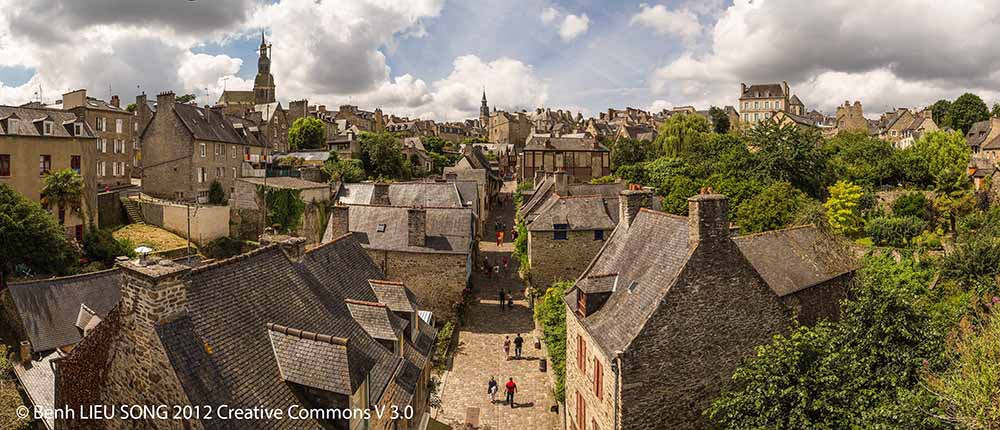
If Saint-Malo is Brittany's great maritime city, Dinan is almost the complete opposite.
This beautiful medieval town sits inland on the River Rance and is packed with timber-framed houses, cobbled streets and historic buildings. The town retains nearly three kilometres of medieval ramparts, making a walk around the walls one of the best ways to appreciate it.
The steep streets down towards the old port are particularly attractive.
Dinan is one of those places where you don't really need a plan. Wander around, look at the buildings, find somewhere for lunch and generally enjoy being there.
It feels almost ridiculously picturesque.
The Pink Granite Coast
Further west is the Côte de Granit Rose, or Pink Granite Coast, and this is one of the most unusual landscapes in Brittany.
Huge granite rocks have been shaped by the sea and weather into strange, rounded formations, with the pinkish stone giving the coastline its name.
The scenery is spectacular, particularly around Ploumanach, where enormous boulders seem to have been casually scattered along the shore.
It is another reminder that Brittany isn't simply about pretty villages. Some of its best scenery is wild, windswept and distinctly dramatic.
Carnac
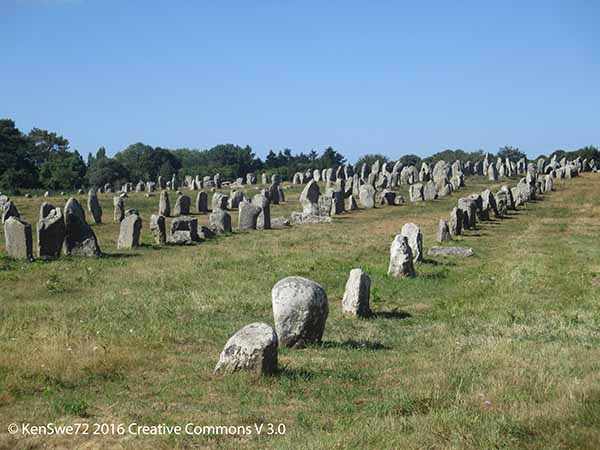 Then there is Carnac, where things get rather mysterious.
The countryside around Carnac contains thousands of prehistoric standing stones arranged in long rows and formations. Nobody knows exactly why they were erected, although they clearly had considerable importance to the people who placed them there thousands of years ago.
It is one of those places where you find yourself asking the obvious question:
Why?
And unfortunately, nobody can give you a definitive answer.
That uncertainty makes Carnac fascinating. You aren't looking at the remains of a Roman settlement or medieval castle where historians can tell you precisely what happened. Instead, you are looking at something created by people who lived thousands of years before us and wondering what on earth they were trying to achieve.
Quimper
Quimper provides another side of Brittany.
This is the traditional capital of the Cornouaille area and has a particularly strong Breton identity. The old centre contains narrow streets, timber-framed buildings and the impressive Gothic Cathedral of Saint-Corentin.
It is also famous for its pottery and distinctive Breton faïence.
Quimper feels considerably more relaxed than some of the bigger French cities and is an excellent place simply to wander around.
And if you are getting hungry, the old town is full of crêperies.
Which brings us neatly to...
Crêpes and Galettes
You cannot come to Brittany and ignore the food.
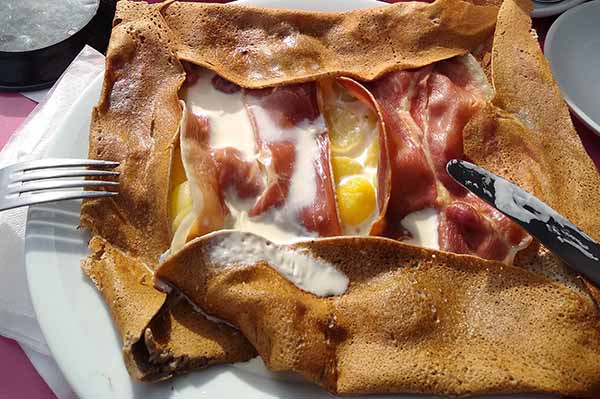 A crêpe is generally made with wheat flour and tends to be sweet, while a galette is traditionally made from buckwheat and is usually savoury.
Both are excellent.
The great thing is that they aren't simply something you eat because you are a tourist. They are part of everyday Breton food culture, and you will find crêperies all over the region.
The photo shows my favourite galette, a complète, ham cheese and egg - yummy
Add some local cider and you have a very good Breton lunch.
And then, of course, there is seafood.
Brittany's long coastline means fresh fish and shellfish are a major part of the cuisine. Oysters, mussels and scallops are particularly associated with the region.
Concarneau
Concarneau is another particularly attractive coastal town.
Its great attraction is the Ville Close, a fortified medieval town sitting on an island in the harbour. The walls and towers make it look almost like something from a film set.
Inside are narrow streets packed with shops, restaurants and cafés.
Yes, it is touristy.
But it is touristy because it is genuinely attractive, rather than because somebody has decided to manufacture an attraction where there wasn't one.
Once again, the harbour and the sea are never far away.
The Coast
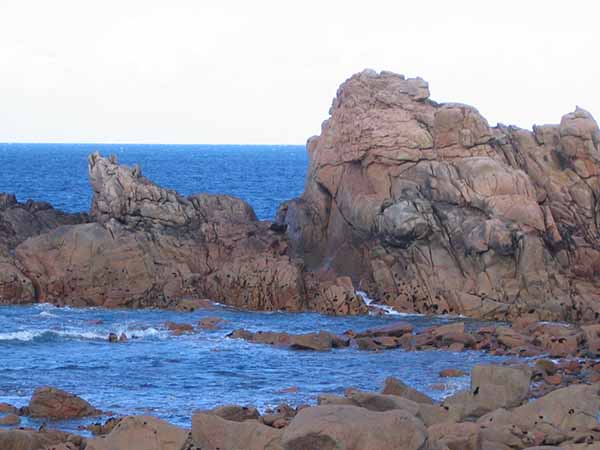 For me, the coastline is really the main event in Brittany.
You can drive for miles and constantly find another headland, beach, fishing village or spectacular viewpoint.
The GR34 coastal path, also known as the Sentier des Douaniers or Customs Officers' Path, follows much of the coastline and offers some remarkable walks. France's tourism authority describes it as running for more than 2,000 kilometres along the Breton coast.
Even if you aren't interested in walking the entire thing — and I certainly wouldn't suggest it unless you have plenty of time — individual sections make for wonderful outings.
The Cap Fréhel is particularly impressive, with dramatic cliffs, lighthouse and open views across the sea.
And then there is Pointe du Raz, where Brittany seems to run out of land altogether.
Stand there on a windy day and you get a very good impression of just how powerful the Atlantic can be.
Vannes and the Gulf of Morbihan
In southern Brittany, Vannes is another excellent historic town.
It has medieval streets, old houses and substantial remnants of its defensive walls, but its position beside the Gulf of Morbihan is what makes this area particularly attractive.
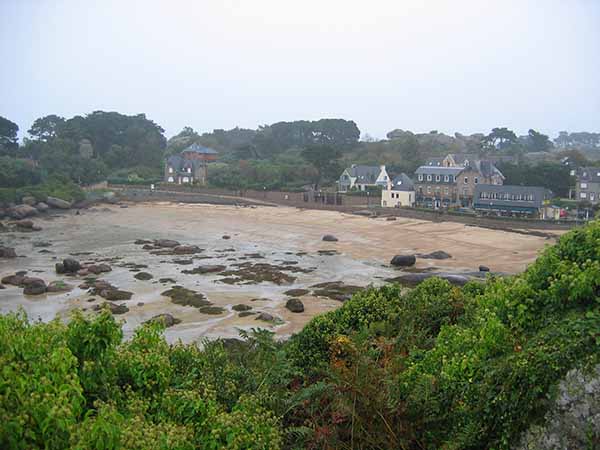
The gulf is dotted with islands and has a landscape that changes dramatically with the tides.
It is another part of Brittany where simply slowing down and enjoying the scenery is probably more rewarding than trying to cram in as many attractions as possible.
The Weather
Now for something that British visitors will understand immediately.
Brittany's weather can be unpredictable.
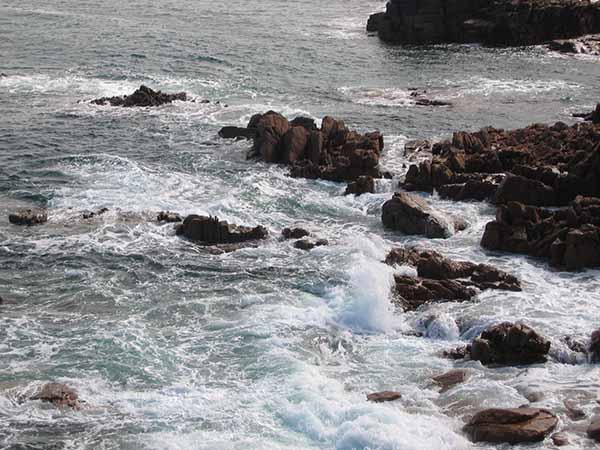 The Atlantic has a considerable influence and the climate is generally mild, but rain, wind and sunshine can sometimes appear within the same afternoon.
In other words, it isn't entirely unlike home.
The difference is that when the weather turns nasty in Brittany, it can make the coastline look even better.
A storm rolling in over the Atlantic, waves crashing against the rocks and clouds racing across the sky can be far more spectacular than a perfectly sunny day.
So take a waterproof.
You won't regret it.
Brittany's Character
What I particularly like about Brittany is that it hasn't completely surrendered its identity to France.
You see Breton flags everywhere. Celtic influences are obvious. Traditional music and dancing remain important, and the Breton language is still spoken, although French is overwhelmingly the everyday language.
There is a genuine sense of regional pride here.It doesn't feel like a French version of somewhere else.
It feels like Brittany.
That distinction is important.
So, Is Brittany Worth Visiting?
Very definitely.
In fact, I think Brittany is one of those places that British travellers sometimes overlook because it is so close to home. That would be a mistake. You have spectacular coastline, medieval towns, fortified ports, prehistoric monuments, beautiful countryside, fascinating legends and some superb food, all within a relatively compact region.
And unlike some European destinations, Brittany doesn't need to shout about its attractions. Much of its appeal comes from simply driving around and seeing what is around the next corner.
One minute you can be beside a windswept Atlantic headland, the next wandering through a medieval town, and an hour later sitting in a little crêperie eating a galette.
Final Thoughts
Brittany is perhaps best summed up as France with a Celtic soul.
It has the food, wine, architecture and culture you would expect from France, but it also has a distinctly British and Celtic feeling in places. The rugged coastline, maritime history, prehistoric monuments and fierce regional identity give it a character all of its own.
 And there is something rather comforting about Brittany.
It is foreign enough to feel like a proper trip abroad, but close enough to home that you never feel completely out of your depth.
For me, the real pleasure is simply getting in the car and exploring.
Don't rush it.
Don't try to see everything.
Follow the coast, stop in the little towns, eat far too many crêpes, admire the scenery and accept that at some point it will probably rain.
Brittany isn't flashy, but it doesn't need to be. It is beautiful, fascinating, slightly eccentric and wonderfully different — and being only a short journey from Britain makes it all the more appealing.
Prices correct as June 2026
Return to France home page