
Gallipoli
There are some places you visit as a tourist, and there are others where you find yourself becoming very quiet. Gallipoli is definitely the latter.
The Gallipoli Peninsula in Turkey is one of those places where the landscape makes the history almost impossible to escape. Today it is green, peaceful and remarkably beautiful, with wooded hills, beaches and views across the Dardanelles. Yet in 1915 this same landscape became the scene of one of the most disastrous campaigns of the First World War.
The Allied landings began on 25 April 1915, with British, French, Australian and New Zealand forces attempting to seize the Gallipoli Peninsula and ultimately open the Dardanelles. The campaign lasted eight months and ended with the Allied evacuation. The human cost was enormous, with hundreds of thousands of men killed, wounded or becoming ill.
Today, the peninsula is covered with cemeteries, memorials and reminders of the fighting. They are not there to glorify the battle. Quite the opposite. Walking amongst them brings home the terrible human cost of what happened here.
Anzac Cove
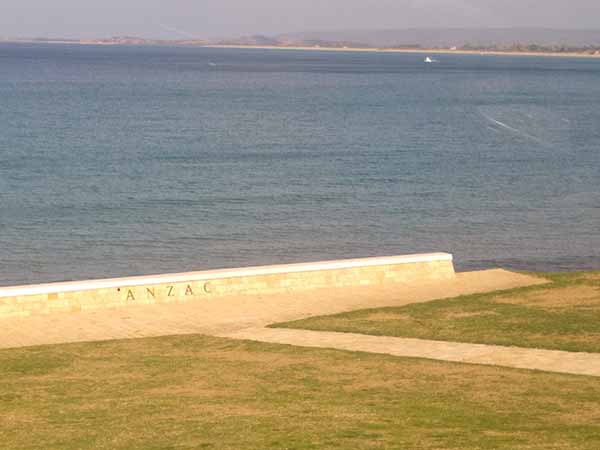 For Australians and New Zealanders, Anzac Cove is probably the most famous location on the peninsula.
This tiny stretch of coastline became the landing place for the Australian and New Zealand Army Corps on 25 April 1915. The plan had been to establish a beachhead and advance inland, but the terrain proved extraordinarily difficult. The hills and gullies rise steeply from the coast, and the men found themselves fighting uphill against determined Ottoman defenders.
Standing on the beach today, it is difficult to imagine the scene of that morning. The water is calm, the surrounding landscape is beautiful and there is little to suggest the chaos that erupted here more than a century ago.
That contrast is one of the most unsettling things about Gallipoli.
Lone Pine
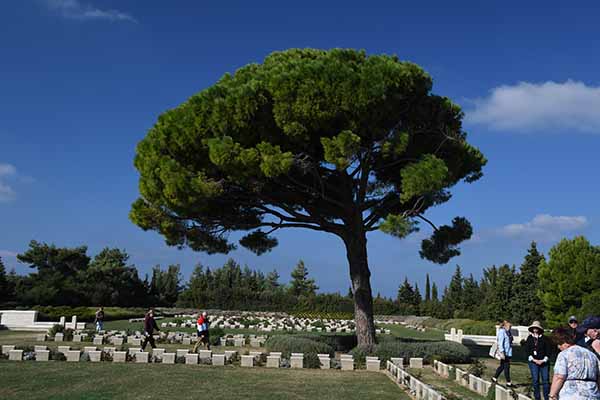 Lone Pine is one of the most important Australian sites on the peninsula.
The area witnessed some of the fiercest fighting of the campaign, particularly during the August offensive. The trenches here were extremely close together and the fighting was often hand-to-hand. The Turkish authorities still identify the area as one of the most critical positions fought over by both sides.
Today the Lone Pine Cemetery and Memorial provide a remarkably peaceful setting.
The memorial commemorates Australians who died at Gallipoli and have no known grave, while the cemetery contains the graves of men who died during the fighting. It is difficult not to be struck by the ages on the headstones.
So many were barely more than boys.
That is something that becomes increasingly obvious as you walk around Gallipoli. These aren't simply statistics in a history book. Each name represents somebody's son, brother, husband or friend.
Chunuk Bair
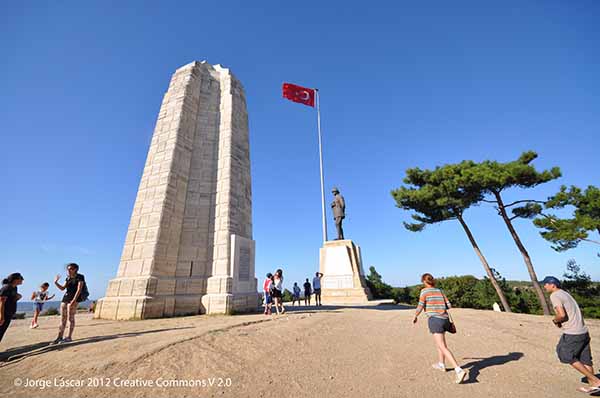 For New Zealand, Chunuk Bair has a similar significance.
The New Zealanders fought desperately to capture this high ground during the August offensive, and briefly succeeded. It was ultimately retaken by Ottoman forces. The New Zealand National Memorial stands here, commemorating those who died in the fighting and have no known grave. The memorial was completed in 1925 and carries the wonderfully poignant words:
“From the uttermost ends of the earth.”
There is also an important Turkish presence at Chunuk Bair, including the Atatürk Victory Statue and memorials to the Turkish troops who defended the position.
Standing here gives you a real appreciation of just how important the high ground was. You can see the Dardanelles and the surrounding peninsula, and it becomes much easier to understand why both sides fought so fiercely for these ridges.
The Turkish Memorial
It is important when visiting Gallipoli not to see the battlefield solely through Allied eyes.
The Turks were defending their homeland.
The Çanakkale Martyrs' Memorial is the principal Turkish memorial on the peninsula and is an enormous and imposing structure overlooking the Dardanelles. It commemorates the Turkish soldiers who died during the campaign. The memorial was opened in 1960 and the names of more than 59,000 Turkish soldiers whose deaths have been established are recorded at the site.
There are numerous other Turkish cemeteries and memorials scattered across the peninsula, including the 57th Infantry Regiment Martyrs' Cemetery and memorials to individual units and commanders. The official Turkish historical site lists dozens of these places of remembrance.
They provide an important reminder that Gallipoli wasn't simply a story of Allied bravery and sacrifice.
For the Ottoman soldiers, this was the defence of their country.
Cape Helles
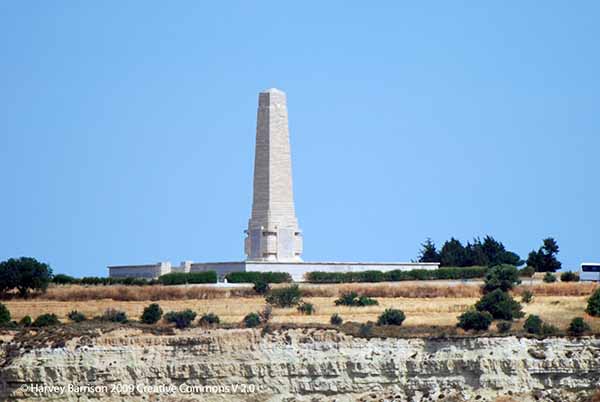 At the southern end of the peninsula is the Cape Helles Memorial, the largest British memorial on Gallipoli.
It commemorates more than 20,000 men whose graves are unknown or who were lost at sea during the campaign. The names of servicemen and the units and ships involved are recorded on the memorial.
The scale of the memorial is impressive, but what really makes it memorable is its location.
It stands high above the landscape, looking towards the Dardanelles.
Again, the scenery is beautiful.
And again, it seems almost impossible that such a peaceful landscape could once have been filled with artillery fire, trenches and thousands of wounded and dying men.
The Cemeteries
Perhaps the most moving part of Gallipoli isn't any particular monument.
It is the cemeteries.
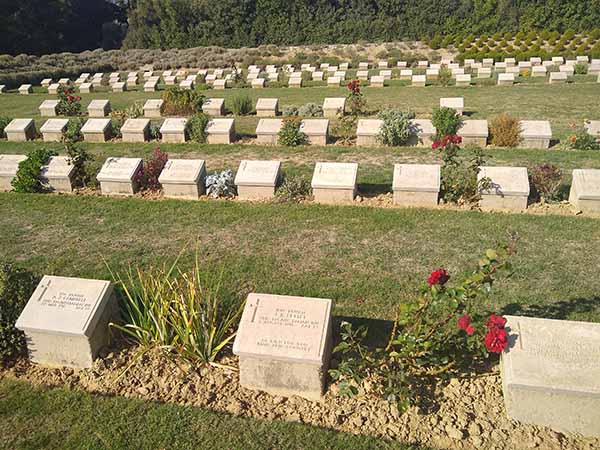 They are generally beautifully maintained, quiet places, often surrounded by trees and flowers. The Commonwealth War Graves Commission has maintained the cemeteries and memorials here for generations, and many have changed remarkably little since they were established in the years after the war.
You walk through the gates and see row after row of identical headstones.
Some carry a name, rank and regiment.
Others simply say “A Soldier of the Great War” because the man's identity could never be established.
That is perhaps the most sobering thing of all.
There are also graves of Australian, New Zealand, British, Indian and other Allied servicemen, while Turkish cemeteries and memorials are spread throughout the same battlefield.
In death, the men from opposing armies now share the same peninsula.
Remembering Atatürk
No account of Gallipoli would be complete without mentioning Mustafa Kemal, the Ottoman commander who became the founder of modern Turkey, Atatürk.
His role at Gallipoli helped establish his reputation as a military leader, and the campaign became an important part of the story of modern Turkey.
But perhaps the most remarkable aspect of the Gallipoli story is the way remembrance eventually developed between former enemies.
Atatürk's words about the Allied dead have become particularly famous, and they are inscribed on the peninsula. The sentiment is one of respect for the men who came from far away and died on Turkish soil.
That is an extraordinary thing when you consider what happened here.
A Beautiful Battlefield
One of the strangest things about Gallipoli is how beautiful it is.
There are forests, beaches, wild countryside and spectacular views across the Dardanelles. The peninsula is now a protected historical area covering around 33,000 hectares.
You can easily understand why people come here for the scenery.
But once you know what happened, the scenery takes on a completely different character.
A quiet hillside becomes a battlefield.
A beach becomes a landing place.
A patch of woodland conceals old trenches.
A peaceful cemetery represents hundreds of lives lost within a few weeks.
The landscape hasn't changed nearly as much as you might expect.
Gallipoli Today
I think the best way to approach Gallipoli is with respect.
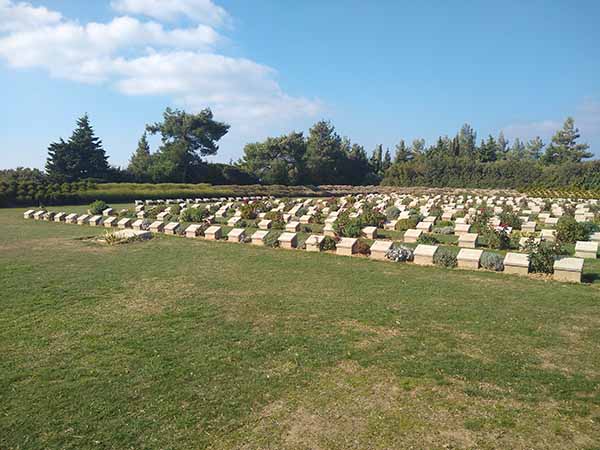 This isn't somewhere to rush around ticking sights off a list. Take your time. Read the names. Look at the dates. Think about the distances these young men had travelled to reach this remote corner of Turkey.
For Australians and New Zealanders, Gallipoli has become an important part of their national identity. For Turkey, Çanakkale and Gallipoli are symbols of national resistance and sacrifice.
And for Britain, France, India and the other countries whose soldiers fought here, it remains one of the most tragic campaigns of the First World War.
What makes Gallipoli particularly powerful is that there isn't really a winner here.
There were military objectives, victories and defeats, but ultimately the peninsula became a place where enormous numbers of young men lost their lives.
Final Thoughts
I found Gallipoli to be one of those places that stays with you.
It isn't spectacular in the conventional tourist sense. There isn't a magnificent palace or famous work of art to admire.
Instead, there are names.
Thousands upon thousands of them.
And there is the landscape.
Beautiful, peaceful and almost deceptively ordinary.
Walking around Gallipoli, it is impossible not to think about the extraordinary waste of life that took place here. Young Australians, New Zealanders, Britons, Frenchmen, Indians and Turks came to this peninsula believing they were fighting for something important.
Many never went home.
That is why Gallipoli deserves to be visited — not as a battlefield tourist attraction, but as a place of remembrance.
And perhaps the most appropriate thing about Gallipoli is that today, former enemies come here to remember their dead together.
The guns have been silent for more than a century. The graves remain.
Return to Türkiye Home Page