
Granada
Granada is one of those Spanish cities where history isn't something you have to search for — it is quite literally built into the place. Sitting at the foot of the Sierra Nevada in Andalucía, Granada combines Moorish palaces, Christian churches, winding old streets, lively squares and some spectacular mountain scenery.
But let's get one thing straight from the beginning. You don't really visit Granada without visiting the Alhambra. You might come for the city, but the Alhambra is the reason most people put Granada on their itinerary in the first place — and having seen it, you will understand why.
The Alhambra
The Alhambra is magnificent. There really isn't another word for it.
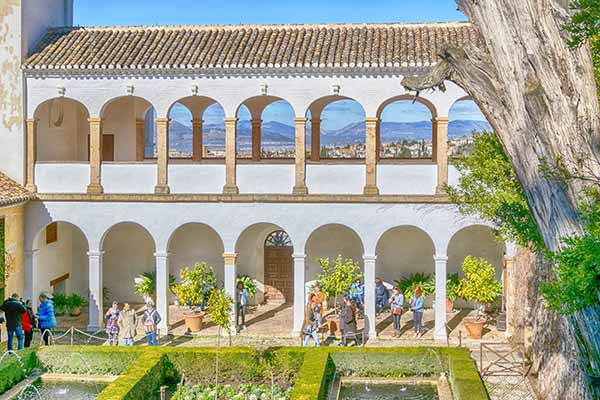 Perched dramatically on the Sabika hill overlooking Granada, this enormous palace and fortress complex was developed by the Nasrid rulers of the Emirate of Granada, particularly during the 13th and 14th centuries. What survives today is one of the finest examples of Islamic architecture anywhere in Europe.
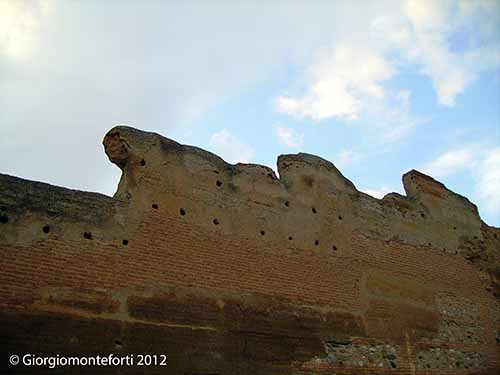
From the outside, parts of it can look surprisingly austere — great defensive walls, towers and reddish stone giving it the appearance of a formidable fortress. Then you walk inside the Nasrid Palaces and discover that the real magic is hidden behind those walls.
The decoration is extraordinary. Intricate geometric patterns, carved plasterwork, Arabic inscriptions, delicate tiles and beautifully proportioned courtyards seem to cover virtually every available surface. Yet it never feels excessively decorated. There is an elegance and restraint to it that modern architecture would struggle to reproduce.
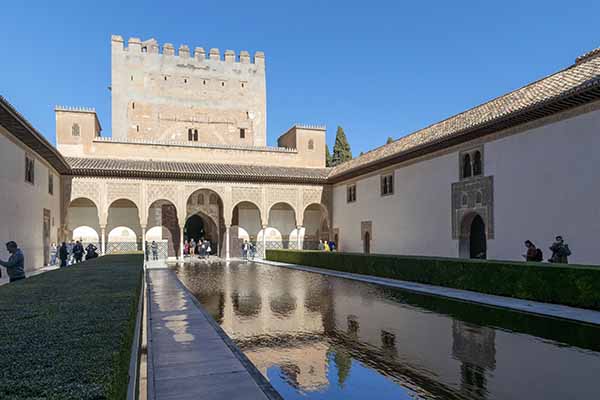 The Court of the Myrtles is one of the great sights, with its long reflecting pool surrounded by graceful architecture. Then comes the Court of the Lions, probably the most famous image of the entire Alhambra. Twelve marble lions support the fountain at its centre, surrounded by slender columns and incredibly intricate decoration.
And then there is the water.
Water was enormously important to Islamic architecture, and at the Alhambra it is used with extraordinary skill. Channels, fountains, pools and cascades provide movement and sound, while also helping to cool the buildings during Granada's ferociously hot summers.
The Generalife is equally impressive, although in a rather different way. This was the Nasrid rulers' country estate and retreat, with beautiful gardens, fountains, terraces and views across Granada.
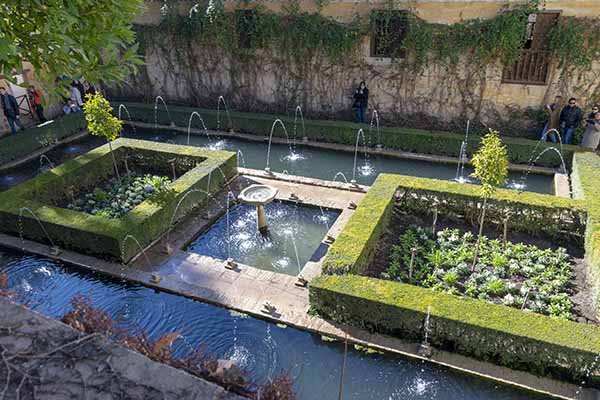 The gardens are a particularly pleasant part of the visit because, after walking through the palaces, you can slow down and appreciate the scenery.
There is also the Alcazaba, the oldest part of the complex and its great fortress. Climb the Torre de la Vela and you'll get superb views over Granada and the surrounding countryside.
The only problem with the Alhambra is getting in.
It is extraordinarily popular and visitor numbers are controlled, particularly for the Nasrid Palaces. Book well in advance rather than arriving in Granada assuming you can stroll up to the ticket office and wander in. You may find yourself admiring the Alhambra from outside instead.
And don't rush it. The Alhambra deserves several hours. This isn't an attraction to tick off in 45 minutes before moving on to the next one.
Adult admission is €22.27 (£19.00), if you only want to visit the gardens, I don't know why being honest, then it's €12.73 (£11.00)
Granada
Once you've recovered from the Alhambra, Granada itself is well worth exploring.
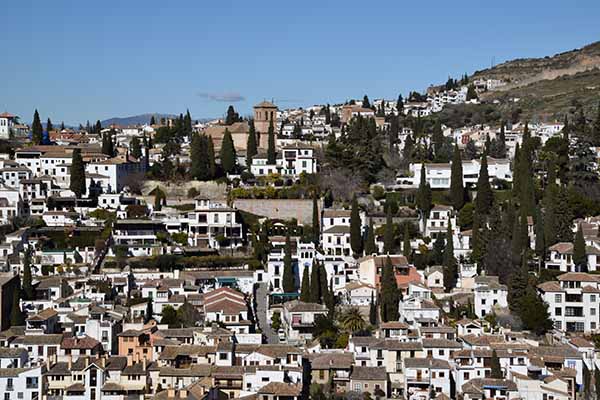 The Albaicín, the old Moorish quarter, climbs the hillside opposite the Alhambra. Its narrow, winding streets, whitewashed houses and little squares retain much of the character of the medieval Muslim city. It is an excellent place to wander, although once again Granada's hills will remind you that sightseeing can be surprisingly strenuous.
The famous Mirador de San Nicolás is the place for the classic view of the Alhambra, particularly towards sunset. You will probably find half of Granada has had the same idea, but there is a reason everyone gathers here.
Across the valley, the Alhambra glows red in the evening light with the Sierra Nevada rising behind it. It is one of those views that looks almost too perfect to be real.
Down in the centre of town is Granada Cathedral, an enormous Renaissance building which took more than 180 years to complete. Next door is the Royal Chapel, where Ferdinand and Isabella — the Catholic Monarchs who completed the Christian conquest of Granada in 1492 — are buried.
And 1492 is a rather important date here.
The fall of Granada marked the end of Muslim rule in mainland Iberia after nearly eight centuries. The last Nasrid ruler, Boabdil, surrendered the city to Ferdinand and Isabella, bringing the Reconquista to its conclusion.
The story of Boabdil supposedly looking back at Granada and weeping as he left has become part of Spanish legend. Whether every detail of the story is true is another matter, but it makes a rather good piece of history.
The Sacromonte
 Then there is Sacromonte, the hillside district famous for its cave dwellings and its association with Granada's Roma community.
This is also one of the traditional homes of zambra, the passionate style of flamenco associated with the caves of Sacromonte. A performance here can be an unforgettable experience — although, as with Fado in Lisbon, choose somewhere genuinely traditional rather than simply booking the first tourist show you encounter.
Granada also has a wonderful food tradition. One of the pleasures of eating here is the tradition of free tapas with drinks in many bars. Order a beer or wine and you may receive a small dish of food without having ordered it separately.
Naturally, this means you can quite legitimately spend an afternoon touring Granada's tapas bars in the name of cultural research.
The city has another unusual attraction in the form of the Hammam, traditional-style Arab baths. Granada's Moorish heritage makes this an especially appropriate place to experience them, although modern versions are considerably more comfortable than medieval plumbing arrangements presumably were.
The Sierra Nevada
And beyond the city are the Sierra Nevada mountains, home to mainland Spain's highest peak, Mulhacén. In winter the mountains become a skiing destination; in summer they provide hiking and spectacular scenery.
This proximity to high mountains also contributes to Granada's rather unusual character. You can be sitting in a sunny city square in the morning and looking at snow-covered mountains in the distance.
Granada isn't perfect. Some parts of the city are scruffy, the hills can be exhausting, the tourist crowds around the Alhambra can be substantial and parking is best described as an adventure.
But none of that really matters.
Because sooner or later you will stand inside the Alhambra, look at the intricate decoration, listen to the water running through the fountains and look out across Granada towards the mountains.
And suddenly you understand why people have been fighting over this place for centuries.
Granada is magnificent, but the Alhambra is something else altogether. It isn't simply an historic building or another Spanish tourist attraction. It is one of those places you remember for the rest of your life.
Prices quoted correct as at August 2026
Return to Andalucia Home Page