
Istanbul
There are plenty of cities that claim to be where East meets West, but Istanbul can make the claim rather more convincingly than most. This is the city where two continents actually meet. The Bosphorus separates Europe from Asia, with Istanbul sitting on both sides of it, and a short ferry ride can quite literally take you from one continent to another.
But geography is only part of what makes Istanbul special. This is a city built on layer upon layer of history, having been the capital of the Roman, Byzantine and Ottoman empires. Ancient walls, Byzantine churches, Ottoman mosques and modern skyscrapers all compete for space, while ferries, trams, taxis and millions of people somehow keep everything moving.
And it is this mixture that I found so fascinating. Istanbul doesn't feel as though it belongs entirely to either Europe or Asia. It has characteristics of both, and the result is a city unlike anywhere else.
The Traffic
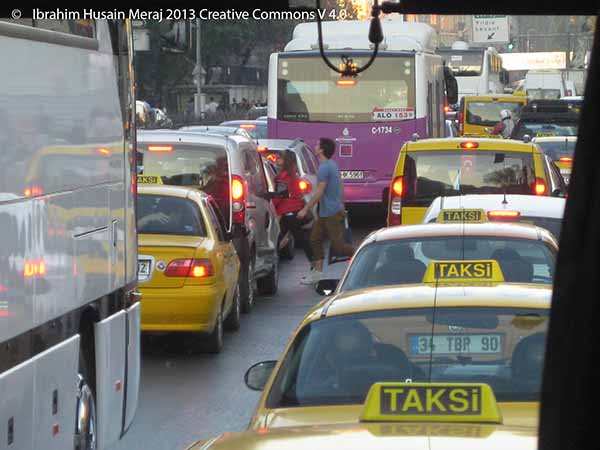 First the inevitable moan.
Istanbul is busy, very busy.
The traffic can be horrendous and the sheer size of the city can make getting from one side to another surprisingly time-consuming. With a population of more than 17 million, this is not a small historic city that happens to have a few modern buildings around it.
Fortunately, the public transport system is extensive, and the ferries are particularly useful. The historic tram is also a great way of getting around the main tourist area without having to fight the traffic.
My advice would be simple: don't try to see everything.
Istanbul is far too big for that. Pick the areas you want to explore, give yourself plenty of time and accept that you will inevitably miss something.
Hagia Sophia
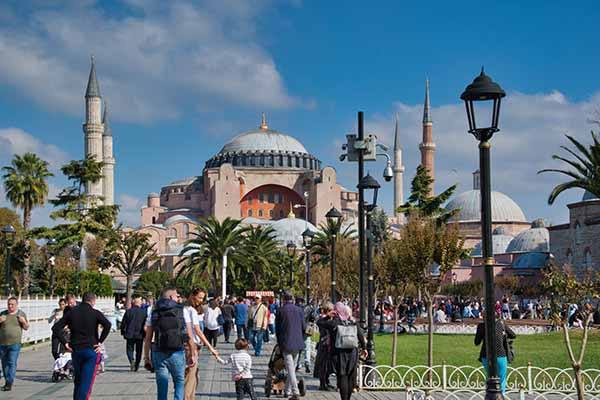 If there is one building that sums up Istanbul, it has to be Hagia Sophia.
Originally built by the Byzantine Emperor Justinian between 532 and 537, it was for centuries one of the greatest Christian churches in the world. It subsequently became a mosque, then a museum, and is now once again a mosque.
Whatever your religious beliefs, standing inside is an extraordinary experience. The enormous dome, the scale of the building and the combination of Christian mosaics with Islamic decoration tell the story of Istanbul itself.
Few buildings anywhere have had such a complicated history, and even fewer have survived with their character intact.
The entrance fee for foreign tourists to Hagia Sophia is €25
The Blue Mosque
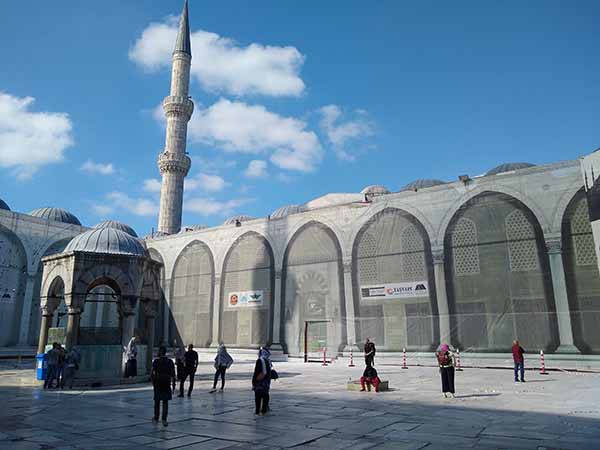 Directly opposite Hagia Sophia is the Blue Mosque, officially the Sultan Ahmed Mosque, and it provides another spectacular piece of Ottoman architecture.
Its six minarets dominate the skyline and the interior is decorated with thousands of İznik tiles, giving the mosque its familiar nickname.
The contrast between the two buildings is wonderful. One represents the Byzantine Christian past, the other the Ottoman Islamic era, yet they stand facing each other across the same square.
This is Istanbul in a nutshell.
Topkapı Palace
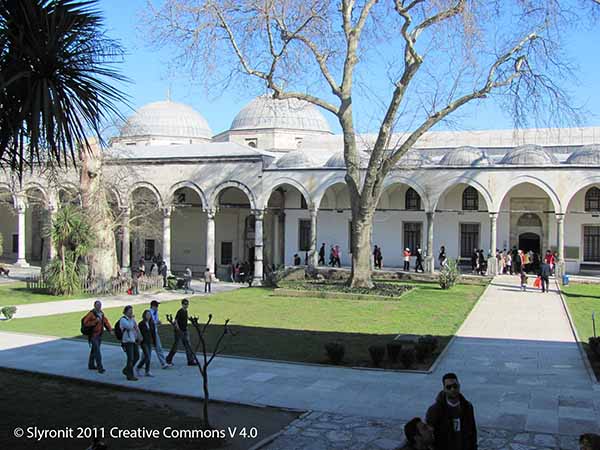 If Hagia Sophia tells you about the Byzantine Empire, Topkapı Palace tells you about the Ottomans.
For around four centuries it was the centre of Ottoman government as well as the home of the sultans. Construction began after the Ottoman conquest of Constantinople, and the palace eventually became an enormous complex of courtyards, gardens, buildings and treasures.
It is not a conventional palace in the European sense. Rather than one enormous building, Topkapı is a collection of buildings spread across a huge site overlooking the Bosphorus.
And those views are magnificent.
The further you explore, the more you appreciate the position the Ottoman rulers had chosen. From parts of the palace you can look across the water towards Asia and realise just how strategically important Istanbul has always been.
The standard combined admission ticket for foreign visitors at the Topkapi Palace Museum gate is 2,750 TL (£42.00)
The Basilica Cistern
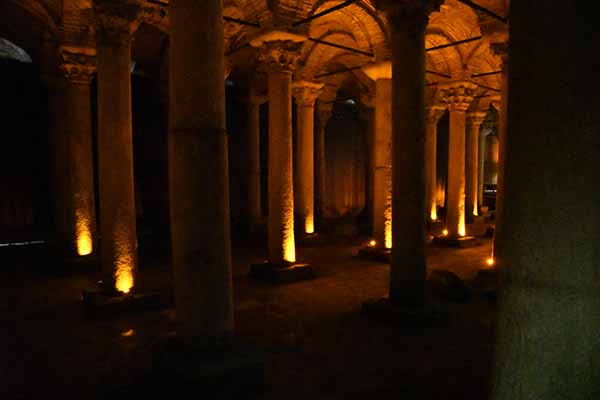 Underneath the streets is one of Istanbul's more unusual attractions — the Basilica Cistern.
This enormous underground water reservoir was constructed during the Byzantine period and is supported by hundreds of columns. The dim lighting and reflections in the water give it an almost mysterious atmosphere.
It is also a welcome escape from the heat outside.
After spending hours walking around Istanbul in the sunshine, descending underground into the cool darkness of the cistern is rather wonderful.
Standard daytime admission to the Basilica Cistern in Istanbul costs 1,950 TL (£30.00)
The Grand Bazaar
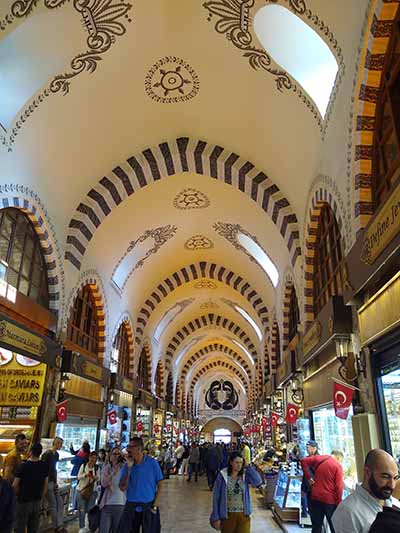 Then there is the Grand Bazaar, which is almost an attraction in its own right even if you have no intention of buying anything.
With more than 4,000 shops, it is one of the world's largest covered markets and has been at the heart of Istanbul's commercial life for centuries. It is enormous, confusing and wonderfully atmospheric.
Carpets, jewellery, leather goods, lamps, ceramics, spices and souvenirs are everywhere, with shopkeepers trying to persuade you that what you have just picked up is exactly what you have been looking for all your life.
And then there is the bargaining.
If you don't enjoy haggling, the Grand Bazaar could become rather tiring. If you do, it can be great fun.
Even if you buy nothing, wander around and enjoy it. The bazaar is part shopping centre, part theatre and part history lesson.
The Spice Bazaar
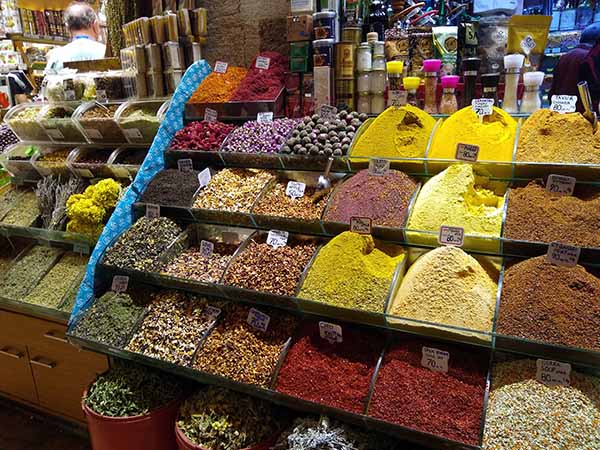 The Spice Bazaar is smaller but perhaps even more atmospheric.
Here the smells hit you before anything else. Spices, herbs, Turkish delight, dried fruit, nuts and countless other delicacies fill the stalls.
It is colourful, busy and exactly the sort of place you imagine when you think of an old Ottoman market.
And yes, you will probably be offered samples.
The Bosphorus
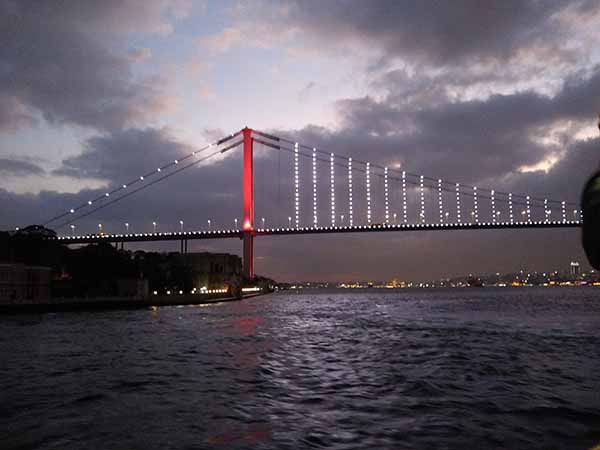 The Bosphorus is where the city's unique geography becomes something you can actually experience. Europe is on one side, Asia on the other, and the water between them is constantly busy with ferries, fishing boats, cargo ships and pleasure boats.
Take a ferry and watch the city pass by.
There are magnificent palaces, mosques, old wooden waterside mansions and modern buildings lining the shores. The Ottoman-era mansions known as yalıs are particularly beautiful and give the waterfront a character you won't find anywhere else.
And then there is the simple novelty of knowing that you are travelling between continents.
It sounds like a gimmick until you actually do it. Then it becomes one of those little travel experiences you remember.
Galata and the Golden Horn
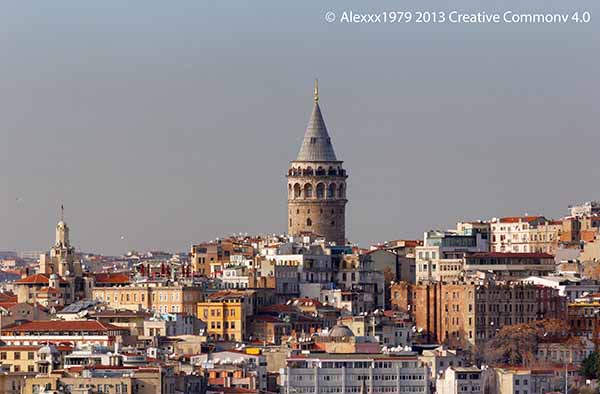 Cross back towards the European side and you reach the Galata area, dominated by the famous Galata Tower.
The tower provides one of the great panoramic views of Istanbul, with the Golden Horn, Bosphorus, historic peninsula and sprawling modern city all competing for attention.
Nearby, the Galata Bridge is another excellent place simply to stop and watch the city. Fishermen line the bridge while ferries move beneath them and the skyline stretches away in every direction.
It is busy, noisy and wonderfully Istanbul.
Taksim and Istiklal Avenue
For a taste of modern Istanbul, head towards Taksim Square and Istiklal Avenue.
This is a completely different side of the city, filled with shops, restaurants, cafés and people. The historic red tram running along Istiklal Avenue adds a nice touch of character.
Here you begin to realise that Istanbul isn't simply an enormous open-air museum.
It is a modern, working city.
There are office blocks, shopping centres, nightlife and all the usual trappings of a major international city. The historic sights are still there, but they exist alongside modern Istanbul rather than replacing it.
The Asian Side
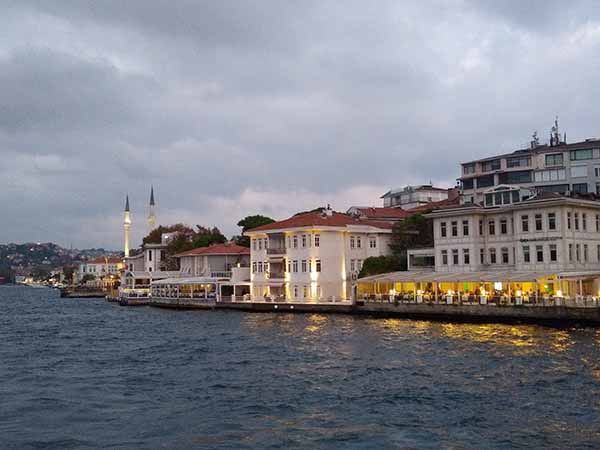 Of course, you can't visit a city that straddles two continents without actually visiting the Asian side.
Crossing the Bosphorus by ferry is the obvious way to do it, and I would recommend doing so even if you only have a few hours.
Kadıköy provides a very different atmosphere from Sultanahmet. It feels more residential and local, with markets, cafés, restaurants and streets full of people going about their everyday business.
And there is something rather satisfying about sitting down for a Turkish coffee or tea and thinking: I'm in Asia.
A few minutes earlier you were in Europe.
That is Istanbul.
The Food
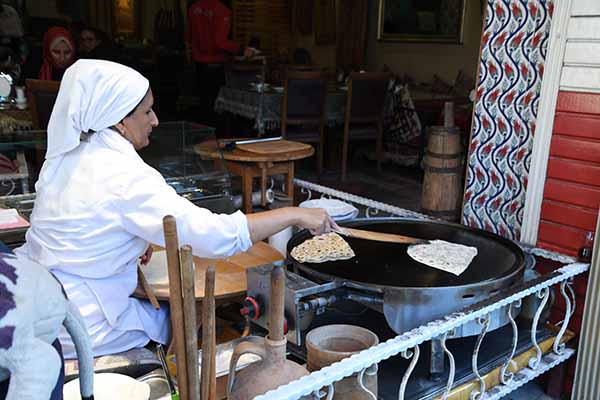 Food is another area where East and West come together.
Kebabs, meze, fresh fish, pide, baklava, Turkish delight and an endless supply of bread are just the beginning.
And don't ignore the simpler things. A freshly made simit from a street vendor, a glass of Turkish tea or coffee, or some fish eaten beside the Bosphorus can be every bit as memorable as an expensive restaurant.
Istanbul is also a city where food is part of everyday life rather than something reserved for special occasions.
So, is Istanbul worth visiting?
Without question.
Istanbul is one of those rare cities where the geography, history and atmosphere all come together to create something genuinely different.
You can stand inside a building constructed nearly 1,500 years ago, walk through an Ottoman palace, bargain in a bazaar, eat lunch beside the Bosphorus and then cross into Asia before dinner.
Where else can you do that?
What I particularly like about Istanbul is that East and West haven't simply been placed next to each other — they have been mixed together. Byzantine and Ottoman, Christian and Muslim, ancient and modern, European and Asian all exist alongside each other.
It isn't always tidy, peaceful or easy.
But then again, it wouldn't be Istanbul if it were.
Istanbul really is a city where two continents meet and where East meets West — and unlike many tourist slogans, this one happens to be absolutely true.
Prices correct as at August 2026
Return to Türkiye Home Page