
Japan In General
Japan is one of those countries where you quickly realise that things are done rather differently from at home.
And, in many cases, considerably better.
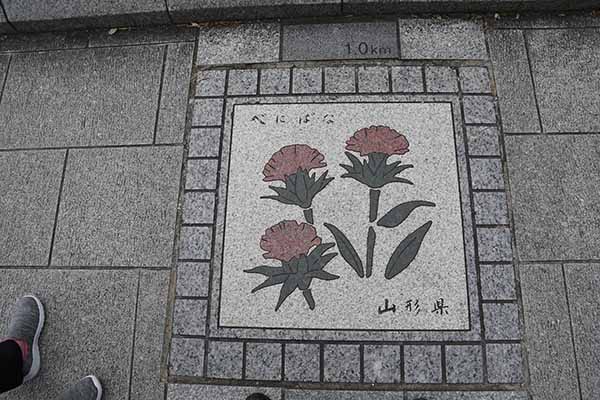 One of the first things you notice is just how clean Japan is. Streets, railway stations, public transport and public spaces are generally kept remarkably tidy. What makes this particularly impressive is that you don't seem to see armies of people constantly cleaning everything. A lot of it comes down to people taking responsibility for their surroundings and, perhaps more importantly, not dropping rubbish in the first place. Japan's tourism authorities themselves describe cleanliness and treating shared spaces with care as an important part of Japanese culture.
There is also something wonderfully refreshing about the lack of litter. You can walk through an enormous city such as Tokyo and, despite the millions of people using its streets every day, find remarkably little rubbish lying around.
There is a slight irony here, because you may struggle to find a bin when you actually have something to throw away. The Japanese solution seems to be remarkably simple: take your rubbish with you.
It works.
Japanese Etiquette
Japan has a reputation for having an enormous number of rules of etiquette, and while you could probably spend several years studying them all, visitors don't need to become experts.
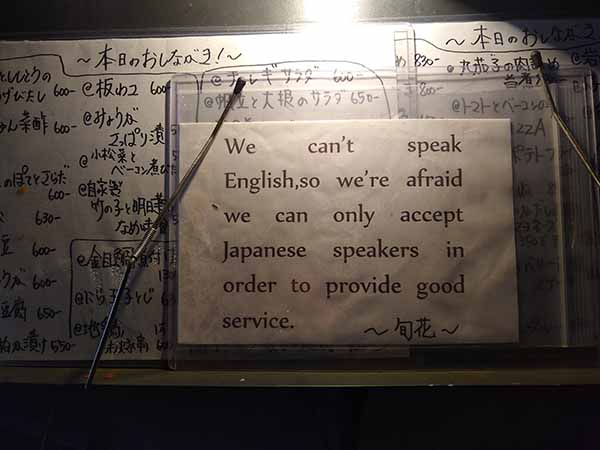 The basic principle is consideration for other people.
Don't be loud, don't push, don't queue-jump, don't inconvenience people and generally try not to behave like the centre of the universe.
That doesn't sound particularly revolutionary, but it is surprisingly refreshing.
On trains, for example, people generally speak quietly and mobile phones are kept on silent. Talking on the phone while travelling is frowned upon, and passengers form orderly queues rather than turning the platform into a rugby scrum when the doors open. You wait for people to get off before getting on yourself.
Eating whilst walking down the street is considered a big no no, as it picking your nose in public.
It is also customary to remove your shoes when entering many homes and some traditional restaurants, temples and other establishments. If you see everybody else taking their shoes off, take the hint.
And don't worry too much about getting every Japanese custom absolutely right.
A polite attitude and a little common sense will get you a very long way.
A small bow or nod of the head, a polite "arigato gozaimasu" when thanking somebody and an attempt to follow local customs are generally appreciated.
The important thing is to remember that you are a visitor.
Japan isn't somewhere that needs to change its customs to make tourists feel comfortable. You are there to experience Japan, so adapting yourself to it is part of the fun.
The Amazing Rail Network
Then there is the Japanese railway system. Quite simply, it's superb.
Japan has one of the most extensive and efficient rail networks in the world, connecting enormous cities, small towns and remote areas. The system includes everything from local trains to the extraordinary Shinkansen bullet trains.
And the Shinkansen really is something to behold.
The first time you see one arriving at the platform, travelling at enormous speed and yet appearing almost completely effortless, it is difficult not to be impressed.
They are fast, comfortable, clean and remarkably punctual.
The railway system is also incredibly well organised. Stations can initially look bewildering, particularly the enormous ones in Tokyo, but once you understand the signs and numbering system, getting around becomes surprisingly straightforward.
And then there is the punctuality.
British passengers used to railway announcements about delays caused by leaves on the line, somebody having a bad day or the train crew discovering that the train they are supposed to operate is somewhere else entirely may find Japanese punctuality almost disturbing.
The Japanese railways take the timetable seriously, very seriously.
The Shinkansen network itself links many of Japan's major cities, including Tokyo, Kyoto, Osaka, Hiroshima and destinations as far north as Hokkaido and south into Kyushu.
You can sit in a Shinkansen travelling at enormous speed between cities, watching the Japanese countryside disappear past the window, and arrive at your destination feeling that the journey itself has been an enjoyable part of the holiday.
Even the little things are done properly.
Stations are clean. Trains are clean. Seats are comfortable. Boarding is orderly. Passengers generally behave themselves.
And, on long-distance trains such as the Shinkansen, you can even enjoy a bento box — one of the beautifully prepared boxed meals sold at railway stations. Eating on long-distance trains is perfectly acceptable, although eating on ordinary urban commuter trains is generally considered bad manners.
It all seems to fit together.
Japan's Toilets
And then we come to one of Japan's great technological achievements — the toilet.
I never expected to write a travel guide in which toilets deserved their own section, but having experienced Japanese toilets, I can understand why they do.
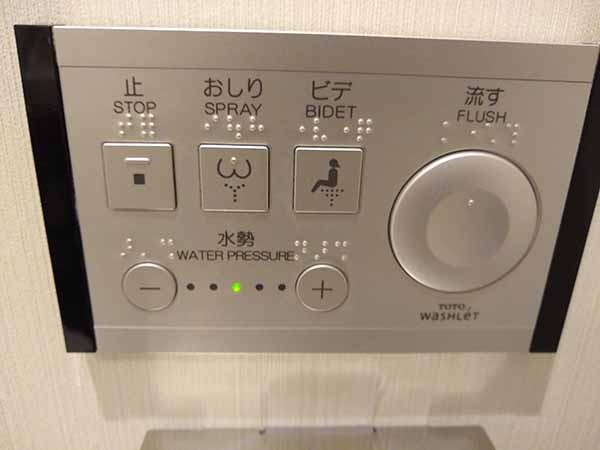 The Japanese have somehow turned something that most of us regard as a basic household appliance into a piece of advanced technology. Heated seats, bidets, adjustable water jets, air drying, automatic flushing and even background sounds to preserve your dignity are all perfectly normal.
You may walk into a toilet expecting a simple lavatory and find yourself confronted by a control panel that looks as though it belongs in the cockpit of a Boeing 747.
There is usually a button for everything.
The first time you encounter one, you may spend several minutes wondering which button is going to wash you, which is going to flush you and which is going to launch you into orbit.
The good news is that most modern Japanese toilets are remarkably easy to use once you work out the symbols.
And they are everywhere.
Hotels, shopping centres, railway stations and public toilets are generally exceptionally clean. Even railway station toilets can be cleaner than some hotel bathrooms I've encountered elsewhere.
There is also something wonderfully civilised about sitting down on a warm toilet seat when you weren't expecting it.
You may never look at an ordinary British toilet quite the same way again.
The Hotel Rooms
There is, however, another side to Japanese efficiency — hotel rooms can be tiny and when I say tiny, I mean tiny.
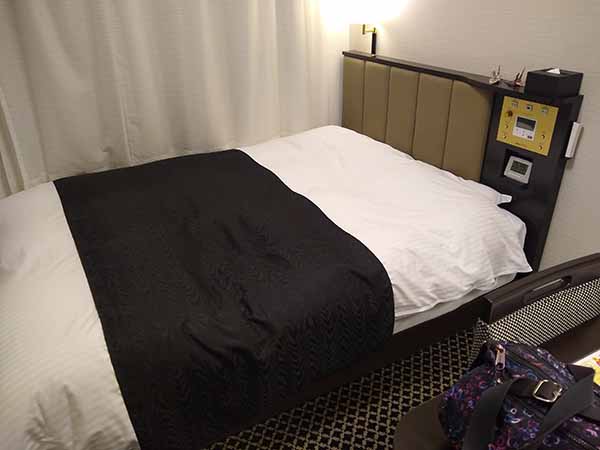 A Japanese hotel room can contain everything you need but leave you wondering whether the architect was paid according to how many square metres he managed to eliminate.
The bed fits. The bathroom fits, your luggage may fit if you are lucky.
You may even be able to walk between them - just.
Japanese hotels, particularly the budget and business hotels found in cities such as Tokyo, make astonishing use of limited space. Everything is compact and carefully arranged, and there is generally a place for everything.
The bathroom can be particularly entertaining. You can have a perfectly functional shower, toilet and washbasin all occupying an area that would barely accommodate the average British garden shed.
But again, it works.
And after a day exploring Tokyo, Kyoto or Osaka, you don't really need a ballroom. You need a clean bed, a decent shower and somewhere to put your head.
The small rooms are therefore less of a problem than you might initially think — unless, of course, you have brought two enormous suitcases. Then you may find yourself sleeping with one of them.
Oh yes, Japanese pillows are like bricks - you have been warned.
The contrast is rather amusing. Japan can give you the world's most technologically advanced toilet in one of the smallest hotel bathrooms you've ever seen.
Only in Japan.
And somehow, it all makes perfect sense.
Japan in General
Perhaps that is what I liked most about Japan.
There is a sense that things have been designed to work, and that people understand that they have a responsibility not to spoil things for everybody else. The result is a country that can be incredibly busy without necessarily feeling chaotic.
Tokyo can contain millions of people, yet the streets can be remarkably orderly. Railway stations can handle huge numbers of passengers without descending into complete madness. Ancient temples can sit alongside modern skyscrapers. Traditional customs exist alongside some of the world's most advanced technology.
And somehow, it all works.
Japan isn't perfect, of course.
No country is.
But as a visitor, it is difficult not to be impressed by the cleanliness, organisation, courtesy and sheer efficiency of everyday life.
Add the spectacular scenery, fascinating history, wonderful food and that extraordinary mixture of ancient and modern, and Japan becomes a country that is remarkably easy to like.
Prices correct as at August 2026
Return to Japan Home Page