
Kyoto
Kyoto is probably the Japan that most people imagine before they ever set foot in the country.
If Tokyo is the futuristic, neon-lit, relentlessly busy Japan, Kyoto is the other side of the coin. Here you get temples, shrines, traditional wooden buildings, peaceful gardens, narrow lanes and geisha hurrying along streets that look as though they have barely changed for centuries.
Of course, the reality is slightly more complicated.Kyoto is beautiful. Very beautiful.
Unfortunately, everybody else knows this as well.
Fushimi Inari
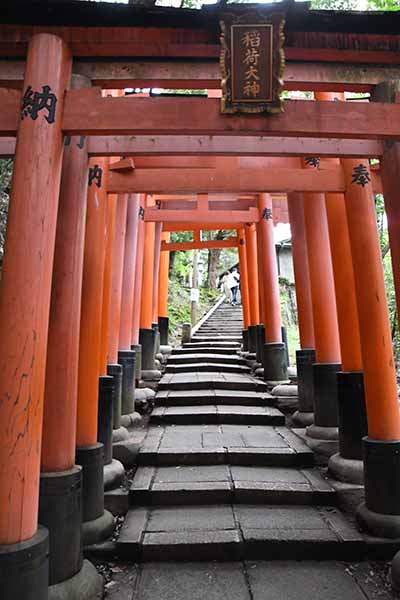 One of the first places most visitors head for is Fushimi Inari Shrine, famous for its thousands of bright orange torii gates winding their way up Mount Inari.
It is one of those sights that looks almost too perfect to be real.
The gates form long tunnels through the forest, and as you climb higher the crowds gradually thin out. The full walk takes considerably longer than you might expect, so don't make the mistake of thinking you can just pop in, take a photograph and be back in town ten minutes later.
And yes, you will take photographs, especially if you do reach the top because it you make it all the way you will be rewarded with stunning views of the city - you may just need some oxygen as well.
Everybody does.
The orange gates against the greenery are one of the most recognisable images of Japan, and for once something that is famous on postcards really is worth seeing.
Kinkaku-ji — The Golden Pavilion
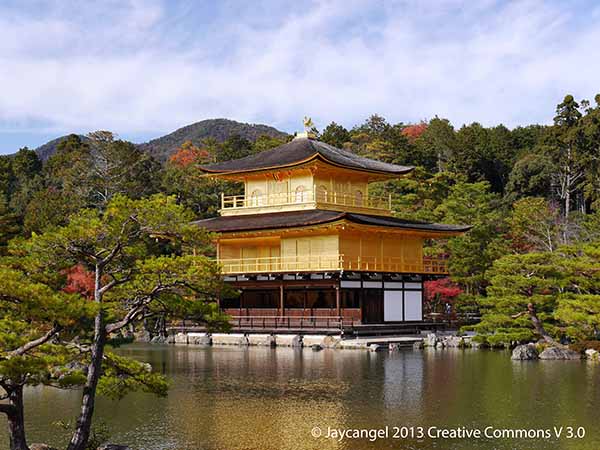 Another Kyoto icon is Kinkaku-ji, the Golden Pavilion.
The name rather gives the game away.
The pavilion is covered in gold leaf and sits beside a pond surrounded by beautifully landscaped gardens. When the weather behaves itself, the reflection in the water produces exactly the sort of picture you came to Kyoto hoping to take.
There is, however, a slight problem.
So did everybody else.
You will probably find yourself moving along with a stream of visitors, all trying to get the same photograph. But this is one occasion when I wouldn't complain too much about the crowds. The Golden Pavilion really is spectacular.
Kiyomizu-dera
Kiyomizu-dera is another of Kyoto's essential sights.
The temple sits on the hillside and provides excellent views across the city. The approach is almost as interesting as the temple itself, with narrow streets lined with shops, restaurants and stalls selling traditional Japanese goods and food.
It is touristy, certainly, but there is still plenty of atmosphere.
The wooden temple itself is particularly impressive, seemingly clinging to the hillside above the trees. It is one of those places where you can understand why Kyoto became such an important cultural centre.
The Arashiyama Bamboo Grove
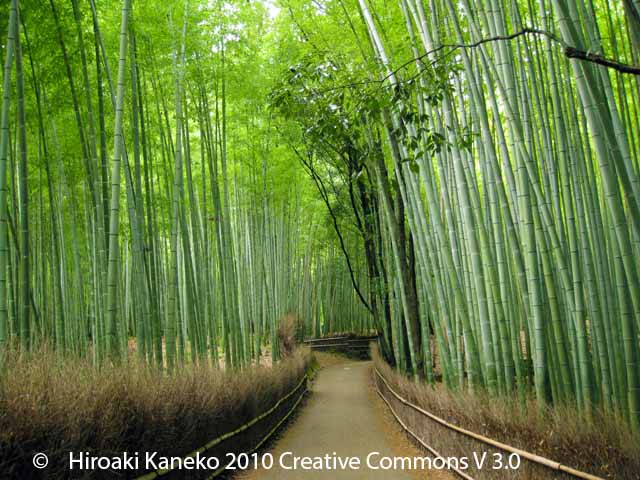 Then there is the Arashiyama Bamboo Grove.
You've probably seen the photographs. Tall bamboo rises on both sides of a pathway, creating a green tunnel that looks wonderfully peaceful.
It is wonderfully peaceful. Until several hundred other people arrive.
The bamboo itself is magnificent, and the surrounding Arashiyama district is worth exploring rather than simply visiting the grove, but don't arrive expecting to have the place to yourself for a contemplative stroll.
If you manage to find a quieter moment, though, it is a lovely experience.
Gion
No visit to Kyoto would be complete without exploring Gion, the city's famous traditional district.
This is where Kyoto's old-world character is perhaps at its strongest. Narrow streets, traditional wooden machiya houses, small restaurants and tea houses create an atmosphere that is completely different from modern Japanese cities.
Gion is also associated with geisha, although visitors should remember that these are working people rather than attractions put there for tourists.
You may be lucky enough to see a geisha or maiko moving between appointments, but don't chase them down the street with a camera.
They have somewhere to be.
Kyoto's Temples and Shrines
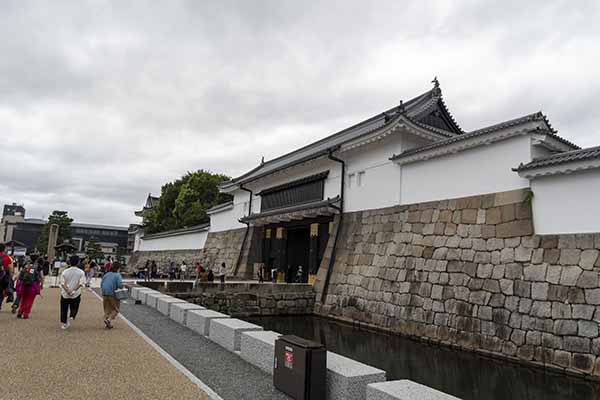 One of the problems with writing about Kyoto is that there are simply too many temples and shrines to mention.
You could spend days visiting them.
And after a while, even the most enthusiastic temple lover may find themselves thinking, Yes, another beautiful temple.
This isn't a criticism of Kyoto. Quite the opposite.
The city has an extraordinary concentration of historic buildings, gardens and religious sites. The trick is not to try to see absolutely everything.
Pick a few that appeal to you and actually spend some time looking at them.
Otherwise you risk turning Kyoto into a rather expensive tick-box exercise.
The Gardens
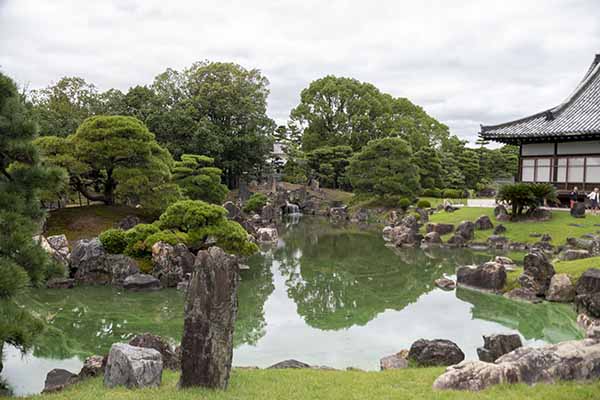 Kyoto's gardens are another highlight.
Japanese gardens are very different from the traditional British variety. There is no great desire to fill every available space with flowers. Instead, gardens often use rocks, gravel, moss, carefully positioned trees and water to create something deliberately restrained.
The result can be incredibly peaceful.
After battling through Kyoto's crowds, finding somewhere quiet to sit beside a garden pond can feel like discovering another world.
Kyoto and the Crowds
There is no getting around this.
Kyoto is crowded, extremely crowded.
Some of the city's most famous sights can become packed, particularly during the cherry blossom season and autumn when the leaves turn spectacular shades of red and orange.
The irony is that Kyoto's greatest attraction is its atmosphere of tranquillity, while its greatest problem is the number of people who have come to experience that tranquillity.
Early mornings are your friend.Get up early, visit the popular sights before the tour groups arrive and you will see a very different side of Kyoto.
Alternatively, accept the crowds and don't let them spoil the experience.
Food
Kyoto is also an excellent place to eat.
Japanese food is much more varied than sushi, and Kyoto has its own traditions. You will find everything from inexpensive noodle restaurants to beautifully presented traditional Japanese meals where the presentation is almost too good to disturb.
And then there are the markets.
Nishiki Market is the obvious place to explore if you want to see an enormous variety of Japanese food in one location. It can get busy, but it is a fascinating place to wander through.
Just be careful what you point at.
You may discover that the thing you thought was a harmless little snack is actually something considerably more adventurous.
Kyoto at Night
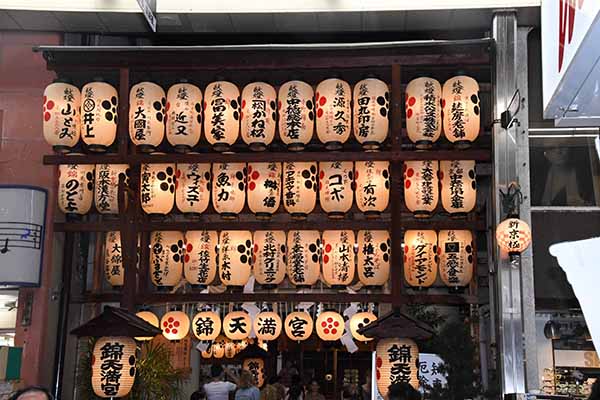 One of the best things you can do is simply walk around Kyoto in the evening.
Once the main tourist crowds have disappeared, the traditional streets take on a completely different atmosphere.
Lanterns glow outside restaurants, wooden buildings are softly illuminated and the narrow streets of areas such as Gion become much quieter.
This is probably the Kyoto that I enjoyed most.
There is no attraction to queue for and no photograph you desperately need to take. You can simply walk and enjoy the atmosphere.
Sometimes doing nothing is the best sightseeing of all.
My Verdict
Kyoto is one of those places where the reality genuinely lives up to the reputation.
It is beautiful, historic and fascinating, with an extraordinary collection of temples, shrines, gardens and traditional buildings. From the orange torii gates of Fushimi Inari to the Golden Pavilion, the bamboo of Arashiyama and the atmospheric streets of Gion, there is an almost endless supply of memorable sights.
But Kyoto isn't perfect.
The crowds can be ridiculous, particularly around the most famous attractions, and at times you may wonder whether half the population of Japan has decided to visit the same temple on the same morning as you.
Don't let that put you off.
Get up early, explore beyond the obvious attractions and take time to wander rather than simply rushing from one famous sight to another.
Kyoto is a city where the details are often more rewarding than the headline attractions.
A quiet lane, a tiny shrine, a beautifully maintained garden or a traditional wooden house can stay in the memory just as strongly as the Golden Pavilion.
Kyoto is, quite simply, one of the great cultural cities of the world.
Yes, it is crowded.
Yes, you will probably take far too many photographs.
And yes, by the end of the day your feet will probably be complaining.
But Kyoto is Japan at its most traditional, atmospheric and beautiful — and it would be a real shame to visit Japan without experiencing it.
Prices correct as at August 2026
Return to Japan Home Page