
Paris
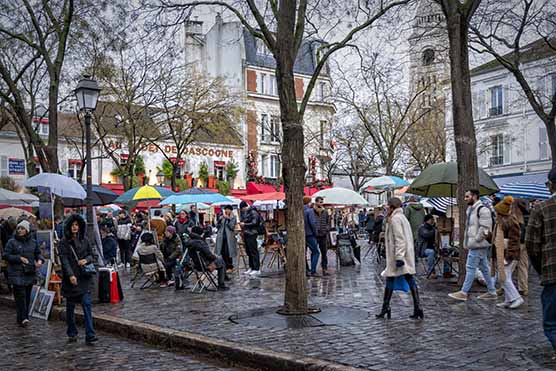 The city of romance, culture, fashion, fine food and people who apparently think indicating before changing direction when driving is an unnecessary extravagance.
It is also one of the world's great cities and, despite all the nonsense, there is an enormous amount to like about it. The trick is not to try to see everything. You can't. Paris has more than 2,000 monuments and over 200 museums, so attempting to tick them all off will leave you exhausted, broke and wondering why you spent three hours looking at a painting of a bloke with a rather odd expression.
Paris is best enjoyed by picking a few things you really want to see, then allowing plenty of time to wander between them.
And yes, you should wander. That's half the point.
GETTING THERE
Paris has two man airports Charles de Gaulle and Orly. both have direct rail links into the city centre. Charled de Gaulle is the main airport and the RER train will take you to Gare du Nord, which is where the Eurostar trains from London arrive.
Step out of the Gare du Nord and you might wonder what all the fuss is about. Like many major stations, it's busy, noisy and a little scruffy around the edges. Panic not, within fifteen minutes you'll be wandering along tree-lined boulevards, passing beautiful stone buildings with wrought-iron balconies, elegant cafés and bustling squares. That's when the magic begins.
Paris isn't dominated by skyscrapers, strict building regulations have preserved much of the city's historic skyline, giving it a timeless feel that's increasingly rare in major European capitals.
GETTING AROUND
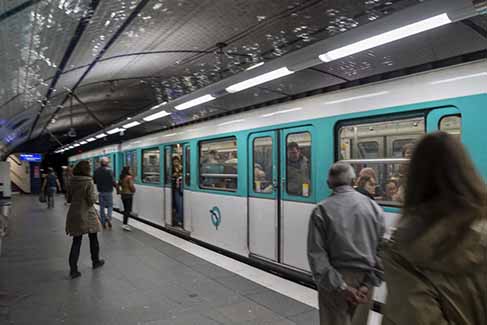 The Paris Metro is your friend.
It isn't always pretty, and some stations appear to have been designed by someone with a personal hatred of escalators, but it is fast and extensive.
In 2026, a standard Metro/Train/RER ticket costs €2.55 and a bus/tram ticket €2.05. There are also passes and other options, so don't automatically buy the tourist pass without working out whether you'll actually save money.
More importantly, don't use the Metro for everything.
Paris is surprisingly walkable, and some of the best bits are what you find between the attractions. Walk when you can. Use the Metro when your feet have started making formal complaints.
THE EIFFEL TOWER
Let's get the obvious one out of the way.
The Eiffel Tower is enormous, impressive and considerably more attractive than you might expect when you first see it. It is also surrounded by people trying to take photographs of themselves pretending to hold it between their fingers.
Don't bother.
Walk towards it instead. See it from the Trocadéro, then cross the Seine. It gets more impressive the closer you get.
You can go up, of course, but whether you actually need to is debatable. The views are excellent, but you can get a magnificent view of Paris from other places without paying to stand in a queue with several hundred other tourists, not to mention the airport style security.
If you do want to go up, book ahead. Turning up and expecting to wander straight in is optimistic.
Admission for adults (25+) is between €14.80 and €36.70, depending on how high you want to go and whether you walk or raide to the second stage. For youths (12-24) it is between €7.40 and €18.40, and for children (4-11) and the disabled between €3.80 and €9.20,
THE LOUVRE
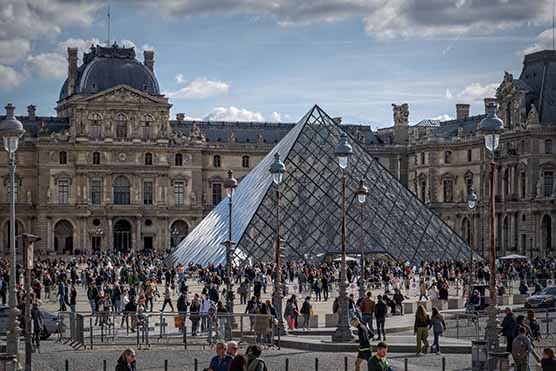 Ah, the Louvre.
It contains some of the world's greatest works of art and is so enormous that you could apparently spend weeks inside it and still not see everything.
Which is precisely why I wouldn't recommend spending weeks inside it.
If you're an art enthusiast, knock yourself out. If you're not, decide beforehand what you actually want to see. The Mona Lisa is, obviously, the big attraction, although after fighting your way through the crowds to get within photographing distance you may find yourself wondering what all the fuss was about.
The building itself is almost as impressive as the contents. The courtyards, grand galleries and famous glass pyramid are all worth seeing, even if your artistic knowledge begins and ends with knowing that Van Gogh had one ear.
Admission, if you are that way inclined is €22.00 for residents of the EU and EEA, for other visitors it's €32.00, under 18's are free.
The Louvre, Tuileries Gardens and the route towards the Champs-Élysées make a very good day out without trying to conquer the entire museum.
NOTRE-DAME
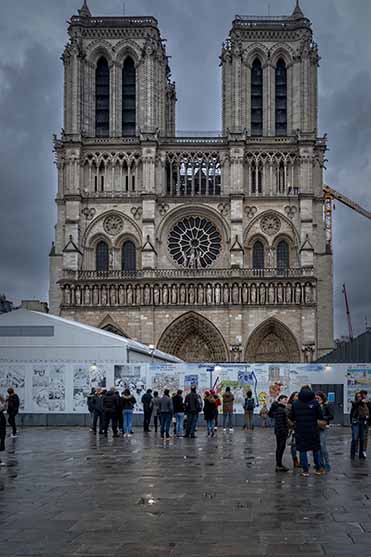 Notre-Dame is back.
After the dreadful fire of 2019, the cathedral reopened to visitors in December 2024, and it is once again one of Paris's essential sights.
Even if you aren't particularly interested in churches, it's worth seeing. The building is extraordinary and its position on the Île de la Cité makes it a good starting point for exploring some of the oldest parts of Paris.
Admission is free.
Nearby is Sainte-Chapelle, which is another one of those places where you walk in expecting a nice old church and then discover that the interior is absolutely spectacular.
The stained glass alone is worth the admission, individual admission is €22 for non-EEA visitors and €16 for EEA residents/citizens
Then wander across the river into the Latin Quarter. This is where Paris becomes much more enjoyable than simply marching from one famous building to another.
ARC DE TRIOMPHE
 The Arc de Triomphe is one of those attractions that looks good from ground level but is considerably better from the top.
There are a lot of steps, naturally, because the French have apparently never heard of lifts being useful in historic buildings, but the view is excellent.
And what a view it is.
Look down the Champs-Élysées and you can see just how much Paris was redesigned to make it look impressive. You can also look towards the Eiffel Tower and get one of the better elevated views of the city.
The monument is open until late in the evening for much of the year, so this is one attraction you don't necessarily have to cram into the middle of the day.
Standard individual admission to the Arc de Triomphe rooftop and summit is €22 during the high season (April 1 to September 30) and €16 during the low season (October 1 to March 31). A discounted rate of €16 applies every Wednesday during the high season.
THE CHAMPS-ÉLYSÉES
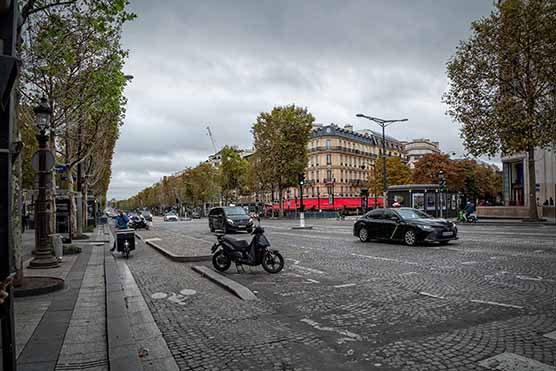 The Champs-Élysées is famous, wide and spectacular.
It is also full of shops, restaurants, traffic and tourists. In other words, don't expect a charming Parisian boulevard where you can sit peacefully drinking coffee while a waiter in a striped shirt cycles past carrying a baguette.
It is worth walking along, particularly between the Arc de Triomphe and the Place de la Concorde, but I wouldn't devote half a day to it.
Walk it. Take the photograph. Move on.
MONTMARTRE AND SACRÉ-CŒUR
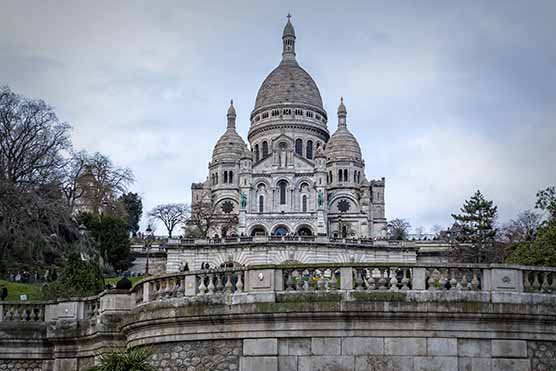 Now we're getting somewhere.
Montmartre is one of the parts of Paris that actually feels like the Paris you imagined before you arrived.
It is hilly, cobbled, occasionally packed with tourists and increasingly expensive, but it's still great fun to wander around.
At the top is the Sacré-Cœur, sitting on the highest point in Paris. The views from the steps outside are superb and, unlike some of the city's attractions, the view doesn't cost you anything.
The basilica itself is free to enter, although there are restrictions on what you can do inside because, amazingly, it is still a place of worship rather than merely another tourist attraction. You can climb the dome for panoramic views of Paris, which costs €8 for adults (ages 16+) and €5 for children up to age 15
Have a wander around Place du Tertre, where artists sit around producing portraits and paintings. Some will be excellent. Others will make you wonder whether you've accidentally wandered into a primary-school art lesson.
That's part of the fun.
THE SEINE
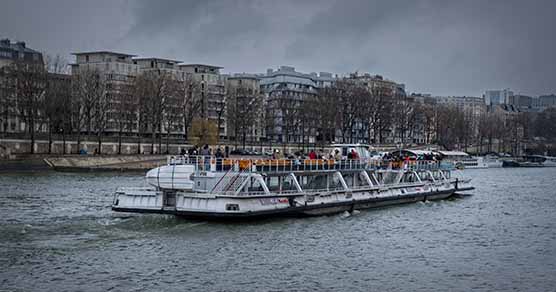 Don't ignore the river.
A walk along the Seine is one of the best free things you can do in Paris, particularly around the central sections where the bridges, buildings and monuments seem to be permanently arranged for your benefit.
You can also take a boat trip.
Yes, it's touristy.
So what?
Sometimes being a tourist is perfectly acceptable.
Seeing Paris from the Seine gives you a completely different perspective, particularly around Notre-Dame, the Louvre and the Eiffel
Tower. Do it in the evening if you can.
THE LATIN QUARTER
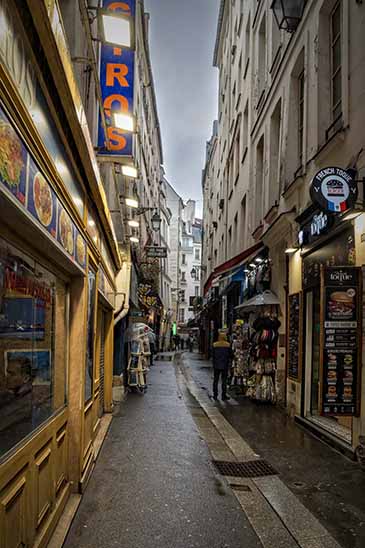 The Latin Quarter is somewhere to get lost.
Forget the map for a while and wander.
There are narrow streets, bookshops, cafés, restaurants and enough history to keep the serious tourist occupied while the rest of us simply enjoy walking around.
The Panthéon is here, as is the Luxembourg Gardens nearby.
The gardens are particularly good if you've had enough of buildings. Sit down, watch the world go by and recover from whatever ridiculous amount you've just paid for lunch.
THE MUSÉE D'ORSAY
 If you like art but aren't convinced that spending an entire day in the Louvre sounds like fun, try the Musée d'Orsay.
It's considerably smaller and housed in a magnificent former railway station, which makes the building itself worth seeing.
It is particularly strong on Impressionist and Post-Impressionist works, so there is plenty here for people who recognise Monet, Renoir, Van Gogh and their friends without needing to have studied art history at university.
For many visitors, this is actually a more enjoyable museum experience than the Louvre. Admission €16.00
THE OPÉRA AND GALERIES LAFAYETTE
The Palais Garnier is another spectacular building and well worth a look even if you have absolutely no interest in opera.
Nearby is Galeries Lafayette, which is basically a department store that decided being a department store wasn't impressive enough.
Go inside and look upwards.
The famous dome is magnificent, and the rooftop provides another excellent city view.
This is also a useful area for shopping, although personally I regard most designer shops as places where you go to discover how much money other people have.
Père Lachaise Cemetery
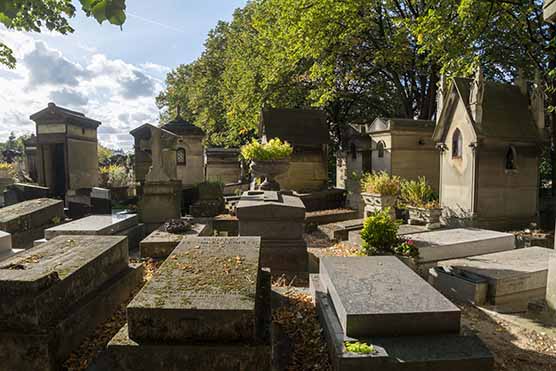 A cemetery?
On a tourist itinerary?
Absolutely.
Père Lachaise isn't gloomy.
It's peaceful.
Tree-lined avenues wind between elaborate tombs, sculptures and chapels, making it feel more like a sculpture park than a graveyard.
Many famous figures are buried here, including:
• Oscar Wilde
• Jim Morrison
• Édith Piaf
• Frédéric Chopin
You don't need to recognise every name to enjoy the atmosphere. It's one of the quietest places in Paris.
Old Moaner's tip, download a cemetery map before you arrive.
Otherwise you'll spend half your visit wondering whether you've just walked past someone famous without realising it.
FOOD
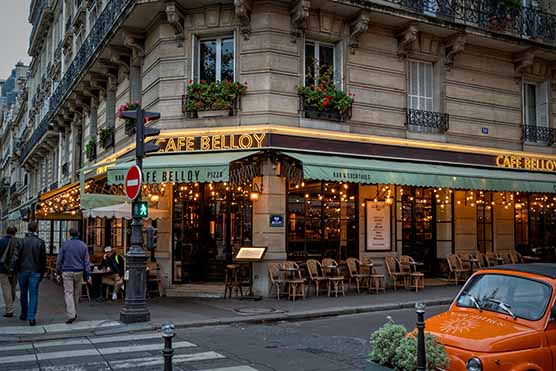 You can't come to Paris and live entirely on burgers.
Well, you can, but you really shouldn't.
Have a croissant. Have a proper French breakfast. Try a crêpe. Eat cheese. Eat something involving pastry that you can't pronounce.
And don't assume you have to eat in an expensive restaurant to eat well.
Some of the best Parisian experiences can be remarkably simple: sitting outside a café, having a coffee and watching people hurry past looking as though they've got somewhere considerably more important to be.
One warning, though.
A café with a view of a major tourist attraction will probably charge you accordingly. Walk a couple of streets away and prices often become rather more sensible.
WHAT I WOULDN'T BOTHER WITH
Paris has an enormous number of attractions, and not all of them deserve your time.
If you're only there for a few days, don't spend your entire visit rushing around ticking boxes.
The Eiffel Tower? Yes.
Notre-Dame? Absolutely.
Montmartre and Sacré-Cœur? Yes.
Arc de Triomphe? Definitely.
The Louvre? If you want to see it, go. If you're not interested in art, don't feel guilty about skipping it.
Versailles? Magnificent, but remember that it's a trip away from Paris. If you've only got two days, I'd stay in the city.
And don't spend hours shopping on the Champs-Élysées unless you particularly enjoy paying more for exactly the same things you can buy elsewhere.
A FEW OLD MOANER TIPS
 Don't try to do everything. You will fail.
Book the major attractions in advance. Paris is busy and standing in a queue because you didn't spend five minutes on a website beforehand is entirely avoidable.
Wear sensible shoes. Paris looks elegant. Your feet won't care.
Be careful with your belongings. Like any major tourist city, Paris has pickpockets, particularly around crowded attractions and public transport.
Learn a little French. You don't need to become fluent. A polite "bonjour" and "merci" will get you further than shouting "DO YOU SPEAK ENGLISH?" at someone who has just been asked the same question 400 times.
Don't judge Paris too quickly. Your first impression may be crowds, traffic and people trying to sell you something. Walk away from the tourist hotspots and the city becomes much more interesting.
SO, IS PARIS WORTH IT?
Yes.
Despite the queues, the prices, the tourists, the Metro stations that appear to have been designed by an underground mining engineer and the occasional waiter who behaves as though serving you is a tremendous personal inconvenience, Paris remains one of Europe's great cities.
The trick is to stop treating it like a collection of attractions.
Paris is at its best when you're simply walking around.
See the Eiffel Tower. Stand outside Notre-Dame. Look at the Arc de Triomphe. Wander around Montmartre. Sit beside the Seine. Have a coffee. Eat something French. Get slightly lost.
And if you manage all that without once consulting a "Top 25 Things You MUST Do in Paris" list, you've probably had a better time than most tourists.
That's Paris.
Magnificent, expensive, occasionally infuriating — and still rather difficult not to love.
Prices quoted correct as of August 2026
Return to France Home Page