
Ronda
Ronda is one of those places where the scenery is so spectacular that you can forgive it for being extremely popular with tourists. Perched dramatically on a plateau in the mountains of Málaga province, Ronda is divided in two by the enormous El Tajo gorge, with the Guadalevín River far below.
And then there is the Puente Nuevo.
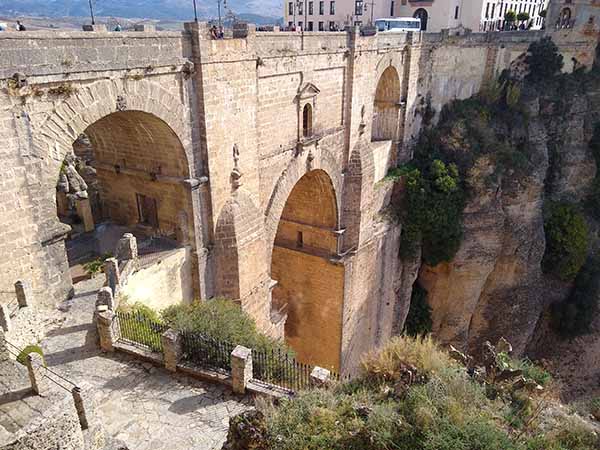 This magnificent stone bridge spans the gorge and has become the symbol of Ronda. Completed in 1793 after decades of construction, it rises around 120 metres above the river and connects the old and new parts of the town. Stand on the bridge and look down into the gorge and you will appreciate just how enormous it really is.
It is also one of those places where every tourist takes exactly the same photograph — and for once, you can't blame them.
The best views are actually obtained from below, where you can appreciate the full scale of the bridge rising out of the gorge.
The walk down is relatively easy. The walk back up is when you start questioning whether that second photograph was really necessary.
The Old Town
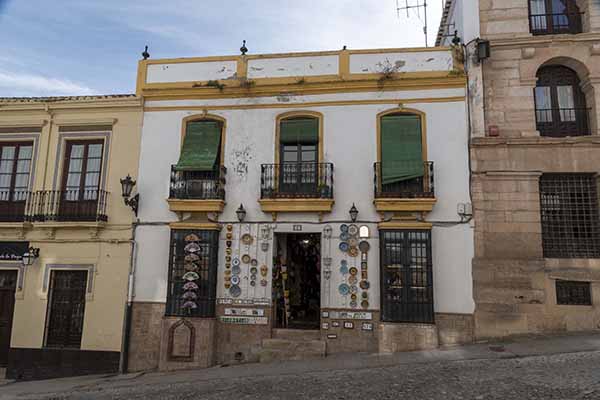 The old town, or La Ciudad, is a wonderful mixture of whitewashed houses, cobbled streets, little squares and remnants of Ronda's Moorish past.
The Moors ruled Ronda for several centuries and their influence remains obvious. The Arab Baths, city walls and Puerta de Almocábar are reminders of that period, while the old streets still retain something of their medieval character.
The Palacio de Mondragón is another worthwhile stop, particularly for its gardens and views. It was once the residence of Moorish rulers before becoming a Christian palace after the Reconquista.
One of the nicest things about Ronda is simply wandering. The town isn't enormous and you can cover much of it on foot, although those cobbles and slopes aren't particularly kind to anyone who thought they'd wear fashionable shoes for the day.
The Bullring
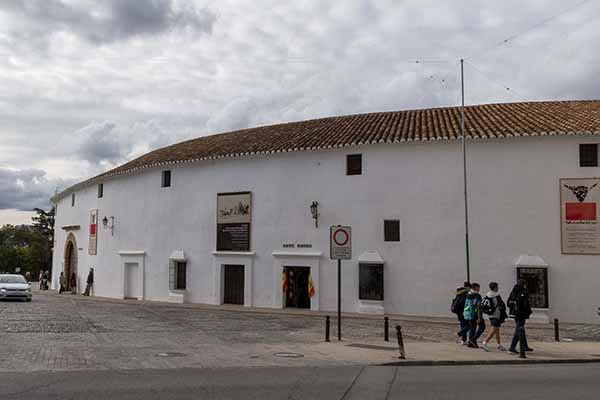 Ronda has an important place in the history of Spanish bullfighting. The Plaza de Toros, dating from 1785, is one of the oldest and most historically significant bullrings in Spain.
This is the birthplace of the Ronda school of bullfighting, associated with the Romero family, who helped establish many of the traditions of modern Spanish bullfighting.
Whether you're a fan of bullfighting or find the whole business deeply unpleasant, the bullring itself is worth seeing as a piece of Spanish history.
The enormous circular arena is impressive, and the museum explains how deeply embedded the tradition once was in Spanish culture.
The Views
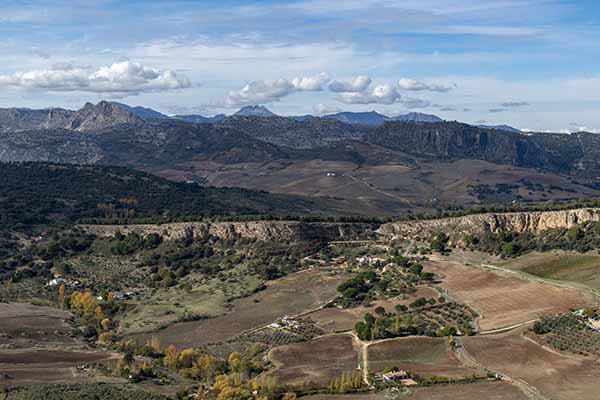 But ultimately, Ronda is about the landscape.
The town sits on the edge of some spectacular mountain country, with the Serranía de Ronda stretching away in every direction. There are viewpoints all over town, but the Alameda del Tajo is particularly good. The park sits right on the edge of the cliffs, with spectacular views across the surrounding countryside.
On a clear day, the scenery is breathtaking. Deep valleys, rugged mountains and distant white villages make you understand why Ronda has attracted artists, writers and travellers for generations.
Ernest Hemingway and Orson Welles both developed strong connections with Ronda, helping to add to its romantic reputation.
Hemingway was particularly fascinated by the town and the surrounding bullfighting culture, while Welles was so fond of Ronda that his ashes were eventually buried here.
The Journey
Getting to Ronda is part of the fun.
Coming from the Costa del Sol, the road winds through the mountains and the scenery becomes increasingly spectacular. It is not a journey for anyone who suffers badly from winding roads, but if you're comfortable driving, it is well worth doing.
The other option is the train, which provides some lovely views as it crosses the mountainous countryside.
And once you're there, give yourself plenty of time. Ronda is often treated as a quick excursion from Málaga or the coast, with visitors arriving, photographing the bridge and disappearing again.
That's a mistake.
The Puente Nuevo may be the headline act, but Ronda deserves a proper day. Explore the old streets, visit the bullring, walk down into the gorge, find a restaurant with a view and sit down for a while.
The Moaner Verdict
Ronda does suffer from the usual problem of being a victim of its own success. At busy times the streets around the bridge can be packed, coaches disgorge their passengers and suddenly the peaceful mountain town becomes rather less peaceful.
But wander away from the obvious tourist route and the crowds thin out remarkably quickly.
And that's when Ronda really works.
It is historic without feeling like a museum, spectacular without needing artificial attractions and distinctly Spanish despite the inevitable tourist invasion.
The Puente Nuevo alone is worth the journey, but Ronda is much more than a bridge.
It's a magnificent mountain town hanging above one of the most spectacular gorges in Spain — and one of those places where the photographs really don't exaggerate.
Return to Andalucia Home Page