
Scotland - Best Of The Rest
Arbroath – Abbeys, Cliffs and the Magnificent Smokie
Arbroath is a town that has two things going for it which are difficult to beat: one of Scotland's most important historic buildings and one of its finest culinary specialities. Add a harbour, dramatic red sandstone cliffs, a pleasant coastline and plenty of fishing heritage and you have a rather good little corner of Angus.
It is also a town with a big place in Scottish history.
Arbroath Abbey
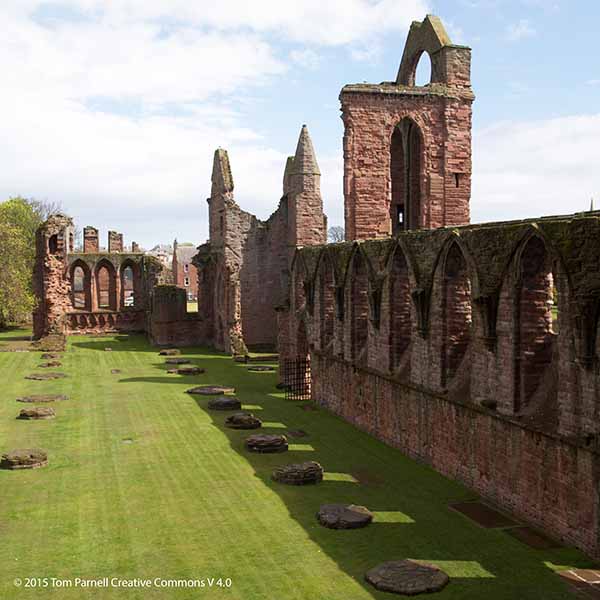 Dominating the town is the magnificent ruin of Arbroath Abbey, founded in 1178 by William the Lion. For almost four centuries it was one of Scotland's grandest monasteries, and even today the surviving west front and twin towers give you a very good idea of how impressive the original building must have been.
But the Abbey's greatest claim to fame came on 6 April 1320, when the famous Declaration of Arbroath was sent from here to Pope John XXII. It was effectively Scotland's great statement of independence and remains one of the country's most important historical documents.
You don't have to be particularly interested in Scottish history to appreciate the place. The sheer scale of the ruins, the intricate stonework and that wonderful sense of age make the Abbey well worth seeing.
And then there is the famous 'Round O', the enormous circular window in the south transept. Originally it helped guide ships safely towards the coast and is a reminder that Arbroath has always had a very close relationship with the sea.
Now for the Smokies
Let's be honest: you can't come to Arbroath and not have an Arbroath Smokie.
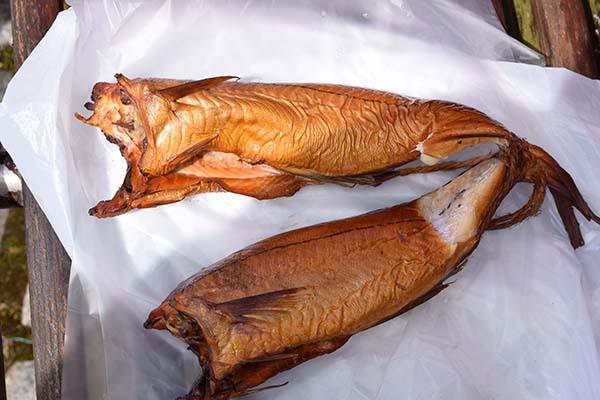 An authentic Arbroath Smokie is haddock that is salted, prepared in pairs and traditionally smoked over hardwood. The finished fish has a beautiful golden-brown appearance and a wonderfully rich, smoky flavour. It also has protected geographical status, meaning a genuine Arbroath Smokie has to be produced traditionally within five miles of Arbroath.
And here is my advice: - Get one straight from the kiln.
Don't buy one, take it home, put it in the fridge and decide you'll have it tomorrow. That's missing the point.
When you get a genuinely fresh Smokie, still warm from the smoking process, the flesh is succulent, smoky and packed with flavour. Peel it apart, get rid of the bones and eat it while it's hot.
It is absolutely superb.
The tradition actually originated in nearby Auchmithie, where fishing families used traditional smoking methods before many moved into Arbroath in the late nineteenth century.
There are several theories about how the method began, including the wonderfully romantic story of salted haddock being accidentally smoked after a fire. Whether that is actually what happened is another matter, but it makes a much better story than simply saying somebody invented a particularly good way of cooking fish.
The Harbour
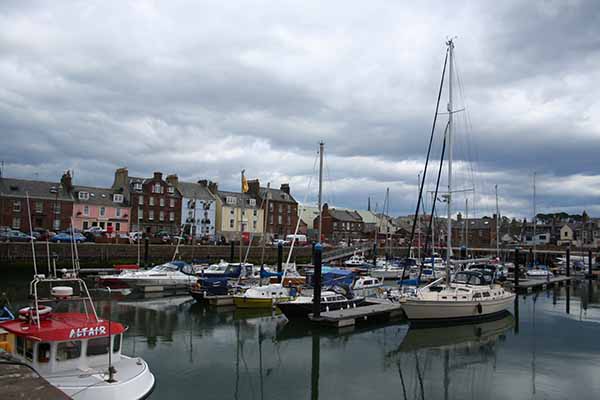 Arbroath's harbour is where the town's fishing heritage is most obvious.
This is where you really get a feel for the Smokie's connection with the town rather than simply seeing it as something sold in a shop. The traditional fishing industry has declined enormously, but the harbour remains an attractive part of Arbroath and is a good place to wander.
Nearby is the Signal Tower Museum, built in 1813 as the shore station for the keepers of the Bell Rock Lighthouse. It tells the story of the lighthouse, the fishing industry and the town's maritime heritage.
Bell Rock Lighthouse
Off the coast is another remarkable piece of engineering – Bell Rock Lighthouse.
Built on the treacherous Bell Rock reef and designed by Robert Stevenson, it dates from the early nineteenth century and is the world's oldest surviving sea-washed lighthouse.
It is difficult enough to imagine building a lighthouse in the middle of the North Sea today, never mind when the work was undertaken more than 200 years ago.
The Signal Tower is therefore much more than another small local museum. It tells the story of an extraordinary engineering achievement and the men who had to keep the lighthouse operating in some pretty dreadful conditions.
The Coast
Arbroath also has a surprisingly attractive coastline.
The red sandstone cliffs north of the town provide some excellent walking, with caves, rock formations and views across the North Sea. The coastal path towards Auchmithie is particularly enjoyable.
And if you've just eaten a Smokie, a walk is probably an excellent idea.
The coast is also good for wildlife, particularly seabirds, while on a clear day there are some magnificent views along the Angus coastline.
Auchmithie
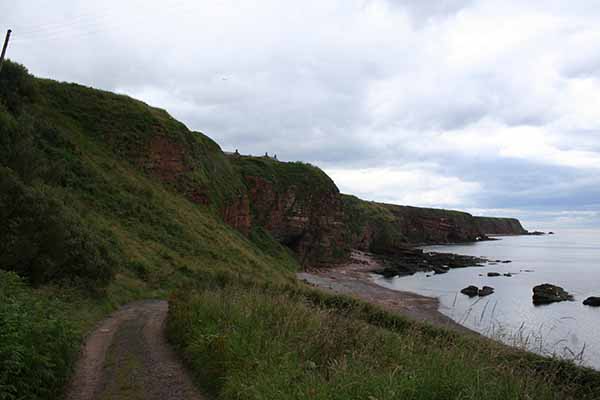 It is worth making the trip to Auchmithie, the small fishing village where the story of the Arbroath Smokie began.
The village is tiny and rather atmospheric, perched above the coast. It provides a useful reminder that the Smokie isn't simply a product invented for tourists – it comes directly from the fishing traditions of this part of Angus.
The coastal scenery around here is excellent too.
Old Moaner verdict: A fascinating Scottish town with a magnificent abbey, an interesting coastline and one of the greatest food specialities Scotland has produced. The Declaration of Arbroath may have changed Scottish history, but for me, the Smokie straight from the kiln is reason enough to visit.
Just remember to bring plenty of napkins.
Ayr – A Traditional Scottish Seaside Town
Ayr is a traditional Scottish seaside town that has seen better days, but there is still enough here to make it worth a stop. Sitting on the Firth of Clyde, it has a long sandy beach and promenade, with views across towards Arran on a clear day.
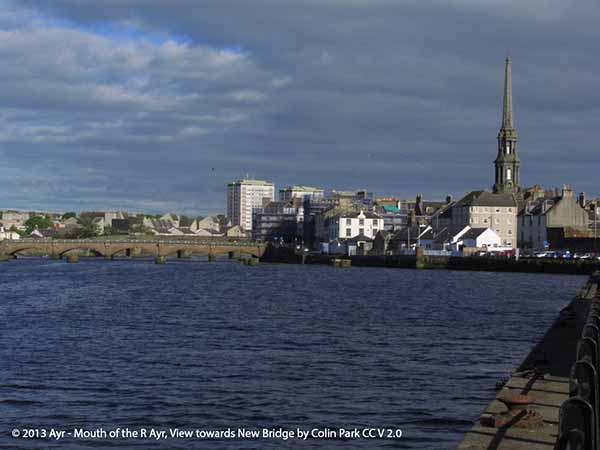 The town's biggest claim to fame is undoubtedly Robert Burns, Scotland's national poet, who was born nearby at Alloway. The Robert Burns Birthplace Museum, Burns Cottage and the atmospheric ruins of Alloway Auld Kirk and Alloway's Brig are all close by and make Ayrshire's connection with Burns impossible to miss.
Back in Ayr itself, the remains of Ayr Castle are a reminder of the town's much older history, while the harbour and riverside provide pleasant places for a stroll.
The town centre, however, is where the Old Moaner has to raise an eyebrow. Like many British seaside towns, Ayr has suffered from declining high streets, tired buildings and too many empty shops. It isn't going to win a beauty contest against Edinburgh or the Highlands.
But that doesn't mean you should ignore it.
The beach is good, the Burns connection is important, and Ayr makes a useful base for exploring the surrounding Ayrshire coast, including Dunure, Culzean Castle and the wonderfully eccentric Electric Brae.
Old Moaner verdict: Ayr may no longer be the grand seaside resort it once aspired to be, but it still has a decent beach, plenty of history and one very important man to thank for putting the area permanently on Scotland's tourist map – Robert Burns.
Gretna and Gretna Green – Runaway Marriages and the English Border
Right on the Scottish side of the English border, Gretna and Gretna Green have become famous for one thing above almost everything else – marriage.
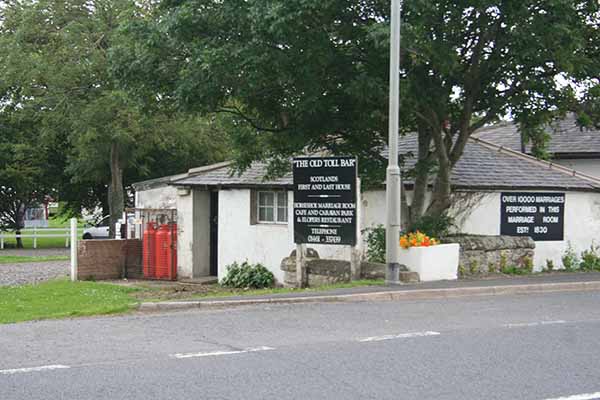 The reason goes back to the eighteenth century, when Scottish marriage laws were considerably more relaxed than those in England. Young couples could marry in Scotland without the formalities required south of the border, provided they declared themselves married in front of witnesses.
Cue generations of runaway lovers heading north as quickly as possible.
Gretna Green became particularly famous because it was the first convenient Scottish village reached by couples crossing the border from England. The village's Old Blacksmiths Shop became the legendary venue, with blacksmiths acting as marriage celebrants. The tradition eventually produced the wonderfully romantic image of couples being married over an anvil.
Today, Gretna Green is considerably more commercialised, with wedding venues, shops and attractions catering for couples from all over the world. The blacksmith's shop remains the centrepiece and is well worth visiting for the history alone.
Nearby Gretna is a more conventional small town and an important transport hub, while the surrounding countryside provides some pleasant walking and views towards the Solway Firth.
Old Moaner verdict: Gretna Green may be rather more touristy than it once was, but the story is irresistible. For generations, determined young couples have crossed the border with one thing in mind – getting married before somebody could change their minds or stop them.
Love, apparently, really did conquer all.
Or at least, it conquered the English marriage laws.
The Electric Brae – A Scottish Optical Illusion
Just south of Dunure on the Ayrshire coast is one of Scotland's more curious little attractions – the Electric Brae.
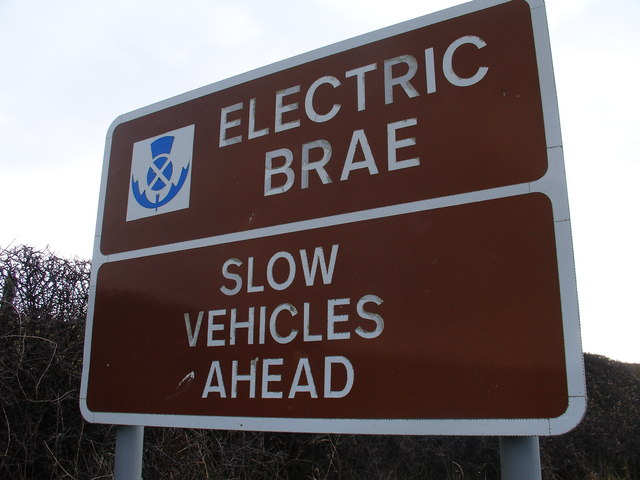 It is a stretch of the A719 where, if you stop your car at the right point, put it into neutral and release the brake, the vehicle appears to roll uphill.
Of course, it isn't really going uphill. It is a wonderfully convincing optical illusion caused by the surrounding landscape making a slight downhill gradient appear to be uphill. But knowing that doesn't make it any less fascinating when you actually experience it.
Naturally, generations of motorists have stopped here to try it for themselves, and it has become a bit of a Scottish roadside tradition.
The Electric Brae is also known as Croy Brae, and there is a memorial stone marking the spot. It sits in a particularly attractive stretch of Ayrshire countryside, with the coast and the Firth of Clyde not far away.
It won't take long to experience, but that's rather the point.
Old Moaner verdict: Stop the car, put it in neutral and watch it apparently defy gravity. It's completely explainable, but don't let science spoil the fun. It's free, it's quirky and it's a good excuse to stop and admire the scenery.
And whatever you do, don't try it while the car is moving. We're looking for an optical illusion, not an insurance claim!
(prices quoted correct as at August 2026)
Return to Scotland home page