
Scottish Borders
The Scottish Borders is one of those parts of Scotland that tends to be overlooked by visitors heading north in search of mountains, lochs and islands. And that's a pity, because the Borders has something rather different to offer: beautiful rolling countryside, historic market towns, magnificent ruined abbeys, grand country houses and a fascinating history shaped by centuries of conflict with England.
It is also considerably easier to get around than the Highlands. You don't have to spend half your holiday negotiating single-track roads or wondering whether the next petrol station is 70 miles away.
The Borders begins just south of Edinburgh and stretches across the countryside towards the English frontier. It is a landscape of green valleys, wooded hills, rivers and farmland, and in many places it is remarkably peaceful.
Melrose – The Jewel of the Borders
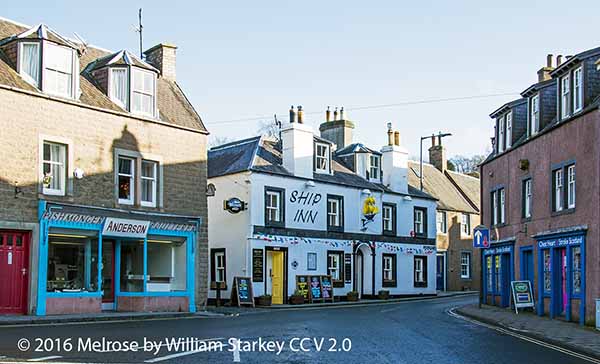 If there is one place that should be on everyone's Borders itinerary, it is Melrose.
The town itself is attractive, but the star attraction is undoubtedly Melrose Abbey. Even in its ruined state, this magnificent medieval building is one of the finest examples of Gothic architecture in Scotland.
Founded in 1136 by Cistercian monks, the abbey was repeatedly damaged during the long-running wars between England and Scotland. What remains is still spectacular, with elaborate stonework, arches and carvings.
There is also a rather wonderful story that the heart of Robert the Bruce is traditionally believed to have been buried here.
Whether it actually is remains a matter for historians.
But it's a good story, and that's often half the fun of visiting somewhere this old.
Behind the town rises Eildon Hill, actually three distinctive peaks, which provide one of the classic views of the Borders.
Dryburgh Abbey
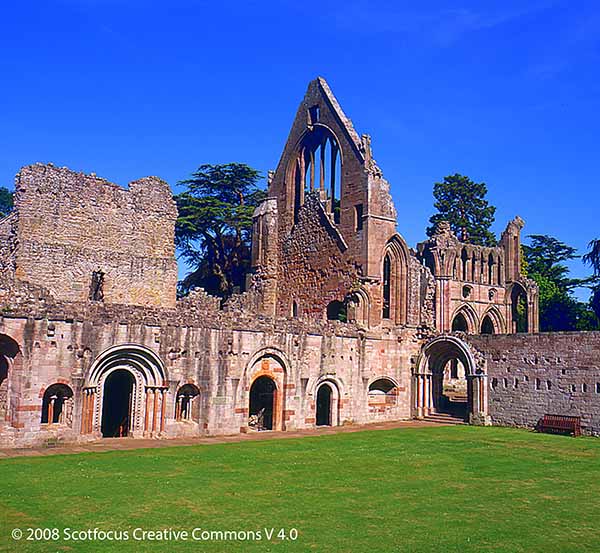 Not far away is Dryburgh Abbey, another atmospheric ruin set beside the River Tweed.
Dryburgh is quieter than Melrose and, personally, I think that is part of its appeal.
The setting is beautiful, surrounded by trees and countryside, and the ruins have a wonderfully romantic quality.
Sir Walter Scott was buried here, and the abbey became his final resting place after his death in 1832.
If Melrose is the impressive one, Dryburgh is the atmospheric one.
Jedburgh
Further south is Jedburgh, dominated by another enormous medieval abbey.
Jedburgh Abbey is an extraordinary survivor, particularly considering the amount of warfare that took place in this region. The town itself is worth exploring, with steep streets, historic buildings and the remains of the medieval town.
The Mary Queen of Scots Visitor Centre tells the story of the queen's stay in Jedburgh in 1566, when she famously fell seriously ill after making the difficult journey from Edinburgh.
Her health problems here became part of the dramatic story of one of Scotland's most tragic monarchs.
Kelso
Then there is Kelso, sitting where the River Tweed meets the River Teviot.
Kelso is an attractive market town with an impressive central square and another magnificent abbey ruin.
Kelso Abbey dates from the twelfth century and is one of the most substantial of the Borders abbeys. Its distinctive architecture makes it particularly photogenic.
Nearby is Floors Castle, the magnificent home of the Duke and Duchess of Roxburghe.
Despite its name, Floors Castle looks exactly like the sort of enormous country house you would expect to find in a Scottish landscape: towers, turrets, vast gardens and plenty of history.
The gardens are particularly impressive.
Abbotsford
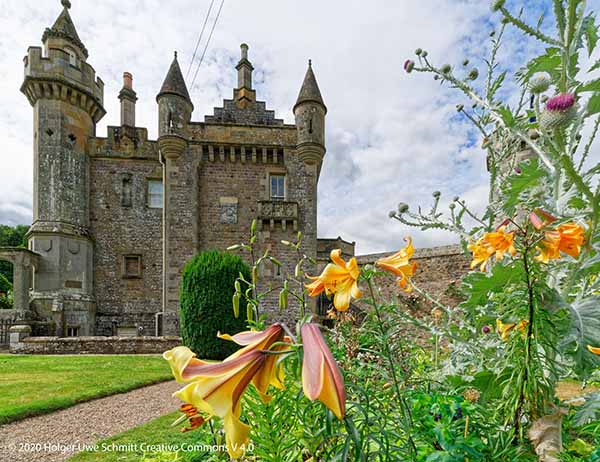 The Borders has a particularly strong literary connection through Sir Walter Scott.
His home, Abbotsford, near Melrose, is one of the region's major attractions.
Scott transformed the house into his romantic vision of a Scottish baronial home, filling it with historical objects, armour, books and paintings.
Even if you're not particularly interested in Scott's novels, the house is fascinating because it tells you an enormous amount about the nineteenth-century obsession with Scottish history and romantic Highland imagery.
The grounds are beautiful too, with views across the surrounding countryside.
The River Tweed
The River Tweed is the geographical thread running through much of the Borders.
It is also central to the region's identity.
The river passes through many of the area's towns and provides opportunities for fishing, walking and simply enjoying the scenery. The surrounding countryside is particularly attractive in autumn when the trees turn colour.
And yes, the river is famous for salmon.
The word 'Tweed' is also rather more famous than many people realise.
The textile industry around the Borders produced the woollen cloth that became known throughout the world as tweed, and textile production remains an important part of the area's heritage.
St Abb's and the Coast
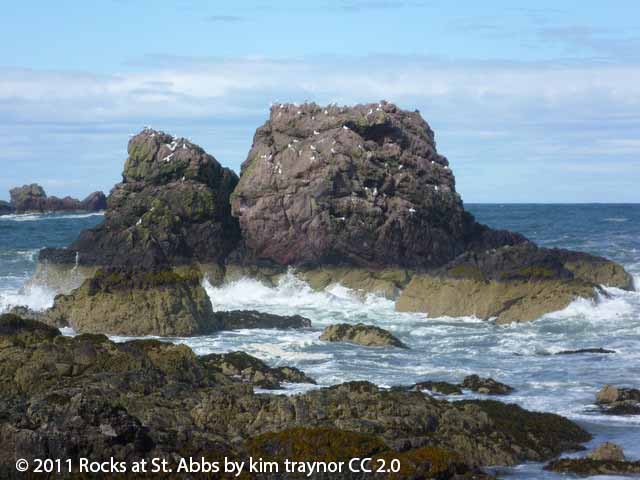 The Borders isn't entirely inland.
Head east and you'll reach the dramatic coastline around St Abb's, one of the most beautiful coastal areas in southern Scotland.
Cliffs plunge towards the North Sea, seabirds nest along the rocks and the small village of St Abbs sits above the harbour.
The nearby St Abb's Head National Nature Reserve is particularly good for birdlife, with enormous numbers of seabirds occupying the cliffs during the breeding season.
The scenery is superb.
Just remember that 'Scottish coastal walk' does not necessarily mean 'flat'.
The Cheviots
Further west, the landscape rises into the Cheviot Hills, forming much of the border between Scotland and England.
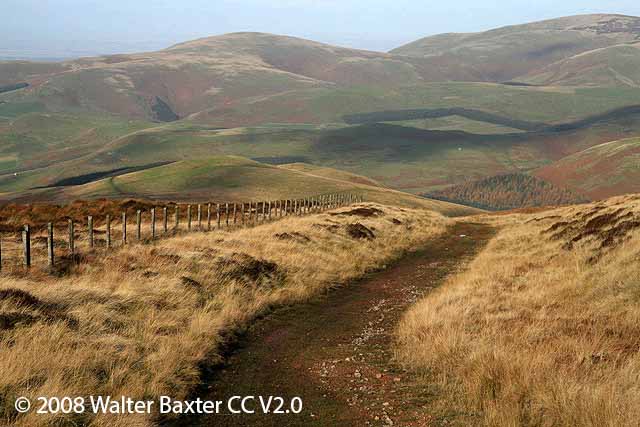 These aren't Highland mountains, but they provide excellent walking country, with broad valleys, open hills and enormous views.
The Southern Upland Way passes through the Borders, while numerous shorter walks provide opportunities to explore without committing yourself to a multi-day expedition.
And unlike some Highland walks, you may actually get to the end without discovering that the weather has declared war on you.
The Borders in General
The Scottish Borders isn't trying to compete with Skye.
It doesn't have to.
There are no towering Cuillin mountains or vast Highland wildernesses, but the scenery has its own considerable charm. Rolling hills, wooded valleys, rivers and farmland create a much gentler landscape.
And for anyone interested in Scottish history, it is arguably one of the richest areas of the country.
The other advantage is that it is accessible.
You can be in the Borders remarkably quickly from Edinburgh, yet within a short distance you can feel as though you've left the modern world behind.
Old Moaner Verdict
The Scottish Borders is Scotland without the postcard clichés – and that's meant as a compliment.
It isn't as dramatic as the Highlands, it doesn't have Skye's jaw-dropping mountains and it probably won't provide quite as many "Wow!" moments.
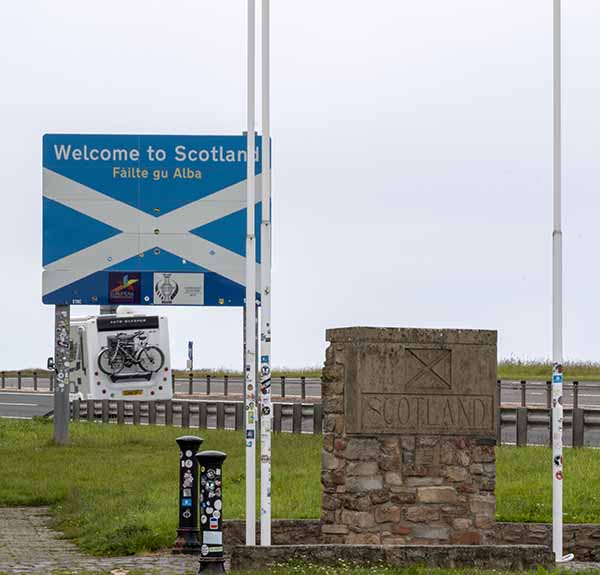 What it does provide is character.
Magnificent ruined abbeys, historic towns, grand houses, beautiful countryside, fascinating border history, excellent walking and a coastline that deserves far more attention than it gets.
And perhaps best of all, it isn't completely overrun with tourists.
For the Old Moaner, that's almost enough reason to recommend it on its own.
Verdict: If you've got a few days in Scotland, don't simply point the car north. Turn south from Edinburgh and explore the Borders. You might just discover that some of Scotland's best bits are hiding where far too many visitors don't bother to look.
(prices quoted correct as at August 2026)
Return to Scotland home page