
Scottish Highlands
There are places in the world where you arrive, look around and think, "Well, they weren't exaggerating." The Scottish Highlands is one of them.
If Scotland had been designed specifically to impress tourists, it would be difficult to improve on the Highlands. Vast mountains, deep glens, shimmering lochs, wild moorland, tumbling waterfalls, lonely roads and tiny villages combine to produce scenery that can be genuinely breathtaking. And unlike some famous tourist destinations, you don't necessarily have to search for the spectacular views – quite often they simply appear around the next bend in the road.
The Highlands cover an enormous area of northern Scotland, stretching from around Fort William and Inverness northwards and westwards towards the far north and the Atlantic coast. It is a landscape on a completely different scale from much of Britain. There are huge areas where you can drive for miles without seeing a town, and sometimes barely another human being.
And that, frankly, is the attraction.
Mountains, Mountains and More Mountains
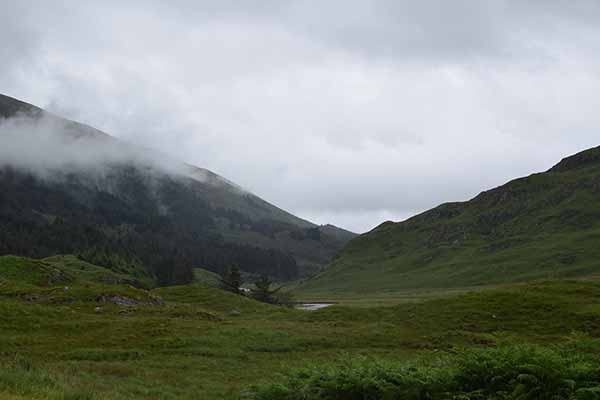 The Highlands are dominated by mountains, although calling some of them simply 'mountains' rather undersells the experience.
The Cairngorms provide some of the most dramatic scenery in the east, while further west the landscape becomes even more rugged. Around Fort William stands Ben Nevis, Britain's highest mountain at 1,345 metres. It attracts walkers from all over the world, although don't make the mistake of thinking that Britain's highest mountain is therefore an easy stroll. It most certainly isn't.
For those who prefer admiring mountains rather than climbing them – and I freely admit to belonging firmly in that category – there are countless opportunities to enjoy the scenery without risking life and limb.
The Three Sisters of Glencoe, the mountains around Torridon, the Cuillin of Skye and the peaks surrounding Glenfinnan are just some of the places where the Highlands seem to have been showing off.
And then there is Glencoe.
Glencoe – The Highland Showstopper
If you only have time to visit one Highland glen, make it Glencoe.
The road through the glen is one of those journeys where you continually find yourself stopping to take photographs, before realising that the view around the next corner is even better. Towering mountains rise dramatically from the valley, waterfalls tumble down the slopes and the whole place has an almost cinematic quality.
Indeed, the scenery has been used as a backdrop for numerous films, but it doesn't need Hollywood to make it impressive.
Lochs That Go On Forever
The Highlands aren't just about mountains. The lochs are equally important to the landscape.
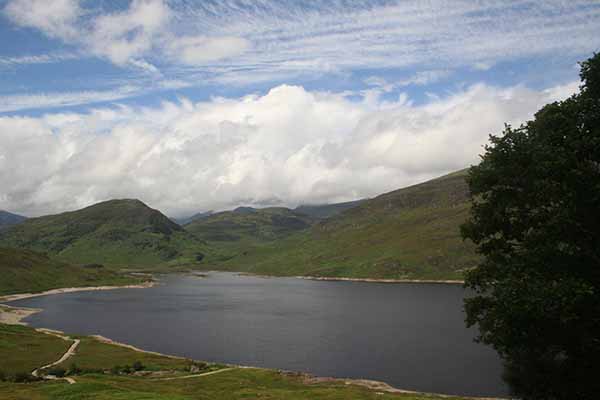 And what lochs they are.
Loch Lomond, although technically on the southern fringe of the Highlands, is probably Scotland's most famous. Further north you encounter Loch Ness, where the monster has managed the remarkable feat of becoming considerably more famous than the loch itself.
Nessie may or may not exist. I shall leave that particular argument to others.
What isn't in dispute is that Loch Ness is enormous and atmospheric, stretching for around 23 miles between Fort Augustus and Inverness. The ruined Urquhart Castle sits dramatically on its shore and provides one of the finest viewpoints.
Then there are Loch Shiel, Loch Linnhe, Loch Maree, Loch Eriboll, Loch Torridon and countless others. Some are surrounded by towering mountains; others are backed by forests or bleak moorland. Each has its own character.
The Road Is Part of the Attraction
One of the great pleasures of the Highlands is simply driving.
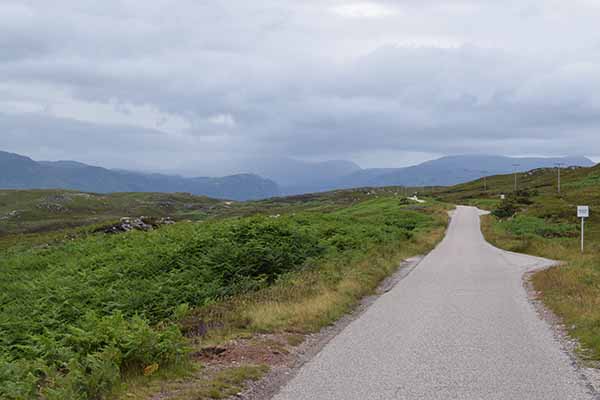 Forget rushing from attraction to attraction. In the Highlands, the journey really is part of the destination.
The roads wind through landscapes that become progressively more remote, and some of the most memorable moments may be when there is absolutely nothing to see apart from mountains, sheep, deer and the occasional Highland cow.
The North Coast 500 has brought enormous attention to the far north, and the route is spectacular. However, its popularity has also created congestion and pressure on infrastructure in places that were never designed to handle large numbers of vehicles.
The answer is simple: don't treat it as a race.
Take your time, get off the main route when possible and explore some of the smaller roads and communities. The Highlands are much more rewarding when experienced slowly.
And don't forget the single-track roads. They are perfectly manageable provided you understand the rules: use passing places, don't park in them, and if there is a queue of traffic behind you, kindly let it past.
It isn't complicated.
Fort William and Glenfinnan
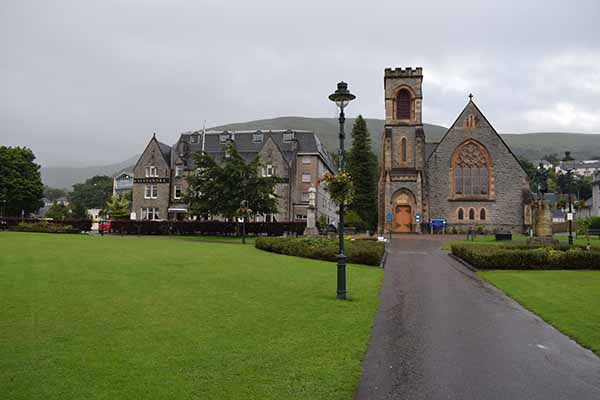 Fort William is one of the principal gateways to the Highlands and sits beneath Ben Nevis at the head of Loch Linnhe. The town itself isn't necessarily the greatest architectural masterpiece Scotland has produced, but its location is magnificent.
From here you can explore Glencoe, take the road to Glenfinnan or use the famous Jacobite Steam Train, which crosses the Glenfinnan Viaduct.
Yes, it is the railway made famous by the Harry Potter films.
The viaduct is spectacular in its own right, while the surrounding landscape is exactly what you would expect from a Scottish Highland railway journey. Even if you aren't interested in Harry Potter, the trip is a wonderful way of experiencing the scenery.
And Glenfinnan has another important piece of history: the monument where Bonnie Prince Charlie raised his standard in 1745 during the Jacobite uprising.
Inverness – Capital of the Highlands
At the other end of the scale is Inverness, often regarded as the capital of the Highlands.
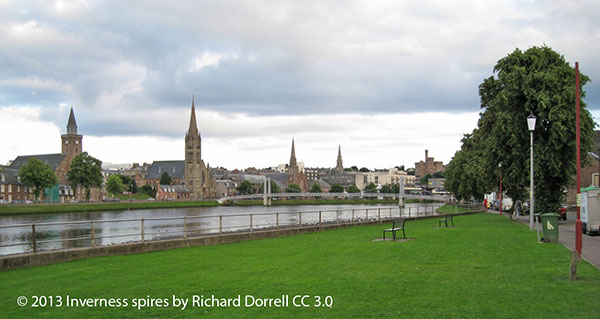 It is a pleasant city rather than a spectacular one, but it makes an excellent base for exploring the surrounding area. The River Ness runs through the centre, while Inverness Castle overlooks the city.
From here you can head towards Loch Ness, Culloden, the Black Isle, the Moray coast and countless other Highland destinations.
Just outside the city is Culloden Battlefield, one of the most poignant historical sites in Scotland. The Battle of Culloden in 1746 effectively ended the Jacobite uprising and had devastating consequences for the Highland way of life.
It is an important reminder that the Highlands aren't merely pretty scenery. They have a fascinating, and often tragic, history.
Wildlife
The Highlands are also one of the best parts of Britain for wildlife.
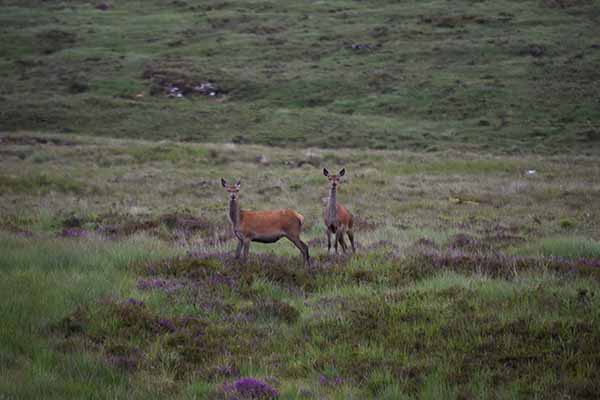 Red deer roam many of the hills and glens, while golden eagles and other birds of prey can be seen if you are lucky. Otters inhabit the coastline, seals are frequently encountered and dolphins can be spotted from various points around the Moray Firth.
There are also Highland cows, which have somehow become international celebrities despite spending most of their lives looking mildly annoyed beneath enormous fringes.
They are magnificent creatures, though.
And don't forget the smaller things. The Highlands are particularly beautiful in spring and summer when the landscape comes alive with wildflowers, while autumn brings extraordinary colours to the forests and glens.
The Weather – Ah, Yes...
Now we come to the Highlands' one small disadvantage.
The weather.
It can be glorious. It can also rain horizontally.
Sometimes it does both within the same ten minutes.
The trick is not to let the weather dictate your opinion of the place. Mist hanging over a mountain can actually make the scenery more atmospheric, while rain running down a window as you sit beside a loch with a cup of coffee can be rather enjoyable.
Provided you're indoors.
The famous Highland saying that "there's no such thing as bad weather, only the wrong clothing" contains considerably more truth than most tourist slogans.
Whisky, Castles and Highland Hospitality
Of course, no Highland tour would be complete without mentioning whisky.
There are distilleries throughout the region, producing some of Scotland's most celebrated single malts. Whether you're a whisky enthusiast or someone who thinks it tastes like paint stripper, visiting a distillery is an interesting way of understanding how closely whisky is tied to the landscape and history of the Highlands.
Then there are the castles.
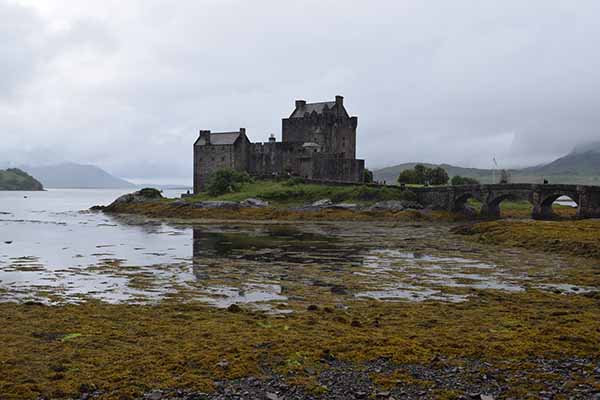 Eilean Donan Castle is perhaps the most photographed of them all, spectacularly positioned where three sea lochs meet. It is almost absurdly photogenic.
There are countless others, from grand estates to atmospheric ruins, each adding another layer to the Highland story.
And everywhere you go, there is a sense that the communities here have had to work with the landscape rather than conquer it.
The Highlands – Just Go
The Scottish Highlands aren't somewhere I would recommend visiting simply to tick off a list of attractions.
They are somewhere to experience.
Drive without being in too much of a hurry. Stop when the scenery demands it. Walk a little. Find a quiet loch. Sit in a village pub. Visit a castle. Take a train. Look for wildlife. Talk to the locals.
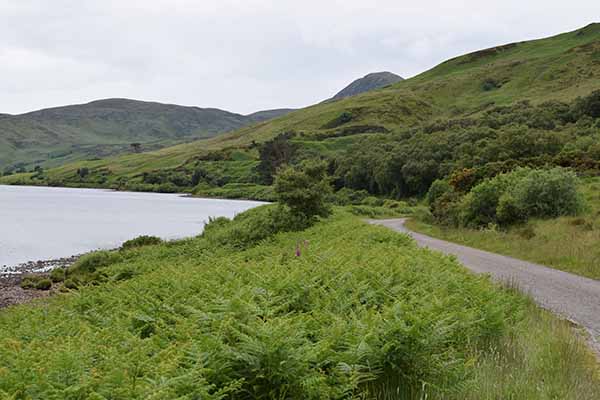 And above all, allow yourself time.
The Highlands can be spectacular in sunshine, mysterious beneath cloud, dramatic in the rain and almost other-worldly when covered in snow. It is a landscape that changes constantly, sometimes within the space of an hour.
There are certainly parts that have become victims of their own popularity, and some of the infrastructure struggles with the number of visitors arriving during the summer. But that shouldn't put you off.
Because despite all the tourism, the postcards, the coach tours and the endless photographs of Eilean Donan Castle, the real Highlands are still there.
Vast, rugged, beautiful and gloriously untamed.
For me, this is Scotland at its absolute best.
Old Moaner verdict:
Forget the arguments about which Scottish city is the prettiest, which castle is the best or which tourist attraction you simply must visit. The greatest attraction in Scotland is the landscape itself. The Highlands don't need gimmicks, theme parks or artificial attractions. Give them mountains, lochs, a winding road and a bit of sunshine and they will beat almost anything else hands down.
And if the clouds roll in?
Well, that's Scotland.
(prices quoted correct as at August 2026)
Return to Scotland home page