
Thames Path: Source - Lechlade
Section Length: 23 miles (37 km)
Time Taken: 7 hrs 41 mins
Dates Walked: 16th and 22nd August 2017
Logistics: This section of the walk was completed in two parts.
The first from the Source to Cricklade (12.5 miles). For this I parked at Swindon Station and caught a train to Kemble, from where it was a 1.5 mile walk to the source of the river.From Cricklade it was a bus back to Swindon.
The second part was Cricklade to Lechlade (10.5 miles). For this I parked Lechlade and caught a bus to Cricklade, via Cirencester.
Time Taken: 7 hrs 41 mins
Dates Walked: 16th and 22nd August 2017
Logistics: This section of the walk was completed in two parts.
The first from the Source to Cricklade (12.5 miles). For this I parked at Swindon Station and caught a train to Kemble, from where it was a 1.5 mile walk to the source of the river.From Cricklade it was a bus back to Swindon.
The second part was Cricklade to Lechlade (10.5 miles). For this I parked Lechlade and caught a bus to Cricklade, via Cirencester.
Return to Thames Home Page Next Lechlade to Oxford
The Thames Path starts in a rather underwhelming fashion.
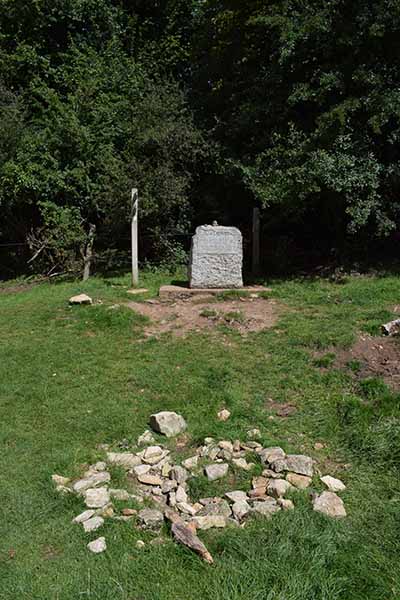 The source of one of Britain's most famous rivers is in a field near Kemble in Gloucestershire, marked by a simple stone beneath a tree. There is no great fanfare, no bubbling spring and certainly no mighty river. In fact, if you visit in summer you may have to walk several miles before you see any water at all.
Finding the actual source isn't necessarily as straightforward as you might imagine either. The path is generally well marked, but this early section is much more agricultural than the Thames Path further downstream and there are places where it isn't immediately obvious which way you're supposed to go. A map is definitely useful, particularly when there is no watercourse to act as a helpful guide.
Leaving the source behind, the path heads across open countryside towards Kemble. At this point you are following the course of the Thames rather than anything that looks remotely like the river most people know.
Kemble is soon followed by Ewen and then Ashton Keynes. These are attractive Cotswold villages and provide a welcome change from the fields, although the waterways here remain very modest. There are little bridges crossing them, some of which seem ridiculously substantial considering the size of the waterway beneath them.
This is also where the Cotswold Water Park starts to make its presence felt. The landscape is dotted with lakes, many of them former gravel workings, and the Thames Path winds its way through this rather unusual mixture of countryside and man-made waterways.
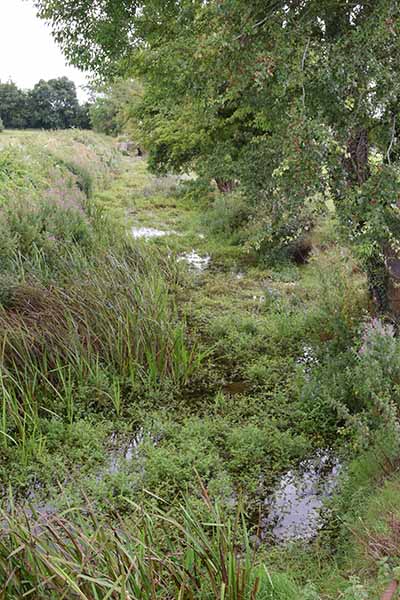 It can be quite confusing at times. You have lakes, drainage channels and various little streams all competing for attention, and the Thames isn't always the most obvious one.
Eventually the route becomes easier to follow and the scenery remains predominantly rural, with meadows and farmland providing the backdrop. There are some lovely quiet stretches here, although this is more about the countryside than spectacular river scenery.
As you continue towards Cricklade the watercourse becomes more substantial and the town provides a useful landmark. Cricklade is one of the first places where you really feel that you are following an established river rather than tracing the line of a stream.
Beyond Cricklade the countryside opens out again, with the route passing through meadows and occasionally disappearing beneath trees. This is classic Thames Valley walking, albeit on a considerably smaller scale than the Thames further downstream.
Eventually you reach Castle Eaton, a small and rather attractive village which makes a pleasant interruption to the countryside.
The route continues towards Kelmscott and Radcot, both of which have strong associations with the Thames and its history. At Kelmscott is Kelmscott Manor, once the country home of William Morris, although you need to leave the immediate route if you want to visit it.
Radcot is particularly interesting as the river becomes navigable and the old bridges and waterways give a better indication of the importance the Thames once had as a transport route.
The final stretch towards Lechlade is particularly pleasant, passing through open countryside with the river winding between fields. By now there is little doubt that you are following a proper river.
Lechlade itself makes a fitting end to this first section. It is an attractive market town and, more importantly for the Thames, marks the point where the river becomes navigable.
Return to Thames Home Page Next Lechlade to Oxford
The Thames Path starts in a rather underwhelming fashion.
The source of one of Britain's most famous rivers is in a field near Kemble in Gloucestershire, marked by a simple stone beneath a tree. There is no great fanfare, no bubbling spring and certainly no mighty river. In fact, if you visit in summer you may have to walk several miles before you see any water at all.Finding the actual source isn't necessarily as straightforward as you might imagine either. The path is generally well marked, but this early section is much more agricultural than the Thames Path further downstream and there are places where it isn't immediately obvious which way you're supposed to go. A map is definitely useful, particularly when there is no watercourse to act as a helpful guide.
Leaving the source behind, the path heads across open countryside towards Kemble. At this point you are following the course of the Thames rather than anything that looks remotely like the river most people know.
Kemble is soon followed by Ewen and then Ashton Keynes. These are attractive Cotswold villages and provide a welcome change from the fields, although the waterways here remain very modest. There are little bridges crossing them, some of which seem ridiculously substantial considering the size of the waterway beneath them.
This is also where the Cotswold Water Park starts to make its presence felt. The landscape is dotted with lakes, many of them former gravel workings, and the Thames Path winds its way through this rather unusual mixture of countryside and man-made waterways.
It can be quite confusing at times. You have lakes, drainage channels and various little streams all competing for attention, and the Thames isn't always the most obvious one.Eventually the route becomes easier to follow and the scenery remains predominantly rural, with meadows and farmland providing the backdrop. There are some lovely quiet stretches here, although this is more about the countryside than spectacular river scenery.
As you continue towards Cricklade the watercourse becomes more substantial and the town provides a useful landmark. Cricklade is one of the first places where you really feel that you are following an established river rather than tracing the line of a stream.
Beyond Cricklade the countryside opens out again, with the route passing through meadows and occasionally disappearing beneath trees. This is classic Thames Valley walking, albeit on a considerably smaller scale than the Thames further downstream.
Eventually you reach Castle Eaton, a small and rather attractive village which makes a pleasant interruption to the countryside.
The route continues towards Kelmscott and Radcot, both of which have strong associations with the Thames and its history. At Kelmscott is Kelmscott Manor, once the country home of William Morris, although you need to leave the immediate route if you want to visit it.
Radcot is particularly interesting as the river becomes navigable and the old bridges and waterways give a better indication of the importance the Thames once had as a transport route.
The final stretch towards Lechlade is particularly pleasant, passing through open countryside with the river winding between fields. By now there is little doubt that you are following a proper river.
Lechlade itself makes a fitting end to this first section. It is an attractive market town and, more importantly for the Thames, marks the point where the river becomes navigable.
Return to Thames Home Page Next Lechlade to Oxford