
Thames Path: Putney - Thames Barrier
Section Length: 19 miles (30.57 km)
Time Taken: 7 hrs 23 mins
Dates Walked: 5th, 12th October 2017
Logistics: This section of the walk was completed in two parts.
The first from Putney to Tower Bridge (10 miles).
The final leg was Tower Bridge to the Thames Barrier (9 miles)
For all legs I travelled to / from the start / finish points by train.
Time Taken: 7 hrs 23 mins
Dates Walked: 5th, 12th October 2017
Logistics: This section of the walk was completed in two parts.
The first from Putney to Tower Bridge (10 miles).
The final leg was Tower Bridge to the Thames Barrier (9 miles)
For all legs I travelled to / from the start / finish points by train.
Previous Windsor to Putney Return to Thames Home Page
From Putney onwards, the Thames Path enters the heart of London and the character of the river changes again. The open countryside and riverside meadows of the upper Thames are now firmly behind you, replaced by bridges, embankments, historic buildings, docks and some of the most recognisable sights in the capital. It is also where the river becomes much wider and more obviously tidal.
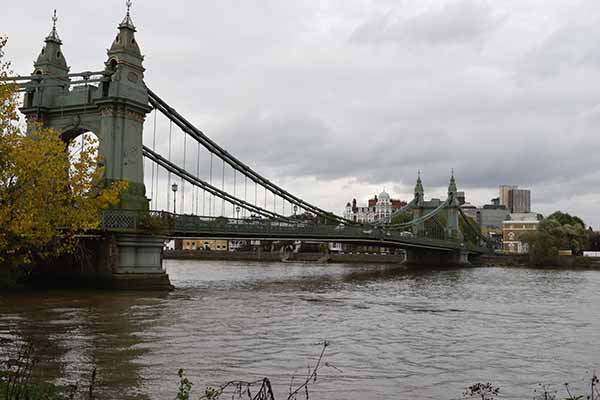 Putney itself is closely associated with rowing, and the river below Putney Bridge is a busy stretch of water, particularly at weekends. From here the path follows the south bank through Fulham, passing the attractive riverside surroundings of Bishop's Park. The huge scale of London isn't always obvious here, as there are still plenty of trees and pleasant stretches beside the river.
Soon, however, the urban landscape takes over. You pass Craven Cottage, the home of Fulham Football Club, right beside the river, before continuing towards Hammersmith. Hammersmith Bridge is one of the most attractive bridges on the Thames, although its long history of structural problems has meant that crossing it has not always been possible.
The path then continues past Chiswick and Barnes, with a mixture of riverside houses, rowing clubs and old industrial buildings. This is still a relatively leafy part of London, but the skyline gradually becomes more built up as you head east.
At Kew, the river passes the famous Royal Botanic Gardens, while further downstream comes the impressive Chiswick House and its surrounding parkland.
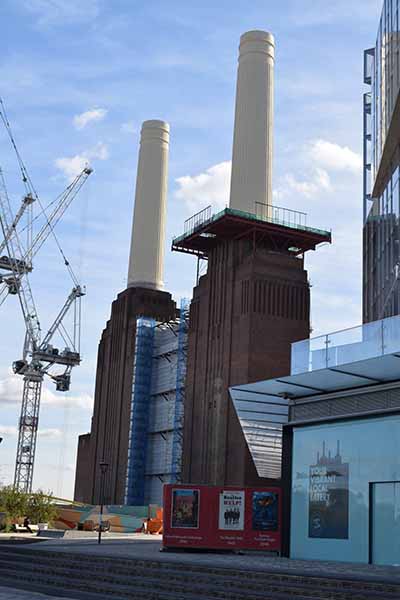 Eventually you reach Battersea, where the enormous power station dominates the skyline. Once a symbol of London's industrial past, Battersea Power Station has been transformed into a huge redevelopment of shops, restaurants, apartments and public spaces. The four famous chimneys remain, making it impossible to miss.
From here the Thames Path heads towards central London, and suddenly the familiar London landmarks begin arriving thick and fast. Westminster provides one of the great views of the whole route, with the Houses of Parliament, Big Ben and Westminster Bridge immediately recognisable across the river.
Further downstream is the London Eye, followed by the South Bank. This is one of the liveliest sections of the walk, with theatres, restaurants, street performers and crowds almost guaranteed. The Tate Modern and Shakespeare's Globe are further along, while across the river St Paul's Cathedral provides another classic London view.
Continuing east, the path passes London Bridge and then Tower Bridge, probably the most spectacular bridge on the Thames. Nearby is the Tower of London, and the riverfront here provides some excellent views of the City of London. The modern skyscrapers behind the historic Tower make a rather impressive contrast.
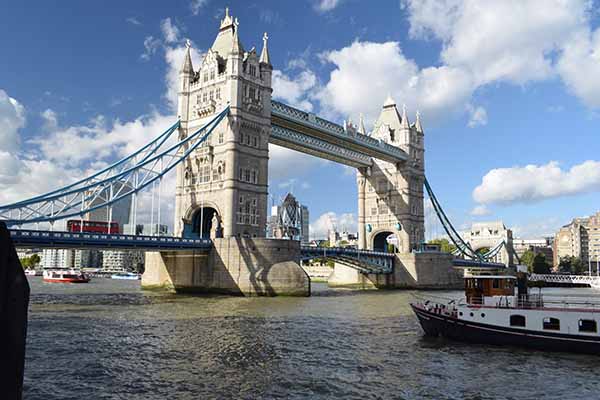 Beyond Tower Bridge the character changes once again. The grand central London landmarks gradually disappear and the Thames becomes increasingly associated with its industrial and dockland past. St Katharine Docks, Wapping and Limehouse all have interesting reminders of the days when London's prosperity depended heavily on ships arriving along the river.
The huge Canary Wharf development then dominates the skyline. This is one of the most striking parts of the Thames Path, with modern skyscrapers rising above the old docklands. The contrast between the glass towers and the remaining stretches of historic dockland is a good illustration of how dramatically this part of London has changed.
East of Canary Wharf, the path continues through the Isle of Dogs and around the bends of the river towards Greenwich. The Royal Naval College, the Cutty Sark and the distinctive Greenwich skyline make this another highlight. Greenwich is also a good place to stop for a while, with plenty to see away from the river itself.
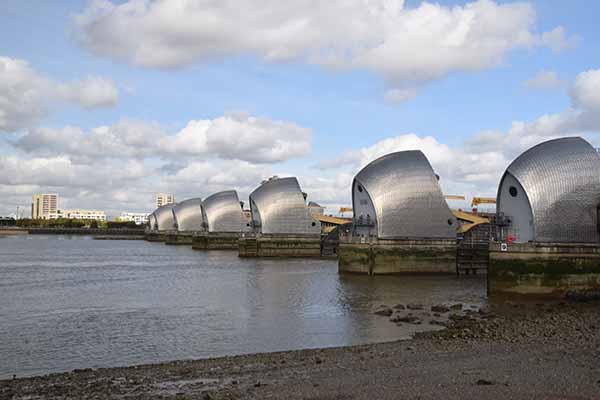 From Greenwich the route continues towards the Thames Barrier, passing through a much more industrial-looking part of London. The riverside here is less picturesque, but that is part of the interest. Warehouses, wharves and industrial buildings remind you that the Thames is still very much a working river.
Eventually the enormous silver gates of the Thames Barrier come into view. Opened in 1982, the barrier protects London from tidal flooding and is one of the most impressive pieces of engineering on the river. Standing beside it provides a fitting end to this section of the Thames Path.
Previous Windsor to Putney Return to Thames Home Page
From Putney onwards, the Thames Path enters the heart of London and the character of the river changes again. The open countryside and riverside meadows of the upper Thames are now firmly behind you, replaced by bridges, embankments, historic buildings, docks and some of the most recognisable sights in the capital. It is also where the river becomes much wider and more obviously tidal.
Putney itself is closely associated with rowing, and the river below Putney Bridge is a busy stretch of water, particularly at weekends. From here the path follows the south bank through Fulham, passing the attractive riverside surroundings of Bishop's Park. The huge scale of London isn't always obvious here, as there are still plenty of trees and pleasant stretches beside the river.Soon, however, the urban landscape takes over. You pass Craven Cottage, the home of Fulham Football Club, right beside the river, before continuing towards Hammersmith. Hammersmith Bridge is one of the most attractive bridges on the Thames, although its long history of structural problems has meant that crossing it has not always been possible.
The path then continues past Chiswick and Barnes, with a mixture of riverside houses, rowing clubs and old industrial buildings. This is still a relatively leafy part of London, but the skyline gradually becomes more built up as you head east.
At Kew, the river passes the famous Royal Botanic Gardens, while further downstream comes the impressive Chiswick House and its surrounding parkland.
Eventually you reach Battersea, where the enormous power station dominates the skyline. Once a symbol of London's industrial past, Battersea Power Station has been transformed into a huge redevelopment of shops, restaurants, apartments and public spaces. The four famous chimneys remain, making it impossible to miss.From here the Thames Path heads towards central London, and suddenly the familiar London landmarks begin arriving thick and fast. Westminster provides one of the great views of the whole route, with the Houses of Parliament, Big Ben and Westminster Bridge immediately recognisable across the river.
Further downstream is the London Eye, followed by the South Bank. This is one of the liveliest sections of the walk, with theatres, restaurants, street performers and crowds almost guaranteed. The Tate Modern and Shakespeare's Globe are further along, while across the river St Paul's Cathedral provides another classic London view.
Continuing east, the path passes London Bridge and then Tower Bridge, probably the most spectacular bridge on the Thames. Nearby is the Tower of London, and the riverfront here provides some excellent views of the City of London. The modern skyscrapers behind the historic Tower make a rather impressive contrast.
Beyond Tower Bridge the character changes once again. The grand central London landmarks gradually disappear and the Thames becomes increasingly associated with its industrial and dockland past. St Katharine Docks, Wapping and Limehouse all have interesting reminders of the days when London's prosperity depended heavily on ships arriving along the river.The huge Canary Wharf development then dominates the skyline. This is one of the most striking parts of the Thames Path, with modern skyscrapers rising above the old docklands. The contrast between the glass towers and the remaining stretches of historic dockland is a good illustration of how dramatically this part of London has changed.
East of Canary Wharf, the path continues through the Isle of Dogs and around the bends of the river towards Greenwich. The Royal Naval College, the Cutty Sark and the distinctive Greenwich skyline make this another highlight. Greenwich is also a good place to stop for a while, with plenty to see away from the river itself.
From Greenwich the route continues towards the Thames Barrier, passing through a much more industrial-looking part of London. The riverside here is less picturesque, but that is part of the interest. Warehouses, wharves and industrial buildings remind you that the Thames is still very much a working river.Eventually the enormous silver gates of the Thames Barrier come into view. Opened in 1982, the barrier protects London from tidal flooding and is one of the most impressive pieces of engineering on the river. Standing beside it provides a fitting end to this section of the Thames Path.
Previous Windsor to Putney Return to Thames Home Page